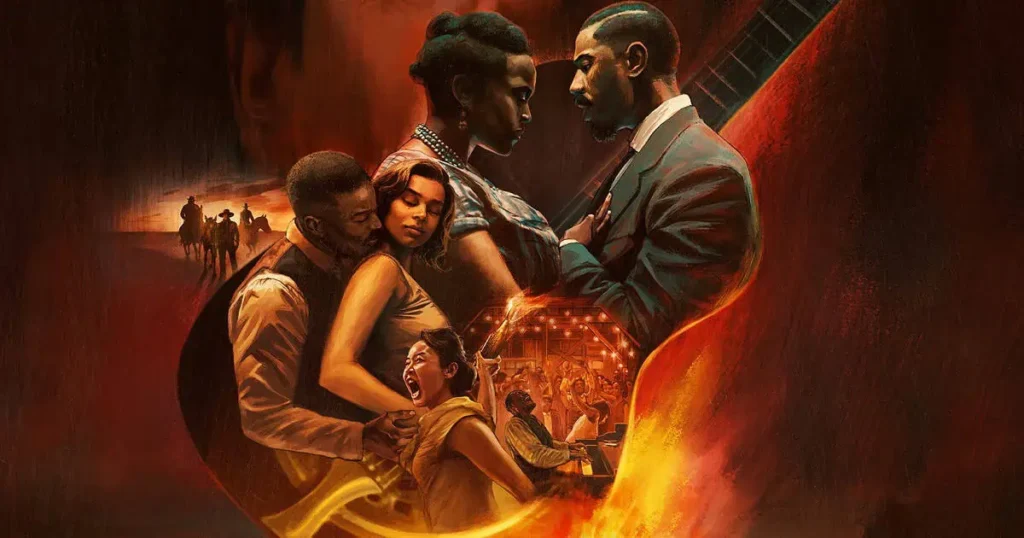
Sinners Movie Explained: The Ending, Vampires, and Hidden Meanings

Ryan Coogler’s Sinners is one of those movies that doesn’t really end when the credits roll. On the surface, it’s a simple vampire film, but once you start pulling at the threads, you realise it needs a proper Sinners explained kind of discussion — especially the ending.

This is one of those films where the story is only half of what’s going on. The other half is hidden in small details, symbols, and choices the characters make. In this article, we’ll break down the ending, the post-credits scenes, the vampire rules, and the bigger meaning behind Sinners, not as a reviewer but as a fan.

[MASSIVE SPOILER WARNING: Do not read further if you haven’t seen the film.]

The Plot of Sinners: A Chronological Breakdown

The story takes place in October 1932, in a small town in the Mississippi Delta. Twin brothers Elijah “Smoke” and Elias “Stack” Moore come back home after many years away. They have lived rough lives, worked with gangs in Chicago, and fought in World War I. Both are carrying a lot of anger, fear, and tiredness from that life.

They don’t come back to start trouble. They come back with one simple plan: to open a juke joint. A place where Black people can eat, drink, dance, and forget their problems for a few hours. They buy an old sawmill for this. The place has a dark past. It was once used by white supremacists as a “killing floor” where Black people were murdered. Now they want to turn that place into something alive.

Now the brothers are bringing in people for their juke joint.

While all this is happening, something else is moving toward the town. An Irish vampire named Remmick has taken shelter with a local white family connected to the KKK. He slowly turns them into vampires too. When Sammie plays at the juke joint, his music does something strange. It feels like it opens a door between worlds. It attracts Remmick and his group.

The Characters: Who’s Who in Sinners

Before getting into the meaning and the ending, it helps to clearly understand who these people are and how they are connected. Sinners is not really a story about vampires first. It’s a story about a small group of people, their past, and the choices they make in one long night.

The Moore Family and Their Circle

At the centre of the story are the Moore family.

Elijah “Smoke” Moore and Elias “Stack” Moore are twin brothers. Sammie is their younger cousin. Jedidiah, Sammie’s father, is a strict pastor. Annie is Smoke’s wife.

Smoke and Stack grew up together, fought together in World War I, and later worked for Al Capone’s gang in Chicago.

Smoke & Stack : The Gears

Smoke is the quieter and more thoughtful of the two. He is tired of violence and wants to build something that feels clean and honest. He is married to Annie, and they once had a baby who died. Smoke still carries that loss, and also the trauma of the war. His hands shake, and he cannot even roll his own cigarettes. Stack always does it for him. Smoke’s journey in the film is about slowly letting go of his violent “Smoke” identity and becoming Elijah again.
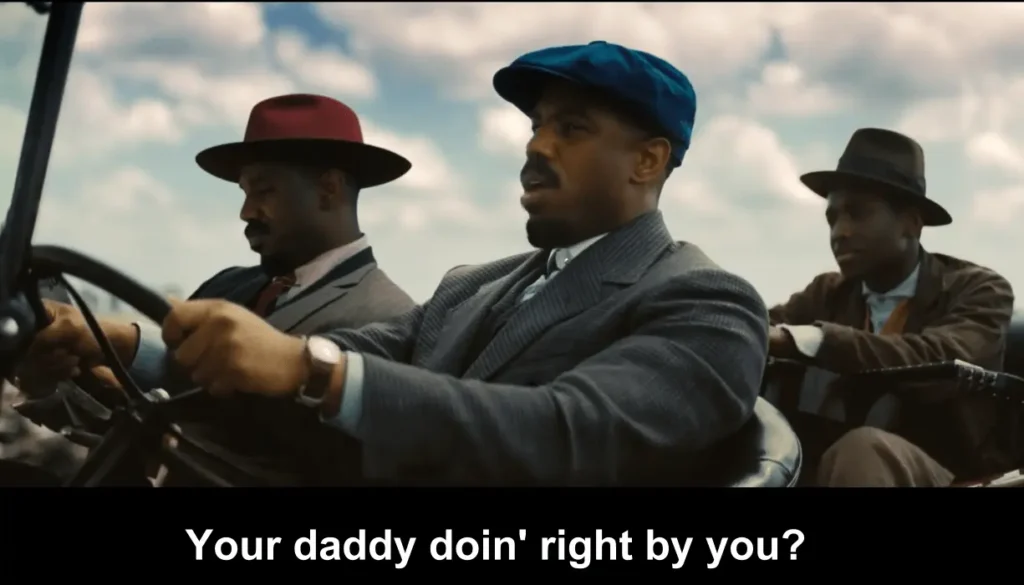
Stack is different. He is more emotional, more reckless, and more comfortable with violence. He also worked for Capone and fought in the war, but he seems less interested in leaving that life behind. He comes back partly to help build the juke joint, and partly because he wants to find Mary, the woman he loved before he left town.

Sammie Moore: The Heart of the Story

Sammie Moore is their young cousin. He is a gifted blues guitarist and the son of Pastor Jedidiah. He is caught between two worlds: his father’s church and his own love for music. He carries the guitar of Charley Patton, a legendary blues musician. Sammie is not just a performer in the film. His music is so powerful that it seems to open a door between worlds. He is the real heart of the story, and also the reason the vampires come.

Jedidiah, Sammie’s father, believes the blues is devil’s music and that it will destroy his son. He tries to stop Sammie from playing at the juke joint. In a dark way, his fears turn out to be right.

The Love Stories

There are two important relationships in the film.

Smoke and Annie are husband and wife. They lost their baby, and that loss broke something in both of them. Annie still believes in Hoodoo and in spiritual protection.
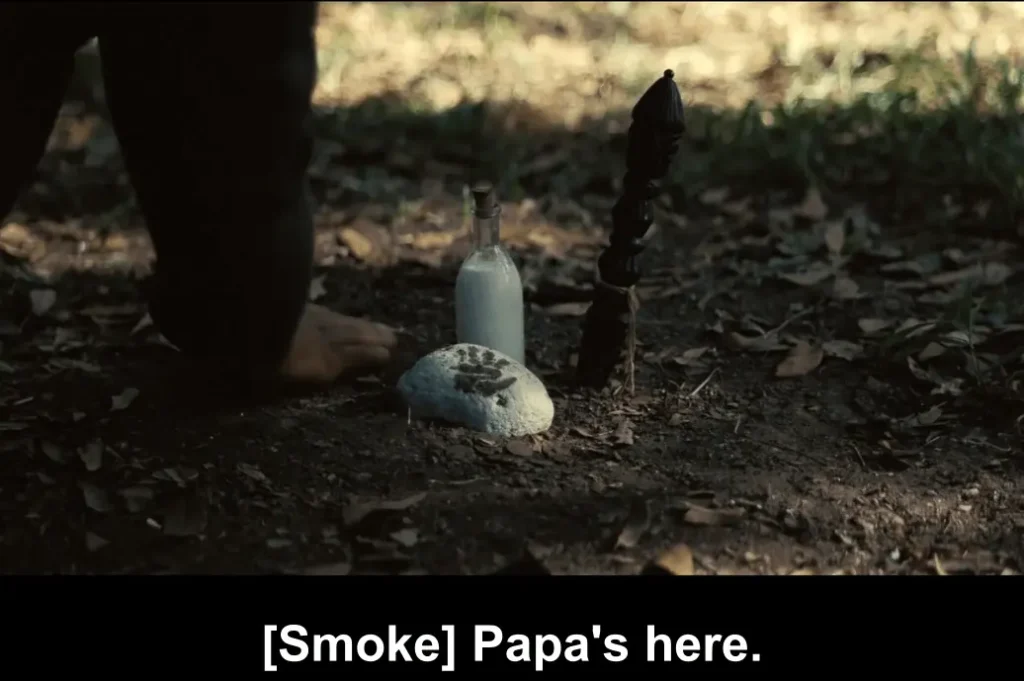
Smoke has mostly lost his faith. Annie is the emotional and spiritual centre of the group. She understands the vampire rules and tries to protect everyone. Her death is what finally breaks Smoke and pushes him toward his final sacrifice.
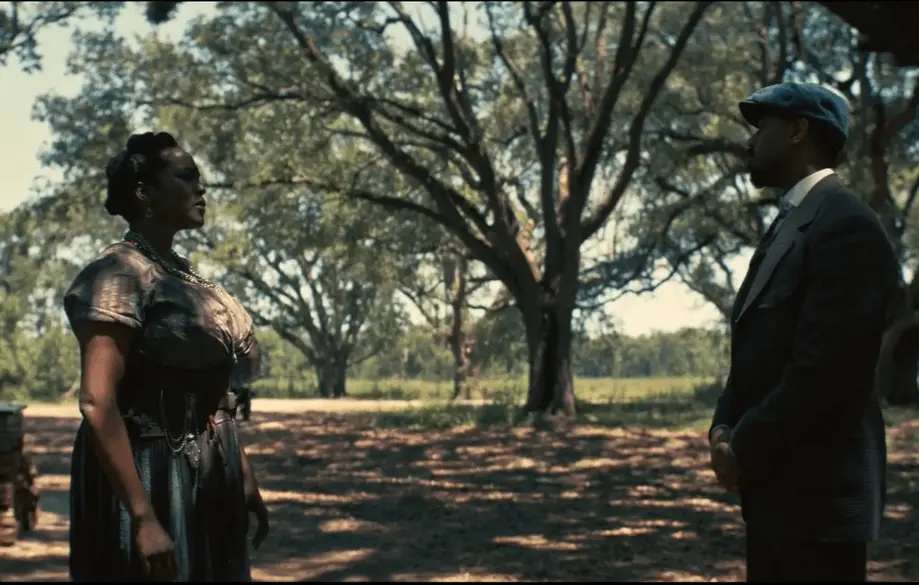
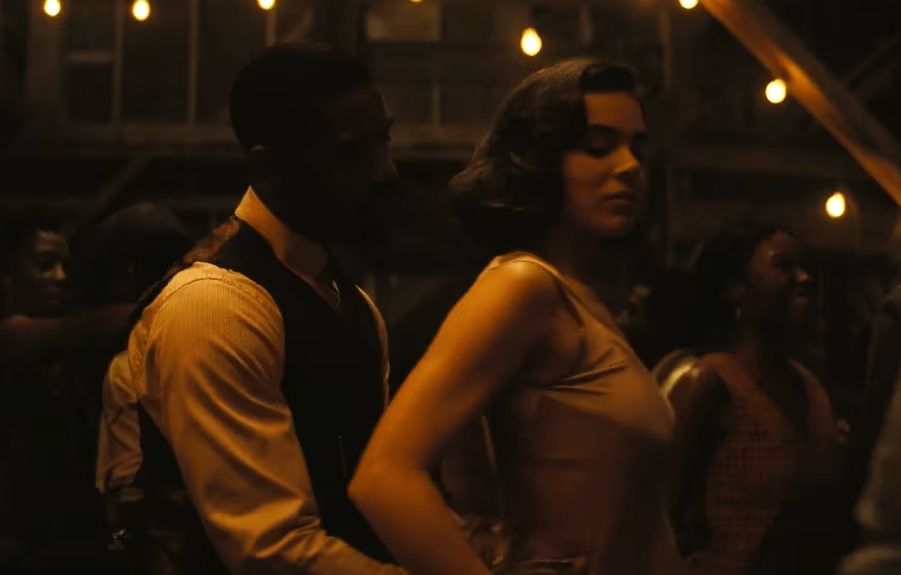
Stack and Mary were lovers before the twins left for Chicago. Mary waited for Stack for seven years and feels abandoned and bitter. When they meet again on the night of the juke joint opening, old feelings come back. Remmick turns Mary into a vampire, and Mary then turns Stack. In a tragic way, their love becomes the reason Stack is pulled into the vampire world. In the 1992 scene, we see that they are still together, still in love, but no longer human.
The Vampires

Remmick is the main vampire and the main villain. He is Irish and was once an immigrant who lost his own community and family. He understands what it means to be oppressed, but instead of standing with others, he chooses power. He is drawn to Sammie because Sammie’s music can cross the line between life and death. Remmick wants to use that power to see his own lost people again. His reason is human. His methods are monstrous.

Remmick turns the local Hogwood family (who are KKK leaders), Mary, and Cornbread. Mary then turns Stack. All of them become part of the same vampire group, connected by a kind of shared feeling or hive mind, but not dependent on Remmick to survive.

The Juke Joint Community

The juke joint is not just a building. It is a small community.

Delta Slim is an old and respected harmonica player. He represents the older generation of blues musicians. His presence gives the juke joint respect and meaning. He dies trying to protect others.
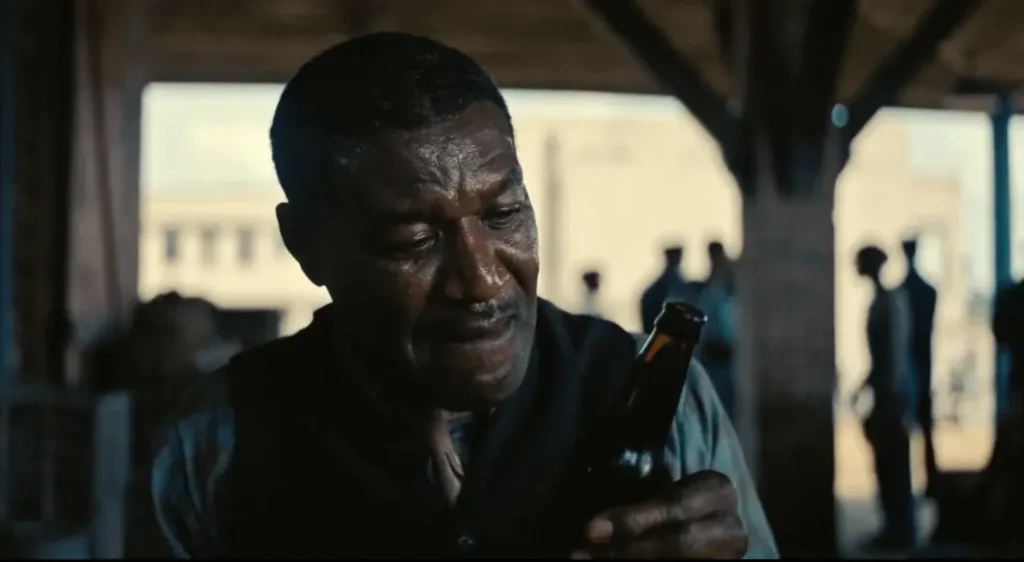
Pearline is a talented singer who is married, but still wants to perform. She represents the many women in blues history who had to balance family life and art. She is turned into a vampire during the attack.

Cornbread is the big, strong bouncer and security for the juke joint. He is loyal to the twins and one of the first people Remmick turns. His turning shows how fast the safe space is destroyed.
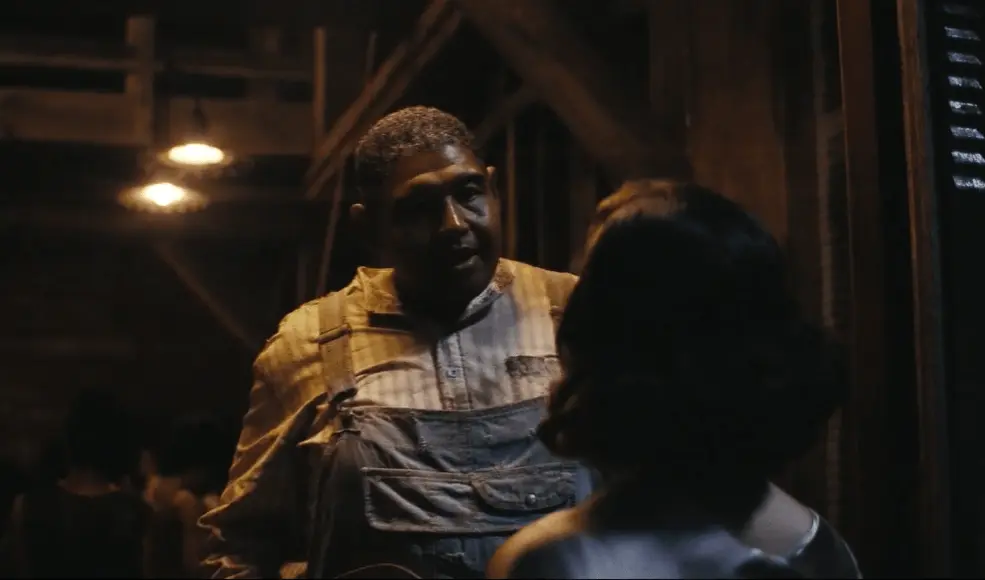
Grace Chow and Bo Chow are Chinese shopkeepers who run a grocery store. They are part of the real history of the Mississippi Delta, where Chinese immigrants often served Black communities when white businesses would not.
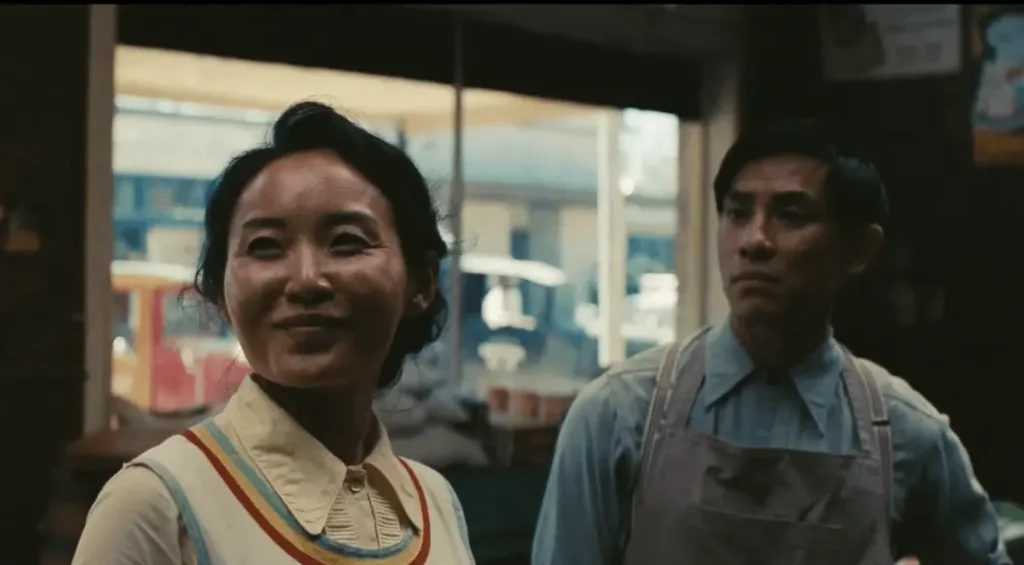
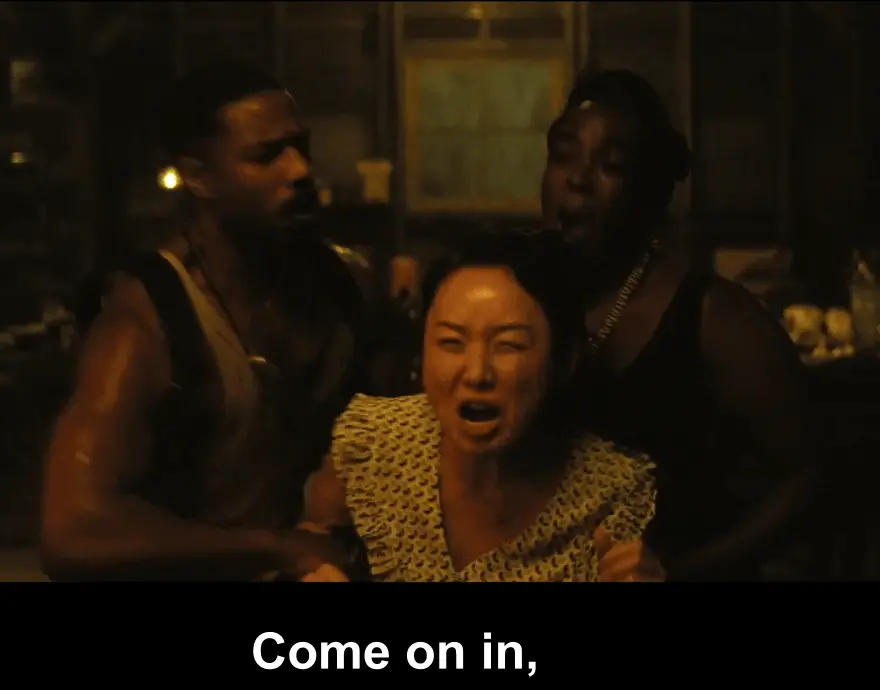
They have a daughter named Lisa. When the vampires threaten her, Grace invites them into the juke joint in anger and fear, breaking the protective barrier.
The Vampires and the Climax

The vampires, who cannot enter without an invitation, find their way in through betrayal.
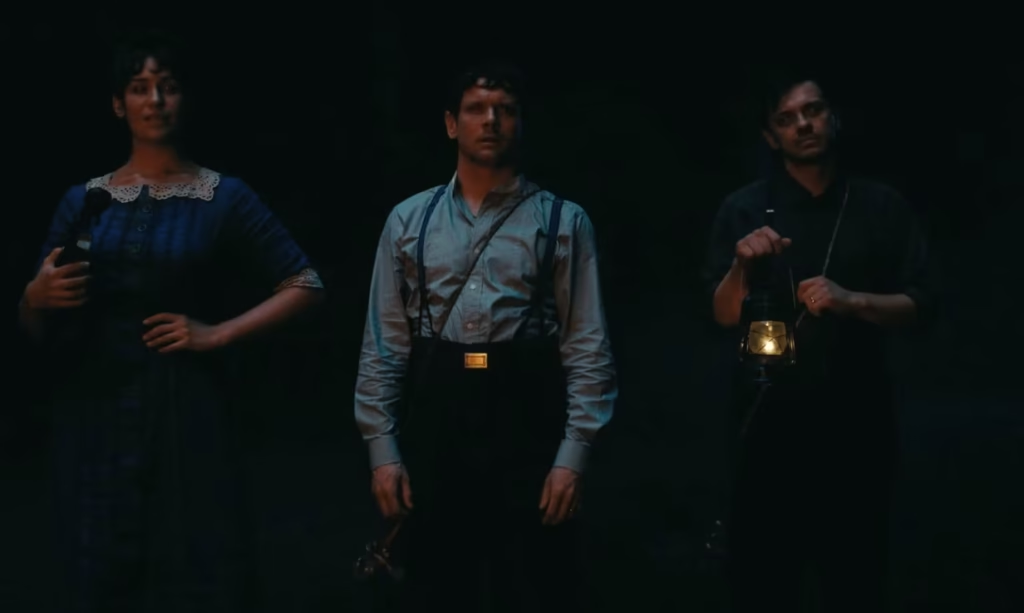
Remmick turns Stack’s ex-girlfriend, Mary (Hailee Steinfeld), who then bites and turns Stack himself. The juke joint becomes a battleground. Smoke’s wife, Annie (Wunmi Mosaku), a Hoodoo practitioner, reveals the rules of these vampires: killing the head vampire (Remmick) won’t save the others, and they are connected by a hive mind.
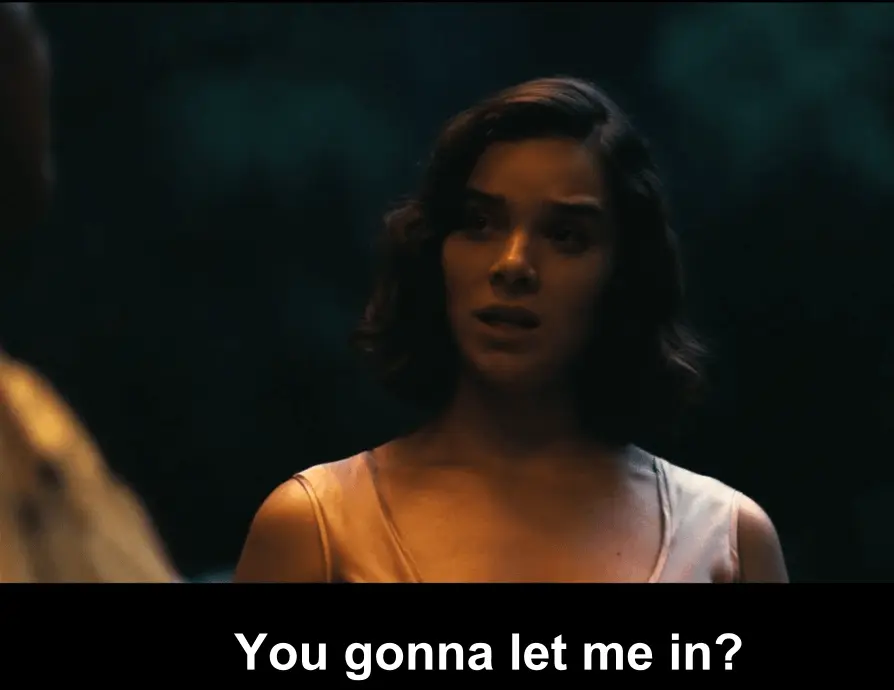
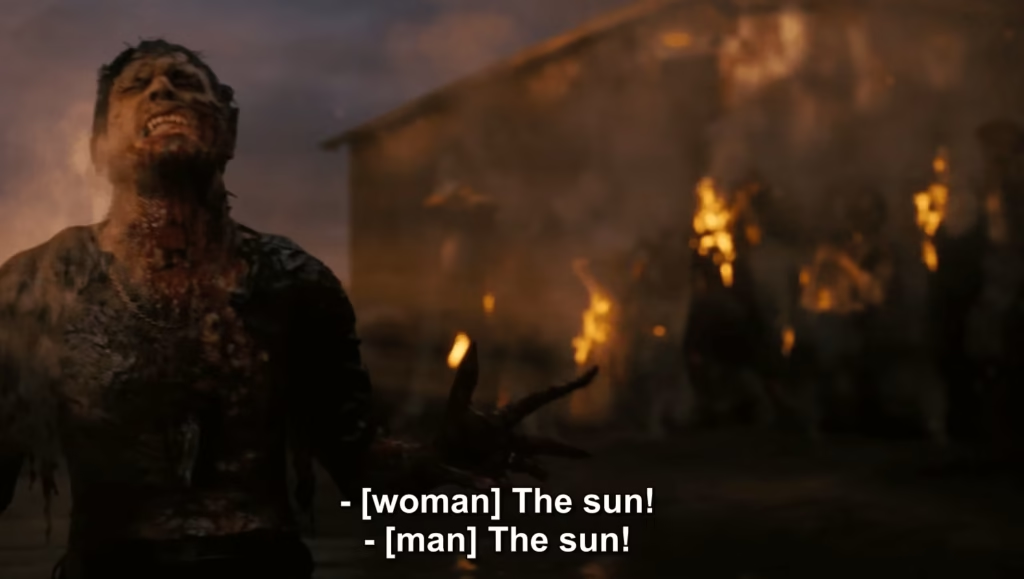
The climax is a brutal siege. Many are killed, including the heroic Annie. Smoke is forced to fight his own brother, Stack, but ultimately spares him. As the sun rises, the remaining vampires are incinerated. Smoke, having sent Sammie to safety, stays behind to kill the arriving KKK members. He succeeds but is fatally wounded.

In his final moments, he sees the spirit of Annie and their deceased child, who call him by his true name, “Elijah.” He drops his cigarette and joins them in a peaceful afterlife.
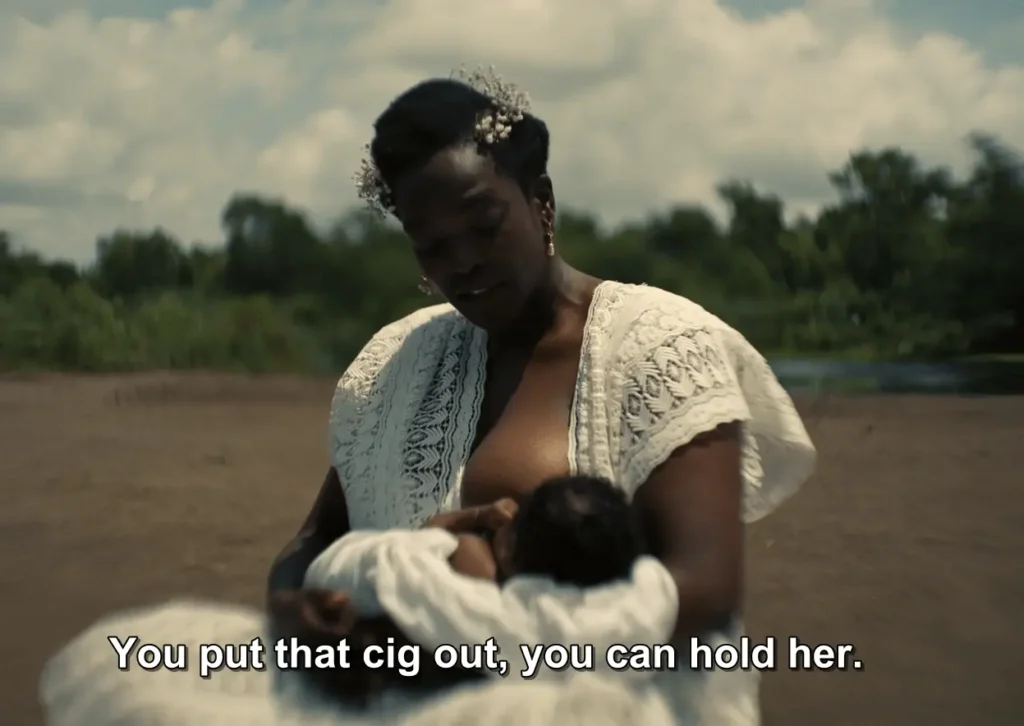

Sinners Ending Explained: What Happens to Smoke, Stack, and Sammie?

The ending of Sinners is not confusing because it is complicated. It is confusing because it is quiet, emotional, and not very comforting. The film does not give everyone the same kind of ending. Each of the three main characters walks away from that night with a very different fate.

Smoke’s Sacrifice and Ascent to “Elijah”

After the vampire attack, Smoke sends Sammie away to safety. He knows that if Sammie stays, he will die. Smoke then stays back to face the Hogwood family, who arrive at dawn to finish their planned attack.
Before fighting them, Smoke removes Annie’s protective charms. This is important. It means he knows he might not survive, and he accepts it. He is not trying to be lucky anymore. He is choosing to stand and protect what little is left.

Smoke manages to kill them, but he is badly wounded. He sits down, lights a cigarette, and slowly bleeds. In his final moments, he sees Annie and their dead child. Annie calls him by his real name, Elijah, not “Smoke.This is the first time in the film that name really matters.

All through his life, he has been “Smoke,” a man shaped by war and violence. In the end, he stops being Smoke and becomes Elijah again. He puts out the cigarette so there is “no smoke on her” and goes with them. He does not survive, but he finally finds peace.

Stack and Mary’s Immortal Fate (The Post-Credits Scene)

The first post-credits scene jumps to 1992. An elderly Sammie, now a legendary blues musician played by the iconic Buddy Guy, is performing in a Chicago club. In the audience are Stack and Mary, ageless and impeccably dressed. They are still vampires.

Stack does not die in the sun. After Smoke defeats him in the juke joint, he lets him go, but only after making him promise to leave Sammie alone forever. Stack keeps that promise.

Stack and Mary manage to escape into the shadows before sunrise. That is why they do not burn like the others.

That is why in the post-credits scene, we see them again in 1992. They are still vampires. They have not turned back into humans. But they are calm, well-dressed, and no longer feel like monsters.

By this point, Remmick is long dead, and the strange shared hunger that controlled them is gone. Over the years, they seem to have learned how to live with what they are. Stack still wears his “Stack” ring, which tells us something important: unlike Smoke, he has accepted this new identity instead of trying to escape it.

When they meet Sammie, they do not harm him. Stack explains that he kept his promise. They even offer Sammie immortality. Sammie refuses.

Sammie’s Choice: The Burden and Blessing of the Blues

Sammie survives, but he is forever haunted. He becomes the vessel for the story, carrying the music and the memory of that night. When Stack asks him about it, Sammie confesses that, despite the horror, it was “the greatest day of his life.”
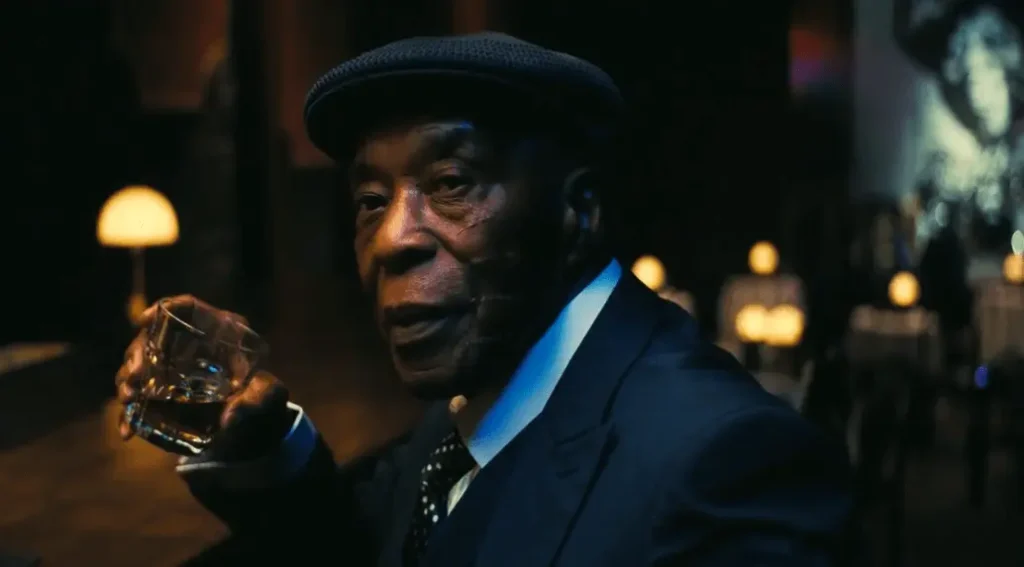
This is the heart of the film. That day, for all its tragedy, was the only day they were truly free. They built a space for themselves, celebrated their culture, and fought for it. Sammie choosing to carry on with the blues, against his father’s wishes, is a testament to the resilience of his culture. The music is both his burden (it attracts monsters) and his salvation (it’s his identity and power).


The Deeper Meaning: Vampires, Blues, and Cultural Appropriation (Must Read)

Sinners uses the vampire genre as a powerful metaphor for cultural theft and historical trauma. This isn’t just a monster movie; it’s a story about America.

To understand the Great Migration is to also understand for a long time our people’s home was the South. To migrate means to leave something behind.” – Ryan Coogler

The Vampires as Colonizers: Remmick and his group are not just here to drink blood. If that was the case, this would be a very simple vampire movie. They are here to take something.

They do not want to destroy Sammie’s music. They want to own it.

Remmick is not excited by Sammie because he is a good guitarist. He is excited because Sammie’s music can do something special. It can cross the line between life and death. It can call back memories, people, and worlds that are gone.

Remmick has lost his own people. He wants that connection back. But instead of building something of his own, he chooses the easier path: take it from someone else.

That is the real meaning of these vampires. They do not create. They only consume.

This is how cultural exploitation works in the real world too. Black music did not come from comfort. It came from work, pain, loss, and survival. Blues, jazz, rock, hip-hop — all of it came from lived experience. But again and again, someone else came, took it, cleaned it up, sold it, and walked away with the profit and the credit.

They enjoy the product. They do not carry the history.

That is exactly what Remmick is doing. He wants the power of the music without the life that created it.

The Power of the Blues: The film is Ryan Coogler’s love letter to the blues, inspired by his late Uncle James. The blues is the film’s lifeblood. It’s a force powerful enough to “pierce the veil” between life and death, to connect generations, and to attract gods and monsters alike. It represents the soul of the community, the one thing the vampires can’t create, only steal.


Unanswered Questions & Theories

Sinners leaves a few things open on purpose. Not because the story is incomplete, but because some parts are meant to stay a little uncomfortable and open to thought. Here are some of the biggest questions and the most likely answers.

Why are Stack and Mary so peaceful in the 1992 epilogue?

  • With Remmick’s death, the shared hunger and pressure of the hive mind is gone. Over the next 60 years, Stack and Mary learn to live with what they are instead of fighting it.
  • They are no longer driven by Remmick’s desperation, but by their own quieter, leftover humanity and their affection for each other. Stack also keeps his promise to Smoke and never goes after Sammie, which tells us that not everything human in him is dead.
  • Why didn’t Stack and Mary burn in the sun like the others?
    • The other vampires do not die because of shared pain. They die because of the sun. Stack and Mary simply escape into the shadows before sunrise.
    • Mary runs away after seeing Annie die, and Smoke spares Stack on the condition that he leaves Sammie alone. That is all that saves them.
  • Why is the movie called “Sinners”?
    • Because everyone is a sinner in someone’s eyes. Sammie is a sinner to his father for playing the blues.
    • Smoke and Stack are sinners for their criminal past.
    • Remmick is a sinner for his violence.
    • The film asks us to question who defines sin. Is it a sin to create art that the church deems demonic? Is it a sin to fight for your own freedom? The title challenges our black-and-white view of good and evil.
  • Is the film setting up a sequel?
    • Yes. The 1992 scene shows that Stack and Mary are still alive, still together, and fully comfortable with what they are. Their story is clearly not over, and the film leaves the door open to explore what kind of life they have been living all these years.

Hidden Details and Easter Eggs You Might Have Missed

Coogler packed the film with incredible details. Here are just a few:

  • Red vs. Blue: Smoke and Annie are consistently associated with the color blue, representing spirituality and wisdom (“haint blue” is a traditional color used to ward off spirits). Stack and Mary are linked to red, symbolizing blood, passion, and danger.
  • Wakanda Forever: In the church rafters, the crossed beams at the very top are a subtle tribute to Chadwick Boseman, forming the “Wakanda Forever” gesture.
    • The reason this detail is read as a tribute is because of Ryan Coogler’s personal history with Chadwick Boseman. Coogler and Boseman worked closely together on Black Panther, and Boseman’s death deeply affected him. Coogler has spoken before about how much Boseman meant to him not just as an actor, but as a person and as a symbol.
  • Smoke’s Shaking Hands: Smoke’s hands tremble throughout the film, a sign of his PTSD from WWI. It’s why he can’t roll his own cigarettes and Stack always does it for him. After Stack’s death, Smoke is forced to take a cigarette from a man he just shot.
  • Historical Nods: The film is rich with real history, from the role of Chinese grocers in the Delta to the origins of tamales in the region, brought by Mexican migrant workers.

The Point of This “Sinners Explained” Article

Sinners is a masterpiece of genre filmmaking, a thrilling and heartbreaking exploration of history, family, and the enduring power of art.

The film is about loss, about memory, and about what happens when someone takes something that does not belong to them and calls it their own. The real sin in this story is not breaking a religious rule. It is stealing a people’s culture, their voice, and their story.

The film ends with a simple idea: monsters can kill people, but they cannot kill what people leave behind. As long as the song survives, something true survives with it.
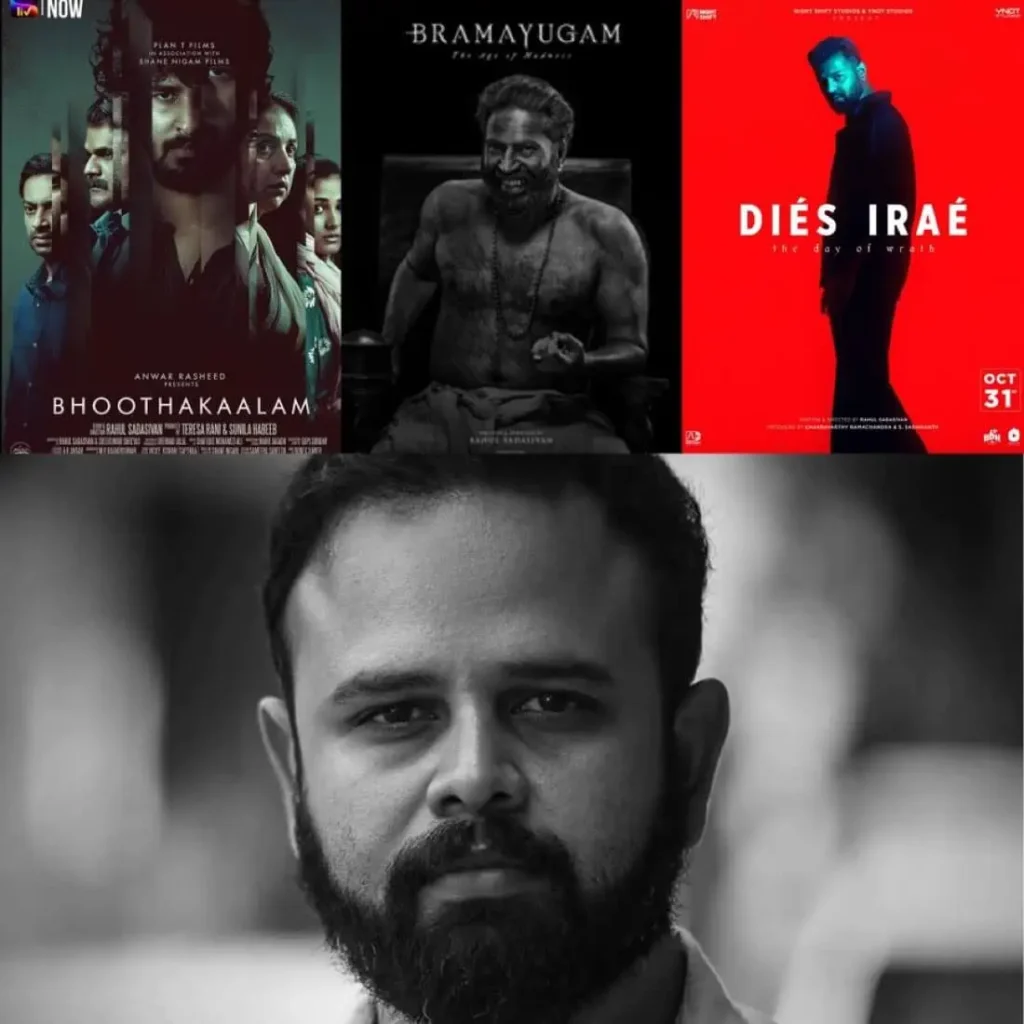

How Rahul Sadasivan Redefined Malayalam Horror — Explained

If you look at Bhoothakaalam, Bramayugam, and Dies Irae, you will immediately notice something different, this is not the usual horror. Rahul Sadasivan brings a new kind of fear into Malayalam cinema, one built on psychology, silence, and emotional depth. In this article, we decode his subtle filmmaking style by analysing Bhoothakaalam, Bramayugam, and Dies Irae in detail.

Hope you might have already notice what he avoids:

  • No exorcism drama
  • No psychiatrist or priest suddenly entering to “solve” things
  • No loud scare tricks
  • No “hero saviour” — even Madhusoodhanan in Dies Irae is scared like us.

They are stories of ordinary people trying to escape something that quietly follows them — sometimes from outside, sometimes from inside.

That is Rahul’s trick.
He makes you uncomfortable slowly, using psychology, silence, and things we carry in our hearts but never speak about.

The House Matters More Than the Ghost

In most horror movies, the ghost is the hero.
But in Rahul’s films, the house is the main force.

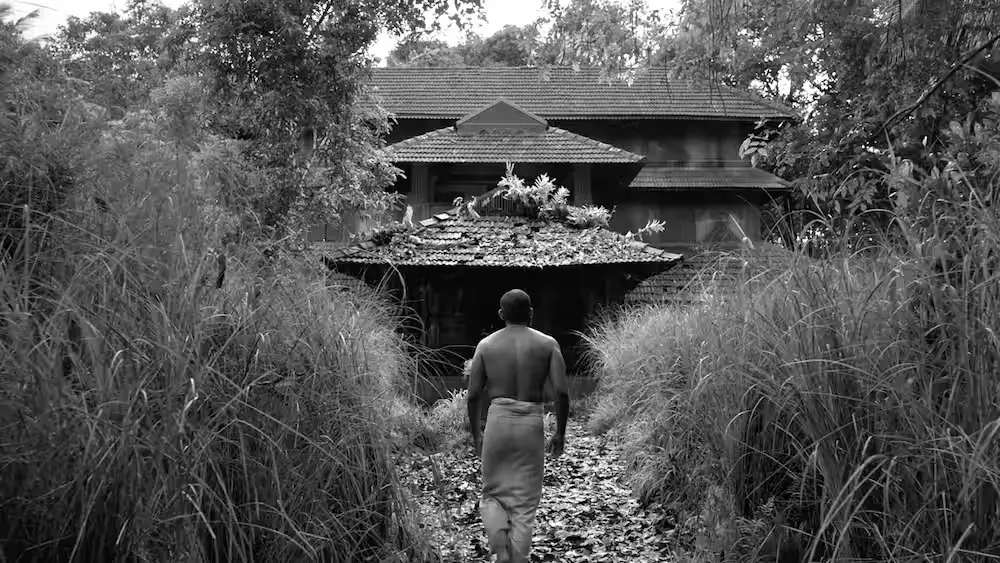
In Bhoothakaalam, that home feels suffocating, like sadness has settled there over years. And in Bramayugam, the old illam becomes a trap, holding secrets and power games.
In Dies Irae, we have a modern luxury villa that still feels empty and cold.

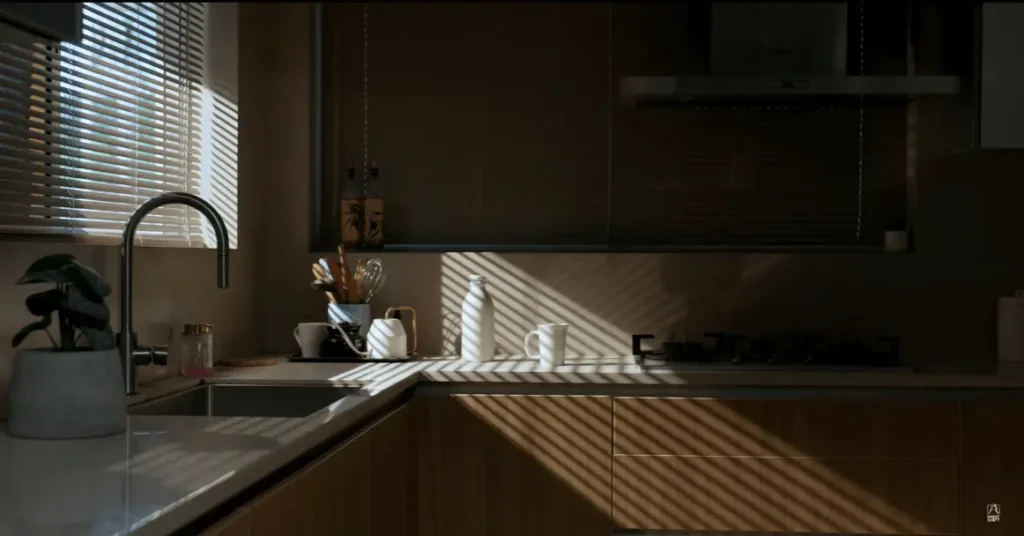
Rahul uses everyday spaces — kitchen, bathroom, staircase, bedroom — and turns them into areas you suddenly notice more when you go home at night.

For visionary filmmakers, space is not just a backdrop — it becomes part of the emotion. Some directors use rooms, corridors, and silence better than dialogue. 

For example, in In the Mood for Love, the narrow corridors and tight apartment hallways make us feel the unspoken tension between the characters. The walls almost hold their secrets. 

In Billy Wilder’s The Apartment, the office floor and the lonely apartment show how crowded life can still feel empty. Even in Kubrick’s The Shining, long hotel hallways are enough to create anxiety before anything supernatural appears. 

These films prove one thing: space can talk. It can show loneliness, fear, temptation, or pain without a single line of dialogue. Rahul Sadasivan uses this same idea in Malayalam horror. 

He does not create a haunted house.
He makes you think about your own house after the film ends. You go home and think, “Why does my house suddenly feel so quiet?”

His horror isn’t about the building; it’s about your relationship with your space.

Bhoothakaalam: The Cramped Apartment

Central Theme: Depression and the fear of mental health

Setting: Middle-class apartment in the midst of a bustling city (not an isolated mansion)

From Rahul Sadasivan’s interview (Times of India):

“I was very particular about the house, once the story and screen was completed. Since it’s a horror movie, and has paranormal elements, the house becomes a character, at one point. Instead of going for a cliché mansion or deserted bungalow, I wanted a house that seemed normal, in a relatable neighbourhood. Our requirement was a single storeyed house with three bedrooms.”

In Bhoothakaalam, the cramped spaces and minimal effects create a terrifying atmosphere. Whatever pain Vinu and Asha already have, the house quietly absorbs it, makes it heavier, and sends it back to them. So instead of getting better, they keep sinking deeper into fear and hopelessness..

Bramayugam: The 17th Century Mana

Central Theme: “Oppression is a cycle, it never stops”

Setting: Dilapidated, labyrinthine 17th-century mansion

The mana in Bramayugam acts as a physical manifestation of a corrupt power structure. It creates entrapment — the night lasts longer than the day, and the characters seem stuck in an endless time loop.

Dies Irae: The Luxury Villa

Central Theme: “when you have everything outside, the battle begins inside.” The film explores how emotional hunger inside us creates its own demons.

Setting: Villa that “screams luxury in every corner”

Function: The luxurious villa becomes a gilded cage, amplifying the protagonist’s profound sense of isolation despite (or because of) its opulence.

Also, you can see that there three different homes in Dies Irae

  1. Rohan’s luxury villa
  2. Kani’s home: A middle class home
  3. Eliamma (Jaya Kurup): A tiny old home made of wood and bricks.

In Dies Irae, each home carries its own ghost, no matter how big or small the space is. Rohan lives in a luxury villa, yet that house is the most haunted — not just by a spirit, but by guilt, ego, and his inability to face his own actions.

Kani’s middle-class home feels cursed to her family, not because of spirits, but because of grief and the emotional wound.

And then there is Eliamma’s tiny old house, where she feeds a demon. Three different homes, but the same truth: a house becomes haunted when the people inside cannot let pain go. Fear is not about walls or wealth — it follows who we are.

Rahul Sadasivan vs James Wan: Two Different Ways to Create Fear

Rahul Sadasivan doesn’t make “loud” horror.
You won’t see sudden jump scares every few minutes or ghosts screaming into the camera. That style works for some films, but Rahul is not interested in shocking you for one second and moving on.

He wants something else — he wants the fear to sit with you.
Not run at you.
Just sit quietly, like a thought you can’t shake off.

This is very different from the James Wan school of horror. Wan builds fear like a roller-coaster — loud, fast, and engineered for instant reaction (Conjuring, Insidious can be examples). It works, no doubt, but sometimes those scares vanish the moment the lights come on. Rahul does the opposite. He doesn’t chase your heartbeat; he quietly gets into your head.

Rahul treats horror like a natural extension of life.
Problems we don’t talk about, guilt we carry, sadness we ignore — he uses these emotions as real ghosts. And that’s why you feel uneasy. Not because something jumped at you, but because somewhere it feels real.

  • When Rohan talks about Kani to Madhu, you may connect with either Kani or Rohan.
  • When Asha and Vinu fight, you may think about your mother or your own past.
  • And when Potti says, “You can’t have a second chance,” we feel the pain of loss and oppression.

What Rahul Sadasivan’s Horror Really Talks About

On the surface, Rahul’s films look like ghost stories. But if you watch closely, there is always something deeper running underneath. The fear is just a tool — the real subject is what people quietly go through inside their minds.

The Ghost of Depression in Bhoothakaalam

In Bhoothakaalam, the haunting blends with mental health, trauma, and the weight of hopelessness.
The central theme of Bhoothakaalam is depression and the fear surrounding mental health — generational trauma and emotional silence.
The most powerful moment is Vinu’s fear — “the fear of our loved ones not understanding us.”

Two-thirds of Bhoothakaalam is drama about a clinically depressed mother and a troubled son’s dysfunctional relationship, and the remaining one-third focuses on haunted-house elements.
You start wondering whether the ghost is real, or if it is grief taking shape.

Power, Isolation, and the Illusion of Equality in Bramayugam

In Bramayugam, the horror isn’t only about black magic or ancient curses. It’s about power — who controls it, who suffers under it, and how fear keeps systems running for generations.

The illusion is not the ghost; it’s the illusion of egalitarianism. Those who wish to keep you beneath them will first make you sit beside them like an equal, creating a false sense of equality. They use that feeling in you to establish themselves as the bigger person, to whom you owe gratitude for being treated “undeservingly” as equals.
No offence to comrades or communists, but this illusion is something we have seen across revolutions in history.

Look at the song Adithyan Illathe — a cry for help, portraying the sorrow of bondage, sung exactly when planning to break free. Everything is connected. The victims are not waiting for an exorcist.

The Ghosts Made by Desire & Wrath, Not Spirits

And in Dies Irae, the supernatural mixes with guilt and emotional hunger in modern life. The film touches upon desire, obsession, and the wrath that follows.

Rahul simply shows people, their fears, and the world they live in. And when the supernatural enters that space, it doesn’t feel separate. It feels like it was always there, hiding behind the curtain of everyday life. That’s why his stories stay in your head — they talk about ghosts outside and the ghosts inside.

Also, in Dies Irae, I love the way Madhusoodhanan realises his abilities. It reminded me of Nolan’s Batman moments — Madhu discovering the strength he had long ignored, and rising in the second half to confront the evil.

A Team That Understands Rahul’s Vision

Rahul’s films look and sound the way they do not just because of him, but because he works with a team that understands his rhythm.

Cinematography: Shehnad Jalal

Rahul’s visual language works because of cinematographer Shehnad Jalal (alumnus of Satyajit Ray Film and Television Institute).

Shehnad and Rahul plan deeply before they shoot.
They storyboard, visit locations together, and decide how silence, darkness, and stillness should look. Rahul’s VFX and animation background helps him visualise shots in advance — nothing is accidental.

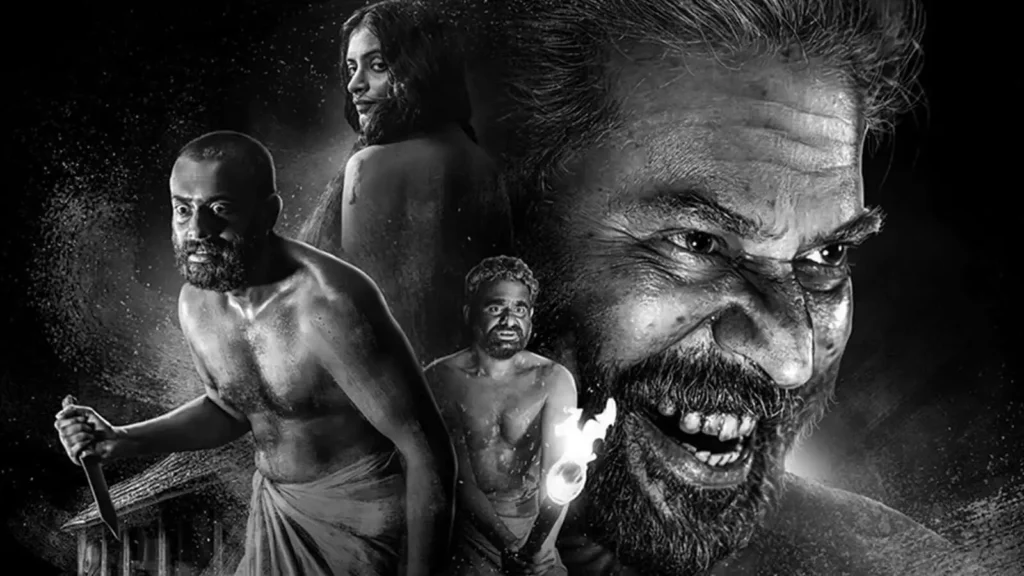
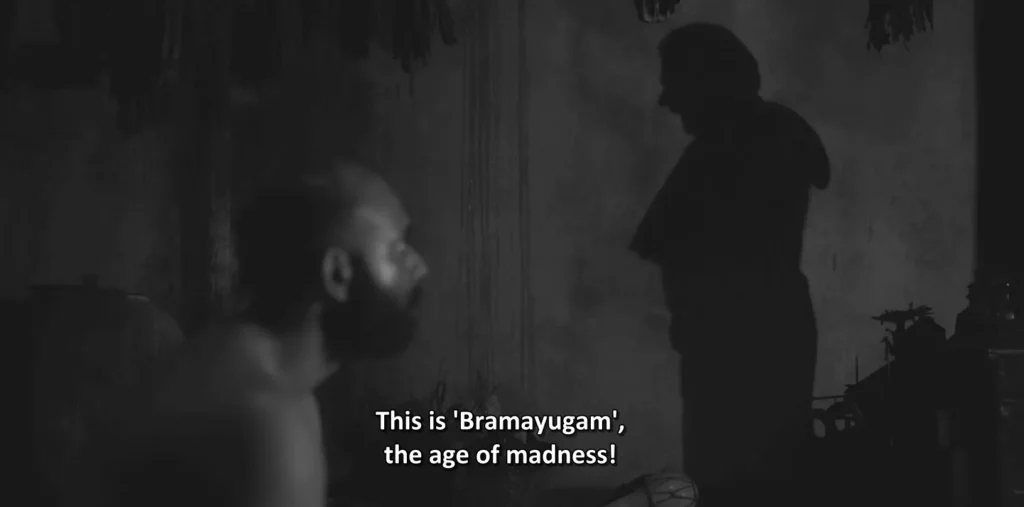
That’s why in Bhoothakaalam, close-ups feel like someone breathing down your neck. In Bramayugam, the monochrome world looks like a folklore nightmare — like the pages of an ancient palm-leaf manuscript moving on screen. The mansion doesn’t feel like a set; it feels like a memory.

And small choices — like the low-angle shot of Mammootty’s shadow towering over another man — show how visual ideas come from trust and collaboration, not chance.

Sound & Silence: Christo Xavier and Team

Horror dies if sound is lazy. Rahul knows that. So does composer Christo Xavier, along with sound designers Jayadevan Chakkadath, M.R. Rajakrishnan, and Raja Krishnan.

I love the way they use Silence.
Silence is not empty — it has weight.

Instead of constant scary music, sound arrives slowly. Sometimes all you hear is a hair clip snapping, a ghungroo, footsteps in another room. These sounds feel ordinary — and that’s why they make your stomach tighten.

That’s why scenes like the “passage of time” sequence in Dies Irae or a casual conversation turning chilling work so deeply — the sound pulls the floor from under you without warning.

Editing: Shafique Mohamed Ali

Finally, Rahul’s films hold tension because of editor Shafique Mohamed Ali. He doesn’t cut for speed — he cuts for mood.

Sometimes a scene stays longer than you expect.
Sometimes it ends just before you feel safe again.

A scene from Dies Irae

Editing in horror is timing, and Shafique knows when to let silence stretch and when to snap it. That’s why Rahul’s films never feel rushed or broken — each moment lands.

A Horror Film That Follows You Home

Rahul Sadasivan isn’t trying to entertain you for two hours and send you home relaxed. His films don’t end when the credits roll. They quietly come with you.

You think about the house, the silence, the feeling that something was always there in the corner. Once you switch off your bedroom light, and suddenly the room feels a bit too still. You hear a sound from the kitchen, and for a second, you pause.

Bhoothakaalam

Not because you saw a ghost in the film — but because the film reminded you that fear doesn’t always scream. Sometimes it just waits.

That’s Rahul’s style:
Not horror that tries to scare you.
Horror that reminds you you are already scared — only you don’t talk about it.

Share your thoughts as comments.

Dies Irae Explained: The Ghosts We Create From Guilt

Dies Irae is a story built on guilt, obsession, and the ghosts we create inside our own heads. Here we are decoding the unanswered questions and symbols from Dies Irae..

For more stories check here.


Constable Kanakam: Season 1 Review & Explained

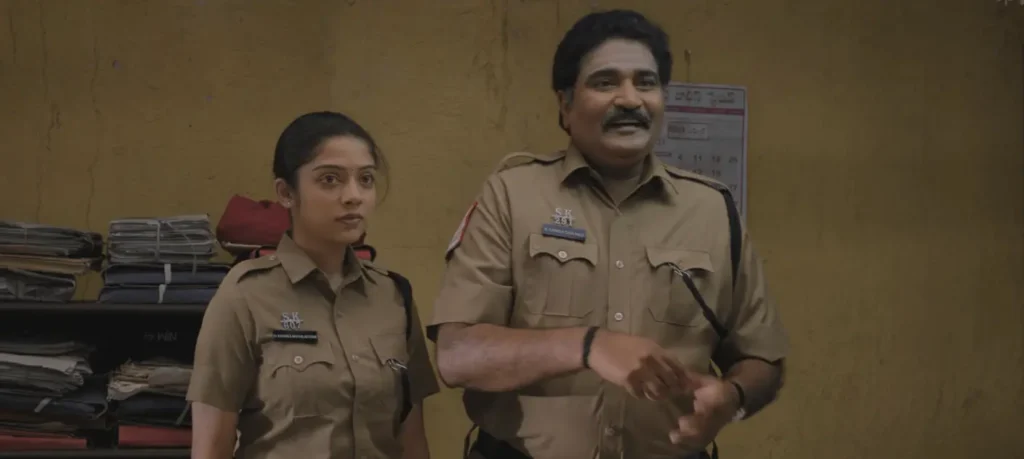
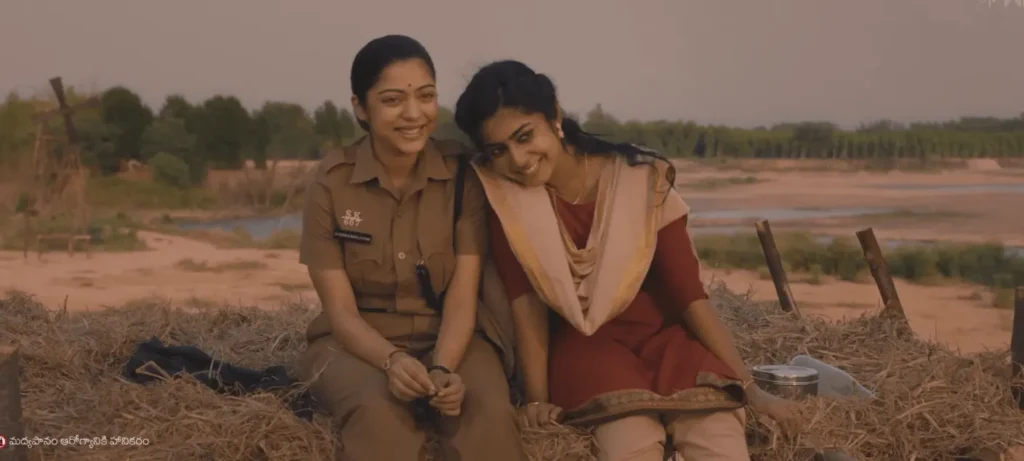
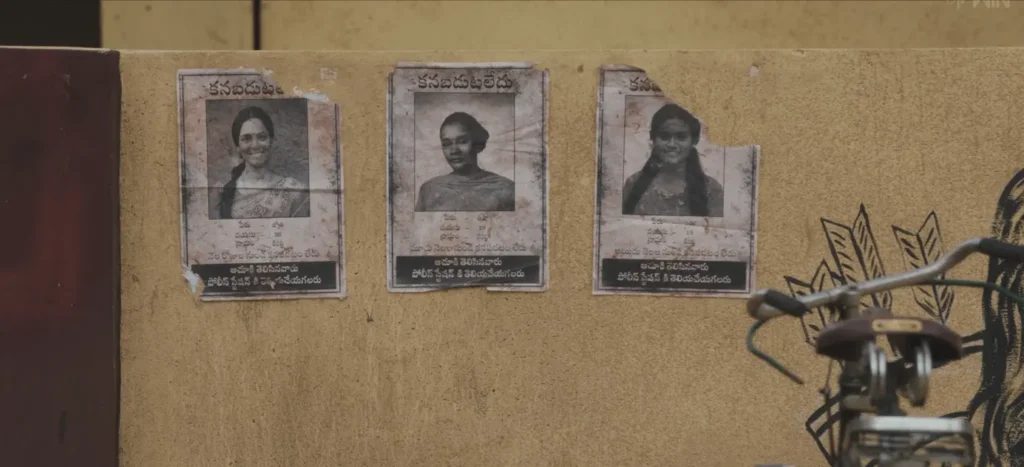
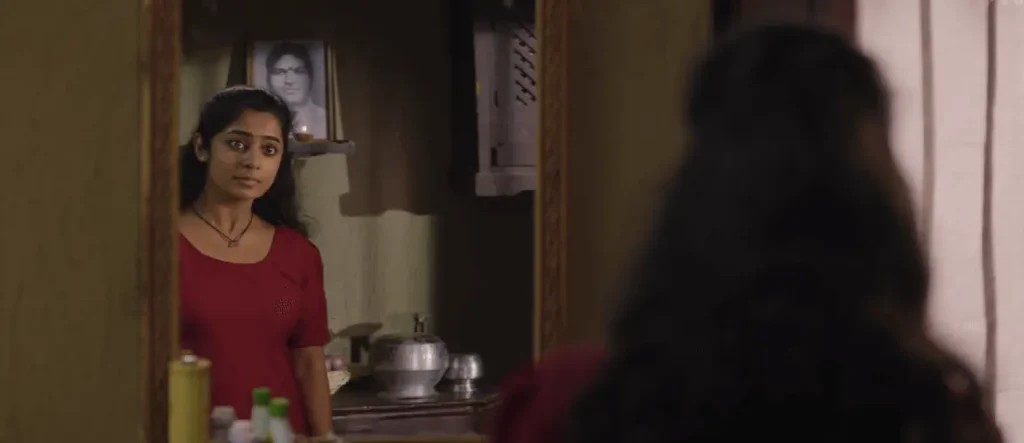
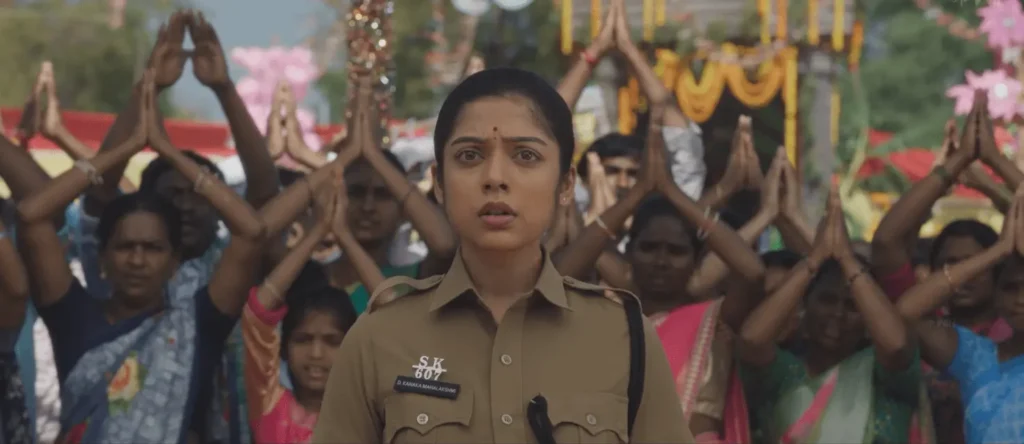
Constable Kanakam streaming on ETV Win, directed by Prasanth Kumar Dimmala starts with a promising idea — a rural village near a mysterious forest, a series of missing girls, and a constable (Varsha Bollamma) trying to connect the dots. The story thread is genuinely gripping, with the right mix of folklore, temple traditions, and a murder mystery that builds well towards a solid ending. Here is my detailed review of Constable Kanakam starring Varsha Bollamma.

title card of constable kanakam

Overused Templates & Poor Execution

“A serial killer with a childhood trauma” – oh, not again!!!! Unfortunately, that’s what waiting for you in Constable Kanakam.

The making is below average, with poor CGI & cliched lazy writing that breaks the immersion. Character establishments feel cliched, and the psycho backstory with childhood trauma is something we’ve seen too many times before. The attempts at showing women empowerment are there, but instead of feeling natural, they look force-fitted and artificial.

climax scene constable kanakam

Technicals & Performances

Cinematography (Sriram Mukkapati)
The camera work is neat, especially in capturing the rural landscapes, temple shots, and forest sequences. The visuals create the right mood for a village mystery, even when the making elsewhere feels average.

Editing (Madhav Kumar Gullapalli)
One of the strongest aspects of the series. The pacing is sharp, transitions are smooth, and even the reveal sequences are stitched well. Without this editing, the show could have felt much slower.

Music (Suresh Bobbili)
The background score feels familiar, often reminding us of Saripodhaa Sanivaaram OST. Instead of bringing originality, the music leans heavily on cinematic tropes. It supports the scenes but no freshness.

Performances

Varsha Bollamma is impressive, balancing innocence and determination in her role as Kanakamahalakshmi.

varsha bollamma & Rajiv Kanakal in a  scene constable kanakam

Srinivas Avasarala plays the president with controlled menace, good presentations at the climax portions.

Rajeev Kanakala once again slips into the zone of a helpless man, but his overused expressions make it feel repetitive.

The supporting cast — Ramana Bhargava, Megha Lekha, Sunny Naveen — are serviceable but don’t leave a lasting mark.

Constable Kanakam Explained (Spoilers Ahead)

For those who want the full breakdown — here’s the story in detail:

Adavigutta, Constable Kanakam and Missing Cases

Kanakamahalakshmi (Varsha Bollamma) works as a constable in a small village that sits on the edge of the dense Adavigutta forest.

The place is steeped in old beliefs and is watched over by a centuries-old temple, where the respected village president also holds authority. But beneath the quiet rural life — young girls keep going missing, villagers believe there is something wrong with Adavigutta.

When Kanakam’s best friend Chandrika disappears, Kanakam realises this is no ordinary case. She decides to dig deeper, uncovering secrets buried in both the forest and the faith that governs the village.

What do crows and Sanjeevani sticks have to do with it?

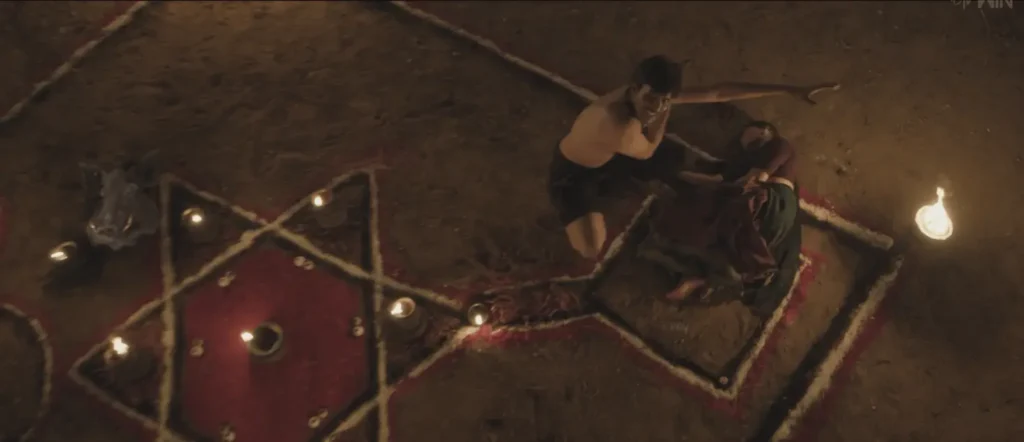
On her night duty at the Adavigutta checkpost, Kanakam notices an unusual number of crows circling the area. She learns that their nests hide Sanjeevani sticks, rare items linked to old rituals. Someone has been cutting down these nests, collecting the sticks, and using them for tantrik practices.

The deeper she looks, the clearer the pattern becomes. Every time a girl disappears from the village, it’s a full moon day. The time when such tantrik is believed to be most powerful.

This realisation shifts the case completely. It’s no longer just about missing girls — Kanakam is staring at a connection between black magic, missing case of Chandrika, and Adavigutta’s secrets.

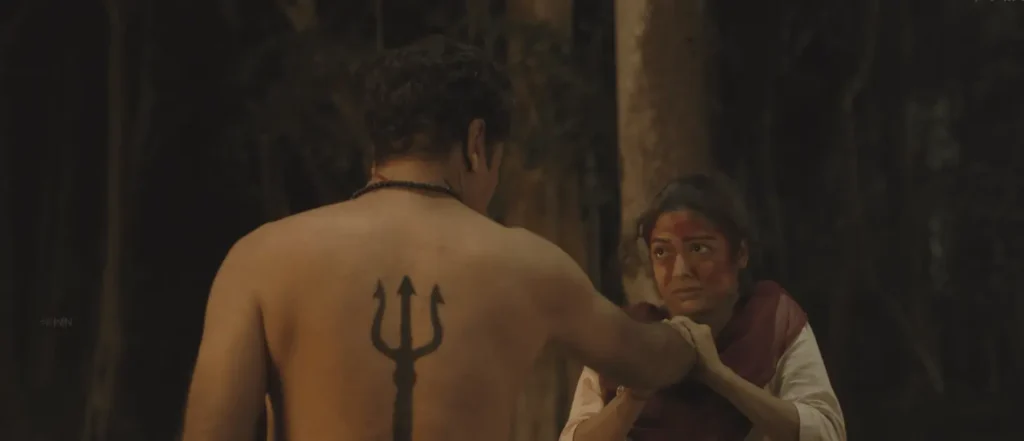
Who is the man with the Trishul tattoo?

A witness says he saw a man doing black magic in Adavigutta forest, and on his back was a Trishul tattoo. Kanakam starts chasing this lead. First, she meets the old tattoo artist Bakthuraalamma, asking if she ever drew such a tattoo. The old woman denies it straight away.

Next, Kanakam checks a villager covered in tattoos from head to toe — but he doesn’t have the Trishul either. Still restless, she goes to the jatra festival, because that’s when most men walk shirtless. She scans the crowd, but again finds nothing.

Just when it feels like a dead end, something catches her eye — a snake coiled around a Trishul. The image rings a bell. She remembers seeing the exact same picture once in a doctor’s file back in the village.

Who Is Vikram Singh? Is he the Killer?

The file belongs to Dr.Hanumanth Rao, who redirects her to Vikram Singh, an ex-military man in Delhi.

Vikram explains that after surviving a terrorist attack at Kedarnath, his 25-member unit all got Trishul tattoos as a tribute to Lord Siva.

But in the group photos, one man is missing — the cook. He was from the South and known for making Mandasa Kova sweets. That one missing soldier’s description connects back to Mallibabu, a village chef who also practices tantrik rituals.

The Final Act: Adavigutta Mystery

Kanakam goes back to Adavigutta, following her trail of clues. She doesn’t expect to meet the president there, but suddenly he appears in front of her. For a moment she is shocked — because a temple priest had once said the sweets Mandasa Kova for rituals came from the president himself. That link makes everything fall into place.

Before she can even react, the president attacks her. Kanakam is caught off guard and struggles to defend herself. Just then, Constable Sathi Babu jumps in, fighting to protect her. The fight turns rough inside the forest — Kanakam, still hurt, somehow gathers strength, grabs her belt, and lashes out at the president.

The strike throws him off balance. Memories of his abusive father beating him with a belt come rushing back, and he begins to hallucinate, seeing Kanakam as his father. In that moment of weakness, Kanakam pins him down. With Sathi Babu’s help, she finally arrests the president.

Why did the president kidnap girls? What’s the motive?

Under interrogation, the president’s childhood trauma spills out:

  • He had killed his own mother when he was young.
  • His uncle Mallibabu raised him, teaching him both sweet-making and black magic.
  • He later served as a military cook, learning more occult practices.
  • After becoming president and temple head, he exploited temple records to track girls born under his mother’s birth star, Bharani Nakshatra.
  • On full moon nights, he kidnapped them for rituals to bring his mother’s soul back. But the mantras only made the girls faint, never succeeding. To cover his tracks, he murdered and buried them in a farm.

Ending & Season 2 Hook

The final shock comes when the president reveals that Kanakam’s birth star is Bharani Nakshatra — making her his true target. On the night Chandrika went missing, his plan had been to kidnap Kanakam. But a villager named Babji interfered, saving her unknowingly. Since Chandrika didn’t share the birth star, she was never meant to be a victim.

The president is arrested, but the bigger mystery remains unsolved — if Chandrika wasn’t kidnapped by him, then where is she? This unanswered question sets the stage for Season 2. So season 1 is not giving clues about Chandrika; for that, we need to wait till season 2.

Final Thoughts

Overall, Constable Kanakam Season 1 is an average series. The core story is strong, the mystery holds till the end, and the village backdrop works.

But the poor production values, forced messaging, and predictable character arcs stop it from being memorable. Worth a watch if you’re curious about small-town thrillers, but don’t expect high standards.

Read More Reviews and Analysis Here.

Salakaar HotStar Web Series Explained

Some spy thrillers dig deep into intelligence networks, geopolitics, and human psychology. I expected Salakaar, as an Indian version of Spy Game where a veteran spy saving a prodigy. But Salakaar looks like a ultra-pro max “tribute to NSA Ajit Doval.” and tastes more like a rushed, below-average drama trying to look serious. Here is my review and story explanation for Salakaar.

The only thing that saves this from being a complete disaster? Its runtime. 5 episodes of ~30 minutes. Let’s break it down episode by episode. Heavy spoilers ahead, and let me tell you, reading this will help you save almost 3 hours.

Episode 1: Cemeteries, Tuition Teachers, and Top Secrets

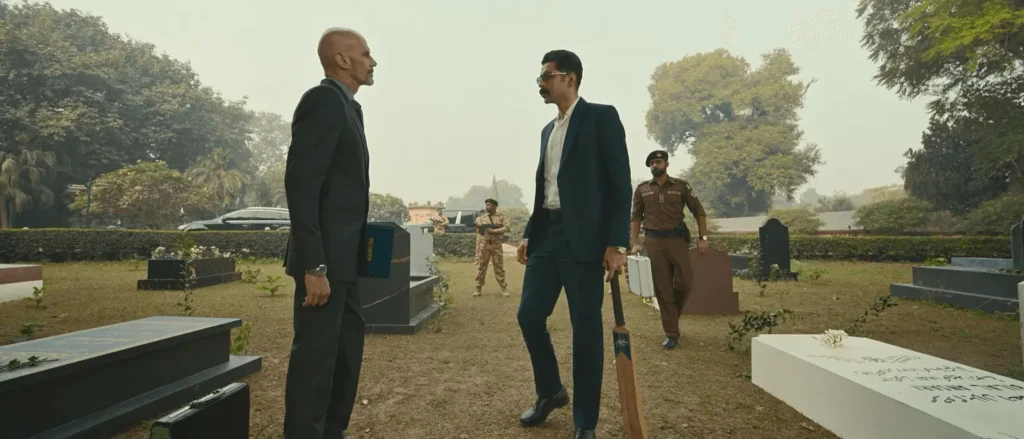
Series start in Abbottabad, Pakistan, 2025. Colonel Ashfaq, who seems to have walked straight out of a shampoo ad, meets a foreigner in a graveyard. “Death can be a beautiful reminder of how precious life is,” he says. The foreigner hands over “Project Kahuta” files and gets killed immediately. Welcome to the world of Salakaar.

Next scene: Physics tuition teacher Mariam (Mouni Roy) is teaching Ashfaq’s son. But guess what? She’s actually Shrishti Chaturvedi, an Indian agent, romancing her way into classified documents. She scans the Kahuta project files after a cosy moment with the Colonel.

Mouni Roy

R&AW chief Paresh Parulkar gets this data and wants to dig deeper—but he doesn’t have access to the 1978 case file linked to this. Why? Because only two people outrank the R&AW chief: the PM and the National Security Advisor (NSA). And guess what? NSA wrote the file. Ufff..romanchification goosebump moment!!!

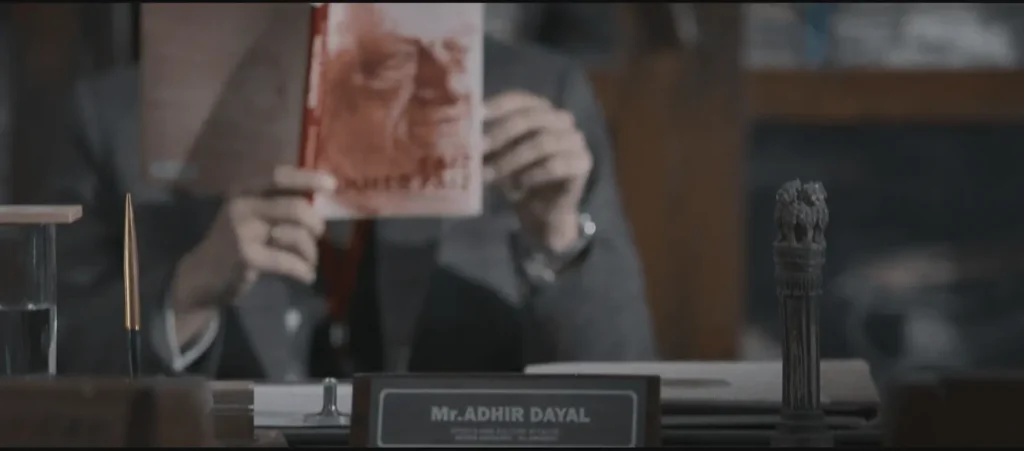
Now we have Naveen Kasturia as Adhir Dayal — the man, the myth, the Salakaar.

Episode 2: Flashback to 1978 – Pakistan, Kids, and a Dinner with Zia

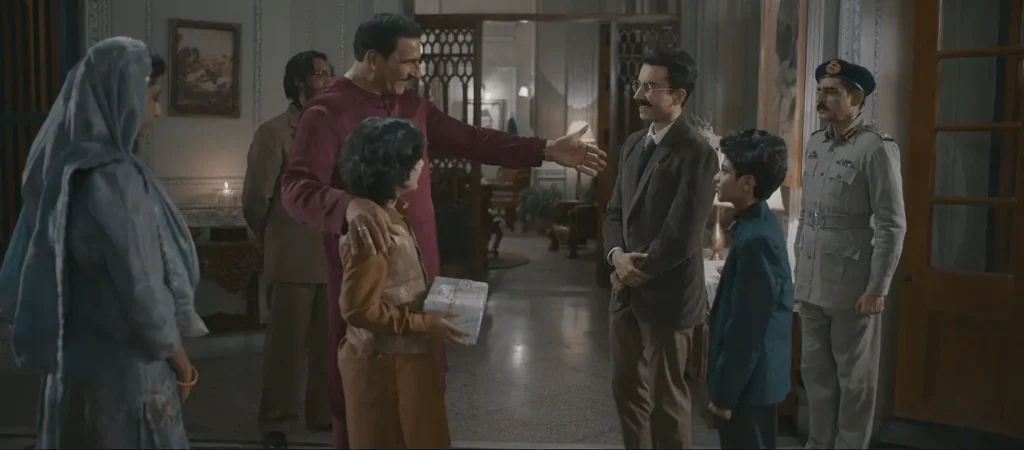
Adhir Dayal (NSA Chief) takes us back to 1978. R&AW had sent him to Pakistan to stop their nuclear ambitions. To build trust, he orchestrates a kidnapping attempt on Zia-ul-Haq’s grandson and then saves him heroically — classic self-created crisis marketing. His son Bharat and Zia’s grandson are classmates.

Zia is impressed and invites Adhir to dinner. Slowly, Adhir wins his way in. Meanwhile, we learn that:

  • Ashfaq (the 2025 Colonel) is Zia’s grandson.
  • Mariam is the granddaughter of Jyoti Chaturvedi, Adhir’s old colleague at the Indian Embassy.

Adhir steals data from nuclear scientist Rahmat Agha and learns about Pakistan’s enrichment efforts at Kahuta. The episode ends with Colonel Ashfaq taking Mariam to Kahuta, hinting at a “surprise.”

Surprise indeed.

Episode 3: Déjà Vu Drives the Plot

Adhir, now the NSA, is tracking Mariam’s journey through the same route he once took 40 years ago. Past and present timelines run in parallel.

Ashfaq tells Mariam: “An Indian spy ruined my grandfather’s Kahuta dream. I will revive it.”
Yes, the revenge plot is now personal.

Adhir Dayal Introdution at Embassy

Meanwhile, in 1978, Adhir infiltrates Kahuta disguised as a Pakistani officer and takes photos.

In the present, Mariam is unknowingly following the same path. This setup could have been exciting—but it’s ruined by predictable writing and cartoonish execution.

At this point, the show is trying to be serious but slips into Power Rangers territory with the emotional depth of a soap ad.

Episode 4: China Scared, Zia Triggered, NSA Unstoppable

Now it gets hilarious.

NSA Adhir threatens Chinese officials. Yes, the National Security Advisor of India walks into a room and scares off Chinese bureaucrats like a school principal scolding kids. They silently walk out.

Then he says, “Activate three best agents. I’m going to Pakistan myself.”

Jyoti on deathbed
Jyoti on deathbed

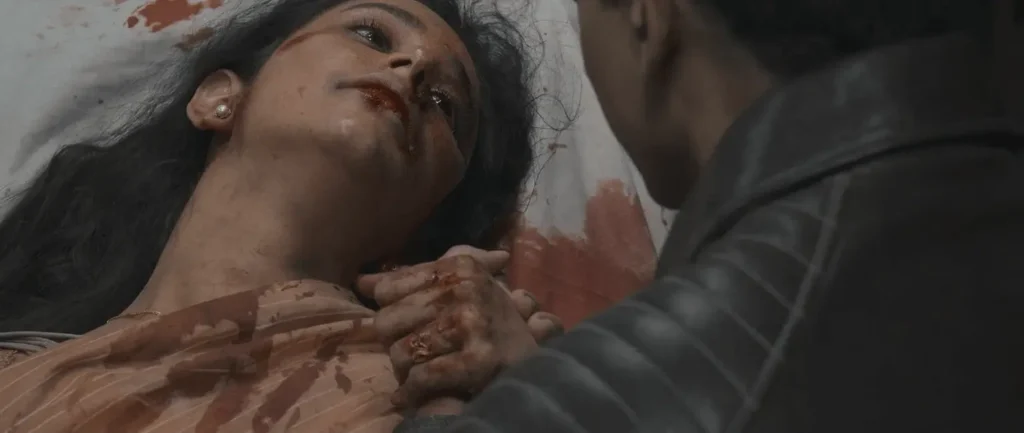
The drama returns to 1978. We see Jyoti Chaturvedi (Mariam’s grandmother) being tortured by Zia’s team. Why? Because Zia’s men honey-trapped the Indian embassy head and found leaks. Jyoti refuses to give in.

Adhir had promised to protect her family. But Jyoti dies in a very filmy, slow-motion shot. I miss that bgm like kanave kanave (composed by Anirudh)

NSA Adhir remembers it all. Grief? Not really. Instead, our action-hero NSA breaks into the house of Zia’s right-hand man Mohsin and kills him in cold blood. Alone. No backup. Just pure Bollywood vengeance. An Indian spy entering a military personnel home and killing everyone and escaping without leaving any trace.

Episode 5: Acid Water, Master Plans, and the Flight Captain Reveal

We now meet a Dr Kalam-like character who guides Adhir in sabotaging the Kahuta nuclear plant. Plan? Pump acidic green water into the cooling system.

Adhir puts on a Pakistani officer’s uniform, walks in casually, and pulls off the sabotage. He escapes, obviously.

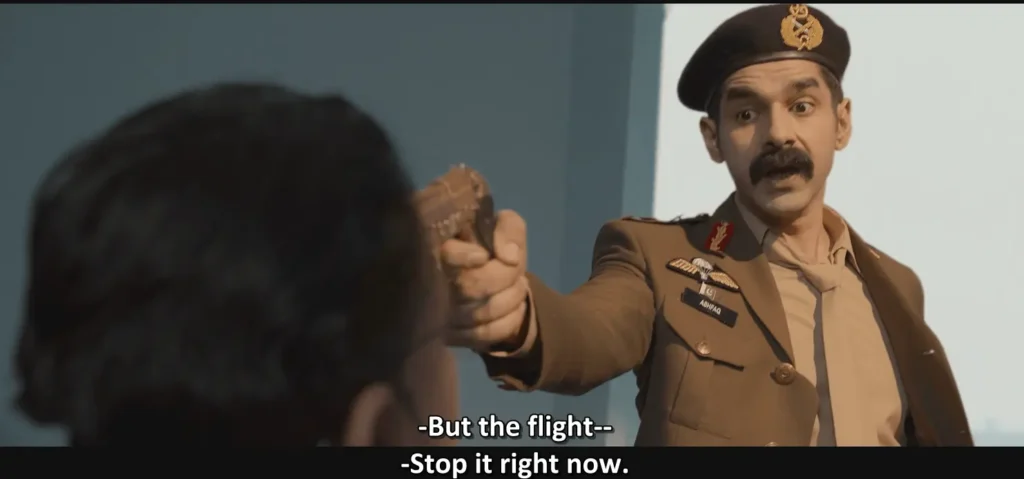
Back in the present, Mariam is in trouble. Colonel Ashfaq finds out she’s a spy. She runs to the airport. Colonel blocks the runway at gunpoint. “Abort take-off!” he screams.

But plot twist — the flight captain is none other than NSA Adhir himself.
He says: “We’re ready to depart. We won’t abort.” ufffff romanchification again.

Mic drop. Plane takes off. Mission accomplished.
Salakaar keeps his promise to protect Jyoti’s bloodline.

Final Thoughts: Salute or Spoof?

Salakaar wanted to be a tribute to  NSA Ajit Doval, I believe. It ended up as a fan-fiction fantasy. It sacrifices realism for pace, throws subtlety out the window, and treats complex geopolitics like a college drama script.

Watch it for:

  • Naveen Kasturia brings conviction to a ridiculous role.
  • Cinematography is brilliant — Hotstar never cuts corners on visual quality.
  • Short runtime — 2.5 hours across 5 episodes is digestible.

Skip it for:

  • Webseries is not grounded, not even on sky, it’s on another planet, made by an Ajit Doval fanboy.
  • Mukesh Rishi as General Zia is cartoonishly menacing but fun to watch.
  • Writing is lazy, predictable, and full of gaping holes.

This could’ve been India’s Argo. Instead, it’s a PowerPoint tribute to a living legend, turned into a spy parody.

Watch it if you like spy stories with no logic but lots of style and ultra pro max heroism.
Skip it if you want realism, depth, or originality.

Read Maayasabha (SonyLiv from July 7, 2025) Review Here.

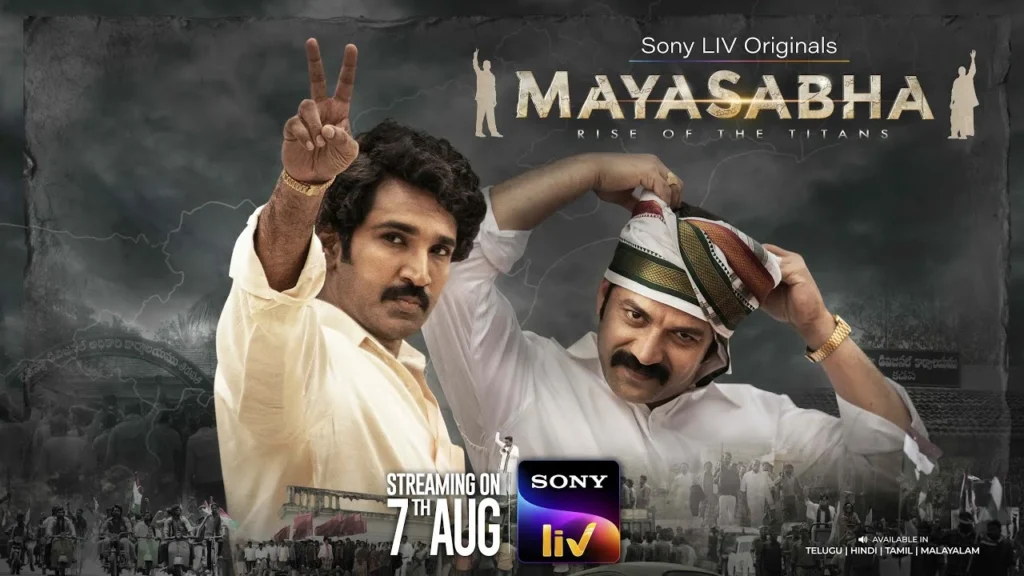
Mayasabha Web Series Review: Great Performances, Weak Writing

Created by Deva Katta, known for Prasthanam and Vennela, Mayasabha from SonyLiv follows the rise of two fictional leaders — Krishnama Naidu (played by Aadhi Pinisetty) and Rami Reddy (played by Chaitanya Rao Madadi) — and how they grow from students to state leaders. The show also stars Sai Kumar as RCR, Divya Dutta as Prime Minister Iravathi Basu, Ravindra Vijay as Pothineni Ramesh, and Tanya Ravichandran as actress Anu Harika. Here is my detailed Mayasabha Review.

Mayasabha Trailer Poster

But let’s not kid ourselves. This isn’t fiction.

Based on True Political Events in Andhra Pradesh

Who are the real characters in Mayasabha?  If you know Andhra Pradesh politics, you’ll spot the references instantly:

  • RCR (Sai Kumar) is clearly inspired by NTR.
  • Krishnama Naidu mirrors Chandrababu Naidu.
  • Rami Reddy is the show’s take on YS Rajasekhar Reddy.
  • Iravathi Basu and her son Sandeep Basu resemble Indira Gandhi and Sanjay Gandhi.
  • Anu Harika’s arc feels like a nod to actress Jayaprada, including her early dance career and political ties. When she was a teenager, she performed a dance at her school’s annual function. A film director in the audience offered her a three-minute dance number in the Telugu film Bhoomi Kosam (1974).
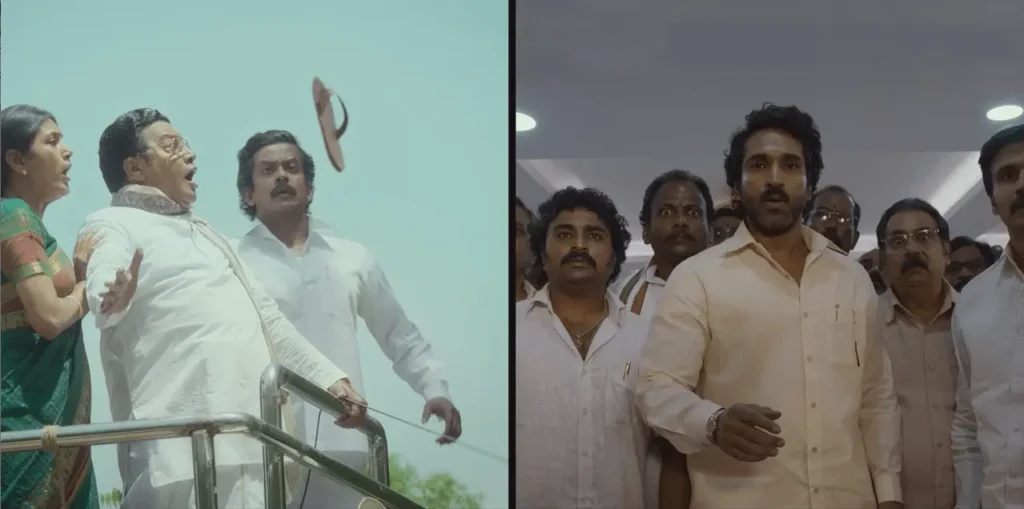
A shot from Mayasabha

The series ends with an event which exactly resembles the Viceroy Hotel episode , where slippers were thrown at Lakshmi Parvathi and NTR was ousted from his own party, are recreated almost frame by frame — though names are changed.

Mayasabha Plot: The Rise of Naidu and Rami Reddy

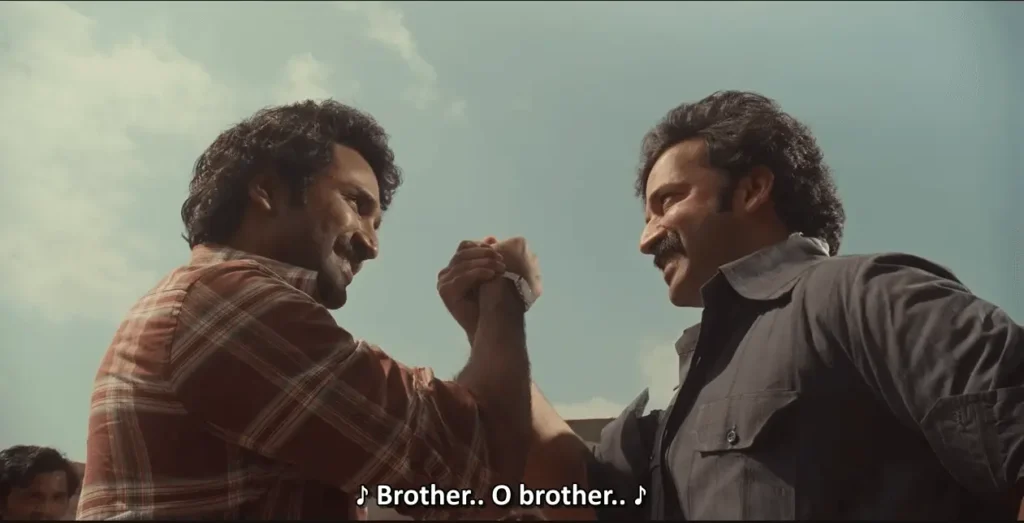
The story begins with Krishnama Naidu, a PhD student from Narsipalli, helping farmers in his hometown by threatening middlemen — in a diplomatic way, of course. Meanwhile, Rami Reddy, the son of faction leader Shiva Reddy, is disgusted by his father’s violent politics and leaves Pulicherla to study in Bellary.

From there, we follow:

  • Student politics, where Krishnama plans to contest elections using strategic caste alliances — and a cabaret dance show (yes, really).
  • Rami Reddy’s fan wars in college, defending Telugu film stars, leading to cow dung being thrown on posters and eventual expulsion.
  • Emergency declared in India, vasectomy drives led by Sandeep Basu, and public resistance led by Rami Reddy.
  • The alliance between Krishnama and Rami Reddy, their entry into politics under Sandeep Basu’s mentorship.
  • Friendship turning into rivalry, when Rami Reddy feels sidelined for being a goon’s son.

The series ends with the rise of RCR as a mass leader, his friction with Iravathi Basu, the betrayal by Krishnama Naidu, and the political fallout. The final few episodes closely resemble TDP’s internal war, NTR’s downfall, and the power shift to Chandrababu Naidu.

Performances & Technical Aspects

  • Aadhi Pinisetty as Krishnama Naidu brings seriousness and political sharpness.
  • Chaitanya Rao delivers an emotional and intense Rami Reddy.
  • Divya Dutta shines as Iravathi Basu — probably the most believable character in the whole show. Her screen presence is 5/5
  • Sai Kumar as RCR fits the larger-than-life image but gets limited screen time.
  • The music by Shakthikanth Karthick is decent — helps set the mood without being intrusive.
  • The cinematography and period detailing (1975–1995) look polished.
  • Tanya Ravichandran did her part well with a song and some scenes here and there.

But Here’s the Problem: Everyone’s a Saint

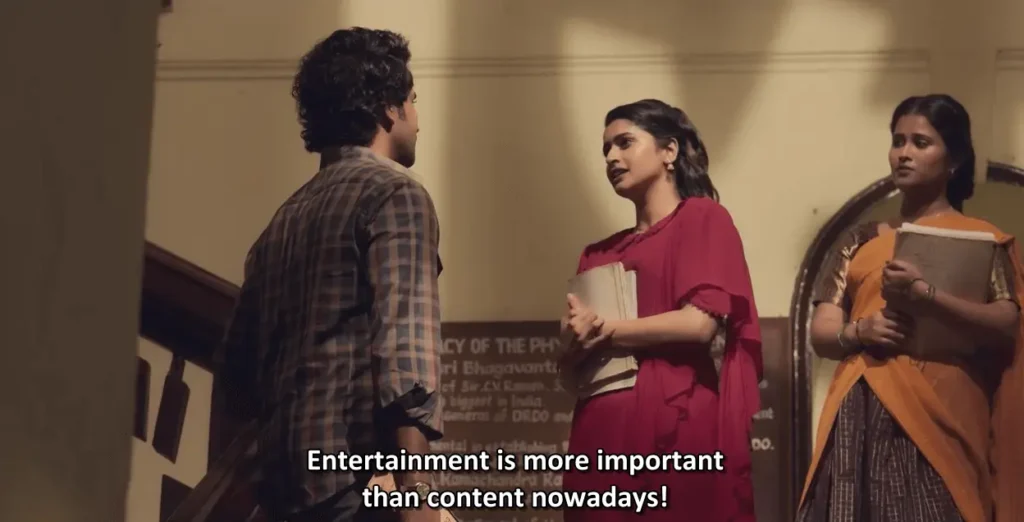
The writing is where Mayasabha falls flat. For example, at one point, the hero tries to win a college election with a cabaret dance by heroine—because in Mayasabha, that’s peak political strategy. Democracy in Mayasabha runs on item numbers and glorifying scenes.

There’s a scene where the heroine says, “People value entertainment more than content. To sell content, the cover page is important.” I’m convinced Deva Katta believes in this too.

For a political series, it lacks grey characters. Krishnama Naidu is always clever and selfless. Rami Reddy is kind-hearted and community-driven. Every major character on the “hero” side acts like a noble soul who’s doing politics only for the people.

This kind of whitewashing feels awkward — especially in a show that clearly draws from real-life political betrayals, caste alignments, and power games.

Let’s be real: In politics, no one climbs the ladder without ambition. But Mayasabha shows its main men as idealists, while anyone who opposes them is either corrupt, emotional, or forgotten.


Divya Dutta as Ira Basu in Mayasabha

Final Verdict: Mayasabha(2025) Review

If you’re watching Mayasabha as a fictional drama, it may keep you engaged for a while. But if you know Telugu politics, you’ll likely find it one-sided, preachy, and borderline fan service. It looks like a fictional retelling, but walks and talks like a strategically polished biopic series.

Mayasabha Review Verdict: 2.5 out of 5

Watch it for the performances — but skip it if you’re expecting sharp, realistic political writing. At the end of the day, even great acting can’t save a story that refuses to show humans as humans — especially in politics, where no one’s a saint.

Read More Reviews Here

Mandala Murders 2025 Explained

If your brain feels fried after finishing Mandala Murders, you’re not alone. But what makes us interested in this series is the Myth and Crime. The core concept is brilliant, unfortunately not the execution. So here I will explain what happened in Mandala Murders (2025).

We remember unfinished tasks more than completed ones. When shows leave questions dangling — “Who is Yasth?”, “What’s the real motive?” — our brain loops it until we find closure.

So here’s the explanation, what happened in Charandaspur? Who are Ayasthis? Are they real or fiction?

The World of Mandala Murders – Ayasthis, Energy, and the Cult of Yasth

Let’s start from the very beginning.

There’s a small, eerie town called Charandaspur — the kind of place where people still whisper about curses and disappearances. Somewhere deep in the Varuna forest nearby, a secretive group of women called the Ayasthis live in hiding. Locals see them as witches. But they see themselves as something else — the chosen ones of a mysterious energy god named Yasth.

Now here’s where it gets mad interesting.

The Ayasthis believe that energy can’t be created or destroyed, only redirected. So if someone dies… maybe their life energy can be pulled back. Revived. Rechanneled. They’ve built a strange machine that can supposedly do that — bring the dead back to life. Why they built it? Who Built that? We need to wait till Episode 7.

The Thumb Theory

Throughout the show, we see people placing their thumb on this mystical machine to ask for miracles. But here’s the catch:

Giving your thumb = asking Yasth for help.
But Yasth doesn’t just help out of kindness. He takes something in return.
Not from you directly — but someone close to you. A life. A body part. A price.

So if you asked for your son to return… maybe he ends up dead later.
You asked for political power… someone loses their legs.
You can’t track it logically — but someone, somewhere, pays.

Now imagine this happening for years. Quietly. One person at a time.
Until suddenly — a pattern emerges.

That’s where the show begins.

In the Past: Ayasthis & Their End

75 years before the murders began, a woman named Nandini (a scientist) arrived in Charandaspur with her husband, Anant, a corporate man trying to set up a nuclear plant in the forest area. Locals were uneasy — the forest wasn’t just green land, it was sacred to the hidden group known as the Ayasthis. The place is Ayasthal, which Rukmini and her cult believe Yasth made it himself years ago.

Ayasthis believe, if something happen to Ayasthal, they should revive Yasth.

One night, Rukmini went to Nandini’s home and warned her about the consequences of destroying their place.

Why Nandini Built The Device

Rukmini wasn’t an ordinary cult head. She was calm, sharp, and spoke in riddles that made dangerous sense. 

Rukmini told Nandini about Yasth, a powerful evil power. She showed her the Book of Prediction, and it was written by yasth during his first incarnation in the earth.

Then she dropped a chilling line:

“Book mentioned about Nandini”

If charandaspur seeks to destroy Ayast shrine, Yasth will be reincarnated, and Yast will be created by the very same woman who took part in destruction” of Ayast

Then came the real shocker.

Rukmini said Yasth also written, that woman has three traits, the traits are:

  1. She will be an Engineer or a Scientist.
  2. She will be pregnant.
  3. She will be a widow.

Nandini laughed. “I’m not a widow.”

Moments later, someone rushed in — Anant had died in an accident.

Now rattled, Nandini turned to the Ayasthi ideology for answers. She agreed to build the device Rukmini described. She thought she was creating something for humanity — a scientific invention to bring people back from death.

But she didn’t know Rukmini had a hidden agenda.

Rukmini never wanted the device for people. She wanted to use it to bring back Yasth — and unleash destruction across the world.

By the time Nandini realised the truth, it was too late. The body — stitched from various parts — was almost complete. The device was working.

Nandini made one last move.
She destroyed the body they had built. Burned it. Damaged the ritual. Then the villagers arrived, already stirred by fear and whispers of black magic. They torched the place, hoping to end it all.

But Rukmini escaped — and took the device with her.

The ritual failed. Yasth didn’t rise. But the blueprint survived.

Back to the Present – The Murders Begin

Now in the present day, ritualistic murders begin again in Charandaspur.

Bodies are turning up stitched, deformed, missing parts. First it’s Abhishek, a journalist. Then others — teachers, politicians, cult members. Each body seems to be missing something:

  • Torso
  • Hands
  • Legs
  • Head

CBI officer Rea Thomas is assigned to investigate. She’s sharp, emotionless on the outside, haunted by past trauma. But she has no idea she’s directly linked to everything.

Meanwhile, ex-cop Vikram Singh finds that his mother (Vasudha) and aunt (Urmila) disappeared years ago on the same night his brother Pawan died. All clues point back to Varuna Forest.

The Thumb Was Not The Price

As Rea and Vikram investigate, they uncover the miracle logic:

  • People used to visit Ayasthis and place their thumb on the machine, asking for miracles.
  • In return, someone close to them or themselves would suffer — die, disappear, lose something.
  • The thumb wasn’t the price. Life was.

For example:

  • Abhishek used the device to kill his mistress’s husband.
  • Birju asked for his lost son Awadesh to return.
  • Leela asked to save his sons — in return, a death followed.

Over time, a pattern forms. All current victims are linked to someone who made a wish in the past.

Sujay, Vijay, and Ananya’s Politics

Two gangsters, Sujay and Vijay, were suspected of killing Abhishek. But they’re being framed by their political rival Ananya Bhardwaj — Vikram’s sister-in-law, wife of the bedridden leader Jayaraj.

Turns out, Ananya is slowly clearing her path to power:

  • She frames Sujay and Vijay.
  • Hires a nurse to act as his mistress and gets Jayaraj paralysed with poison.
  • Removes all political threats in her way.

But behind her ambition is something much older and darker.

Kalindi, Jimmy Khan, and the Ritual Puzzle

Rea and Vikram uncover the truth about Kalindi, the murdered teacher — she was once close to the Ayasthi cult.

Kalindi wasn’t just the wife of a teacher — she had deep ties with the Ayasthi cult. Long ago, she was connected to Rukmini and the original belief system. She wasn’t a believer exactly, but she knew how the system worked. She knew the rituals, the symbols, the sacrifices.

Kalinidi and her assistant, Maithili, trapped all these people in Aysthi’s sacrifice. Ananya’s PA Vyankat, is Maithili’s adopted son, and Maithili helped him to survive.

Vyankat escaped from Killer by sacrificing Awadesh, Birju’s son.

In the end, Kalindi herself sacrificed her head for Yasth.

And before she died, Kalindi left behind clues.

A set of eight metal circles — each representing a different part of the Mandala.

These weren’t just decoration. They were keys.

Hidden inside her wardrobe, each piece would later be used to unlock the Yasthal, the sanctum where Yasth could be resurrected.

Along with Jimmy Khan, a folklore researcher, they begin decoding the Mandala symbols found at every murder site.

Each murder Ayasthi cult is doing for a body part:

  • Head of a teacher (Kalindi)
  • Hands of sinners (Vijay – Sujay)
  • Legs of Servant’s Child (Awadesh – Son of Birju)
  • Face of a princess (Kavitha , wife of Vikram)
  • Torso of a voyeur (Abhishek, Cosuin of Vikram)
  • Blood of someone who escaped death (Vikram)

One by one, these pieces are being collected to recreate Yasth, just like before.

Jimmy’s grandfather, decades ago, had figured this out and led the mob attack on Ayasthis. That’s what we saw in Episode 1.

The Jimmy Khan Connection

Enter Jimmy Khan — a history researcher, symbol decoder, and grandson of the man who led the mob attack on Ayasthis 75 years ago.

Jimmy steps in to help Rea and Vikram understand what these symbols actually mean. He figures out:

  • The symbols aren’t random — they form a Mandala of Sacrifice.
  • Each murder is connected to a specific body part — and a specific sin or sacrifice tied to the Ayasthi machine.
  • His grandfather tried to stop this ritual decades ago, but it was never fully destroyed.

Rea’s True Identity

Rea begins having dreams — a mysterious woman, always repeating, “Save my son’s life.”

She later learns:
That woman isn’t her imagination.
It’s her grandmother.
Nandini.

Yes — Rea is Nandini’s granddaughter, she born after Nandini decided to help Rukmini.

Suddenly, everything makes sense.

The murders, the device, her connection to Charandaspur — this isn’t just a case. This is her family’s unfinished business.

Nandini was killed by Rukmini

Who is the Killer? Who is the New Rukmini?

In the final twist, it’s revealed that the new mastermind behind everything…
is Ananya Bhardwaj.

Yes — the politician.
She’s Rukmini’s granddaughter.

Ananya is not chasing power for elections.
She’s finishing what Rukmini started:
Resurrecting Yasth.

The killer — the one collecting the body parts — is Aaditi Pohankar, selected as the “ultimate warrior” of the Ayasthi legacy. 

She passed Kalindi’s test and is now fulfilling the prophecy.

Final Showdown: Rea vs Killer

Ananya brings Vikram to Yasthal — the ancient sanctum — to complete the ritual. Vikram’s blood is the final ingredient: someone who escaped death.

But Rea arrives, guided by Nandini’s visions.

She fights the ultimate warrior. Destroys the ritual.

The Real Miracle: Vikram’s Mother and Her Missing Case

In the middle of all the murder boards, occult symbols, political plotting, and scientific devices, there’s one quiet voice that never left the forest:

Save my son’s life…

That voice was Vasudha — Vikram’s mother.
A woman who once carried her dead son Pawan’s body into Varuna Forest, hoping for a miracle.

Let’s rewind.

The Night That Broke Her

20 years ago, Vikram’s younger brother Pawan died in a tragic accident. That same night, Vasudha, heartbroken and desperate, disappeared from home. She was last seen going into the forest with Pawan’s body.

And that was it.
She was gone, along with Urmila (Vikram’s aunt)— no one knew where, or why.

But now, through Birju and Urmila’s memories, we learn the truth.

Vasudha reached the Ayasthi machine. She placed her thumb, asked to Yasth “Save my son” And the Ayasthi logic kicked in — a desire was registered.

But Yasth couldn’t bring back Pawan — because, according to Rukmini, once a soul leaves the body fully, it cannot return. The request was technically impossible.

But they couldn’t reject the wish either.

So instead… they kept Vasudha alive under custody.

She became a “frozen prayer” — a living vessel of an unfulfilled desire.

Her constant chant — “save my son’s life” — echoed inside the forest for two decades, like a glitch in the Ayasthi system.

Why the Ritual Couldn’t Be Completed in the End: Climax Explained

Now here’s the most important bit.

Rukmini’s ritual to bring back Yasth needed:

  • The correct body parts.
  • The correct blood.
  • And clean karmic pathways — meaning all past sacrifices and desires had to be fully processed.

But Vasudha’s wish was still hanging.

She asked for Pawan’s life, and Yasth didn’t deliver.
So the cycle was incomplete.
That one loose end — that unfulfilled request — became the error in the code.

And when Rea arrived, she unintentionally fulfilled Vasudha’s wish — not by reviving Pawan, but by saving Vikram’s life in the final battle.

Suddenly, the wish was no longer unfulfilled.
The loop closed. The chant stopped.
Yasth no longer had the justification to rise.

Nandini was killed by Rukmini. Now, Nandini’s granddaughter, Rea, killed Ananya (Rukmini’s granddaughter) and took revenge.

No more miracles. No more deaths.
Just closure would have been better, they made a tailend showing Aditi Pohankar, that this might continue with a season 2.

So who is the killer in Mandala Murders?

It is Moksha (Ultimate Warrior from Ayasthi Community) played by Aditi Pohankar.

Who is that surprise Villain ?

That is Ananya Bharadwaj played Surveen Chawla

Is Varuna forest real? or Ayasthis real?

No, everything is fiction, and unfortunately couldn’t even build a great on screen world as well.

5 Must Watch Series If You Like the Mandala Murders Theme

The story of Mandala Murders — with its secret societies, mystical devices, body-part rituals, and hidden ancestry — may sound uniquely Indian. But this kind of genre-bending, brain-twisting, cult-infused mystery has global roots.

SeriesCountryCore Themes
DarkGermanyTime loops, generational trauma, secret cult
The OAUSAAlternate dimensions, experiments, prophecy
1899USA/GermanySymbolism, death, simulation, trauma
Sacred GamesIndiaMyth meets crime, religious cults, politics
AsurIndiaMythological symbolism, serial killings
Webseries List

Mandala Murders follows the same global formula — but gives it an Indian spine, layered with energy theory, cult worship, thumb sacrifices, and generational guilt.

Read more about Asur here.

Kerala Crime Files Season 2 Review

After watching Season 1 of Kerala Crime Files, I wrote, “Written poor, but executed well.” Season 2 flips that statement. Read the Kerala Crime Files Season 2 review for more, No Major Spoilers ahead.

Trailer Kerala Crime Files Season 2

This time, Bahul Ramesh takes charge of the writing, and similar to Season 1, the story pulls you in from the very first episode. But not through flashy twists or over-the-top reveals—rather, through carefully crafted character layers, subtle cues, and emotional hooks. It’s no longer about “what happens next” but more about “who they are?”

Writing That Respects Its Characters

Bahul who previously wrote Kishkindha Kaandam, doesn’t rush to shock you. He builds tension by slowly revealing the people behind the plot. Take Shyju Bhai, the police officer assisting SI Noble. He’s not loud or dramatic—his brilliance lies in small gestures and quiet observations. And it’s exactly this subtlety that makes the show more gripping than many fast-paced thrillers.

If you’ve seen Kishkindha Kaandam, you might’ve noticed—except Aparna Balamurali (who represents the viewer), every character is cryptic, with layers that slowly unfold. Bahul uses the same approach here.

Kishkindha Kaandam Poster

Though it may look like an event-driven thriller on the surface, I found it to be more of a character-driven mystery. That’s rare in Indian web series. What Bahul has done here is borrow the stillness of indie crime films and blend it with procedural drama, adding emotional recall through visual and narrative cues.

CPO Ambili Raju (Indrans) and Ayyappan (Harisree Ashokan), though they don’t get much screen time, leave a lasting impact. Their characters are mysterious, quiet, and reveal themselves gradually with each episode.

Dogs, Details, and a Thematic Echo

If Kishkindha Kaandam used monkeys as a narrative metaphor, here Bahul uses dogs. They aren’t just background elements—they walk silently through every episode, tied to the story, the characters, and the trauma. There’s a murder, an investigation, and a childhood memory—all connected to a dog. Every thread feels intentional.

The way Bahul uses this thematic echo—repeating visuals of dogs, loyalty, bonds, and betrayal—to create emotional undercurrents is brilliant. It reminded me of The Banshees of Inisherin, where animals act as emotional mirrors. It also brought to mind Parinamam by M.P. Narayana Pillai, where dogs are used throughout the novel in a similar metaphorical way. I wouldn’t be surprised if Bahul has read that novel.

Another detail I appreciated: whenever a viewer might develop a doubt, the next scene often features a character voicing that very same question. It’s thoughtful writing that respects the intelligence of its audience.

Same Frame, Better Picture

Despite the change in writers, the overall structure of Season 2 mirrors that of Season 1: a murder, an investigation, and a reveal in the final episode.

Cast: Kerala Crime Files Season 2

In terms of execution, the framework isn’t radically different if you’re a fan of thrillers. Past and present intercut, truth revealed at the end—a Memento-style approach is present here, like Mystic River or our own Malayalam thriller Memories, where a past trauma anchors a current crime mystery.

Instead of revealing everything linearly, the plot is broken into modules—glimpses of childhood, the current investigation, and side character arcs (like Ayyappan, Ambili, and a few other characters). Each piece seems unrelated until the final episode, where they all snap together.

In Season 1, I felt the villain’s motive lacked depth. Here, the antagonist’s motive is much stronger, rooted in emotion and personal pain. By Episode 5, seasoned viewers might start solving the “why” and “how.” Episode 6 completes the puzzle by revealing the “who.”

Abdul Wahab’s music plays gently in the background but rises at the right moments—it complements the scenes rather than dominating them. Jithin Stanislaus’ cinematography, especially in the night sequences, adds mood and shadow to the mystery. 

As for performances, Indrans and Harisree Ashokan deliver some of their best, despite their limited screen time. Aju Varghese and Lal maintain the same chemistry and tone from Season 1, adding consistency to the evolving story. Together, the team elevates this season beyond expectations.

Final Verdict

Kerala Crime Files Season 2 is still a slow burn, but this time, the fire feels intentional. The emotional weight is stronger. The characters are deeper. The motive is real. And the writing? It finally respects the audience.

OTT Releases This Week: April 05, 2025

What are the OTT releases, this week? With so many releases across platforms, here are 2-3 picks that I think are worth checking out. Murmur, Shivamma Yarehanchinnala, and Paru Parvathy are my suggestions. Why I pick those; scroll down to read more.

Streaming now: April 04

Test (2024): Cricket, Choices, and Chaos

OTT Platform: Netflix
Director: S. Sashikanth
Cast: Nayanthara, R. Madhavan, Siddharth, Meera Jasmine

Test Trailer

Plot & Review Test (2024)

A cricketer struggles with his career while his life becomes complicated by money problems, family stress, and betrayal.

✅ The cricket scenes feel intense and engaging

❌ The story starts strong but gradually loses its charm, becoming confusing

❌ Unnecessary twists and slow pacing make the 145-minute runtime feel longer

My Opinion: Skip this. Even Nayanthara’s performance can’t save “Test” from becoming tedious and frustratingly long. You’re better off re-watching something else.

Murmur (2025): Tamil Cinema’s First Found-Footage Horror

OTT Platform: Amazon Prime
Director: Hemnath Narayanan
Cast: Devraj, Richie Kapoor, Yuvikha Rajendran, Aria Selvaraj, Suganya Shanmugam

Murmur Trailer

Plot & Review Murmur (2025)

Four YouTubers explore a haunted forest to uncover supernatural mysteries but soon face terrifying consequences.

✅ Technically brilliant with immersive sound design and realistic cinematography.

❌ Story pacing is uneven, sometimes dragging despite tense moments.

✅ Unique found-footage style feels authentic and adds genuine scares.

My Opinion: Give Murmur a watch for its fresh style and solid technical execution, especially if you’re a horror fan seeking something new in Tamil cinema.

Machante Malakha (2025): An Outdated Drama of Gender Stereotypes

OTT Platform: Manorama Max
Director: Boban Samuel
Cast: Soubin Shahir, Namitha Pramod, Shanthikrishna, Dhyan Sreenivasan, Dileesh Pothen

Plot & Review Machante Malakha (2025)

A bus conductor marries a regular passenger, but soon realises marriage isn’t what he expected.

❌ Soubin Shahir struggles to convincingly play the serious parts.

❌ Outdated filmmaking style and poor humour make the viewing uncomfortable.

My Opinion: Skip this one. Machante Malakha is frustratingly old-fashioned and reinforces negative stereotypes without any meaningful storytelling.

14 Days Girlfriend Intlo (2025): A Fun Lockdown Rom-Com

OTT Platform: Amazon Prime
Director: Sriharsha Manne
Cast: Ankith Koyya, Shriya Kontham, Vennela Kishore, Indraja, Prashaant Sharma

14 Days Girlfriend Intlo Trailer

Plot & Review 14 Days Girlfriend Intlo

A carefree guy secretly visiting his girlfriend’s house ends up trapped there for 14 days when her conservative parents unexpectedly return..

✅ Vennela Kishore provides some solid laughs with his comic timing.
❌ The story stays lighthearted but never moves beyond its basic premise.
❌ Predictable plot, lacking depth and emotional payoff.

My Opinion: Watch it only if you’re in the mood for a light cringe binge watch. Good for casual viewing, but unlikely to leave a lasting impression.

Kaafir (2025): A Powerful Journey of Justice and Humanity

OTT Platform: ZEE5
Director: Sonam Nair
Cast: Dia Mirza, Mohit Raina, Dishita Jain

Plot & Review Kaafir (2025)

Based on true events, Kaafir follows a Pakistani woman falsely imprisoned in India and the Indian journalist determined to free her.

✅ Dia Mirza gives a deeply emotional performance as Kainaaz Akhtar.

❌ Story effectively highlights themes of prejudice, resilience, and humanity.

✅ Powerful writing by Bhavani Iyer keeps the narrative engaging and heartfelt.

My Opinion: If you are too bored, watch Kaafir for its performances and moving storyline. It’s a more of a drama that stays relevant but not that impactful.

Paru Parvathy (2025): A Feel-Good Road Trip of Self-Discovery

OTT Platform: Amazon Prime
Director: Rohit Keerti
Cast: Deepika Das, Poonam Sirnaik, Fawaz Ashraf

Paru Parvathy (2025) TRailer

Plot & Review Paru Parvathy (2025)

A young vlogger and a neglected elderly woman bond on a life-changing road trip from Bengaluru to Uttarakhand.

✅ Beautiful cinematography captures scenic roads and landscapes effectively.

❌ The film drags initially and struggles with lip-sync and dialogue delivery issues.

❌ Attempts at deeper messaging feel overstretched and lack clarity.

My Opinion: Watch it if you’re patient enough for a slow start. Paru Parvathy has heartwarming moments and beautiful visuals but needed tighter editing and clearer storytelling.

Shivamma Yarehanchinnala (2025): A Spirited Tale of Ambition and Humour

OTT Platform: Sun NXT (Where to watch or streaming Shivamma Yarehanchinnala)
Director: Jaishankar Aryar
Cast: Sharanamma Chetti, Shivu Abbegere, Chennamma Abbegere, Shruthi Kondenahalli

Shivamma Yarehanchinala – Official Trailer

Plot & Review Shivamma Yarehanchinnala (2025)

Shivamma, a spirited village woman, invests in a risky marketing scheme to escape poverty, leading to humorous yet heartfelt situations.

✅ Sharanamma Chetti is superb with her authentic and lovable performance.

❌ Story remains simple and character-driven, avoiding unnecessary complexities.

✅ Humorous dialogues and Shivamma’s charming confidence bring consistent laughs.

✅ Realistic portrayal of village life and the innocent dreams of ordinary people.

My Opinion: Definitely watch Shivamma Yarehanchinnala. Its warmth, humour, and strong lead performance make it an enjoyable, feel-good experience.

For more updates on movies and theatrical releases, click here.

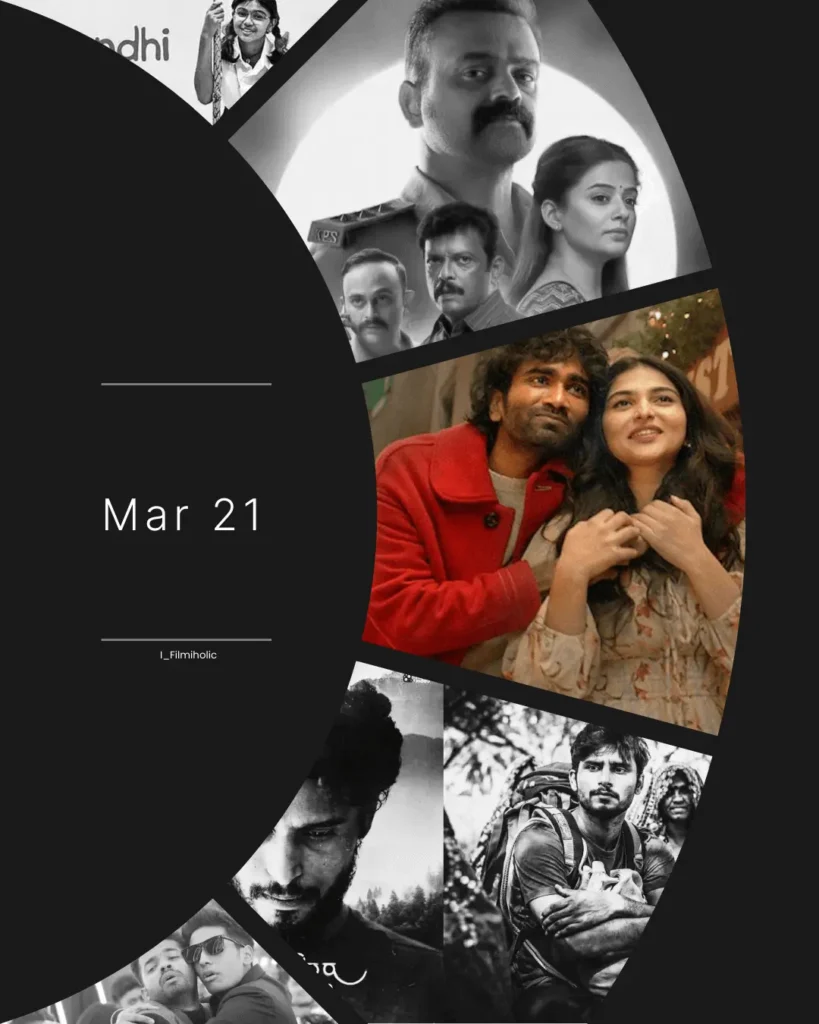
What To Watch on OTT: March 21, 2025

What are the OTT releases this week? So many titles out but most of them feel average or above average. But if you’re in the mood to watch something worthwhile, Officer On Duty, Dragon, and Nodidavaru Enantare (2025) are the ones I’d recommend this week. Why I picked these three? Scroll down to read a short review without spoilers.

OTT Releases March 22, 2025

Gandhi Tatha Chettu (2025): A Tree, A Grandfather, and a Young Girl’s Promise

📺 Where to watch: Amazon Prime
🎬 Director: Padmavathi Malladi
Cast: Sukriti Veni Bandreddi, Anand Chakrapani, Rag Mayur, Bhanu Prakash

Gandhi Tatha Chettu (2025) Trailer

Plot & Review Highlights

Set in a Telangana village in the year 2000, this film follows Gandhi, a schoolgirl, who promises her dying grandfather to protect a neem tree planted in memory of Mahatma Gandhi. As the village faces pressure to sell land to a factory, young Gandhi uses non-violent methods to resist.

❤️ Sukriti Veni gives a natural, bold debut — she even tonsured her head for the role
❤️ First half is simple, grounded, and emotionally strong
❤️ Captures rural life with warmth and honesty

❌ The second half turns weak and dramatic
❌ The climax feels rushed and unrealistic

My Opinion: This is not a perfect film — but it dares to speak gently in a loud world. If you have the patience for a quiet story with an honest heart, give it a watch. Sukriti makes it worth it.
Dragon (2025): A Massy Ride With Two Climaxes and One Honest Heart

📺 Streaming on: Netflix
🎬 Director: Ashwath Marimuthu
Cast: Pradeep Ranganathan, Mysskin, Anupama, Kayadu Lohar

Dragon 2025 trailer

Plot & Review Highlights

Ragavan, a gold medalist, turns into ‘Dragon’—a college don—for love. Then comes redemption, success, and a second fall. But wait, there’s more. This film gives two full arcs: one downfall and comeback, then another. Almost like watching two stories in one.

❤️ Pradeep Ranganathan goes full mass and full emotion
❤️ Mysskin as the calm, moral principal is a surprise package
❤️ Every small scene has a smart callback — no filler

❌ Second half feels too convenient at times
❌ Women characters deserved more than being plot bridges

My Opinion: Dragon is like a Rajini-style redemption tale for this generation. Over the top, yes — but sincere. If you’re okay with some cliched moments, this one rewards you with good drama, comedy, and that rare cathartic moments.

Baby and Baby (2025): Old Wine in an Older Bottle

📺 Where to watch: Sun NXT
🎬 Director: Prathap
Cast: Jai, Yogi Babu, Sathyaraj, Pragya Nagra

Baby and Baby (2025) trailer

Plot & Review Highlights

Two friends mix up their babies on a flight back home. One family wants a baby boy, the other believes a baby girl is lucky. Lies, confusion, and kidnapping plans follow.

❤️ Yogi Babu’s one-liners (some land, some don’t)
❤️ A couple of emotional scenes save it from total collapse

❌ Cringe comedy and dated visuals
❌ Wastes veterans like Sathyaraj and Nizhalgal Ravi
❌ Feels like a 2005 DVD re-release

My Opinion: This isn’t a comedy; it’s a time capsule. Even nostalgia can’t save it. Watch only if you want to test your patience—or enjoy chaos with zero logic.

Nodidavaru Enantare (2025): A Soul-Searching Journey That Doesn’t Play Safe

📺 Streaming on: Amazon Prime
🎬 Director: Kuldeep Cariappa
Cast: Naveen Shankar, Apoorva Bharadwaj, Padmavati Rao, Ayra Krishna

Nodidavaru Enantare (2025) trailer

Plot & Review Highlights

Siddharth loses love, loses his job, and then loses his father. Instead of fixing things, he hits the road — to escape, to think, and maybe, to start over.

❤️ Naveen Shankar delivers a raw, silent, and moving performance
❤️ Road trip mood meets existential crisis — slow but deep
❤️ Strong visual storytelling, with emotions that don’t need dialogue

❌ Begins clunky and a bit preachy
❌ Not for those expecting commercial payoffs

My Opinion: This is not a feel-good film. It’s a feel-real one. A quiet but sharp look at loneliness, pressure, and choosing dreams over stability. Not perfect — but it lingers.

Officer On Duty (2025): First Half Hooks, Second Half Cooks

📺 Where to watch: Netflix
🎬 Director: Jithu Ashraf
⭐ Cast: Kunchacko Boban, Priyamani, Muthumani

Plot & Review Highlights

CI Harishankar, demoted and damaged, takes up a fake gold case. From their case moves to a deeper, darker past. The first half builds tension. The second half… flips the genre.

❤️ Kunchacko Boban’s intense, layered performance
❤️ Tight first half with solid investigative buildup
❤️ Jakes Bejoy’s background score keeps the grip

❌ Second half turns too commercial
❌ Emotional drama weakens the thriller tone
❌ Same old cop tropes and character shifts

My Opinion: Starts as a gripping police procedural, ends up as a stylised supercop story. Watch it for the craft, not for surprises.
📖 Want a deeper review? Read More Here

Sky Force (2025): A War Hero’s Story Hijacked Mid-Air

📺 Streaming on: Amazon Prime
🎬 Directors: Sandeep Kewlani & Abhishek Anil Kapur
Cast: Akshay Kumar, Veer Pahariya, Sara Ali Khan, Nimrat Kaur

Sky Force (2025) Trailer

Plot & Review Highlights

Based on India’s first air strike on Pakistani soil, the film should’ve flown high with the forgotten hero Vijayan. Instead, it turns into an Akshay Kumar show — again.

❤️ Veer Pahariya gives it soul, especially in the final act
❤️ Real story behind the 1965 Sargodha strike is powerful

❌ Akshay Kumar overshadows the real hero
❌ Female characters written like props
❌ Too much posturing, too little emotional weight

My Opinion: This could’ve been a landmark war film. But it forgets whose story it is. Watch for the visuals, stay for the last 20 mins, skip the star worship.

Khakee: The Bengal Chapter (2025): Familiar Faces, Flat Storytelling

📺 Where to watch: Netflix
🎬 Creator: Neeraj Pandey
Cast: Jeet, Prosenjit, Saswata, Parambrata, Ritwik, Chitrangada Singh

Khakee: The Bengal Chapter 

Plot & Review Highlights

Set in 2000s Bengal, this cops vs gangsters drama shows the rise of don Shankar Barua and the honest cop Arjun Maitra trying to clean the city. But beyond the setup, the show struggles to rise.

❤️ Saswata Chatterjee nails the flashback portions
❤️ Jeet fits well as the upright officer
❤️ A few interesting twists in the middle

❌ Too many clichés, too little depth
❌ Wasted talents like Parambrata & Chitrangada
❌ Bengal setting feels generic — not rooted

My Opinion: A show with top Bengali actors but no real Bengali soul. It starts with promise but quickly becomes just another slow-moving crime drama. Nothing you haven’t seen before.

Nilavukku Enmel Ennadi Kobam (2025): Love, Closure, and a Scene-Stealing Friend

📺 Streaming on: Amazon Prime
🎬 Director: Dhanush
⭐ Cast: Pavish, Anikha Surendran, Mathew Thomas, Priya Prakash Varrier

A song from NEEK

Plot & Review Highlights

Prabhu attends his ex’s wedding hoping for closure — while a new match awaits back home. What follows is a cocktail of confusion, nostalgia, and young love.

❤️ Mathew Thomas & Anikha steals every scene — the true MVP
❤️ Light-hearted take on Gen Z love & heartbreak
❤️ Dhanush’s flavour is everywhere — from house interiors to ringtone choices

❌ Lead pair lacks chemistry, performances feel uneven
❌ Too many threads, not enough depth
❌ Some scenes feel like extended Instagram reels

My Opinion: It’s Dhanush’s weakest directorial so far, but it’s still likeable — not loveable. Watch it for its charm, subtle callbacks, and a reminder that love today comes with 2x speed and emoji reactions.

For more updates on movies and theatrical releases, click here.

What To Watch on OTT: March 14, 2025

What are the OTT releases this week? With so many releases across platforms, unfortunately, I couldn’t find many great options for you this week, since most releases are average; if you have time, try Ponman (Malayalam) or Kaadhal Enbadhu Podhu Udamai (Tamil) Why I Pick That; scroll down to read more.

March 15, 2025 OTT Releases

Ponman (2025): A Gritty Drama That Goes Beyond the Gold

📺 Streaming on: JioStar
🎬 Director: Jyothish Shankar
Cast: Basil Joseph, Lijomol Jose, Sajin Gopu, Anand Manmadhan

Ponman Trailer

Plot & Highlights

This is not just another film about dowry; Ponman doesn’t preach; it shows; it makes you feel the pain; finally, it’s your judgement, not the writer’s. 

Gold dealer Ajesh lends gold for a village wedding in Kollam. However, the reluctant bride, Steffi, is not ready to return the gold after the marriage. The story takes a tragic turn when Mariano (Sajin Gopu), her husband, confronts Ajesh.

❤️ Basil Joseph shines —far from his comfort zone
❤️ A realistic, layered take on dowry, without cliché melodrama or preachiness
❤️ Well-written screenplay with gripping moments set in unexpected places
A slow-burn that demands patience

My Opinion: Ponman doesn’t just criticise a system—it immerses you in it, making you see its victims and perpetrators as flawed, complex individuals. A smartly written, must watch film, considering the impact it is worth more than just its weight in gold.

Ramam Raghavam (2025): A Gritty Tale of Family, Betrayal & Redemption

📺 Streaming on: Sun NXT
🎬 Director: Dhanraj Koranani
Cast: Dhanraj Koranani, Samuthirakani, Satya, Pramodini, Harish Uthaman, Sunil, Mokksha

Plot & Highlights

Raghava (Dhanraj Koranani) is stuck in life, making one bad decision after another. His father, Ramam (Samuthirakani), tries to guide him, but the gap between them only grows. One day, Raghava does something shocking, changing everything. From there, the film becomes a tense battle of emotions and consequences.

❤️ A raw, intense family drama that doesn’t sugarcoat emotions
Misses the emotional depth needed to fully connect with Raghava’s journey
Some characters feel underdeveloped, limiting their impact

My Opinion: Ramam Raghavam takes a complex moral dilemma and presents it in a brutal, unfiltered way. While the execution stumbles, the film stays with you—especially in its haunting final act. Can give it a try if you have time.

Kaadhal Enbadhu Podhu Udamai (2025): A Bold Step for Queer Cinema

📺 Streaming on: Tentkotta
🎬 Director: Jayaprakash Radhakrishnan
Cast: Lijomol Jose, Anusha Prabhu, Rohini, Vineeth, Deepa, Kalesh Ramanand

Trailer

Plot & Highlights

Kaadhal Enbadhu Podhu Udamai isn’t just about love; it’s about how society decides who deserves it.

When Sam (Lijomol Jose) reveals she is in love with Nandhini (Anusha Prabhu), her mother Lakshmi (Rohini) and father Devaraj (Vineeth) struggle to accept it. The film focuses on their hypocrisy, their contradictions, and the silent pain of those forced to justify their existence.

❤️ A rare Tamil film that puts queer identity at the centre
❤️ Rohini delivers a stunning performance as a mother caught in conflict
Sam and Nandhini’s relationship feels underdeveloped
At times, the film feels more like a debate than a story

My Opinion: Kaadhal Enbadhu Podhu Udamai is not perfect, but it’s important. It doesn’t just argue—it demands to be heard. A much-needed step for Tamil cinema, even if it leaves you wishing for a deeper, more personal look at its queer leads.

2K Love Story (2025): A Forced Take on Friendship That Lacks Heart

📺 Streaming on: Aha Tamil
🎬 Director: Suseenthiran
Cast: Meenakshi Govindarajan, Jagaveer, Bala Saravanan

2k Love Story Trailer

Plot & Highlights

Can a man and a woman just be friends? 2K Love Story sets out to prove they can, but instead of exploring their bond naturally, it forces the message with clichés and weak storytelling.

Karthik (Jagaveer) and Moni (Meenakshi Govindarajan) run a wedding planning business together. Despite being constantly thrown into situations where love could bloom, they stick to their “friends forever” pact. But when a new person enters their lives, their friendship faces the ultimate test.

❤️ A refreshing idea that challenges relationship stereotypes
Tries too hard to be progressive, but lacks emotional depth
Tonally confused—part love triangle, part comedy, but never compelling
Shallow character development makes it hard to care about their struggles

My Opinion: 2K Love Story wants to be different but ends up feeling staged and empty. Friendship deserves a better story, one with real emotions—not just a forced message. 

Emergency (2025): A Selective Retelling of History

📺 Streaming on: Netflix
🎬 Director: Kangana Ranaut
Cast: Kangana Ranaut, Anupam Kher, Shreyas Talpade, Satish Kaushik, Mahima Chaudhary

Plot & Highlights

Kangana Ranaut plays Indira Gandhi, recreating the events surrounding the 1975 Emergency. While the film captures key moments—the power struggle, the political arrests, and the press censorship—it often feels like a highlight reel rather than a layered exploration. Indira’s strengths are downplayed, her insecurities exaggerated, and her adversaries glorified, creating an uneven narrative.

❤️ Kangana delivers a powerful performance, capturing Indira’s intensity
❤️ Cinematography and music elevates the storytelling
More a political statement than a balanced biopic
Key historical events feel oversimplified or conveniently left out
Fails to provide a nuanced take on Indira’s political journey

My Opinion: Emergency is ambitious but one-sided. While Kangana shines as Indira, the film picks and chooses its facts to fit a narrative rather than offering an honest portrayal. Watch it for the performances, but don’t expect the full picture.

Vanvaas (2025): Nana Patekar Shines in a Predictable Tearjerker

📺 Streaming on: Zee5
🎬 Director: Anil Sharma
Cast: Nana Patekar, Utkarsh Sharma, Khushboo, Simratt Kaur, Ashwini Kalsekar, Rajesh Sharma

Vanvaas Trailer

Plot & Highlights

A familiar story of an aging father abandoned by his children, Vanvaas follows Deepak Tyagi (Nana Patekar), a man battling memory loss and betrayal. Left alone in Varanasi, he finds an unlikely ally in Veeru (Utkarsh Sharma), a small-time crook with a heart of gold.

The film sticks to the Baghban-style formula, where the noble parent suffers, the children are heartless, and the saviour arrives in the form of a selfless outsider. While it tugs at the emotions, the storytelling feels outdated and exaggerated.


❤️ Moments of poetic monologues add emotional weight
❤️ Visually rich with glimpses of Varanasi’s culture
Predictable, melodramatic, and overly theatrical
Utkarsh Sharma struggles to match Nana Patekar’s intensity
One-dimensional characters with little depth

My Opinion: Vanvaas is powered by Nana Patekar’s presence, but the film itself feels like a relic of the past. It has moments of emotion, but the outdated storytelling and forced drama hold it back. Watch it if you love old-school family dramas, but don’t expect surprises.

Moana 2 (2025): A Visual Spectacle, But an Unnecessary Voyage

📺 Streaming on: JioHotstar
🎬 Directors: David Derrick Jr., Jason Hand, Dana Ledoux Miller
Cast: Auliʻi Cravalho, Dwayne Johnson, Hualālai Chung, Rose Matafeo, David Fane

Moana 2 Trailer

Plot & Highlights

Moana is back on the seas, but this time, the waves aren’t as thrilling.

When her ancestors warn her about an ancient storm god’s curse, Moana (Auliʻi Cravalho) sets out on a mission they failed—to reunite the islands and restore balance. Unlike her first solo journey, she’s joined by a crew of fellow islanders, along with the ever-charismatic Maui (Dwayne Johnson).

❤️ Visually stunning, with breathtaking ocean landscapes
❤️ Kakamora pirates steal the show in their brief screen time
Lacks the emotional depth of the first film
Music fails to match the magic of the original soundtrack

My Opinion: Moana 2 is beautiful to look at, but it lacks the soul that made the first film special. While kids might enjoy the adventure, it feels like Disney is just trying to keep the franchise afloat. Not a disaster, but definitely not smooth sailing.

For more updates on movies and theatrical releases, click here.