So, you just finished watching Lokah: Chapter 1, and you might have questions. Who exactly are these immortals? Who is Dulquer, and what is he doing as a Ninja? And what’s with that surprise ARM–Maniyan connection at the end? This blog will walk you through the climax, explain the roles of Neeli, Chathan, and Odiyan, and highlight all the unanswered questions that set the stage for Chapter 2.
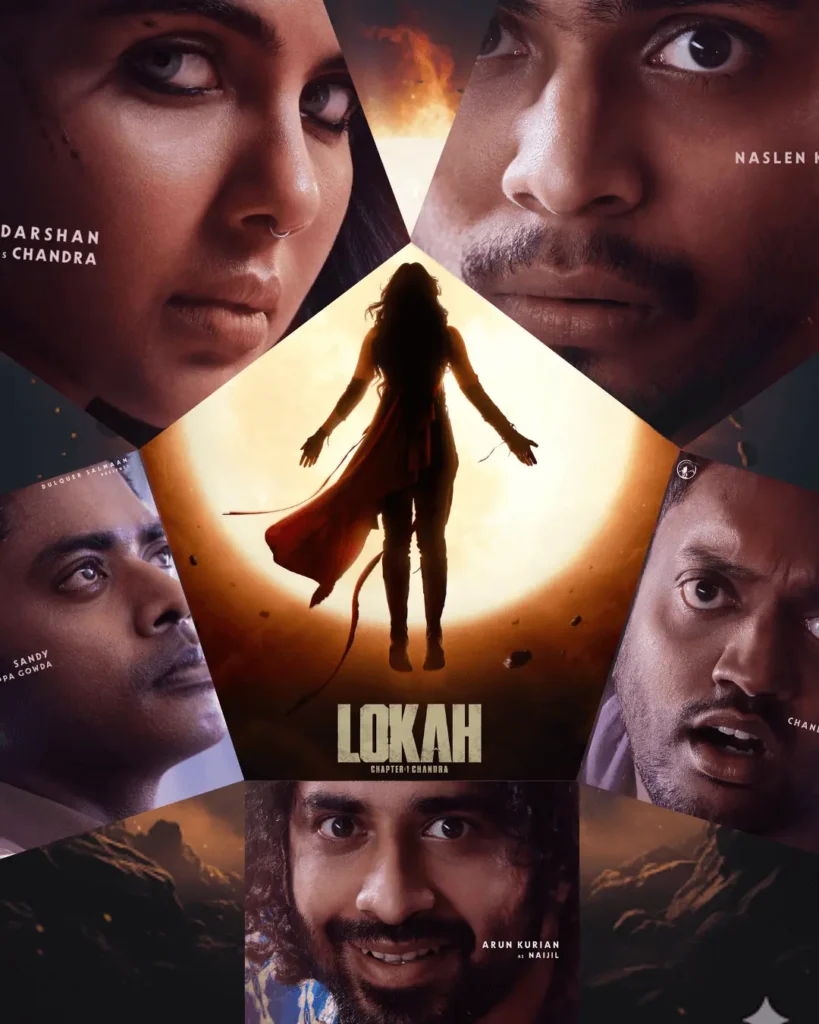
Lokah vs Minnal Murali: A Different Superhero Blueprint
We have Minnal Murali, our first superhero film from Mollywood. While Minnal Murali was a complete story about one hero’s origin, Lokah is designed as the first part of a larger film series. It introduces a new world and many characters to build a foundation for future stories.
Lokah: A Full Plot Summary (Spoilers)
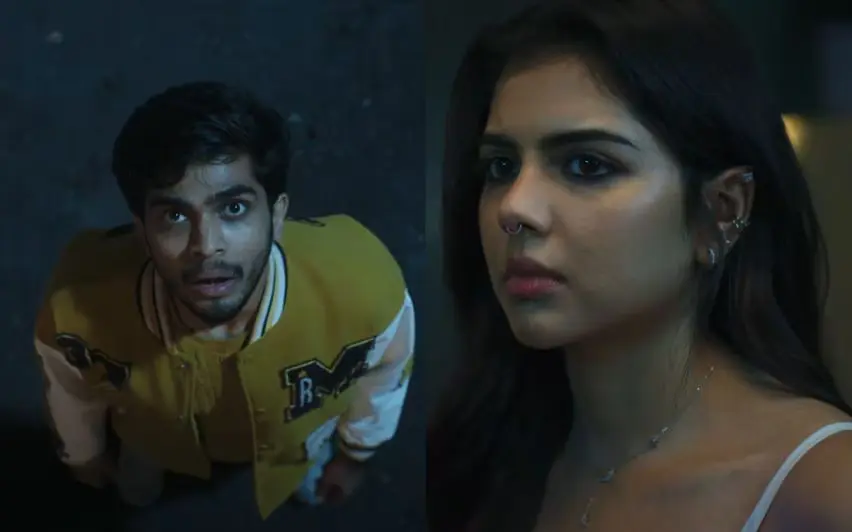
The story of Lokah Chapter 1: Chandra is an origin story that introduces the main character and her world.
- The film is set in modern-day Bengaluru.
- The central character is Chandra (Kalyani Priyadarshan), mysterious with a difficult past. She works night shifts at a café.
- Living across from her are three unemployed men—Sunny (Naslen), Nijil (Arun Kurian), and Venu (Chandu Salimkumar). They notice her strange behaviour. Sunny develops a crush and curiosity about her.
- Chandra is revealed as a Yakshi called Kalliyankattu Neeli, inspired by Kerala folklore. In the myths, Neeli terrorised Panchavankadu and was impaled by Kadamattathu Kathanar.
- In Lokah, Kathanar (Sunny Wayne) once impaled Neeli, but later he liberated her after realising she was a good spirit who was fighting against evil men. In modern times, his descendants run a secret hotel in Bengaluru where immortals gather. They are controlled by a supreme power called Moothon, whose identity remains unrevealed.
- The conflict begins when Chandra’s co-worker is threatened by an organ trafficking gang. She steps in, revealing her superhuman powers.
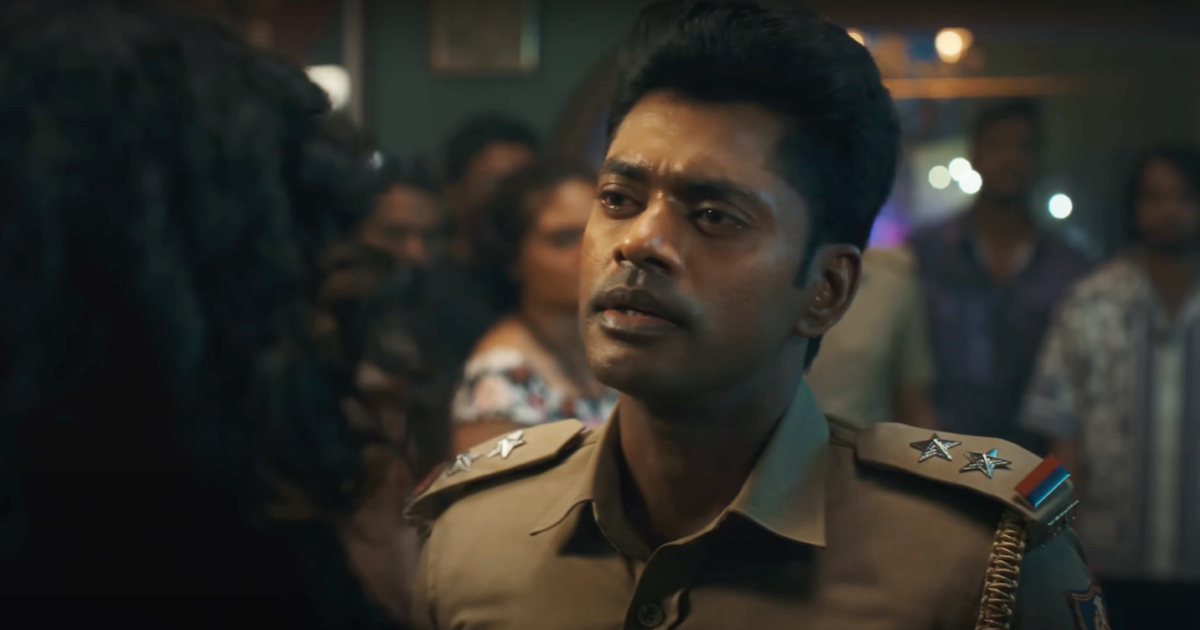
Later, the director reveals glimpses of many other immortals—like Chathans, Tovino in the form of a magician in Bengaluru, and Dulquer Salmaan is playing the character of Odiyan (Ninja fighter).
Analysis of the Screenplay
The screenplay for Lokah was written by the director, Dominic Arun, with additional screenplay and dramaturgy by actress and writer Santhy Balachandran.
In 2017, when Tharangam came out, I thoroughly enjoyed it because of its narrative style and black humour. Even his short film Mrithyumjayam (a noir short film) worked for me.
What went wrong with Tharangam was its racy screenplay and intricate plot that used non-linear sequences, animation, and split screens to create a dynamic viewing experience. But many felt it was too overwhelming and complex.
In Lokah, the film’s main plot is very simple. I felt the story did not have enough complexity. The script focuses more on introducing the world of Lokah and its many characters than on telling a complicated, self-contained story. This focus on world-building is a key part of its design as the first chapter of a franchise.
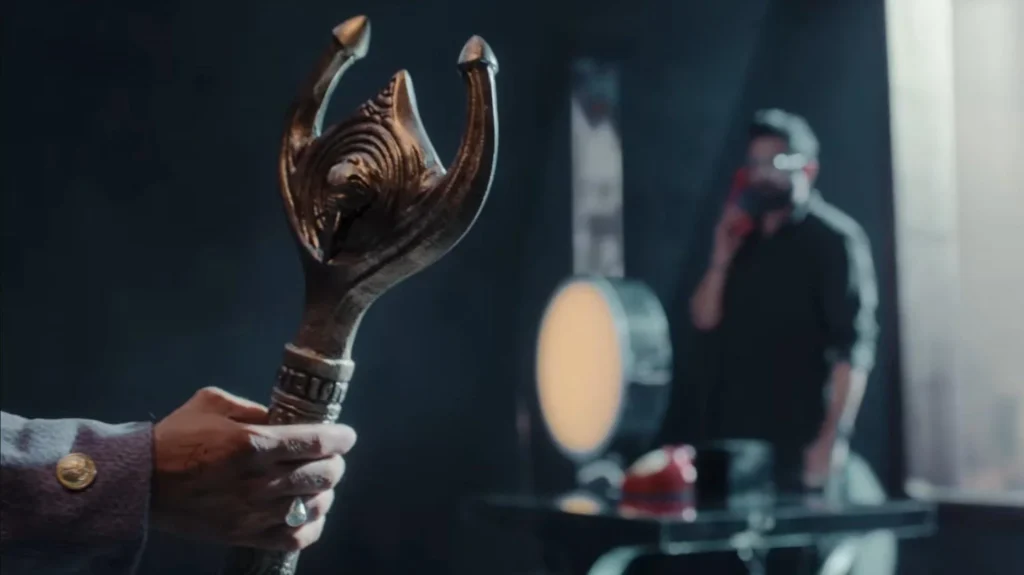
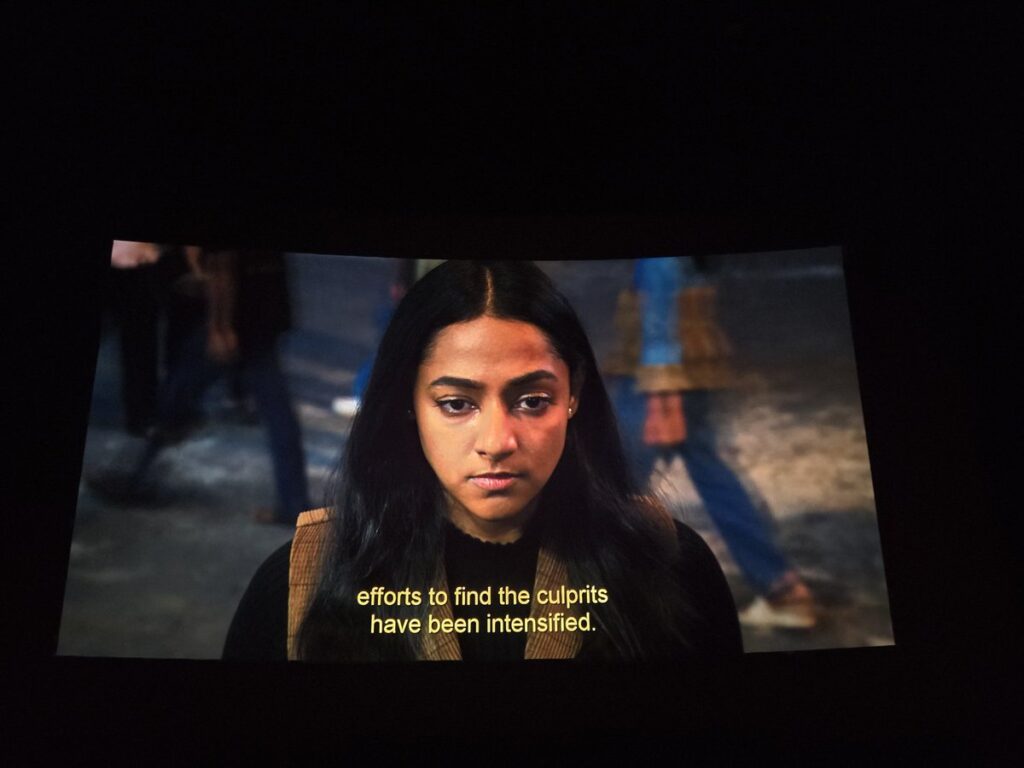
Santhy Balachandran’s contribution to the screenplay is significant. Her work on dramaturgy suggests she helped shape the story’s structure and its mythological themes, ensuring the folklore elements were woven into the modern superhero narrative in a meaningful way. Her views on a patriarchal society are also layered in Lokah.
How Lokah Uses the Superhero Formula
Superhero films typically follow the hero’s journey. Let me explain that with my favourite superhero Batman:
- Origin and Backstory – Bruce Wayne witnesses his parents’ murder.
- Call to Action – He decides Gotham needs a protector.
- Training or Preparation – Learns combat and stealth from the League of Shadows.
- Initial Confrontation (Setback) – Faces Joker but suffers losses like Rachel’s death.
- Low Point / Dark Moment – Bane breaks him and Gotham falls.
- Final Battle and Transformation – Returns, defeats Bane, and finds a life beyond Batman.
Lokah follows a similar structure, but with non-linear narration.
Is Chandrah a Vampire? Why is she Immortal?
Chandra, as a child, was infected with a mysterious virus. She became a Yakshi, called Neeli. This is inspired by Aithihyamala, where Kalliyankattu Neeli was a Yakshi eventually liberated by a priest called Kadamattathu Kathanar.
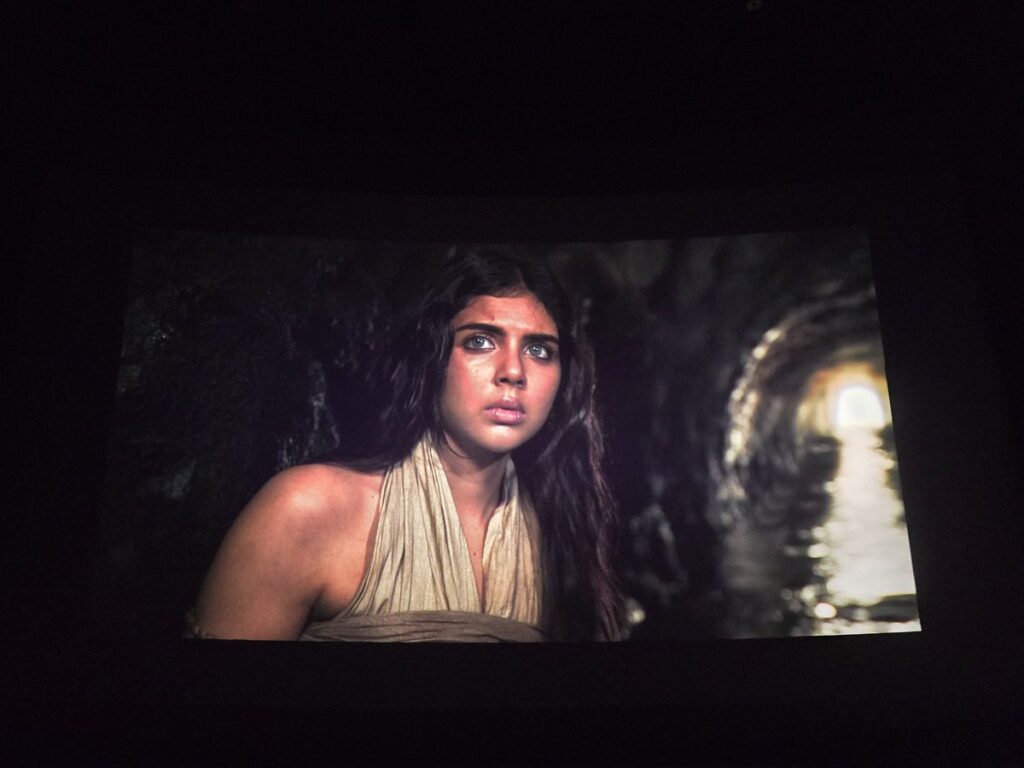
But Santhy gives an alternate ending here: Neeli was not evil. Kathanar gave her freedom to do good, and she continued fighting evils across centuries, living on as an immortal.
Now in Bengaluru, she keeps a low profile and works night shifts. This is clearly inspired by vampire stories (Even chandra’s super speed is inspired from MCU Quick silver effect)—where someone bitten also becomes a vampire, avoiding sunlight as they age.
If you notice, during the Kiliye Kiliye song, Chandra enters Sunny’s house only after he invites her inside. This is just like the scenes in Sinners, where vampires can enter a home only if they’re given permission. That’s another hint that Chandra is actually a vampire.
People might ask: Why doesn’t Kalyani look old even after hundreds of years? The same reason—Santhy and Dominic Arun are portraying Kalyani’s character, Chandra, as a vampire-like immortal who was infected by a virus. Vampires reach maturity faster and then stop ageing.
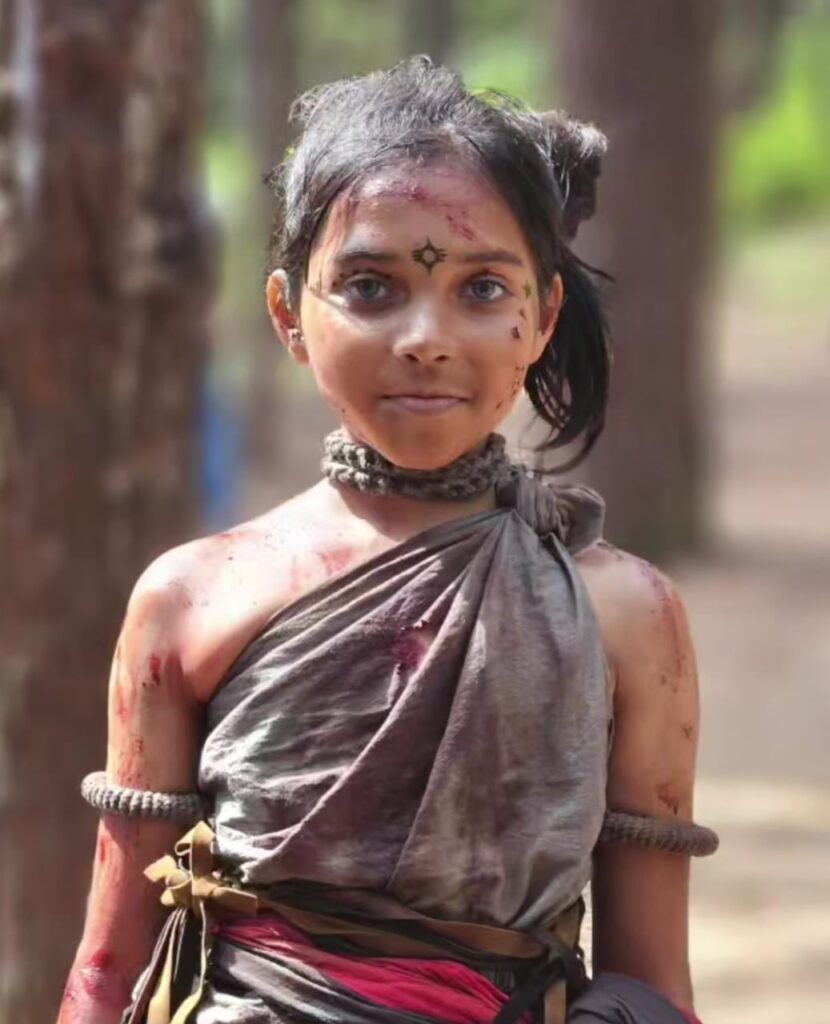
She confronts an organ trafficking gang. The editing by Chaman Chacko is brilliant here, along with the narrative style. A grandfather (played by Vijayaraghavan) tells the story of how a little girl became a Yakshi and fought against mercenaries of an evil king, while in parallel, the director shows us modern-day Neeli, aka Chandra, fighting against organ traffickers.
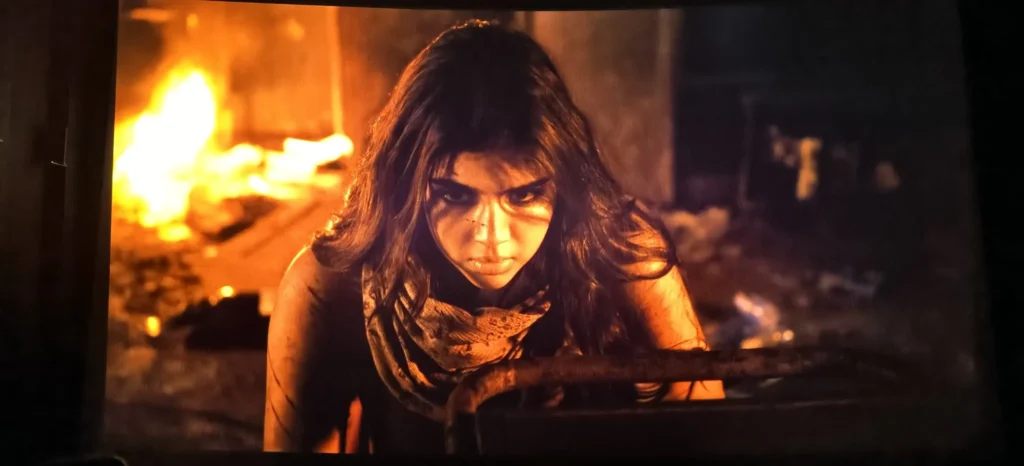
So the rise of Chandrah in the modern day and past is presented in parallel. It answers, how she became a vampire.
Who is the Goddess in the Cave
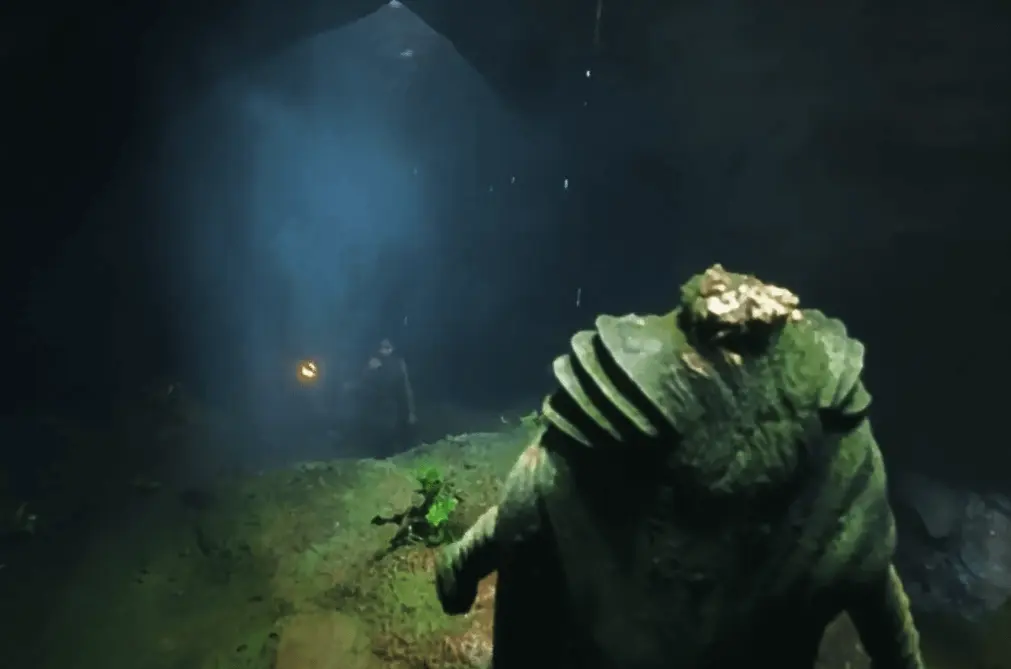
While explaining the flashback, we see child Neeli looking at a cuneiform text — the wedge-shaped script of ancient Mesopotamia — carved inside the cave.
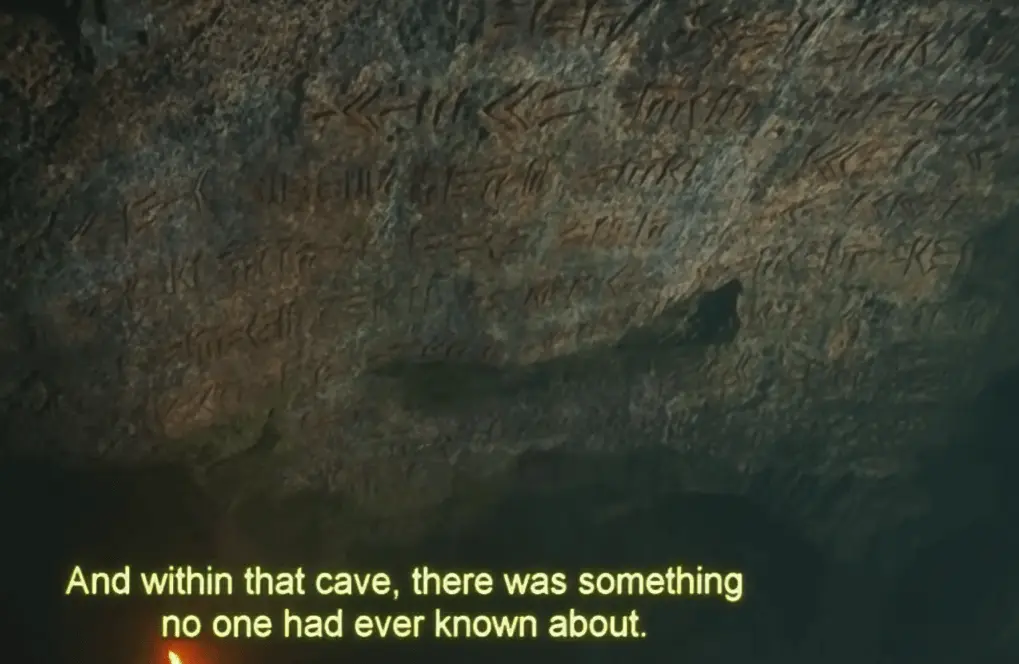
This links the beheaded idol that Neeli sees to Ishtar, the Mesopotamian goddess.
14 Immortals & They Live Among Us Book
Vijayaraghavan’s character Daniel is revealed to be the author of the book They Live Among Us. He is researching 14 immortals who live among us. These include Maadan, Marutha (likely played by Santhy Balachandran or Ahana Krishna, since Marutha is a female spirit), Chathan (Tovino), Yakshi (Kalyani), Odiyan (Dulquer), and possibly Bhootham/Jinn (Soubin). This is my assumption, based on Aithihyamala.
Lokah Ending Explained: The Final Battle & Post-Credit Scenes
In the end, Neeli, aka Chandra, kills the villain. Like in old myths, immortals have a weak point—the heart. This mirrors how Kathanar once tied Neeli in the past, piercing a holy knife into her heart.
After that, we see Odiyan (Dulquer) killing a few gangsters at the hotel. Chronologically, this happens before Kalyani’s fight at the same hotel. Then we get Tovino’s character, Chathan, asking someone how he managed to find him. The reply is about a viral video, where Tovino—as a magician—performed the trick of tying a shoelace in Bengaluru.
Now if we look back, in the very beginning, Naslen’s character talks about this: “I am trying to tie my shoelace the way that magician did.” That line connects directly to Chathan’s reveal.
Then, the Guest (played by Vijay Menon) asks Chathan about a picture he received from some architects who explored a cave. The picture looks exactly like Tovino. Chathan explains that there might be nearly 389 Chathans in the world who look exactly the same as him.
And here comes the real connection in the second post credit scene: we are shown Maniyan’s picture (from the film ARM, where Tovino played a mysterious character named Maniyan).
Now it all ties together — Maniyan mostly lived in caves, and his death was mysterious. Maniyan moves fast, and we can see his magical powers, so it’s fair to assume he might be a form of Karimkutty Chathan or Theekkutti Chathan.
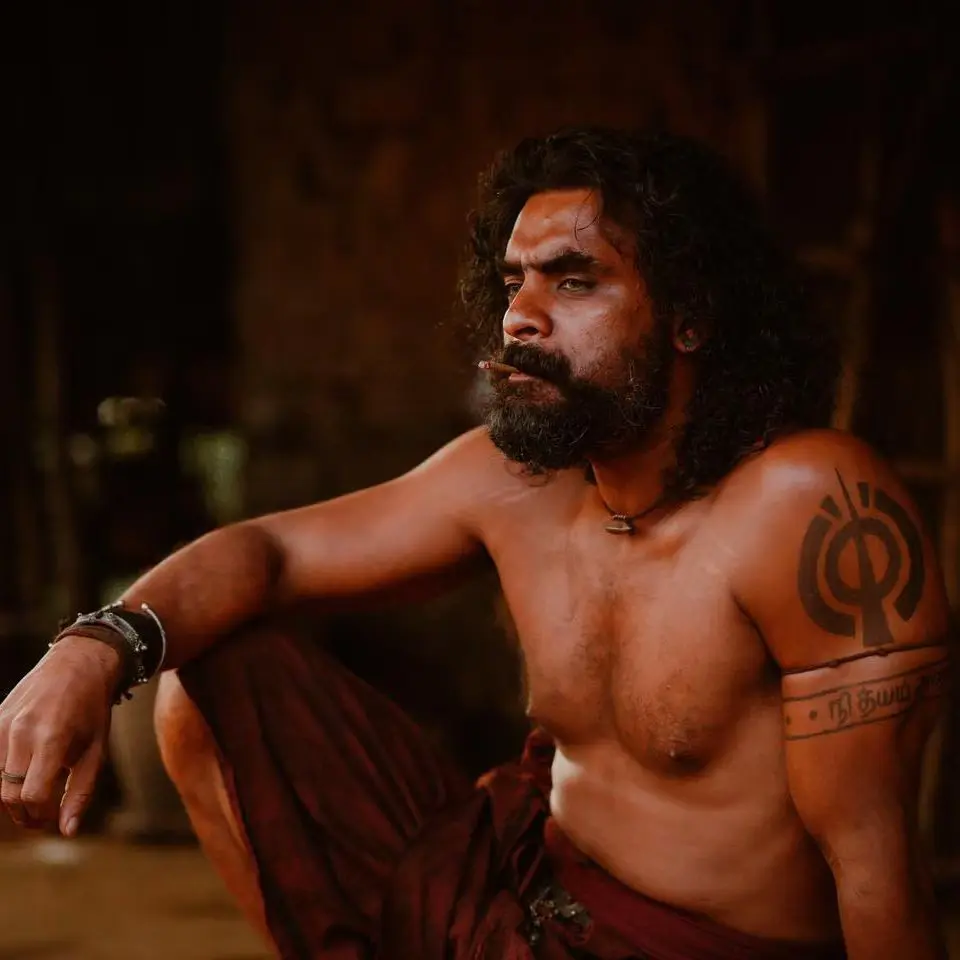
That’s where the movie ends, leaving us with the hint that Maniyan could also be one of these Chathans.
How Maniyan( ARM) Can Be A Chathan
As per mythology and folklore, when Lord Shiva and Parvati disguised themselves as Valluvan and Valluvathi, they had two children named Karuval(Goddess) and Kuttichathan. Another story says Lord Shiva’s encounter with a beautiful forest woman named Koolivaka led to the birth of Vishnumaya Kuttichathan.
So, in all popular stories, Kuttichathan is essentially a form of Shiva. Now, if you look at the Bhairava song in ARM, the entire song is about dualism. In Hindu mythology, Bhairava is Shiva’s most wrathful form.
That connection makes the logic correct: the makers can absolutely bring Maniyan into the world of Lokah. And if they do, it would be a powerful addition to the universe.
But the real question is this: if Maniyan is indeed a Chathan, will Listin Stephen (the producer of ARM) agree to make Maniyan part of the Lokah universe?
Cultural Innovation: Kerala’s Myths in a Superhero Template
This shows that the film relies heavily on the conventional superhero template for its plot progression, choosing not to innovate structurally.
But Lokah’s innovation is not structural or deconstructive—it is cultural. The film does not parody the superhero genre or fundamentally question the morality of its hero. Instead, its main contribution is cultural transposition.
It takes the largely American superhero template, adds vampire-like features, and grounds it in a specific non-Western mythological framework: the folklore of Kerala.
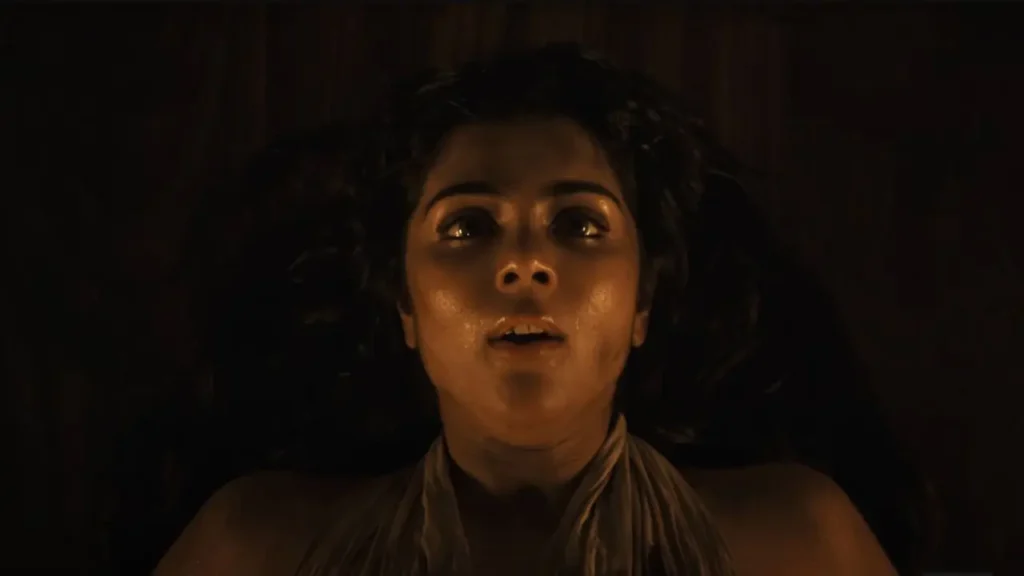
The central premise of the film—that immortal beings from these legends exist in today’s world—is summed up in one idea: They live among us.
And I’m happy this is not another poor imitation of a Hollywood superhero or vampire movie sprinkled with Sanskrit verses (which is mostly what Tollywood does).
The Immortals Explained: Who Are They?
Chandra = Kalliyankattu Neeli.
Chathan = Tovino’s Kuttichathan is a mischievous but powerful spirit. Some myths say that when Kuttichathan was killed and his body torn apart, every piece became a new Chathan. This explains why there are hundreds of Chathans. Karim Kuttichathan, Vishnumaya Kuttichathan, Pulakkutti Chathan, Neerkkutti Chathan and Theekkutti Chathan are the prominet ones.
Odiyan = Dulquer’s shape-shifting assassin. Odiyans were fighters. Their primary method was assassination through fear. The source of an Odiyan’s power came from a secret and gruesome ritual that created a magical oil called Pilla Thailam (literally, “child oil”).
Possibly others: Maadan, Marutha, Bhootham/Jinn.
Together, they form a clandestine immortal society that has lived among us for centuries.
Daniel’s Secret Motive (Fan Theory)
Vijayaraghavan’s Daniel is introduced as the author of They Live Among Us, writing under the pen name Joseph Dominic. At first, he looks like a researcher documenting immortals, but his actions raise bigger questions. Why does he meet Nachiappa, the infected police officer? He collect his blood, why? Why he is doing this research?
One possible theory is that Daniel’s obsession is personal, not academic. We see hints that his granddaughter suffers from a chronic illness. If true, Daniel’s entire research may not be about revealing immortals to the world — it’s about finding a cure.
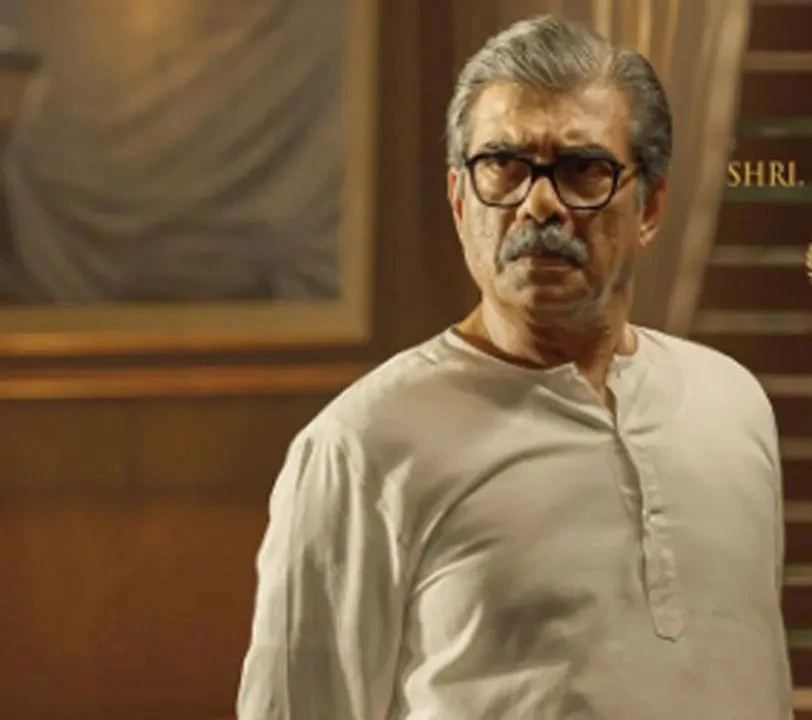
If Lokah explores this, Daniel could become one of the most morally complex characters in the universe. A grandfather trying to save his family at any cost, even if it means reviving antagonists, experimenting with immortal blood, or breaking the balance between good and evil.
And if Moothon’s control is already pulling strings, maybe Daniel isn’t just researching — maybe he’s unknowingly working for the antagonists. That twist would make him less of a mentor figure and more of a tragic player caught between love for his granddaughter and manipulation by a greater power.
Too many Questions For Lokah Chapter 2
The ending leaves us with more questions than answers. If Maniyan is really one of the 300 Chathans, what does that mean for the larger Lokah universe?
Who is Moothon? How many more immortals are hiding in plain sight? What was the mission Kalyani was trying to accomplish in the opening scene? Who is Ishthar?
Read About Moothon and his Link between Mesopotamian Dieties Here.
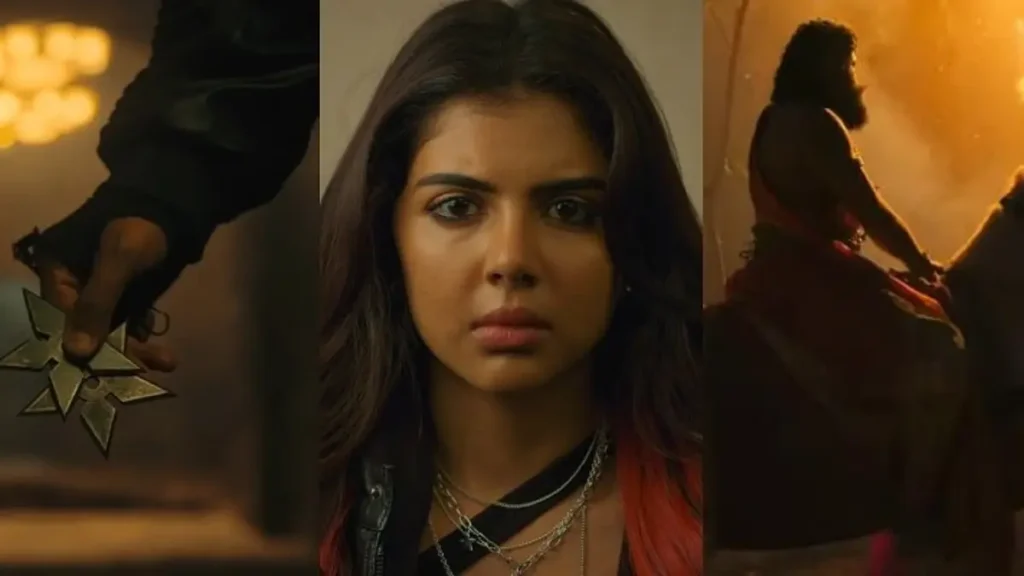
Is the organ trafficking gang leader Gajendran a reincarnation of the old evil king, since they look the same?
Nishanth Sagar’s character Prakash says, “Even you are a daughter to Moothon!!”—what does that mean? Why did Neeli have to come to Bengaluru in the first place, and what was her motive?
Did she already know about Gajendran’s organ trafficking and plan to kill him? And why is Dulquer’s Odiyan killing so many gangsters at the hotel?
These are questions that Lokah Chapter 1 doesn’t answer—but maybe it doesn’t need to. For now, it has given us Neeli, Chathan, and Odiyan. The rest of the story waits in the shadows.
For More Reviews and Analysis: click here
loved this <3
Thank you 🙂
Great analysis!!!!
Thank you!!
Well explained…how about Neslens character, sunny???
I believe, Sunny is not the part of the world, he is there as a love interest.
Just to know, can you tell which of Tollywood movies felt like an imitation of Hollywood super heroes with sanskrit verses for you?
No offence 🙂
Kishkindapuri, Karthikeya 2, Mirai, Hanuman, most of these films, I felt, skip an extensive research and added some verses, well-konwn stories, and cooked a half-baked product. We still don’t have something like Da Vinci code, or something which explore the depper layers. LOkah at least tried to add some layers, for example, Neeli is not just amythical character here ratger she is standing tall against the traditional patriachal views. The detailing is excellent.
Great analysis but unnecessary comment on tollywood. Every movie has positives and negatives! Just like Kantara chapter 1, which btw i thoroughly enjoyed, had so many obvious negatives. We need to appreciate the innovative efforts all these directors are making rather than make a blanket negative comment. Think about it this way, how would it look when Hollywood directors watch Lokah and say they were copying Hollywood superhero or marvel formula? But i have seen many great directors from hollywood appreciating the craft and creativity of other country films!! Lets learn from those legends and enjoy movies like they are supposed to be 🎥 🍿 !!!
I completely understand what you’re saying, and I also love how Tollywood pushes mythological storytelling in mainstream cinema.
But my earlier comment came from a place of disappointment, not hate. The reason I quoted Tollywood is that, in recent years, many of its myth-based films (Karthikeya 2, HanuMan, Mirai, Kishkindhapuri) tend to present mythology in a regressive tone, glorifying blind faith, temple miracles, or fake gurus, then some saffron flags everywhere with jai shriram rather than using those stories to question or reinterpret ideas.
My point is: mythology should evolve with us. Look at Karthikeya 1, it treated myth as mystery and logic, not propaganda. Or take Lokah: the scene where a woman in a white saree walks at night,our old belief system , that set-up is – she’s a Yakshi, the danger, man will be a victim, she will seduce him and kill. But Lokah flips it. The man becomes the predator, and the woman, the victim. That’s how traditional belief should be used,to challenge old fears and redefine power, not repeat patriarchal or political narratives.
Even in older Malayalam Yakshi stories, you see words like thalaykuka (to bind her) and scenes where a priest nails her forehead, symbolic of suppression. In Lokah, that’s replaced by a knife to the heart and words that echo liberation or moksha. That’s the kind of reinterpretation I wish more films attempted, not just repeating folklore, but rebuilding meaning.
I’m not against Tollywood at all. Directors like Trivikram Srinivas handle mythology beautifully, mixing it with modern storytelling without glorifying superstition 9Except Khaleja). Even Rajamouli did it well in Yamadonga, pure fantasy, not forced divinity. That’s all I meant, cinema should push mythology forward, not drag it back into blind belief. Otherwise soon India will be like Bangladesh or Pakistan, where fanatics rule us with regressive thoughts.
When we use Myhtology to question, decode, or rediscover ourselves, that’s an effort, that’s a renaissance. For example, the Dashavatara itself could be read as a poetic representation of evolution- Matsya (fish), Koorma (amphibian), Varaha (mammal), and finally Narasimha to human- a gradual reflection of life’s journey on Earth. Imagine if more filmmakers used mythology like this: as science, metaphor, and philosophy- not propaganda.