Ryan Coogler’s Sinners is one of those movies that doesn’t really end when the credits roll. On the surface, it’s a simple vampire film, but once you start pulling at the threads, you realise it needs a proper Sinners explained kind of discussion — especially the ending.
This is one of those films where the story is only half of what’s going on. The other half is hidden in small details, symbols, and choices the characters make. In this article, we’ll break down the ending, the post-credits scenes, the vampire rules, and the bigger meaning behind Sinners, not as a reviewer but as a fan.
[MASSIVE SPOILER WARNING: Do not read further if you haven’t seen the film.]
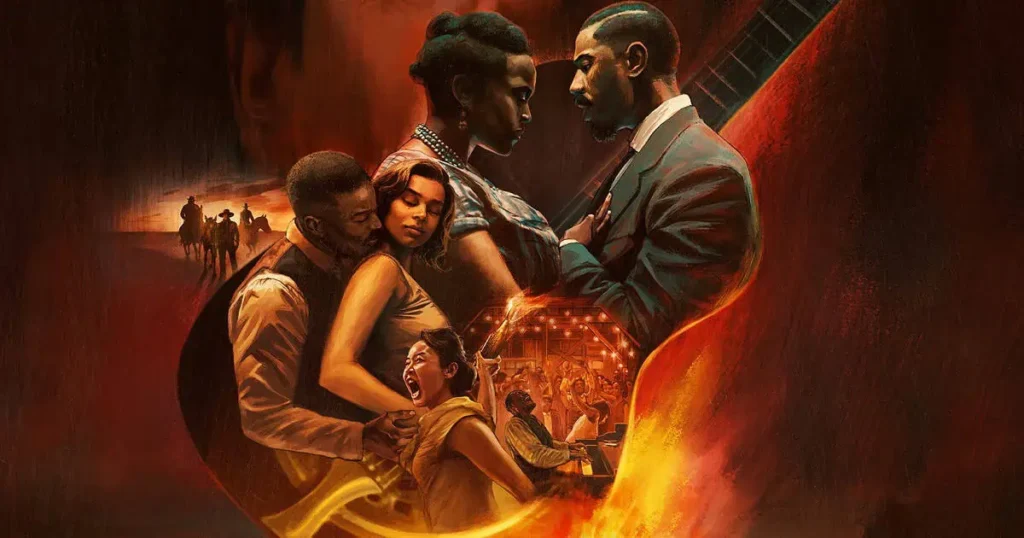
The Plot of Sinners: A Chronological Breakdown
The story takes place in October 1932, in a small town in the Mississippi Delta. Twin brothers Elijah “Smoke” and Elias “Stack” Moore come back home after many years away. They have lived rough lives, worked with gangs in Chicago, and fought in World War I. Both are carrying a lot of anger, fear, and tiredness from that life.
They don’t come back to start trouble. They come back with one simple plan: to open a juke joint. A place where Black people can eat, drink, dance, and forget their problems for a few hours. They buy an old sawmill for this. The place has a dark past. It was once used by white supremacists as a “killing floor” where Black people were murdered. Now they want to turn that place into something alive.
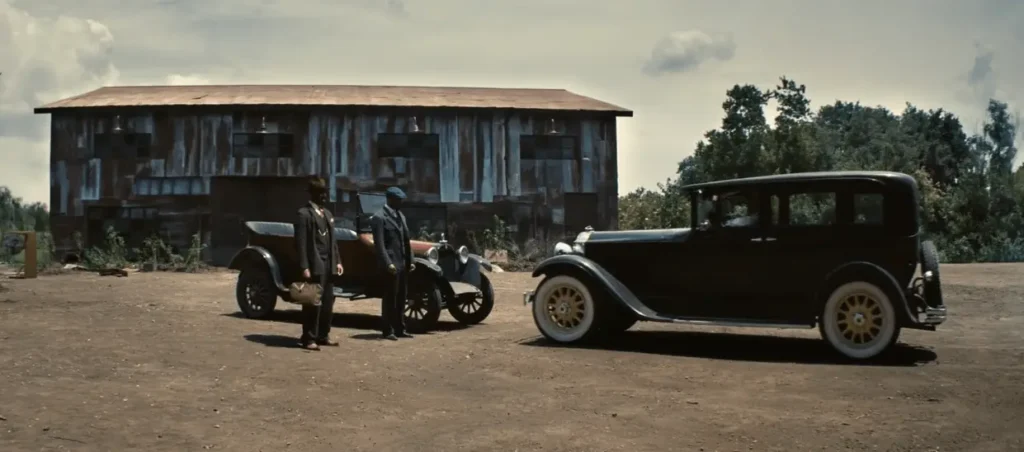
Now the brothers are bringing in people for their juke joint.
While all this is happening, something else is moving toward the town. An Irish vampire named Remmick has taken shelter with a local white family connected to the KKK. He slowly turns them into vampires too. When Sammie plays at the juke joint, his music does something strange. It feels like it opens a door between worlds. It attracts Remmick and his group.
The Characters: Who’s Who in Sinners
Before getting into the meaning and the ending, it helps to clearly understand who these people are and how they are connected. Sinners is not really a story about vampires first. It’s a story about a small group of people, their past, and the choices they make in one long night.
The Moore Family and Their Circle
At the centre of the story are the Moore family.
Elijah “Smoke” Moore and Elias “Stack” Moore are twin brothers. Sammie is their younger cousin. Jedidiah, Sammie’s father, is a strict pastor. Annie is Smoke’s wife.
Smoke and Stack grew up together, fought together in World War I, and later worked for Al Capone’s gang in Chicago.
Smoke & Stack : The Gears
Smoke is the quieter and more thoughtful of the two. He is tired of violence and wants to build something that feels clean and honest. He is married to Annie, and they once had a baby who died. Smoke still carries that loss, and also the trauma of the war. His hands shake, and he cannot even roll his own cigarettes. Stack always does it for him. Smoke’s journey in the film is about slowly letting go of his violent “Smoke” identity and becoming Elijah again.
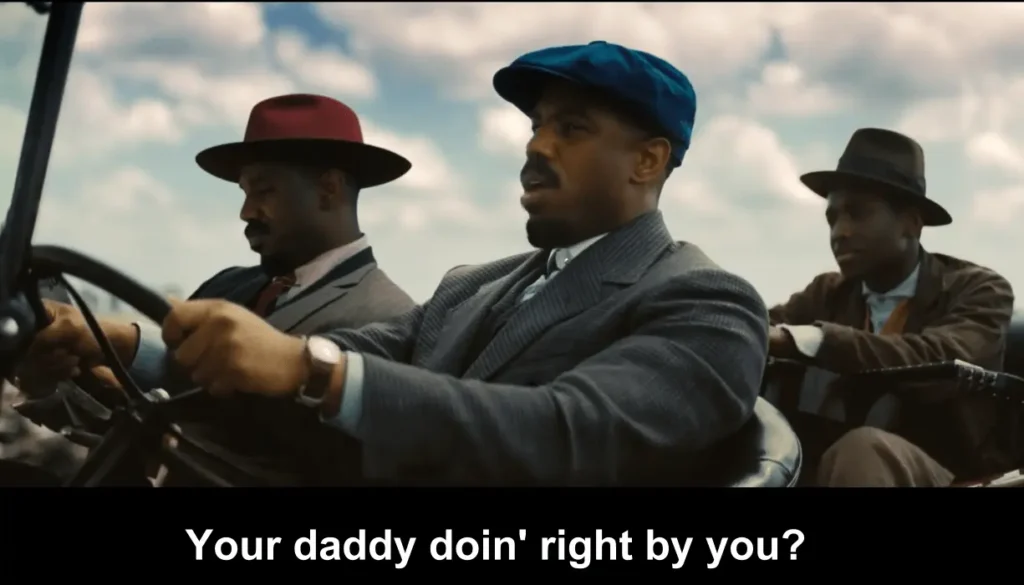
Stack is different. He is more emotional, more reckless, and more comfortable with violence. He also worked for Capone and fought in the war, but he seems less interested in leaving that life behind. He comes back partly to help build the juke joint, and partly because he wants to find Mary, the woman he loved before he left town.
Sammie Moore: The Heart of the Story
Sammie Moore is their young cousin. He is a gifted blues guitarist and the son of Pastor Jedidiah. He is caught between two worlds: his father’s church and his own love for music. He carries the guitar of Charley Patton, a legendary blues musician. Sammie is not just a performer in the film. His music is so powerful that it seems to open a door between worlds. He is the real heart of the story, and also the reason the vampires come.
Jedidiah, Sammie’s father, believes the blues is devil’s music and that it will destroy his son. He tries to stop Sammie from playing at the juke joint. In a dark way, his fears turn out to be right.
The Love Stories
There are two important relationships in the film.
Smoke and Annie are husband and wife. They lost their baby, and that loss broke something in both of them. Annie still believes in Hoodoo and in spiritual protection.
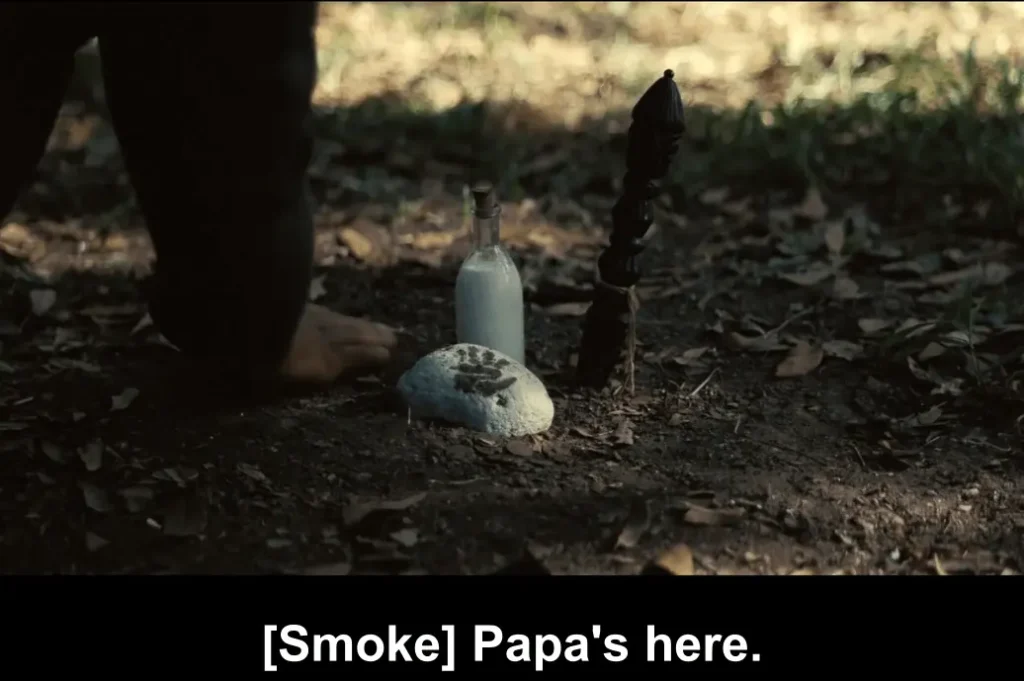
Smoke has mostly lost his faith. Annie is the emotional and spiritual centre of the group. She understands the vampire rules and tries to protect everyone. Her death is what finally breaks Smoke and pushes him toward his final sacrifice.
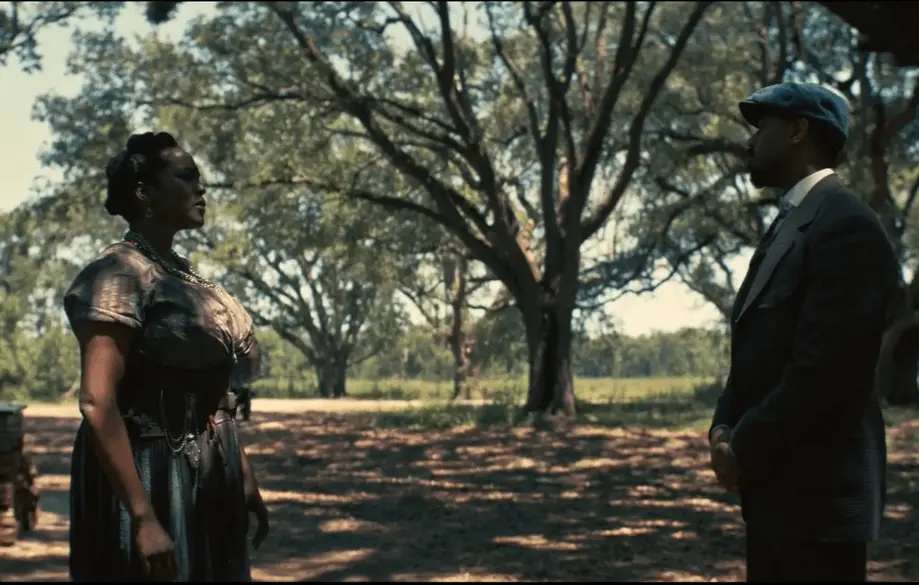
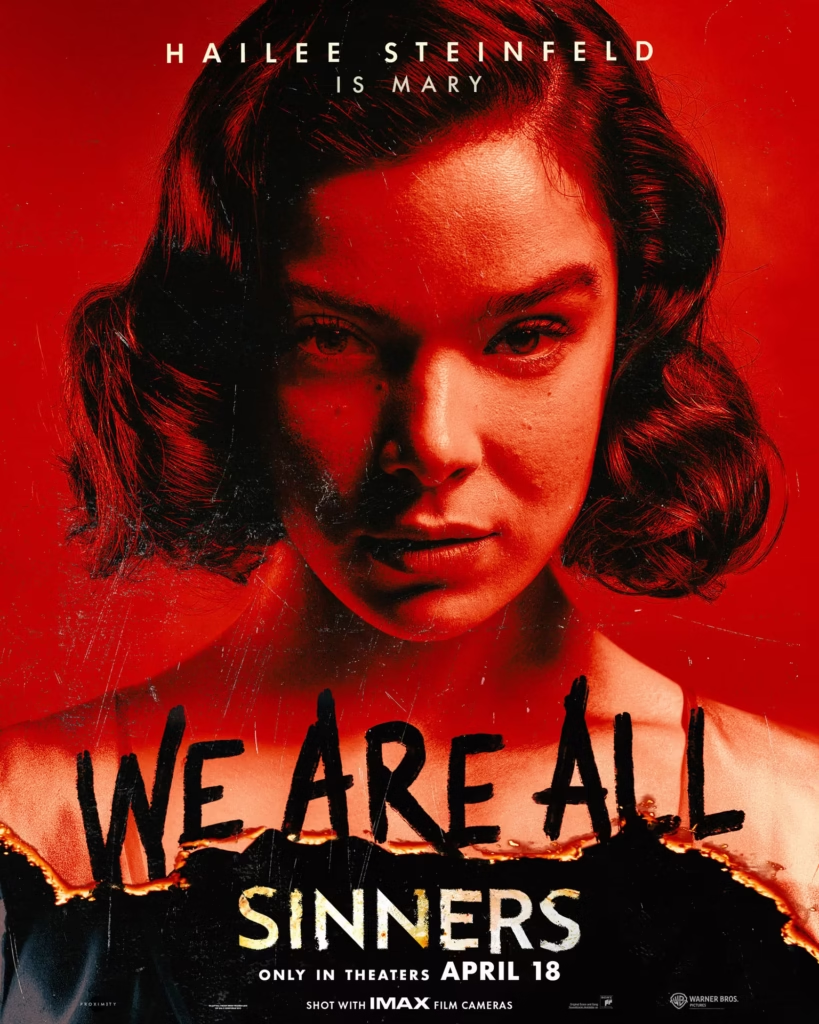
Stack and Mary were lovers before the twins left for Chicago. Mary waited for Stack for seven years and feels abandoned and bitter. When they meet again on the night of the juke joint opening, old feelings come back. Remmick turns Mary into a vampire, and Mary then turns Stack. In a tragic way, their love becomes the reason Stack is pulled into the vampire world. In the 1992 scene, we see that they are still together, still in love, but no longer human.
The Vampires
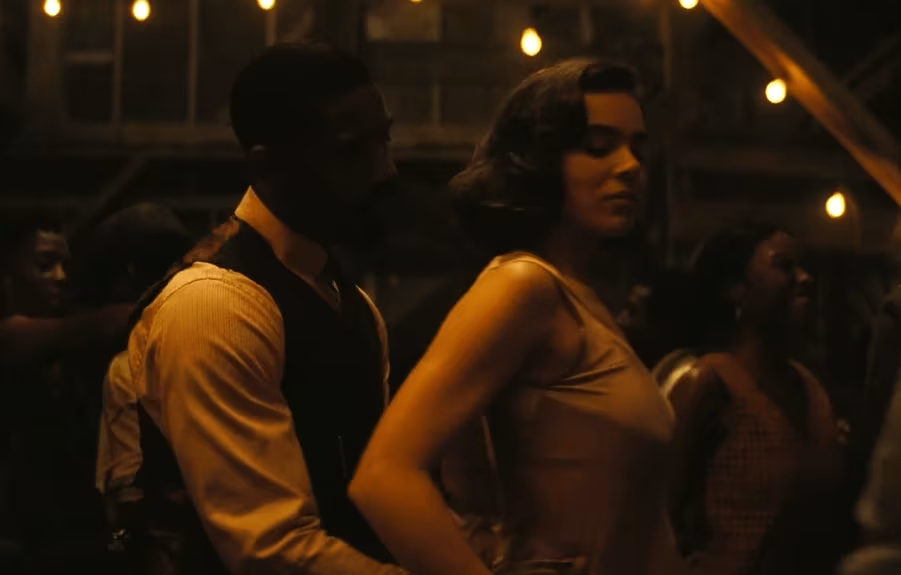
Remmick is the main vampire and the main villain. He is Irish and was once an immigrant who lost his own community and family. He understands what it means to be oppressed, but instead of standing with others, he chooses power. He is drawn to Sammie because Sammie’s music can cross the line between life and death. Remmick wants to use that power to see his own lost people again. His reason is human. His methods are monstrous.
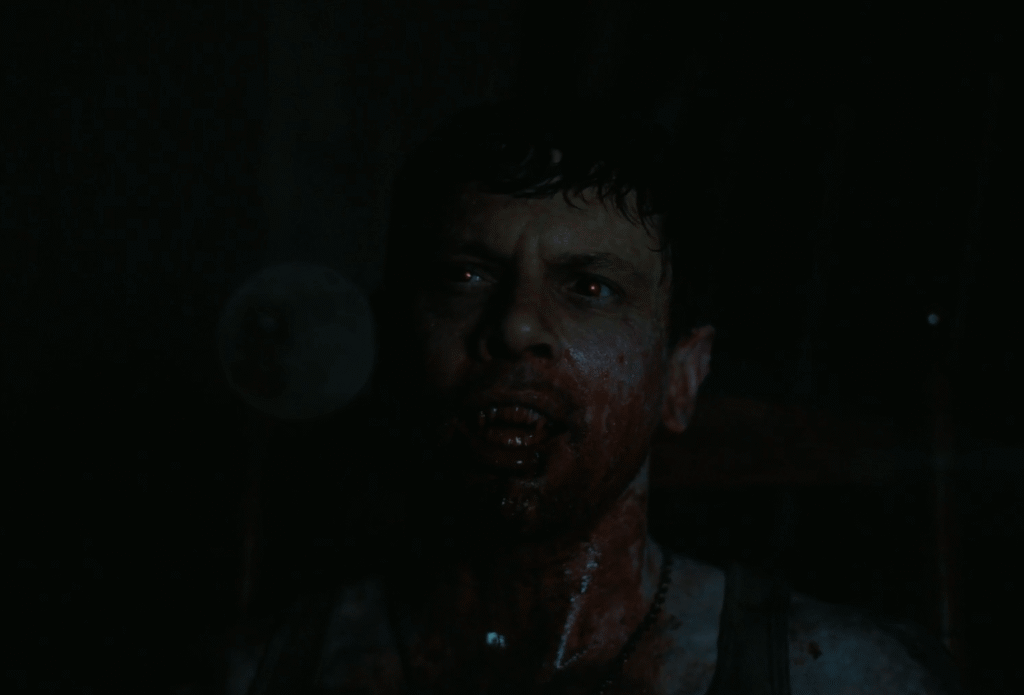
Remmick turns the local Hogwood family (who are KKK leaders), Mary, and Cornbread. Mary then turns Stack. All of them become part of the same vampire group, connected by a kind of shared feeling or hive mind, but not dependent on Remmick to survive.
The Juke Joint Community
The juke joint is not just a building. It is a small community.
Delta Slim is an old and respected harmonica player. He represents the older generation of blues musicians. His presence gives the juke joint respect and meaning. He dies trying to protect others.
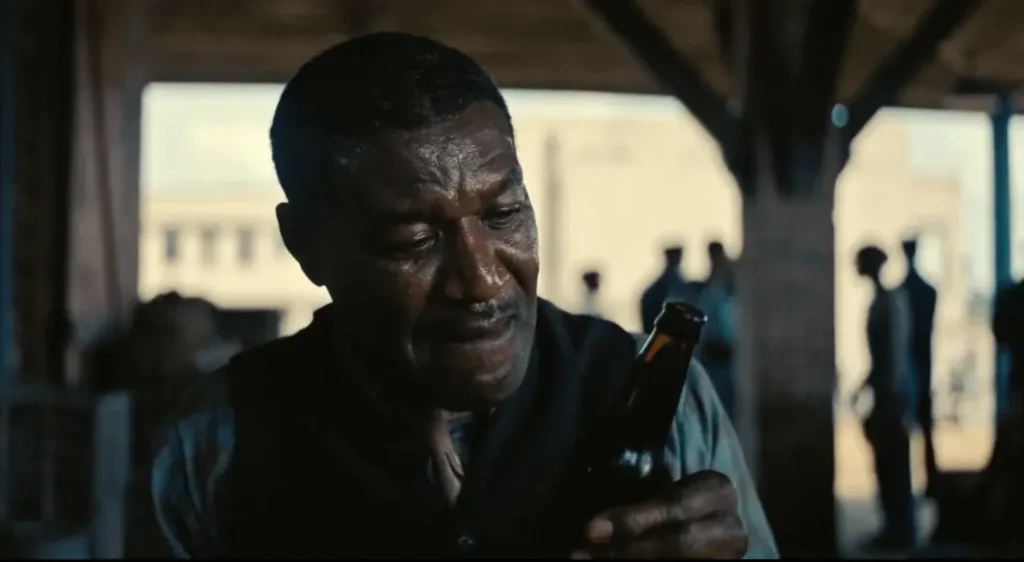
Pearline is a talented singer who is married, but still wants to perform. She represents the many women in blues history who had to balance family life and art. She is turned into a vampire during the attack.
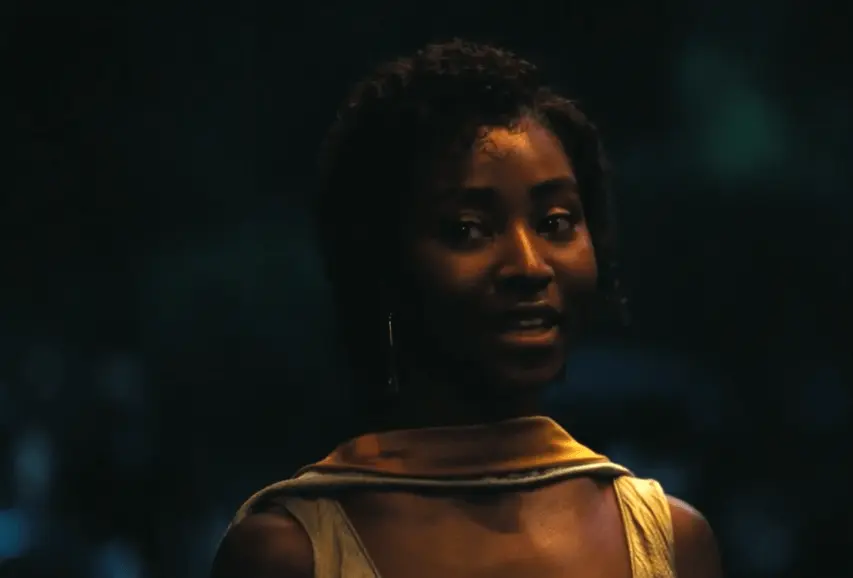
Cornbread is the big, strong bouncer and security for the juke joint. He is loyal to the twins and one of the first people Remmick turns. His turning shows how fast the safe space is destroyed.
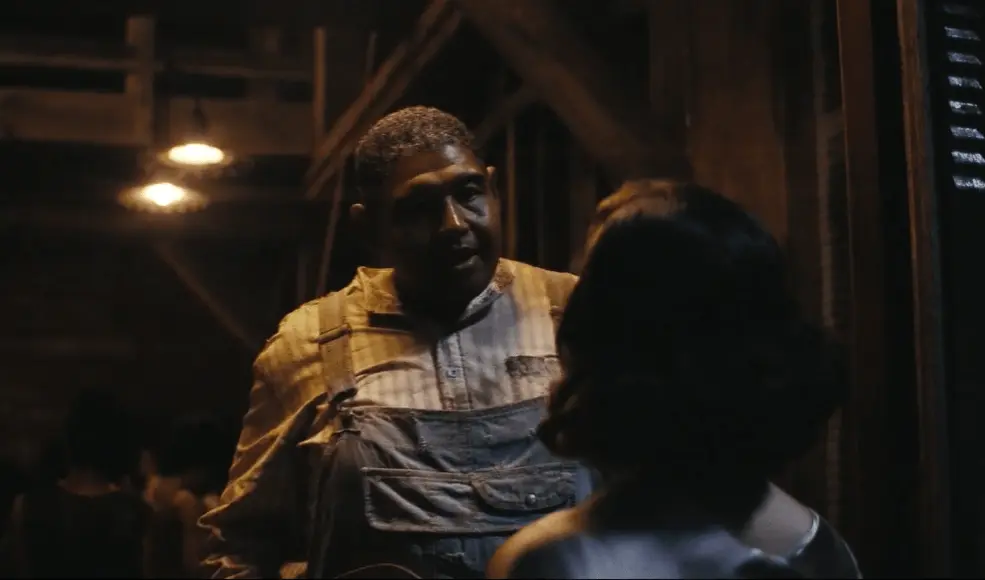
Grace Chow and Bo Chow are Chinese shopkeepers who run a grocery store. They are part of the real history of the Mississippi Delta, where Chinese immigrants often served Black communities when white businesses would not.
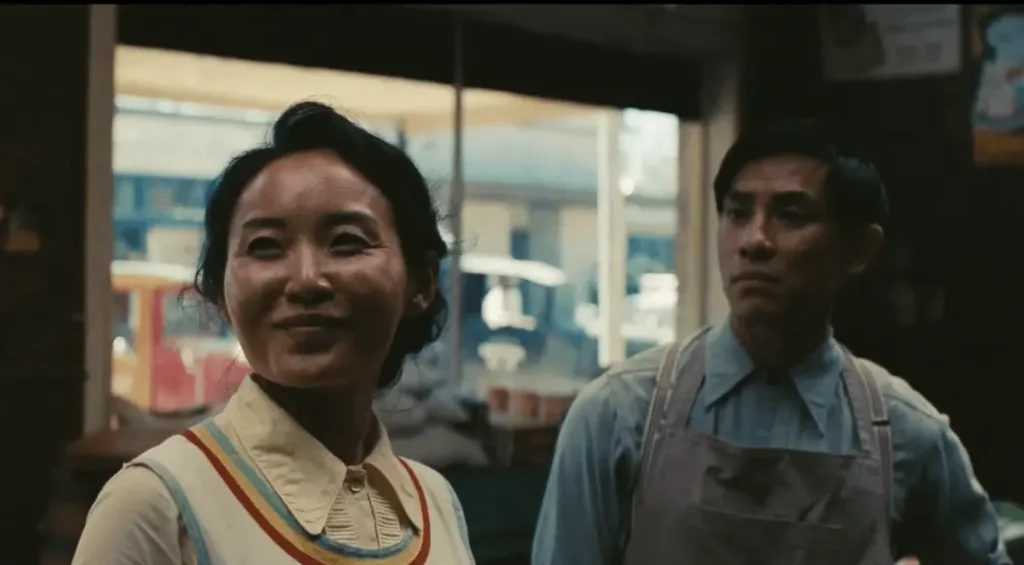
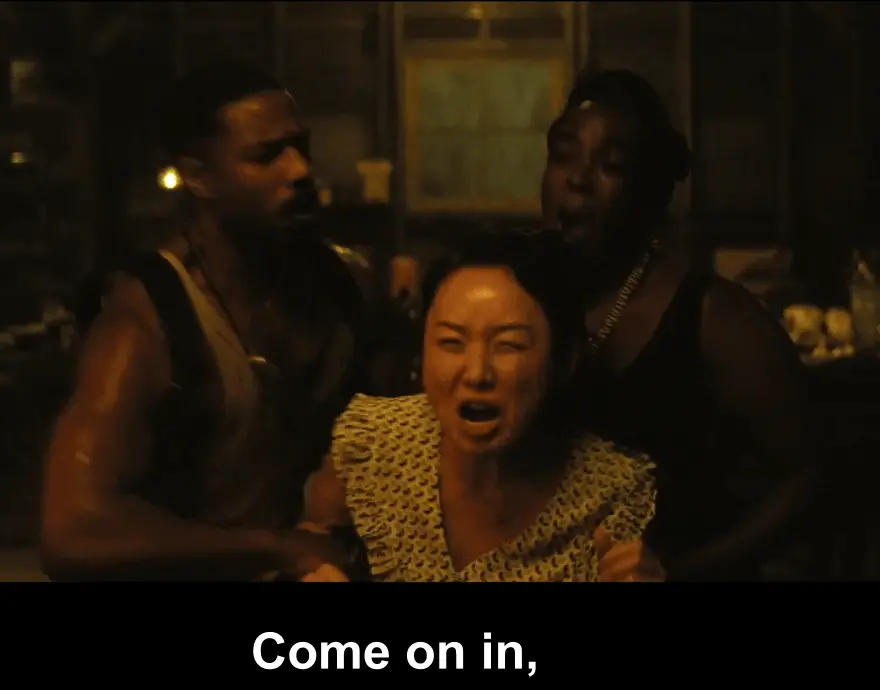
They have a daughter named Lisa. When the vampires threaten her, Grace invites them into the juke joint in anger and fear, breaking the protective barrier.
The Vampires and the Climax
The vampires, who cannot enter without an invitation, find their way in through betrayal.
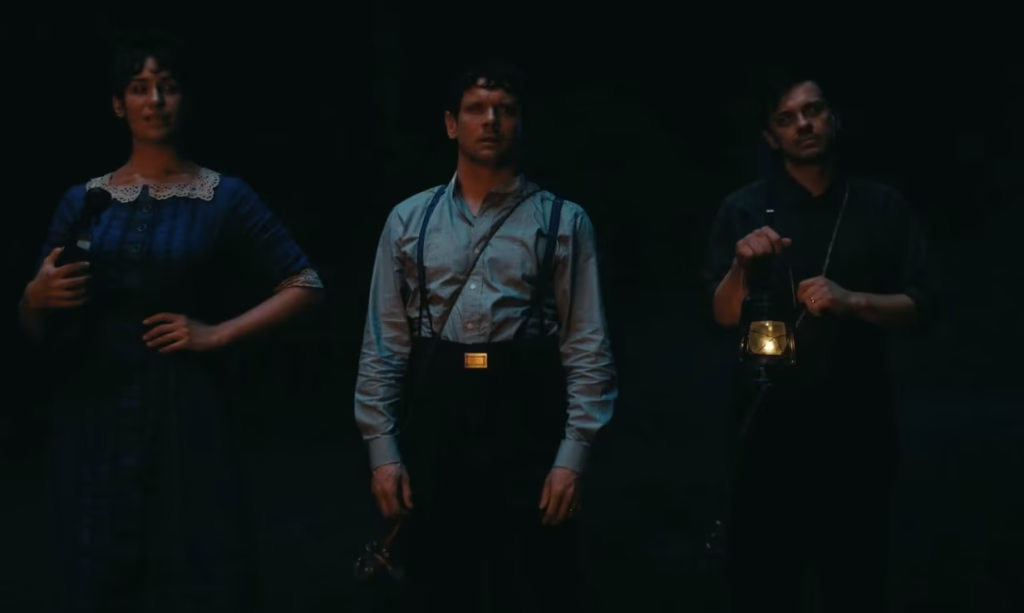
Remmick turns Stack’s ex-girlfriend, Mary (Hailee Steinfeld), who then bites and turns Stack himself. The juke joint becomes a battleground. Smoke’s wife, Annie (Wunmi Mosaku), a Hoodoo practitioner, reveals the rules of these vampires: killing the head vampire (Remmick) won’t save the others, and they are connected by a hive mind.
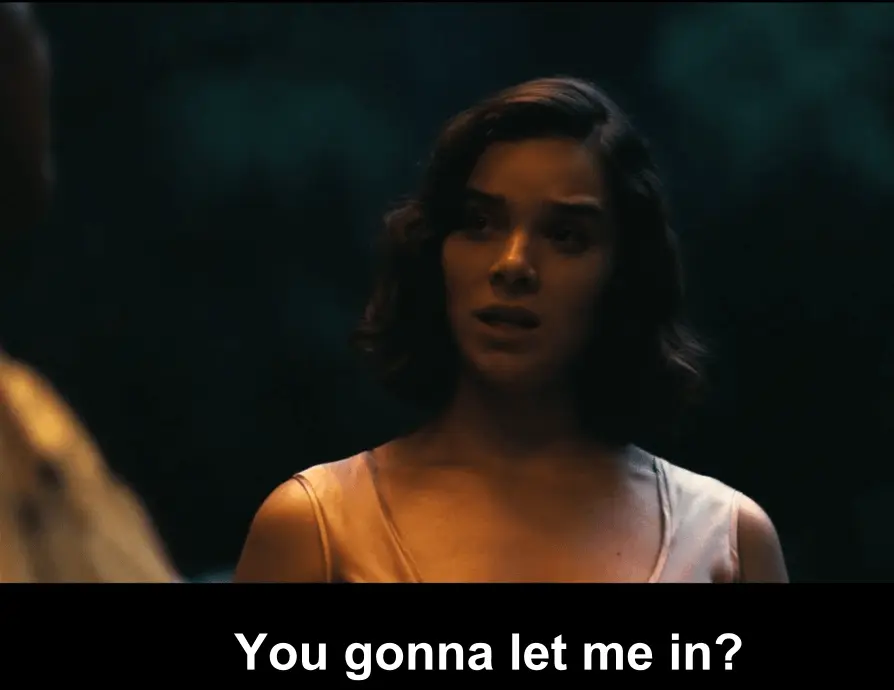
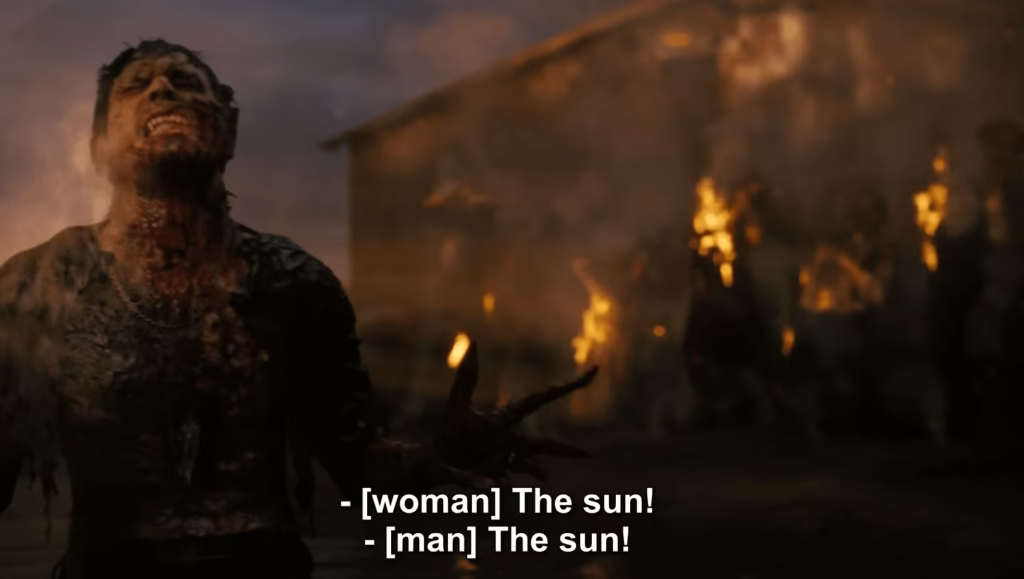
The climax is a brutal siege. Many are killed, including the heroic Annie. Smoke is forced to fight his own brother, Stack, but ultimately spares him. As the sun rises, the remaining vampires are incinerated. Smoke, having sent Sammie to safety, stays behind to kill the arriving KKK members. He succeeds but is fatally wounded.
In his final moments, he sees the spirit of Annie and their deceased child, who call him by his true name, “Elijah.” He drops his cigarette and joins them in a peaceful afterlife.
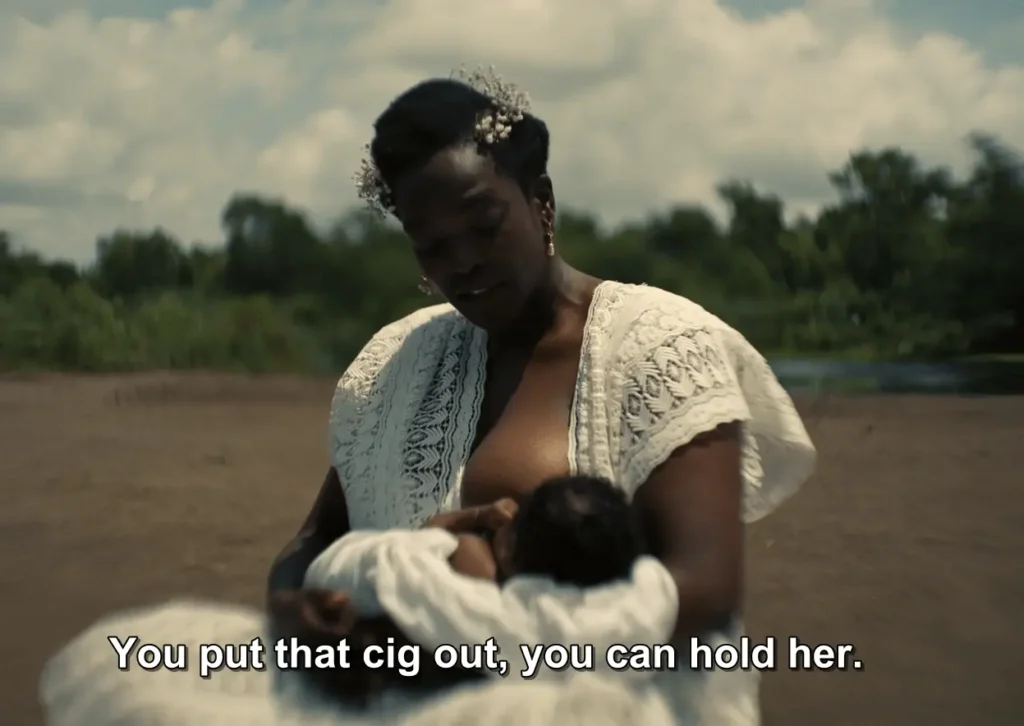
Sinners Ending Explained: What Happens to Smoke, Stack, and Sammie?
The ending of Sinners is not confusing because it is complicated. It is confusing because it is quiet, emotional, and not very comforting. The film does not give everyone the same kind of ending. Each of the three main characters walks away from that night with a very different fate.
Smoke’s Sacrifice and Ascent to “Elijah”
After the vampire attack, Smoke sends Sammie away to safety. He knows that if Sammie stays, he will die. Smoke then stays back to face the Hogwood family, who arrive at dawn to finish their planned attack.
Before fighting them, Smoke removes Annie’s protective charms. This is important. It means he knows he might not survive, and he accepts it. He is not trying to be lucky anymore. He is choosing to stand and protect what little is left.
Smoke manages to kill them, but he is badly wounded. He sits down, lights a cigarette, and slowly bleeds. In his final moments, he sees Annie and their dead child. Annie calls him by his real name, Elijah, not “Smoke.” This is the first time in the film that name really matters.
All through his life, he has been “Smoke,” a man shaped by war and violence. In the end, he stops being Smoke and becomes Elijah again. He puts out the cigarette so there is “no smoke on her” and goes with them. He does not survive, but he finally finds peace.
Stack and Mary’s Immortal Fate (The Post-Credits Scene)
The first post-credits scene jumps to 1992. An elderly Sammie, now a legendary blues musician played by the iconic Buddy Guy, is performing in a Chicago club. In the audience are Stack and Mary, ageless and impeccably dressed. They are still vampires.
Stack does not die in the sun. After Smoke defeats him in the juke joint, he lets him go, but only after making him promise to leave Sammie alone forever. Stack keeps that promise.
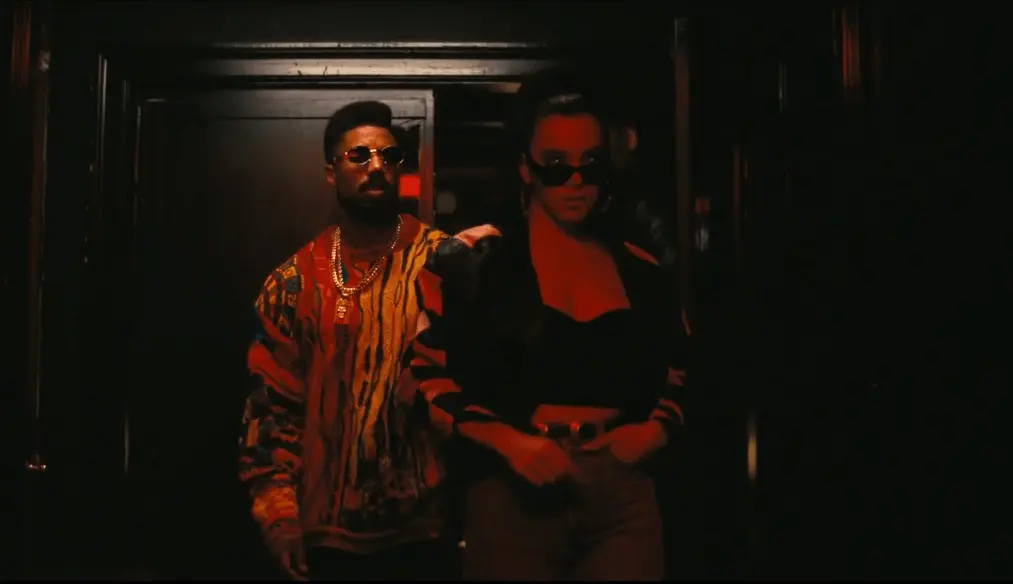
Stack and Mary manage to escape into the shadows before sunrise. That is why they do not burn like the others.
That is why in the post-credits scene, we see them again in 1992. They are still vampires. They have not turned back into humans. But they are calm, well-dressed, and no longer feel like monsters.
By this point, Remmick is long dead, and the strange shared hunger that controlled them is gone. Over the years, they seem to have learned how to live with what they are. Stack still wears his “Stack” ring, which tells us something important: unlike Smoke, he has accepted this new identity instead of trying to escape it.
When they meet Sammie, they do not harm him. Stack explains that he kept his promise. They even offer Sammie immortality. Sammie refuses.
Sammie’s Choice: The Burden and Blessing of the Blues
Sammie survives, but he is forever haunted. He becomes the vessel for the story, carrying the music and the memory of that night. When Stack asks him about it, Sammie confesses that, despite the horror, it was “the greatest day of his life.”
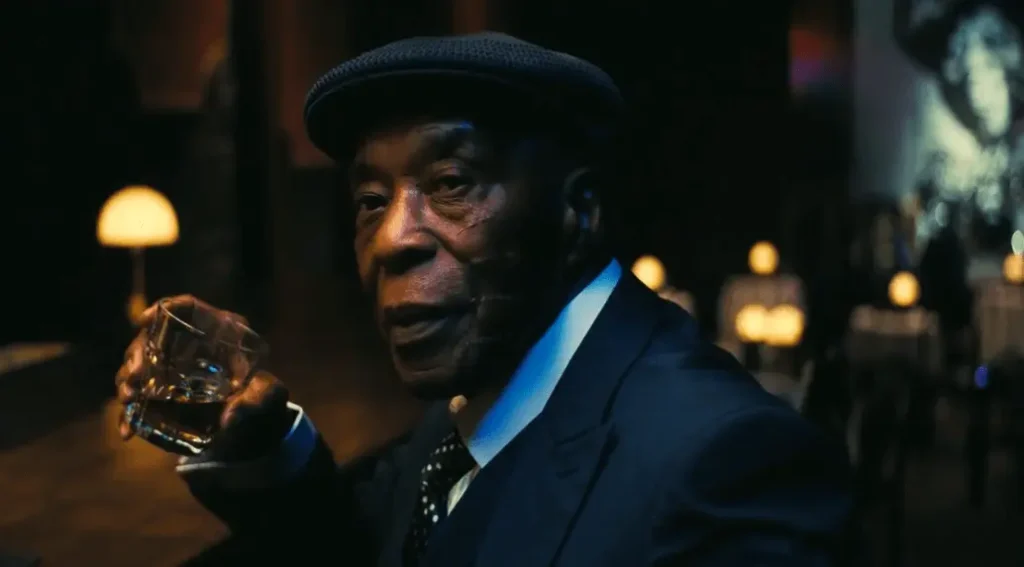
This is the heart of the film. That day, for all its tragedy, was the only day they were truly free. They built a space for themselves, celebrated their culture, and fought for it. Sammie choosing to carry on with the blues, against his father’s wishes, is a testament to the resilience of his culture. The music is both his burden (it attracts monsters) and his salvation (it’s his identity and power).
The Deeper Meaning: Vampires, Blues, and Cultural Appropriation (Must Read)
Sinners uses the vampire genre as a powerful metaphor for cultural theft and historical trauma. This isn’t just a monster movie; it’s a story about America.
“To understand the Great Migration is to also understand for a long time our people’s home was the South. To migrate means to leave something behind.” – Ryan Coogler
The Vampires as Colonizers: Remmick and his group are not just here to drink blood. If that was the case, this would be a very simple vampire movie. They are here to take something.
They do not want to destroy Sammie’s music. They want to own it.
Remmick is not excited by Sammie because he is a good guitarist. He is excited because Sammie’s music can do something special. It can cross the line between life and death. It can call back memories, people, and worlds that are gone.
Remmick has lost his own people. He wants that connection back. But instead of building something of his own, he chooses the easier path: take it from someone else.
That is the real meaning of these vampires. They do not create. They only consume.
This is how cultural exploitation works in the real world too. Black music did not come from comfort. It came from work, pain, loss, and survival. Blues, jazz, rock, hip-hop — all of it came from lived experience. But again and again, someone else came, took it, cleaned it up, sold it, and walked away with the profit and the credit.
They enjoy the product. They do not carry the history.
That is exactly what Remmick is doing. He wants the power of the music without the life that created it.
The Power of the Blues: The film is Ryan Coogler’s love letter to the blues, inspired by his late Uncle James. The blues is the film’s lifeblood. It’s a force powerful enough to “pierce the veil” between life and death, to connect generations, and to attract gods and monsters alike. It represents the soul of the community, the one thing the vampires can’t create, only steal.
Unanswered Questions & Theories
Sinners leaves a few things open on purpose. Not because the story is incomplete, but because some parts are meant to stay a little uncomfortable and open to thought. Here are some of the biggest questions and the most likely answers.
Why are Stack and Mary so peaceful in the 1992 epilogue?
- With Remmick’s death, the shared hunger and pressure of the hive mind is gone. Over the next 60 years, Stack and Mary learn to live with what they are instead of fighting it.
- They are no longer driven by Remmick’s desperation, but by their own quieter, leftover humanity and their affection for each other. Stack also keeps his promise to Smoke and never goes after Sammie, which tells us that not everything human in him is dead.
- Why didn’t Stack and Mary burn in the sun like the others?
- The other vampires do not die because of shared pain. They die because of the sun. Stack and Mary simply escape into the shadows before sunrise.
- Mary runs away after seeing Annie die, and Smoke spares Stack on the condition that he leaves Sammie alone. That is all that saves them.
- Why is the movie called “Sinners”?
- Because everyone is a sinner in someone’s eyes. Sammie is a sinner to his father for playing the blues.
- Smoke and Stack are sinners for their criminal past.
- Remmick is a sinner for his violence.
- The film asks us to question who defines sin. Is it a sin to create art that the church deems demonic? Is it a sin to fight for your own freedom? The title challenges our black-and-white view of good and evil.
- Is the film setting up a sequel?
- Yes. The 1992 scene shows that Stack and Mary are still alive, still together, and fully comfortable with what they are. Their story is clearly not over, and the film leaves the door open to explore what kind of life they have been living all these years.
Hidden Details and Easter Eggs You Might Have Missed
Coogler packed the film with incredible details. Here are just a few:
- Red vs. Blue: Smoke and Annie are consistently associated with the color blue, representing spirituality and wisdom (“haint blue” is a traditional color used to ward off spirits). Stack and Mary are linked to red, symbolizing blood, passion, and danger.
- Wakanda Forever: In the church rafters, the crossed beams at the very top are a subtle tribute to Chadwick Boseman, forming the “Wakanda Forever” gesture.
- The reason this detail is read as a tribute is because of Ryan Coogler’s personal history with Chadwick Boseman. Coogler and Boseman worked closely together on Black Panther, and Boseman’s death deeply affected him. Coogler has spoken before about how much Boseman meant to him not just as an actor, but as a person and as a symbol.
- Smoke’s Shaking Hands: Smoke’s hands tremble throughout the film, a sign of his PTSD from WWI. It’s why he can’t roll his own cigarettes and Stack always does it for him. After Stack’s death, Smoke is forced to take a cigarette from a man he just shot.
- Historical Nods: The film is rich with real history, from the role of Chinese grocers in the Delta to the origins of tamales in the region, brought by Mexican migrant workers.
The Point of This “Sinners Explained” Article
Sinners is a masterpiece of genre filmmaking, a thrilling and heartbreaking exploration of history, family, and the enduring power of art.
The film is about loss, about memory, and about what happens when someone takes something that does not belong to them and calls it their own. The real sin in this story is not breaking a religious rule. It is stealing a people’s culture, their voice, and their story.
The film ends with a simple idea: monsters can kill people, but they cannot kill what people leave behind. As long as the song survives, something true survives with it.