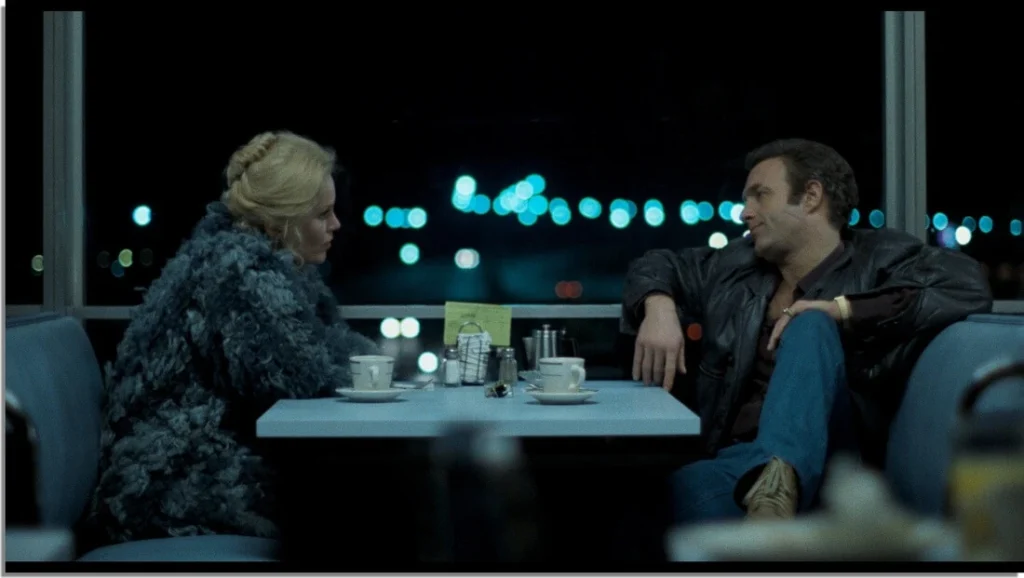
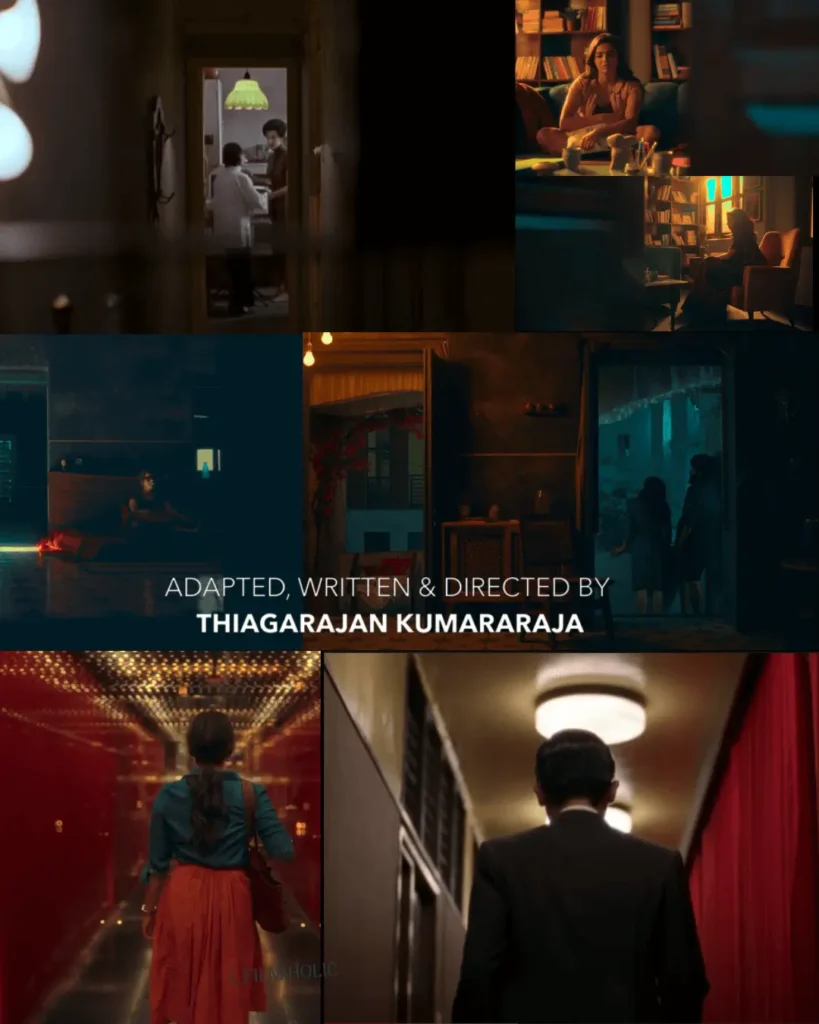
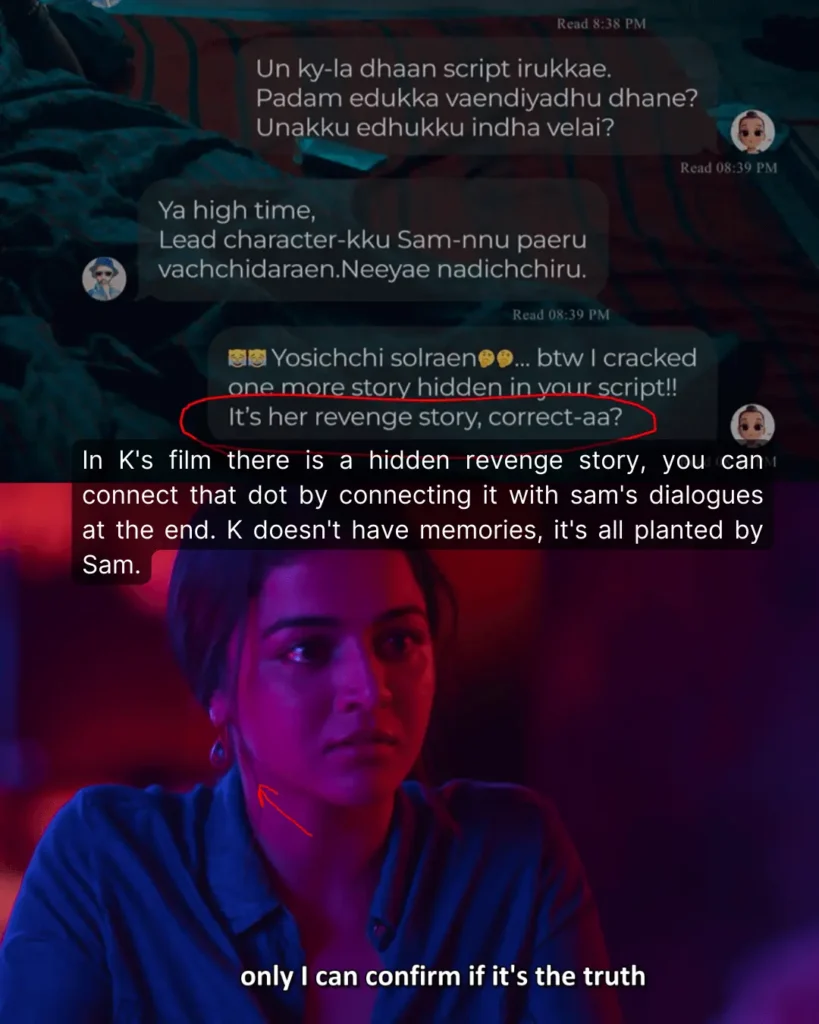
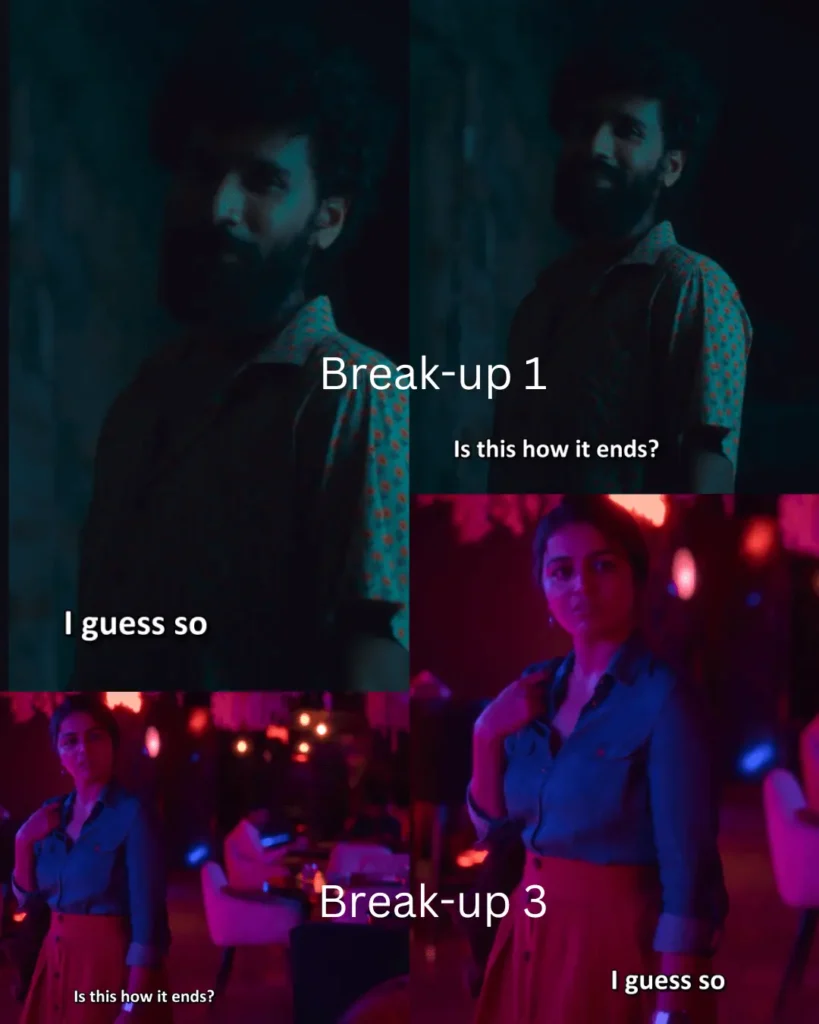
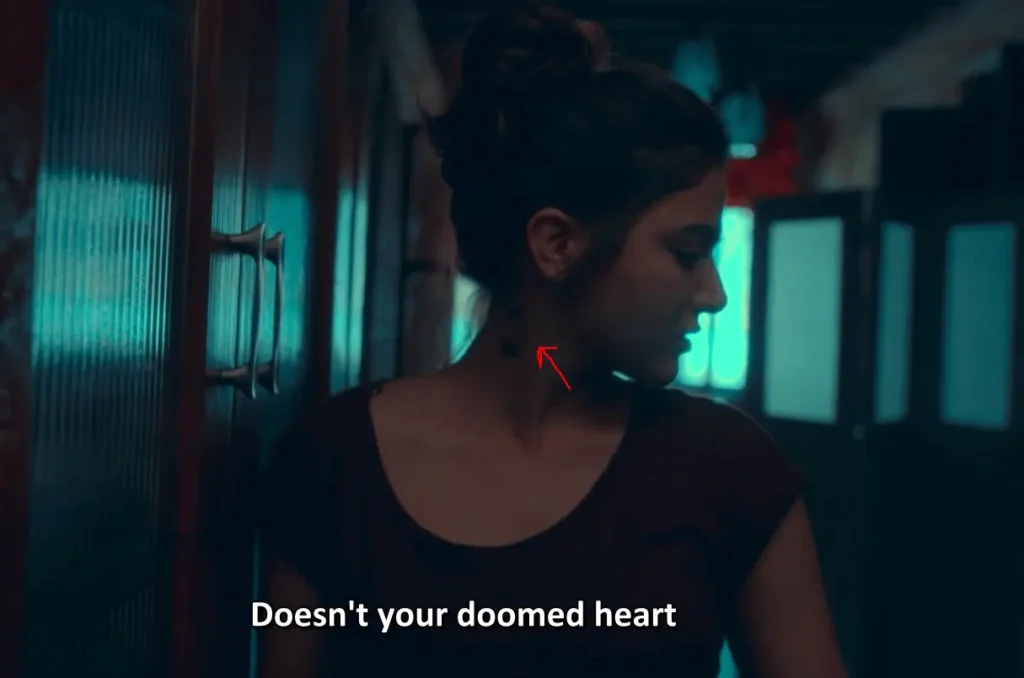
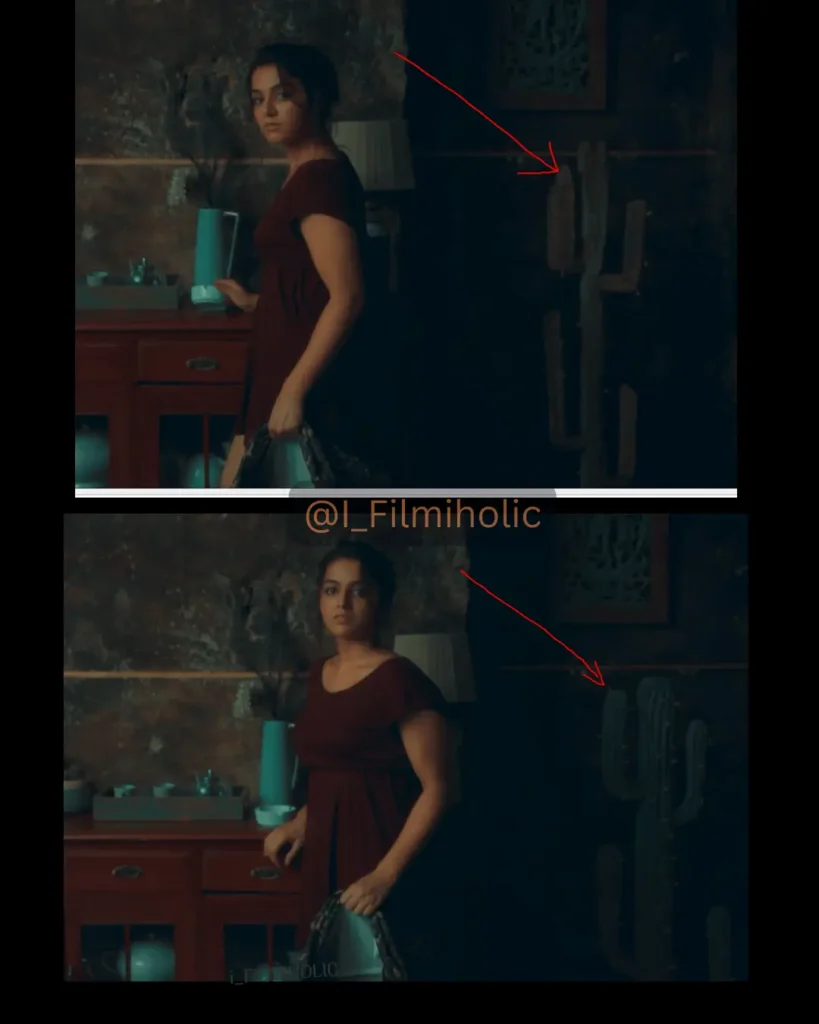
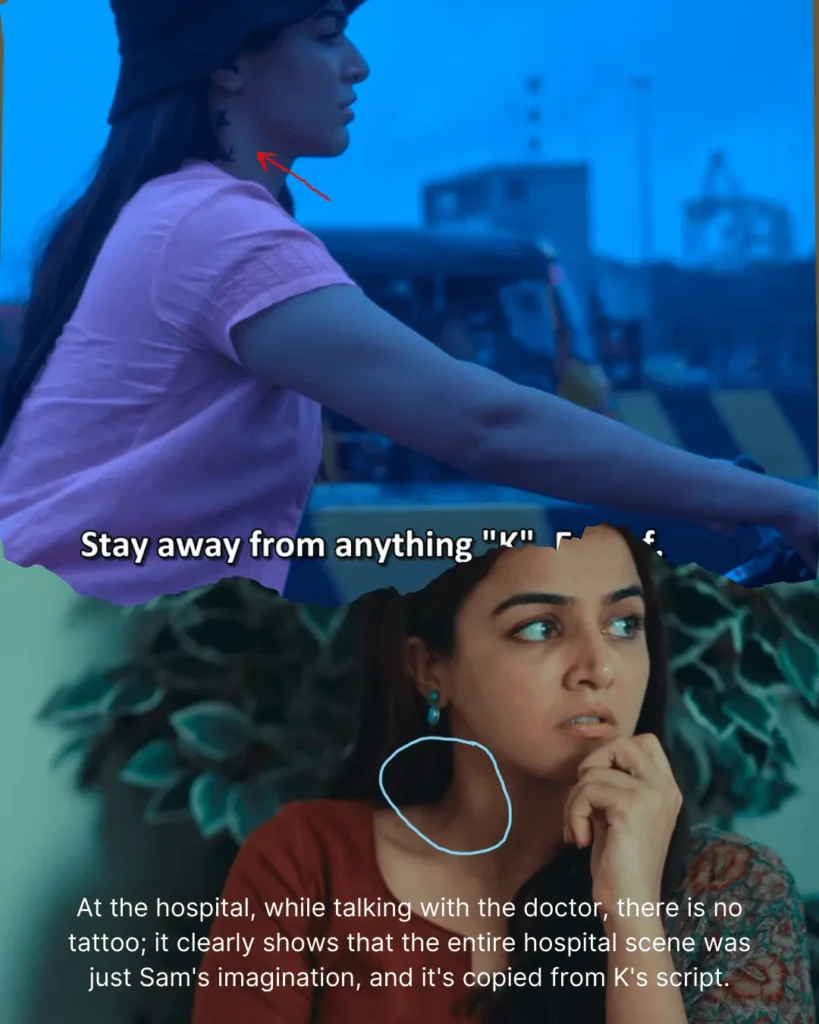
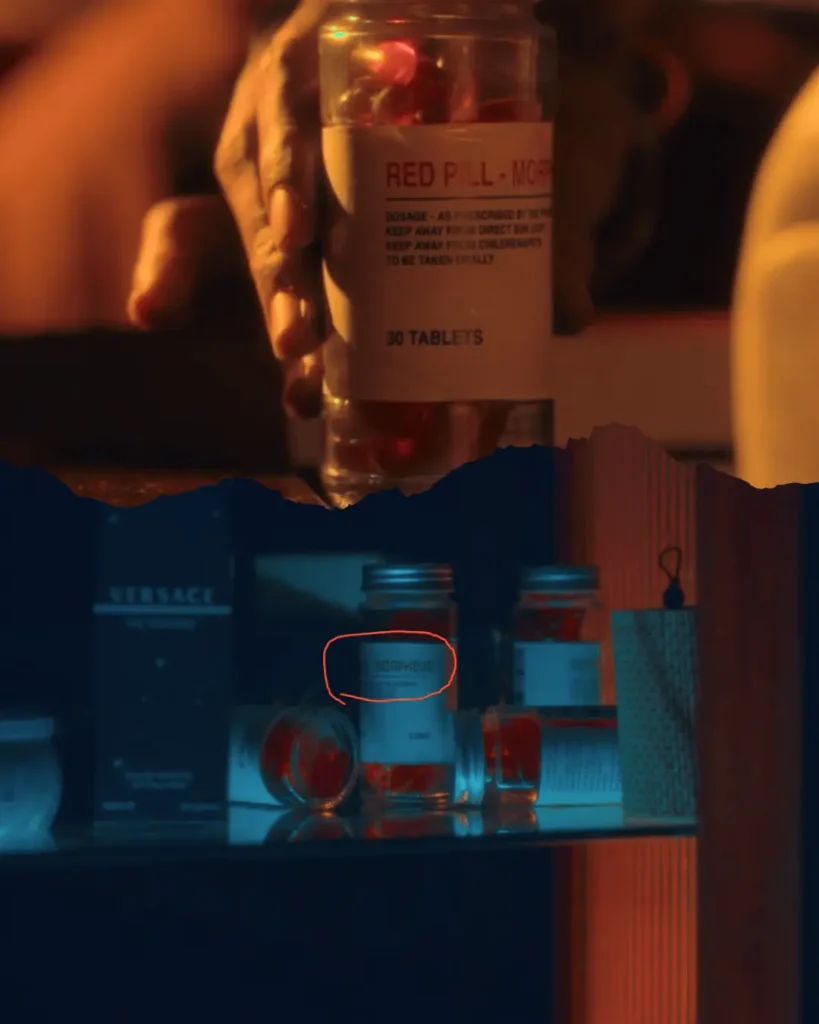
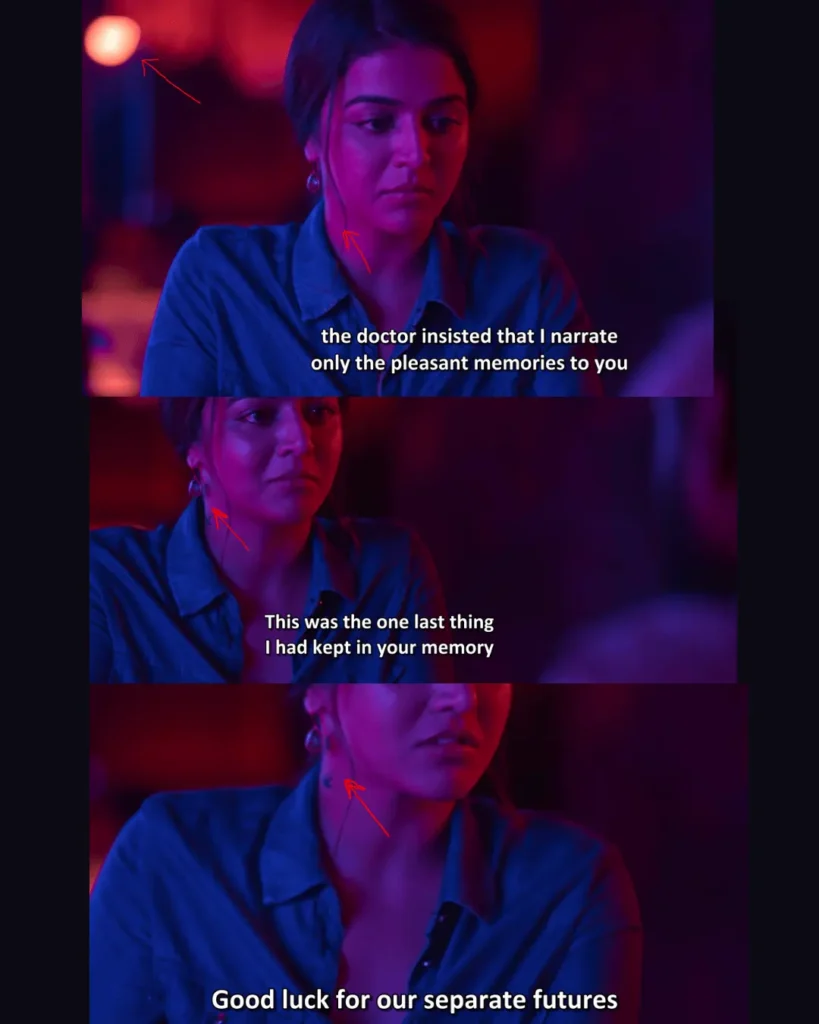
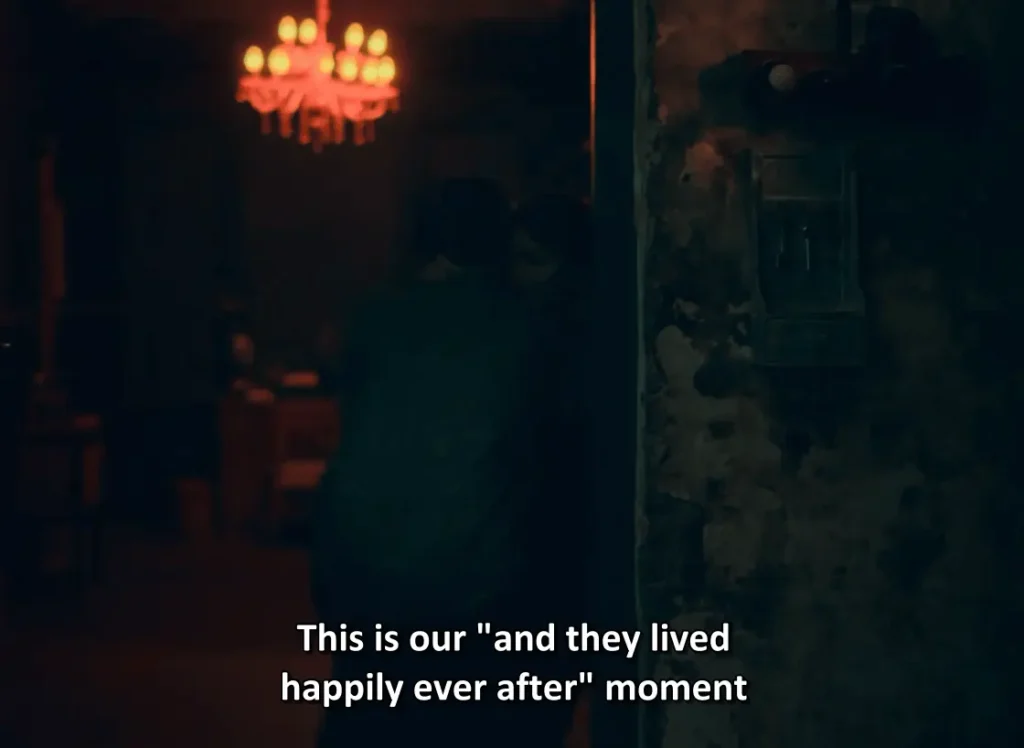
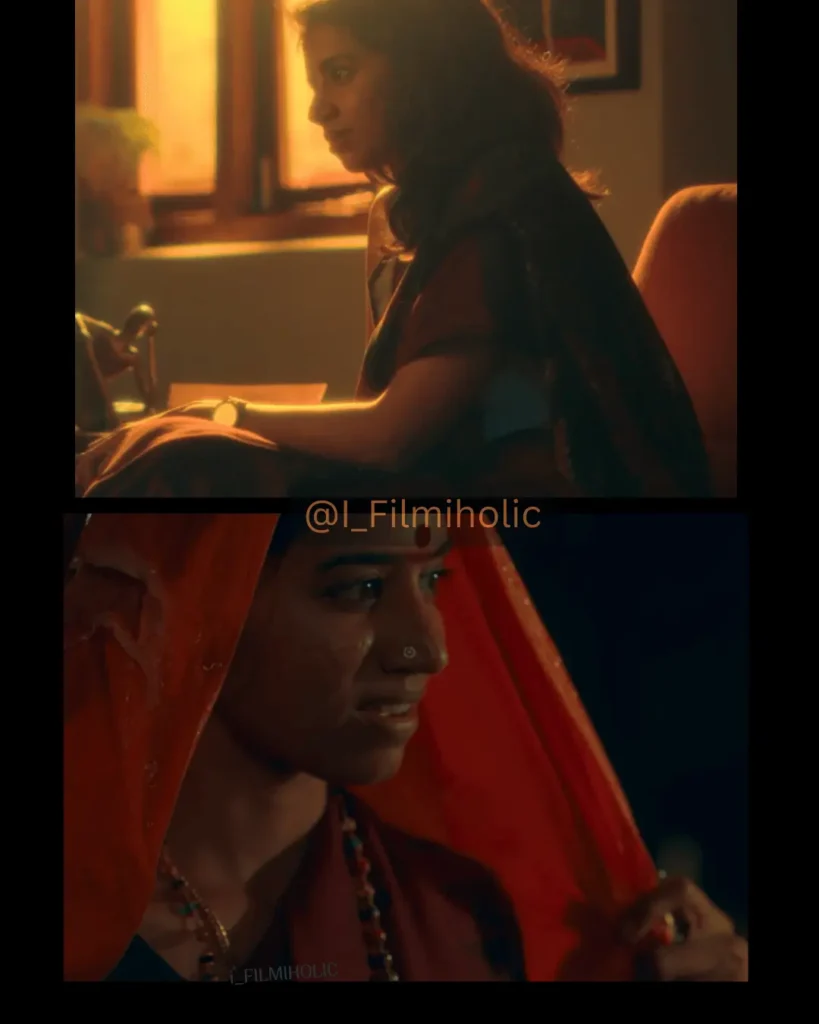
If you walked into SPA(2026) expecting a typical adult comedy or som thrills, you probably walked out feeling disappointed — but also thinking. And that’s exactly why I wrote this observations on Abrid Shine’s 2026 malayalam movie SPA. Spa quietly observes people. It holds up a mirror. And sometimes what we see in that mirror isn’t very comfortable. On the surface, it’s just a day inside a spa. But if you sit with it, you realise it’s one of the sharpest social satires Malayalam cinema has done in recent years….not about sex, but about hypocrisy, desire, and the gap between who we pretend to be and who we actually are.
This isn’t a typical movie review for Spa (2026). Think of it as trying to understand what Abrid Shine was really doing with this experiment.
The Rejection of Narrative: A Film Without a Graph
Spa is a film that, from its very first scene, tells you to abandon all preconceived notions of conventional cinema.
There is no three-act structure, no clear protagonist, no rising action, no central conflict, and certainly no neat resolution in the end.
Instead, Shine invites us into the closed, intimate world of a spa in Kochi, and for two hours, we become voyeurs, observing a series of episodic encounters that expose the raw, often uncomfortable, truths about desire, morality, and the hypocrisy that governs our society.
The spa itself becomes the main character.
This structure is very important because if the film followed one person’s story, we would focus on their drama. Even there is a director character who asks a therapist, “What is your story?” She says, “Our story is boring. We come, we do massages, we go — nothing exciting. But the people who come here make it exciting.” Abrid Shine follows the same philosophy here.
And slowly you realise: this isn’t about individuals. It’s about behaviour.
The film doesn’t just talk about hypocrisy. It shows it happening again and again until you can’t ignore it.
How SPA Flips the Male Gaze
When we think a bout a cinema with title, the first thought might be objectifying women with semi nudity and some jiggling moments in the dark rooms. SPA quietly flips that idea.
Here, the camera isn’t interested in objectifying women. The women are mostly fully dressed, calm, professional, and in control.
It’s the men who are exposed — physically and emotionally.
We meet a sawmill worker, a doctor, an artist, and even a film star, each bringing their own unique set of desires, insecurities, and moral contradictions into the therapy room.
They lie on massage tables, vulnerable, stripped not just of clothes but also of their social masks. The respected doctor, the tough officer, the intellectual poet — inside the spa they all look the same. Just men dealing with desire, insecurity, and ego.
The camera never sensationalises nudity. Instead, it observes behaviour.
That choice makes a big difference because the film isn’t trying to shock — it’s trying to study the male psyche.
And that’s where the satire becomes sharp. Let me explain that with few examples from Spa.
The Innocent Hypocrite
Mathan looks harmless, almost sweet. He’s inexperienced with women and slowly becomes emotionally attached to his therapist. He feels protective, like a “nice guy.”
But the irony is obvious. He’s still part of a system he might morally judge if it involved someone from his own family.
His innocence isn’t pure — it’s blind. And that’s what makes his character interesting. The conversation between Mathan and therpaist Riya is one of the peak moments in the cinema.
Unfortunately, society celebrates these type of characters as protectors. I am sure, after OTT release of Spa, Mathan will be celebrated in reels.
The Many Faces of Male Ego
Rahul Madhav’s character represents what you could call a fragile ego. He’s a film star who wants to be recognised but at the same time wants to stay anonymous, which perfectly shows the strange paradox of modern celebrity life.
He wants validation, but he’s also clearly afraid of being exposed, like his confidence is something he constantly has to perform rather than naturally feel.
Then there’s Srikanth Murali, who is usually seen in respectable roles like a doctor or advocate, but here he plays a character who is completely stripped of that public dignity.
His performance feels brave because it’s uncomfortable to watch, and in many ways, his character becomes the most direct reflection of what the film is really trying to say about hypocrisy and the gap between public image and private reality. Whole theatre went on shock when he said the word “Ecstacy!!!”
Dinesh Prabhakar’s character feels like a sharp satire of the so-called cultural elite. He comes in as a Malayalam poet carrying all that intellectual weight and sophistication, but slowly his strange and almost comical kinks start to show.
The film subtly shows how he uses his intellect almost like a mask to hide his basic desires, reminding us that education or artistic sensibility doesn’t automatically make someone morally superior — hypocrisy can exist just as easily behind polished words.
What Do the Women of SPA Represent? Professionalism Over Victimhood
Perhaps the most progressive and important choice Abrid Shine makes is in the portrayal of the women.
The film steadfastly refuses to make them victims. We are not given tragic backstories or forced to pity them.
As Radhika Radhakrishnan’s character powerfully states, “If those who seek these services do not have a moral conundrum, why should we?”
Shruthy Menon leads the pack with a commanding presence. She is a seasoned professional, handling difficult clients with a calm authority that comes from experience. She is not a victim; she is a manager.
Radhika Radhakrishnan, in a performance that showcases her incredible range, is the emotional anchor for many of the vignettes. Her ability to transition from gentle empathy with Mathan to righteous anger when a client crosses a line is remarkable.
This is the same actress who gave a deeply nuanced and vulnerable performance as the long-suffering mistress in Appan. In SPA, she sheds that vulnerability to embody a woman who is in complete control of her emotional and physical boundaries. The contrast proves her versatility and courage as a performer.
Is It a Happy Ending? A Sudden Break in a Carefully Constructed World
After building a quiet, character-driven tone, the film suddenly moves into an action-style climax.
Suddenly, new characters enter, and the film shifts into something that feels like a Kill Bill-style action sequence. The change is so abrupt that it feels slightly out of place.
For nearly two hours, the film carefully builds a realistic world… yes, it’s satirical, but it still feels grounded and observational. Then this sudden move into a spoofy, hyper-stylised climax feels almost like the film loses its confidence.
I felt Abrid Shine’s that choice feels contradictory because the whole film had earlier questioned the need for a traditional story arc in the first place.
Some viewers might interpret this ending as one final satirical comment on filmmaking itself, but emotionally it weakens the impact.
In the end credits, I love the way Abrid Shine roast those taglines “Family movie”, “Award Films”, “Artisctic Social Responsibility film”.
Why SPA is Must Watch Despite Its Flaws in Ending
Even with that uneven ending, SPA remains a bold film.
It trusts the audience to think instead of spoon-feeding emotions. Spa explores desire without judgement. It questions morality without preaching.
By reversing the gaze, presenting women as professionals, and showing repeated patterns of behaviour, the film creates a powerful commentary on society.
More than anything, it starts conversations. Because it asks us to look at ourselves without filters.
It challenges our ideas about morality and respectability. And most importantly, it proves that sometimes cinema doesn’t need a story — just observation.
If you’re willing to engage with it patiently, SPA becomes less of a movie and more of a reflection.
What is the real story behind Dhurandhar? In Dhurandhar several real characters are clearly inspired by real officers, gang leaders, and terror figures, even if their names and details are changed for the screen.
In this article, we break down Dhurandhar — separating cinema from history. We look closely at the Dhurandhar real story, decode the real characters behind the reel roles, and examine which incidents are rooted in fact and which ones are deliberately simplified or dramatized. Not to glorify or accuse — but to understand what the film is really saying beneath the action and patriotism.
Dhurandhar Real Characters: Who Played Whom?
One of the strongest things Dhurandhar does is this: it doesn’t invent heroes and villains out of thin air. Most characters are shaped around real people who operated in the shadows — soldiers, gangsters, intelligence officers, and terrorists whose actions quietly shaped history. The names are changed, but the behaviour, ideology, and outcomes feel very familiar.
Let’s break down the Dhurandhar real characters and understand who they are actually inspired by.
The reel character: Ranveer Singh plays a deep-cover RAW operative who lives with anger, patience, and restraint at the same time. He is not shown as a loud patriot or a chest-thumping hero. Instead, he is quiet, methodical, and willing to disappear into the enemy’s world if that’s what the mission demands. His goal is simple — correct what he believes was a national failure.
The real story behind it: This character draws clear inspiration from Major Mohit Sharma, one of India’s most respected special forces officers and an Ashok Chakra awardee.
Major Sharma infiltrated the Hizbul Mujahideen by taking on the identity of Iftikhar Bhatt. He lived among militants, earned their trust, gathered intelligence, and eliminated key terrorists from inside the network.
In 2009, during an operation in Kupwara, he was critically injured but continued fighting, saved two of his teammates, and killed four terrorists before being martyred. Dhurandhar doesn’t recreate his life exactly, but it captures the core idea — deep infiltration, moral isolation, and sacrifice without recognition.
The reel character: Akshaye Khanna plays Rehman Dakait as calm, intelligent, and terrifyingly practical. He doesn’t shout. Doesn’t rush. He runs Lyari like a system — controlling crime, politics, and terror logistics as one operation. On the ground, he is the film’s most visible villain.
The real story behind it: Rehman Dakait was not fictional. His real name was Sardar Abdul Rehman Baloch, and he was one of the most feared gang leaders in Karachi. He rose from petty crime to running Lyari’s underworld, controlling extortion, kidnappings, arms, and protection rackets. For years, Lyari functioned almost like a parallel state.
Like in the film, he tried to move closer to legitimacy by forming the People’s Aman Committee and building political connections. His death in 2009, in a police encounter, remains controversial — many believe he outlived his political usefulness. The film stays close to this arc without naming names.
The reel character: Sanjay Dutt plays a hardened Pakistani police officer who is not aligned to gangs, terrorists, or ideology. His loyalty is only to order. He hunts everyone — criminals, extremists, and political pawns — making him dangerous and unpredictable for all sides.
The real story behind it: This character is almost a direct reflection of Chaudhry Aslam Khan, widely known as Pakistan’s toughest cop. As the head of Karachi’s anti-terror operations, he went after gangsters like Rehman Dakait and Taliban operatives with equal force.
He survived multiple assassination attempts. After a bomb attack on his home, his response was simple: “I will bury the attackers in the same rubble.”In 2014, he was killed in a suicide bomb attack. His death showed how deeply he had unsettled powerful networks.
The reel character: Madhavan plays the strategist — not the man pulling the trigger, but the one deciding when the trigger must be pulled. He represents the shift in thinking inside India’s security establishment: from restraint to retaliation.
The real story behind it: The inspiration here is clearly Ajit Doval, India’s National Security Advisor and former RAW officer. Doval was directly involved in the IC-814 hijacking negotiations and later became the face of India’s aggressive counter-terror doctrine.
From surgical strikes to Balakot, his philosophy has been consistent — threats must be neutralised at their source. The film borrows his worldview more than his biography, using Madhavan’s character to voice that strategic shift.
The reel character: Arjun Rampal plays the invisible villain — the handler, not the foot soldier. He represents state-backed terror, using criminals and extremists as tools rather than allies.
The real story behind it: This role is inspired by Ilyas Kashmiri, a former Pakistani soldier who became one of Al-Qaeda’s most dangerous operatives. He was linked to multiple terror plots, including the 2008 Mumbai attacks, and was considered a master of guerrilla warfare.
Once described as a successor-level figure to Osama bin Laden, Kashmiri was reportedly killed in a US drone strike in 2011. In Dhurandhar, his character symbolises the system that enables terror — not just the men who carry it out.
The Real Story vs the Reel Story of Dhurandhar
The IC-814 Hijacking (1999): The film opens with the humiliating memory of India releasing captured terrorists, including Masood Azhar, in exchange for the lives of passengers on a hijacked plane. This event serves as the protagonist’s core motivation—a national shame he is desperate to avenge.
Operation Lyari: A significant portion of the film is set in the volatile Lyari district of Karachi, a lawless region ruled by powerful gangs. This is not a fictional backdrop; it’s based on the real Lyari gang wars that held Karachi hostage for years.
Fact vs fiction: The emotional impact shown in the film is accurate. But the real event was far messier. Governments were under extreme pressure, options were limited, and every decision carried consequences. The film simplifies this into a clear moral trigger, while reality offered no clean answers.
The Heart of Democracy Under Siege: Parliament Attack (2001)
The real story: On December 13, 2001, five terrorists linked to Jaish-e-Mohammed attacked the Indian Parliament. Using a vehicle with fake security markings, they breached the complex and opened fire. The encounter killed nine security personnel and a gardener. All five attackers were neutralised.
The Dhurandhar version: The film does not recreate the attack in detail. Instead, it uses it as proof. In briefings and conversations, the Parliament attack is referenced as evidence that restraint had failed. That release in 1999 was followed by escalation, not peace.
This is where Madhavan’s character gains authority in the narrative. The old logic — patience, restraint, diplomacy first — is shown as outdated. The film positions this attack as the moment where covert retaliation becomes inevitable.
Fact vs fiction: The connection between Kandahar and later terror attacks is real. But history is rarely linear. The film compresses years of intelligence failures, global politics, and regional instability into a straight line to make its argument clearer. It’s a simplification — but a deliberate one.
The 26/11 Connection That Changes Hamza’s Mission
How 26/11 is Referenced in the Movie:
The 26/11 attacks become the emotional and moral catalyst for Hamza’s betrayal of Rehman Dakait. Here’s the pivotal moment:
Hamza discovers that the weapons supplied by Rehman Dakait to various terror groups were used in the 26/11 Mumbai terror attacks.
This revelation is deeply disturbing to Hamza because it shows that his mentor—the man he worshipped as the “Sher-e-Baloch” (Lion of Balochistan), who claimed to fight for Baloch upliftment through schools, hospitals, and jobs—was actually complicit in terrorism that killed innocent civilians in India.
The Breaking Point:
When Hamza witnesses Rehman celebrating with ISI chief Major Iqbal after the “success” of the 26/11 attacks, something inside him shatters. This is the moment when Hamza’s loyalty transforms into hatred.
He realizes that Rehman has betrayed not just India, but his own people—the Baloch community he claimed to serve. Rehman has become nothing more than a puppet of the ISI, using terror to advance Pakistan’s strategic interests.
The Moral Justification:
This discovery provides Hamza with the moral justification he needs to execute his mission. He’s no longer just following orders from Ajay Sanyal; he’s now driven by a personal vendetta. Rehman’s involvement in 26/11 makes him, in Hamza’s eyes, a legitimate target who deserves to die.
The Economic Jihad: The De La Rue Fake Currency Scandal
The real story: This is the least discussed, and arguably the most uncomfortable part of the film’s inspiration. For years, Pakistan’s ISI pushed high-quality counterfeit Indian currency into circulation. This wasn’t street-level forgery — these were “supernotes” almost impossible to detect.
The controversy deepened when allegations emerged that a British security printing firm, De La Rue, had supplied technology to both India and Pakistan.
Investigations later raised questions about decisions taken during the UPA era — monopoly contracts, ignored warnings, and extended agreements despite security concerns. The implication was disturbing: India’s economic security may have been weakened not only from outside, but also through internal policy failures.
In simple terms, fake currency funded terror, and systemic decisions allegedly made that easier.
The Dhurandhar version: The film strips this story down. It shows fake currency as a Pakistani operation run through gang networks and ISI handlers. The focus stays external. There is no mention of questionable contracts, corporate responsibility, or Indian administrative failures.
From a storytelling perspective, this makes the narrative cleaner. Villains stay on one side. The system remains intact.
Fact vs fiction: This is where the gap is widest. By avoiding the role of internal vulnerability, the film removes the most disturbing part of the real story.
The truth was not just about an enemy printing fake notes — it was about how fragile systems can be when oversight fails. Dhurandhar turns a story of institutional weakness into a familiar spy-versus-villain framework.
Dhurandhar Ending Explained: The Rise of a King, The Birth of a Monster
The Twist That Changes Everything: Who is Hamza Ali Mazhari?
Just as you’re processing Hamza’s ruthless ascent to power, the film delivers its most devastating blow. In the final moments, we learn the truth:
Hamza Ali Mazhari does not exist.
He is a carefully constructed identity, a mask worn by Jaskirat Singh Rangi, a death-row inmate from India.
Recruited by IB Director Ajay Sanyal (R. Madhavan), Jaskirat was given a new face, a new name, and a new life for a single purpose: to infiltrate Pakistan’s deepest terror networks and dismantle them from within. He is the ghost in India’s first-ever covert espionage operation of this scale.
This revelation is the key to the entire film. It reframes everything we’ve seen.
Hamza’s loyalty, his internal conflicts, his moments of brutality—they are all part of a deep-cover role played by a man who has sacrificed his very identity for his country.
The Ranveer Singh real identity Dhurandhar twist isn’t just a clever plot device; it’s a commentary on the profound psychological toll of espionage. To become the perfect monster, Jaskirat had to bury the man he once was.
The Ending Isn’t Victory — It’s Consequence
After eliminating Rehman and taking control of his empire, Hamza/Jaskirat (Ranveer Singh) is not shown celebrating power. Instead, he is disturbed.
He sees Rehman everywhere — in reflections, in silence, in memory. These are not literal ghosts. They are reminders.
He has become what he was sent to dismantle.
This is where Dhurandhar becomes uncomfortable. Jaskirat didn’t just defeat a system — he absorbed it. He now carries its violence, its logic, its moral weight. The mission succeeded, but the man did not remain intact.
The final moments push this further.
Hamza turns his attention to the real architect behind everything — Major Iqbal (played by Arjun Rampal), known within the system as “Bade Sahab.” The post-credits scene makes one thing clear: Dhurandhar Part 2 is not about expanding scale — it’s about escalation.
But the real conflict is internal.
Can Jaskirat continue this mission without fully losing himself? Or has he lived as Hamza for so long that there is no Jaskirat left to return to?
What Dhurandhar Is Really Saying
The ending of Dhurandhar does not celebrate triumph. It questions it.
The film asks something deeper than politics or patriotism: When a nation sends a man into darkness to fight monsters, what happens if he survives — but comes back as one?
Ryan Coogler’s Sinners is one of those movies that doesn’t really end when the credits roll. On the surface, it’s a simple vampire film, but once you start pulling at the threads, you realise it needs a proper Sinners explained kind of discussion — especially the ending.
This is one of those films where the story is only half of what’s going on. The other half is hidden in small details, symbols, and choices the characters make. In this article, we’ll break down the ending, the post-credits scenes, the vampire rules, and the bigger meaning behind Sinners, not as a reviewer but as a fan.
[MASSIVE SPOILER WARNING: Do not read further if you haven’t seen the film.]
The Plot of Sinners: A Chronological Breakdown
The story takes place in October 1932, in a small town in the Mississippi Delta. Twin brothers Elijah “Smoke” and Elias “Stack” Moore come back home after many years away. They have lived rough lives, worked with gangs in Chicago, and fought in World War I. Both are carrying a lot of anger, fear, and tiredness from that life.
They don’t come back to start trouble. They come back with one simple plan: to open a juke joint. A place where Black people can eat, drink, dance, and forget their problems for a few hours. They buy an old sawmill for this. The place has a dark past. It was once used by white supremacists as a “killing floor” where Black people were murdered. Now they want to turn that place into something alive.
Now the brothers are bringing in people for their juke joint.
While all this is happening, something else is moving toward the town. An Irish vampire named Remmick has taken shelter with a local white family connected to the KKK. He slowly turns them into vampires too. When Sammie plays at the juke joint, his music does something strange. It feels like it opens a door between worlds. It attracts Remmick and his group.
The Characters: Who’s Who in Sinners
Before getting into the meaning and the ending, it helps to clearly understand who these people are and how they are connected. Sinners is not really a story about vampires first. It’s a story about a small group of people, their past, and the choices they make in one long night.
The Moore Family and Their Circle
At the centre of the story are the Moore family.
Elijah “Smoke” Moore and Elias “Stack” Moore are twin brothers. Sammie is their younger cousin. Jedidiah, Sammie’s father, is a strict pastor. Annie is Smoke’s wife.
Smoke and Stack grew up together, fought together in World War I, and later worked for Al Capone’s gang in Chicago.
Smoke & Stack : The Gears
Smoke is the quieter and more thoughtful of the two. He is tired of violence and wants to build something that feels clean and honest. He is married to Annie, and they once had a baby who died. Smoke still carries that loss, and also the trauma of the war. His hands shake, and he cannot even roll his own cigarettes. Stack always does it for him. Smoke’s journey in the film is about slowly letting go of his violent “Smoke” identity and becoming Elijah again.
Stack is different. He is more emotional, more reckless, and more comfortable with violence. He also worked for Capone and fought in the war, but he seems less interested in leaving that life behind. He comes back partly to help build the juke joint, and partly because he wants to find Mary, the woman he loved before he left town.
Sammie Moore: The Heart of the Story
Sammie Moore is their young cousin. He is a gifted blues guitarist and the son of Pastor Jedidiah. He is caught between two worlds: his father’s church and his own love for music. He carries the guitar of Charley Patton, a legendary blues musician. Sammie is not just a performer in the film. His music is so powerful that it seems to open a door between worlds. He is the real heart of the story, and also the reason the vampires come.
Jedidiah, Sammie’s father, believes the blues is devil’s music and that it will destroy his son. He tries to stop Sammie from playing at the juke joint. In a dark way, his fears turn out to be right.
The Love Stories
There are two important relationships in the film.
Smoke and Annie are husband and wife. They lost their baby, and that loss broke something in both of them. Annie still believes in Hoodoo and in spiritual protection.
Smoke has mostly lost his faith. Annie is the emotional and spiritual centre of the group. She understands the vampire rules and tries to protect everyone. Her death is what finally breaks Smoke and pushes him toward his final sacrifice.
Stack and Mary were lovers before the twins left for Chicago. Mary waited for Stack for seven years and feels abandoned and bitter. When they meet again on the night of the juke joint opening, old feelings come back. Remmick turns Mary into a vampire, and Mary then turns Stack. In a tragic way, their love becomes the reason Stack is pulled into the vampire world. In the 1992 scene, we see that they are still together, still in love, but no longer human.
The Vampires
Remmick is the main vampire and the main villain. He is Irish and was once an immigrant who lost his own community and family. He understands what it means to be oppressed, but instead of standing with others, he chooses power. He is drawn to Sammie because Sammie’s music can cross the line between life and death. Remmick wants to use that power to see his own lost people again. His reason is human. His methods are monstrous.
Remmick turns the local Hogwood family (who are KKK leaders), Mary, and Cornbread. Mary then turns Stack. All of them become part of the same vampire group, connected by a kind of shared feeling or hive mind, but not dependent on Remmick to survive.
The Juke Joint Community
The juke joint is not just a building. It is a small community.
Delta Slim is an old and respected harmonica player. He represents the older generation of blues musicians. His presence gives the juke joint respect and meaning. He dies trying to protect others.
Pearline is a talented singer who is married, but still wants to perform. She represents the many women in blues history who had to balance family life and art. She is turned into a vampire during the attack.
Cornbread is the big, strong bouncer and security for the juke joint. He is loyal to the twins and one of the first people Remmick turns. His turning shows how fast the safe space is destroyed.
Grace Chow and Bo Chow are Chinese shopkeepers who run a grocery store. They are part of the real history of the Mississippi Delta, where Chinese immigrants often served Black communities when white businesses would not.
They have a daughter named Lisa. When the vampires threaten her, Grace invites them into the juke joint in anger and fear, breaking the protective barrier.
The Vampires and the Climax
The vampires, who cannot enter without an invitation, find their way in through betrayal.
Remmick turns Stack’s ex-girlfriend, Mary (Hailee Steinfeld), who then bites and turns Stack himself. The juke joint becomes a battleground. Smoke’s wife, Annie (Wunmi Mosaku), a Hoodoo practitioner, reveals the rules of these vampires: killing the head vampire (Remmick) won’t save the others, and they are connected by a hive mind.
The climax is a brutal siege. Many are killed, including the heroic Annie. Smoke is forced to fight his own brother, Stack, but ultimately spares him. As the sun rises, the remaining vampires are incinerated. Smoke, having sent Sammie to safety, stays behind to kill the arriving KKK members. He succeeds but is fatally wounded.
In his final moments, he sees the spirit of Annie and their deceased child, who call him by his true name, “Elijah.” He drops his cigarette and joins them in a peaceful afterlife.
Sinners Ending Explained: What Happens to Smoke, Stack, and Sammie?
The ending of Sinners is not confusing because it is complicated. It is confusing because it is quiet, emotional, and not very comforting. The film does not give everyone the same kind of ending. Each of the three main characters walks away from that night with a very different fate.
Smoke’s Sacrifice and Ascent to “Elijah”
After the vampire attack, Smoke sends Sammie away to safety. He knows that if Sammie stays, he will die. Smoke then stays back to face the Hogwood family, who arrive at dawn to finish their planned attack.
Before fighting them, Smoke removes Annie’s protective charms. This is important. It means he knows he might not survive, and he accepts it. He is not trying to be lucky anymore. He is choosing to stand and protect what little is left.
Smoke manages to kill them, but he is badly wounded. He sits down, lights a cigarette, and slowly bleeds. In his final moments, he sees Annie and their dead child. Annie calls him by his real name, Elijah, not “Smoke.” This is the first time in the film that name really matters.
All through his life, he has been “Smoke,” a man shaped by war and violence. In the end, he stops being Smoke and becomes Elijah again. He puts out the cigarette so there is “no smoke on her” and goes with them. He does not survive, but he finally finds peace.
Stack and Mary’s Immortal Fate (The Post-Credits Scene)
The first post-credits scene jumps to 1992. An elderly Sammie, now a legendary blues musician played by the iconic Buddy Guy, is performing in a Chicago club. In the audience are Stack and Mary, ageless and impeccably dressed. They are still vampires.
Stack does not die in the sun. After Smoke defeats him in the juke joint, he lets him go, but only after making him promise to leave Sammie alone forever. Stack keeps that promise.
Stack and Mary manage to escape into the shadows before sunrise. That is why they do not burn like the others.
That is why in the post-credits scene, we see them again in 1992. They are still vampires. They have not turned back into humans. But they are calm, well-dressed, and no longer feel like monsters.
By this point, Remmick is long dead, and the strange shared hunger that controlled them is gone. Over the years, they seem to have learned how to live with what they are. Stack still wears his “Stack” ring, which tells us something important: unlike Smoke, he has accepted this new identity instead of trying to escape it.
When they meet Sammie, they do not harm him. Stack explains that he kept his promise. They even offer Sammie immortality. Sammie refuses.
Sammie’s Choice: The Burden and Blessing of the Blues
Sammie survives, but he is forever haunted. He becomes the vessel for the story, carrying the music and the memory of that night. When Stack asks him about it, Sammie confesses that, despite the horror, it was “the greatest day of his life.”
This is the heart of the film. That day, for all its tragedy, was the only day they were truly free. They built a space for themselves, celebrated their culture, and fought for it. Sammie choosing to carry on with the blues, against his father’s wishes, is a testament to the resilience of his culture. The music is both his burden (it attracts monsters) and his salvation (it’s his identity and power).
The Deeper Meaning: Vampires, Blues, and Cultural Appropriation (Must Read)
Sinners uses the vampire genre as a powerful metaphor for cultural theft and historical trauma. This isn’t just a monster movie; it’s a story about America.
“To understand the Great Migration is to also understand for a long time our people’s home was the South. To migrate means to leave something behind.” – Ryan Coogler
The Vampires as Colonizers: Remmick and his group are not just here to drink blood. If that was the case, this would be a very simple vampire movie. They are here to take something.
They do not want to destroy Sammie’s music. They want to own it.
Remmick is not excited by Sammie because he is a good guitarist. He is excited because Sammie’s music can do something special. It can cross the line between life and death. It can call back memories, people, and worlds that are gone.
Remmick has lost his own people. He wants that connection back. But instead of building something of his own, he chooses the easier path: take it from someone else.
That is the real meaning of these vampires. They do not create. They only consume.
This is how cultural exploitation works in the real world too. Black music did not come from comfort. It came from work, pain, loss, and survival. Blues, jazz, rock, hip-hop — all of it came from lived experience. But again and again, someone else came, took it, cleaned it up, sold it, and walked away with the profit and the credit.
They enjoy the product. They do not carry the history.
That is exactly what Remmick is doing. He wants the power of the music without the life that created it.
The Power of the Blues: The film is Ryan Coogler’s love letter to the blues, inspired by his late Uncle James. The blues is the film’s lifeblood. It’s a force powerful enough to “pierce the veil” between life and death, to connect generations, and to attract gods and monsters alike. It represents the soul of the community, the one thing the vampires can’t create, only steal.
Unanswered Questions & Theories
Sinners leaves a few things open on purpose. Not because the story is incomplete, but because some parts are meant to stay a little uncomfortable and open to thought. Here are some of the biggest questions and the most likely answers.
Why are Stack and Mary so peaceful in the 1992 epilogue?
With Remmick’s death, the shared hunger and pressure of the hive mind is gone. Over the next 60 years, Stack and Mary learn to live with what they are instead of fighting it.
They are no longer driven by Remmick’s desperation, but by their own quieter, leftover humanity and their affection for each other. Stack also keeps his promise to Smoke and never goes after Sammie, which tells us that not everything human in him is dead.
Why didn’t Stack and Mary burn in the sun like the others?
The other vampires do not die because of shared pain. They die because of the sun. Stack and Mary simply escape into the shadows before sunrise.
Mary runs away after seeing Annie die, and Smoke spares Stack on the condition that he leaves Sammie alone. That is all that saves them.
Why is the movie called “Sinners”?
Because everyone is a sinner in someone’s eyes. Sammie is a sinner to his father for playing the blues.
Smoke and Stack are sinners for their criminal past.
Remmick is a sinner for his violence.
The film asks us to question who defines sin. Is it a sin to create art that the church deems demonic? Is it a sin to fight for your own freedom? The title challenges our black-and-white view of good and evil.
Is the film setting up a sequel?
Yes. The 1992 scene shows that Stack and Mary are still alive, still together, and fully comfortable with what they are. Their story is clearly not over, and the film leaves the door open to explore what kind of life they have been living all these years.
Hidden Details and Easter Eggs You Might Have Missed
Coogler packed the film with incredible details. Here are just a few:
Red vs. Blue: Smoke and Annie are consistently associated with the color blue, representing spirituality and wisdom (“haint blue” is a traditional color used to ward off spirits). Stack and Mary are linked to red, symbolizing blood, passion, and danger.
Wakanda Forever: In the church rafters, the crossed beams at the very top are a subtle tribute to Chadwick Boseman, forming the “Wakanda Forever” gesture.
The reason this detail is read as a tribute is because of Ryan Coogler’s personal history with Chadwick Boseman. Coogler and Boseman worked closely together on Black Panther, and Boseman’s death deeply affected him. Coogler has spoken before about how much Boseman meant to him not just as an actor, but as a person and as a symbol.
Smoke’s Shaking Hands: Smoke’s hands tremble throughout the film, a sign of his PTSD from WWI. It’s why he can’t roll his own cigarettes and Stack always does it for him. After Stack’s death, Smoke is forced to take a cigarette from a man he just shot.
Historical Nods: The film is rich with real history, from the role of Chinese grocers in the Delta to the origins of tamales in the region, brought by Mexican migrant workers.
The Point of This “Sinners Explained” Article
Sinners is a masterpiece of genre filmmaking, a thrilling and heartbreaking exploration of history, family, and the enduring power of art.
The film is about loss, about memory, and about what happens when someone takes something that does not belong to them and calls it their own. The real sin in this story is not breaking a religious rule. It is stealing a people’s culture, their voice, and their story.
The film ends with a simple idea: monsters can kill people, but they cannot kill what people leave behind. As long as the song survives, something true survives with it.
Dinjith Ayyathan – Bahul Ramesh, EKO is their third collaboration, after Kishkindha Kaandam and part of Bahul’s animal trilogy after Kerala Crime Files Season 2. And with Eko, it becomes clear that Bahul Ramesh is not interested in neat thrillers or clever twists. In both KCF and EKO, he is saying similar things- power that hides behind care, and loyalty that slowly erases free will. This article is not a “what happened in the climax” summary. This is an attempt to understand the psychology of Eko, decode its symbols, and explain the unanswered questions the film deliberately leaves behind.
Spoiler Alert: We will be explaining the entire movie, including the climax.
The World of Eko: A Story That Begins With Absence
The story begins with a void.
Kuriachan — a legendary dog breeder, trainer, fixer, manipulator — has been missing for six years.
What matters is this: Everyone is still orbiting around Kuriachan, even in his absence.
Some want revenge. Few want justice. Some want answers. And one person wants nothing except his master back.
That absence is the engine of Eko. Kuriachan may not be physically present for most of the film, but his control lingers everywhere — in people, in stories, in fear, and most importantly, in loyalty.
People, Dogs, and Masters: Understanding the Characters of Eko
1. Kuriachan (Saurabh Sachdeva)
Who he is: A notorious dog breeder and trainer with a dark reputation. He is known for his exceptional ability to control dogs and has connections with police, army, and even Naxalites. He owns acres of hills near the Kerala-Karnataka border in a remote area called Kaattukunnu.
Relation to the story: He is the central mystery. The entire film revolves around his disappearance and the search for him. Everyone is looking for Kuriachan – some to find him, some to kill him, some to get answers.
Why he matters: Kuriachan is not just a dog trainer – he is a manipulator of both animals and humans. He treats people like dogs, training them for blind loyalty. He has multiple families, cheats people, and uses his cunning to escape consequences. His most loyal “dog” is not an animal but a human – Manikandan.
2. Mlaathi / Soyi (Biana Momin)
Who she is: Kuriachan’s Malaysian-born wife. Her real name is Soyi. She is an elderly woman living alone in Kuriachan’s isolated hill estate with her caretaker Peeyoos and the dogs.
Relation to Kuriachan: She is his wife, but their relationship is built on lies. Kuriachan manipulated her into marrying him after framing her first husband Yosiah in British Malaya during World War II. She believed Yosiah was dead, but he was actually imprisoned.
Her revenge: She doesn’t kill Kuriachan. Death would be too easy. She keeps him alive but imprisoned – the same “protection” that was actually “restriction” that she suffered under both her husbands.
3. Peeyoos / Manikandan (Sandeep Pradeep)
Who he is: The young caretaker living with Mlaathi Chedathi. But this is a lie. He is NOT the real Peeyoos. His real name is Manikandan – Kuriachan’s most loyal follower, his “human dog.”
Backstory: Manikandan’s parents were Naxalites. They committed suicide by igniting a stick of dynamite while hugging each other. Young Manikandan witnessed their dead bodies. Kuriachan took him in after this trauma and molded him into a ruthless, blindly loyal enforcer.
Relation to Kuriachan: He is Kuriachan’s right-hand man. He has killed for Kuriachan. When Kuriachan disappeared, Manikandan came to Kaattukunnu disguised as “Peeyoos” (a caretaker Mlaathi’s children had arranged) to find his master. He sends money to the real Peeyoos to keep him quiet.
Why he is there: He is searching for Kuriachan. Unlike others who want to harm Kuriachan, Manikandan wants to find and rescue his master. He is the only truly loyal person to Kuriachan.
4. Mohan Pothan (Vineeth)
Who he is: A former close friend and associate of Kuriachan. He was recently released from jail after serving time for a crime Kuriachan framed him for.
Why he is there: He comes to Kaattukunnu seeking revenge and also searching for a rare dog breed. He brings a female dog in heat, hoping to lure Kuriachan’s male dogs and through them, find Kuriachan. Also, it confirms whether the dogs are still under the control of their master or not.
What happens to him: Mohan visits Mlaathi and reveals the truth about Kuriachan’s betrayal – that her first husband Yosiah was not killed but imprisoned. This revelation triggers Mlaathi’s revenge. Later, Mohan is killed by dogs – pushed off a cliff. Mlaathi ordered this killing as revenge for his role in destroying her life in Malaysia.
5. The Navy Officer (Narain)
Who he is: A mysterious ex-Navy officer who arrives at Kaattukunnu searching for Kuriachan.
Relation to Kuriachan: The exact details are not revealed, but Kuriachan cheated or betrayed him in some way. He has a personal vendetta.
Why he is there: He wants to find Kuriachan, likely to confront or kill him. He represents one of the many people Kuriachan has wronged over the years.
6. The Two Truckers / Undercover Policemen (Binu Pappu, Ranjith Shekhar)
Who they are: Two men posing as loggers/truckers. They are actually undercover policemen hunting for Kuriachan.
Why they are there: To find and arrest Kuriachan.
What happens: Manikandan discovers their true identity and kills them to protect Kuriachan.
7. Appootty / Appunni (Ashokan)
Who he is: A local man in Kaattukunnu who knows Kuriachan and his history.
Relation to Kuriachan: He is loyal to Kuriachan, like a “loyal dog.” He helps hide information about Kuriachan and protects his secrets.
Why he matters: He provides exposition about Kuriachan’s legendary abilities with dogs. He also spreads the rumor that Mlaathi practices “Malayan black magic” – which is actually just villagers’ xenophobia. The truth is simpler: she controls the dogs through care and feeding.
8. Pappachan (Saheer Mohammed)
Who he is: Another local character who shares stories and information about Kuriachan.
Role: He helps build the mythology around Kuriachan – the “infinite chronicles” that everyone talks about but no one fully knows.
9. Yosiah
Who he was: Soyi’s first husband in British Malaya. He was a skilled dog trainer who trained rare breed dogs. His dogs were fiercely loyal to him.
The Malaysia Flashback: The First Prison
Soyi was married to Yosiah, a skilled dog trainer. His dogs were fiercely loyal, so loyal that they would not let anyone near her. On paper, this was protection.
In reality, it was a cage.
Soyi could not leave the house. The dogs would stop her. Her safety came at the cost of her freedom.
This is the first time Eko introduces its central idea: protection that removes choice is not kindness.
When Kuriachan and Mohan Pothan arrive by boat, the dogs sense danger immediately. They bark. Block access. They refuse to let Soyi step outside.
This is one of the film’s most important insights:
“No human can measure another human like a dog can.”
The dogs were not controlling Soyi. They were protecting her from Kuriachan.
Betrayal in Malaysia: Where Everything Breaks
Kuriachan wants two things:
Yosiah’s rare dogs
Soyi herself
With Mohan Pothan’s help, Kuriachan frames Yosiah for a crime. Yosiah is imprisoned. Kuriachan tells Soyi her husband is dead.
Heartbroken, isolated, and with no way out, Soyi accepts Kuriachan’s “rescue”.
This is not love. This is abduction disguised as salvation.
She is taken to India. To Kaattukunnu. From one prison to another.
The Lie That Sustained a Lifetime
For decades, Mlaathi lives a lie. Her marriage, her loyalty, her silence, all built on falsehood.
The truth is revealed by Mohan Pothan.
Vineeth as Mohan Pothan
Mohan is not a hero. He is not a saviour. Mohan is a man consumed by Karma. He gave ideas to Kuriachan to frame Yosiah, now Kuriachan betrayed him too, got him imprisoned, destroyed his life.
In his anger, Mohan tells Mlaathi the truth:
Yosiah was never dead. He was imprisoned. Kuriachan lied.
This revelation shatters Mlaathi. Her entire life with Kuriachan was built on a lie. He didn’t save her – he kidnapped her. He didn’t love her – she was just another trophy, another thing to control.
Her Patience is what we see next.
Mlaathi’s Revenge: How She Became The Master
Mlaathi does not confront Kuriachan. She does not scream. She does not seek sympathy.
Mlaathi, the seemingly powerless woman, begins her own hunt. She uses the one tool Kuriachan taught her to value above all else: loyalty.
As she tells Peeyoos,
“Feeding the dogs is like claiming ownership.”
While Kuriachan was away with his mistresses and business, Mlaathi was quietly feeding his dogs, transferring their allegiance from their loud, absent master to their silent, present one. She became the unseen master.
Loyalty shifts.
Not suddenly. But completely.
When Kuriachan finally comes to hide in his secret cave, the trap is already set.
The dogs surround the cave. The dogs, now loyal to Mlaathi, become his jailers They do not let him leave.
Kuriachan is alive. But he is contained.
He is fed just enough to survive — through bamboo containers, delivered by dogs.
This is not revenge through violence. This is revenge through mirroring.
The same protection that imprisoned Soyi now imprisons Kuriachan.
The Central Theme: Protection vs Restriction
At its core, Eko is not about dogs, crime, or revenge.
It is about control disguised as care.
Protection, when imposed without choice, becomes restriction. Loyalty, when conditioned, becomes obedience. And obedience, when absolute, destroys identity.
Every major character in Eko exists somewhere on this spectrum.
The Loyal Dog: Who is Peeyoos?
While Mlaathi’s revenge unfolds, another drama plays out. The caretaker, Peeyoos, is not who he seems. He is Manikandan, Kuriachan’s most loyal disciple—his “human dog.”
Manikandan’s backstory is a tragedy. His Naxalite parents committed suicide with dynamite, leaving him an orphan.
Kuriachan took the traumatized boy and forged him into a ruthless weapon, what Kuriachan gave Manikandan was not healing.
This is shown in a subtle way. While the Navy officer is showing the movie to Pappachan, we can hear a background voice-over from the film where a boy asks someone for food, and the other person offers him food.
It was purpose through obedience.
He is in Kaattukunnu disguised as a caretaker for one reason: to find Kuriachan.
Manikandan is the only one searching for Kuriachan out of pure, unwavering loyalty. He kills the undercover cops and, he is the one who removed the break cable and attempts to kill the Navy officer, all to protect a master he hasn’t seen in years.
The Ending Explained: Two Endings, One Truth
The climax of Eko is a masterclass in subtle storytelling, offering two interpretations that both lead to the same terrifying conclusion for Manikandan (disguised as Peeyoos).
Manikandan discovers the bamboo container used to feed Kuriachan. He smells it, and the memory of the Malaysia flashback clicks into place.
The Bamboo Container: This is the most powerful symbol. It’s a direct visual echo of how Yosiah’s dogs fed him in Malaysia.
Mlaathi uses the very method of her first husband’s imprisonment to imprison her second.
In the climax, Manikandan checking Bamboo sticks and rice
He knows. He confronts Mlaathi, ready to force the truth from her. But her dogs surround him, a silent, growling wall of protection.
This is where the brilliance of Bahul Ramesh’s script shines. It’s not about what happens next, but what has already happened.
Ending 1: The Prisoner
In this interpretation, Kuriachan is still alive, trapped in the cave. Mlaathi is his eternal jailer. Manikandan is now trapped in a horrifying stalemate: the only person who knows his master’s location is the one person he cannot touch. He is frozen, a loyal dog with no master to serve, forced to live in the shadow of his master’s captor.
Ending 2: The Judge, Jury, and Executioner
This is the darker, more subtle ending, hinted at by a crucial visual clue. Throughout the film, we see 5-6 dogs around Mlaathi’s house.
5-6 dogs
In the final confrontation, 12 dogs appear.
An Army of dogs surrounding Manikandan
Where did the extra dogs come from? They are the guards from Kuriachan’s cave.
Mlaathi has called them back. Why?
1.Kuriachan is dead. Her revenge is complete. She may have finally poisoned his food. The guards are no longer needed.
2.She needs them to control Manikandan. Now that he knows the truth, he is a threat. She has summoned her full army to deal with him.
When Manikandan sees the expanded pack, his eyes fill with tears. He understands. His master is either dead or his fate is sealed, and Mlaathi is now demonstrating her absolute power. This is her checkmate. She has not only imprisoned Kuriachan but has now neutralized his most loyal follower, forcing him to witness her total victory.
The Doubts Eko Doesn’t Answer Directly
Why the Name Eko?
This can be interpreted in multiple ways-
In Japanese, it can mean “transfer of merit.” From Kuriachan to Mlaathi there is an absolute transfer of power.
In Sanskrit, it relates to “Ekam” or “one,” signifying that the dogs obey only one true master.
It also, of course, refers to the echo of Kuriachan’s past sins coming back to haunt him.
Who killed Mohan Pothan?
Mlaathi. She ordered the dogs to push him off the cliff. Her revenge was not just for Kuriachan, but for everyone who had a hand in her lifelong imprisonment, including his co-conspirator.
The film ends with this standoff. Mlaathi has won. Kuriachan is her prisoner forever or might be dead. Manikandan is neutralized. The Navy Officer has his answer but cannot act on it.
The hunter has become the hunted. The master has become the prisoner. The protector has become the jailer.
This is the echo – the “Eko” – of the past. What Kuriachan did to Soyi in Malaysia has come back to him in Kerala. The manipulation, the lies, the control – all of it echoes back as his punishment.
In one word, if I define Kantara: Chapter 1, it is a magnum opus. Louder and more prudent than the first Kantara. I would like to compare it to the Indian version of Apocalypto. Why?
The Apocalypto Parallel
Mel Gibson’s Apocalypto (2006) is more than just a survival thriller set in the Mayan world. In the film, nature feels harsh, but it plays by clear rules. If you’re strong and smart, you survive; if not, you don’t. Human systems, on the other hand, twist those rules.
Slavery, sacrifice, and the hunger for power create cruelty that doesn’t come from nature. The message is that people themselves end up corrupting what was once simple and balanced.
Kantara: Chapter 1 is built on similar lines. On one side, a human system backed by hunger for power and ego—people who believe everything in this world exists for them to hunt and feed, where bloodshed is a hobby.
On the other side, another set of humans who worship every element of nature. They believe the world is protected by gods who appear in the form of tigers, pigs, trees, and land. Kantara is the clash between these two sets of humans.
Tracing the Beginning
In Kantara, we saw Guliga and his power. Here, we are tracing its beginning. The film aims to explore how ancient beliefs, rituals, and conflicts started. It asks: Where does the divine or supernatural tradition come from? How did current struggles arise from those roots?
Spiritual or divine forces (through rituals, deities) are not separate from nature—they are entwined with it.
Kantara Chapter 1: Rishab Shetty’s Masterclass
Kantara is a masterclass by Rishab Shetty in world-building, balance between spectacle and story, and creating sync between character arcs and conflicts. The pacing and structure work beautifully for a big-budget entertainment-focused film.
Most importantly, some Telugu directors should learn from him that chanting Sanskrit hymns or just showing Shiva on screen is not how you set up emotional or spiritual resonance. Rishab nails it at its best. The way he established that spiritual and divine forces are not separate from nature—but deeply tied to it—is such a brilliant thought. Sarvam Khalidham Bramha
The World of Kantara and Bhoothaloka
The world of Kantara is inspired by the concept of Bhoothaloka. To understand Kantara Chapter 1, you need to know this tradition first.
In Tulu Nadu, a coastal area in Southern India, people still follow an old tradition called Daiva Aradhane or Bhoota Kola. It is a way of worshipping spirits through rituals, stories, music, and dance. These rituals act like a bridge between humans and the divine. This is the inspiration for Kantara.
Buta Kola
“Bhoota” is derived from the Sanskrit bhūta, meaning “spirit,” “past,” or “creature.” However, in Tuluva culture, a Bhoota is not a ghost but a guardian spirit, a powerful being worthy of reverence.
The Ritual of Bhoota Kola
A Bhoota Kola is a night-long ceremony where the spirit enters the human world through a performer. This performer, called a paatri, belongs to hereditary families like the Nalike or Pambada. From a young age, he is trained in dance, songs, and discipline to carry the spirit safely.
Before the ritual, the paatri purifies himself with fasting and celibacy. During the ceremony, his face is painted with bright designs, he wears a skirt of coconut leaves, brass anklets, and a tall headpiece. Music with drums and pipes fills the air.
The pāḍdana, an oral epic in Old Tulu, is sung to narrate the story of the spirit—its birth, deeds, and why it is worshipped there. As the song continues, the performer goes into trance, shaking and convulsing, until the spirit takes over his body. At that moment, villagers believe he is no longer human—he has become the Daiva.
A core belief is that these spirits were once living beings who walked the earth—heroes, ancestors, or animals of totemic importance. Some were human beings who died tragically fighting injustice. This makes the spirit world very personal and ancestral. Tuluvas believe that all people join Bhoothaloka after death. It is very similar to Kerala’s Theyyam concept. This is the answer to why Rishab Shetty’s character vanishes into Bhoothaloka in Kantara.
Guliga: The Enforcer Spirit
Among the hundreds of Daivas worshipped in Tulu Nadu, Guliga holds a position of prominence and fear. He is primal, powerful, and often violent—his role is to serve as the ultimate enforcer of divine law.
The Origin of Guliga
The pāḍdanas of Tulu Nadu tell us how Guliga was born. In Kailasa, the home of Lord Shiva, Goddess Parvati once brought Shiva a pile of ash. Inside was a strange stone. Shiva threw it away, and from that stone, Guliga was born.
From birth, he was wild. He had two unstoppable traits: endless hunger and violent fury. He tried to swallow the sun, drank Lord Vishnu’s celestial lake, and devoured the blood of elephants and horses. His hunger only stopped when Vishnu offered his own little finger to eat.
But Guliga’s ferocity was too much for the heavens. Vishnu sent him down to Bhoothaloka, the world of spirits. This was not just punishment—it was duty. Guliga was made the Kshetrapala, the guardian of the land, to protect boundaries and watch over people. His story explains why he is both feared and worshipped: a force of chaos tied to sacred purpose.
Guliga’s Role
Because of this, Guliga became the strict enforcer among the spirits. While Daivas like Panjurli protected prosperity and harvests inside the village, Guliga guarded the edges—fields, borders, and family lands. He punishes without mercy, sometimes with death. That is why people fear him but also trust him to uphold dharma.
Shrines for Guliga are simple: just an uncarved stone under a sacred tree. He is older than temples—raw and elemental.
Guliga Kola
The Guliga Kola is one of the most fearsome rituals. The paatri purifies himself, then transforms into Guliga with paint, costume, and dance. The performance is wild and violent—torches in hand, frenzied steps, terrifying presence. Unlike gentler Daiva rituals, Guliga Kola includes raw meat and blood from sacrificed chickens, symbolising his hunger.
When Guliga takes over the paatri, the entire village believes it is no longer a man before them, but Guliga himself—raging, punishing, and protecting.
The Many Faces of Guliga
Rudra Guliga – fierce form, punishing injustice.
Tantra/Mantra Guliga – linked to fire and esoteric rituals.
Kathale Guliga – Guliga of darkness and mystery.
Nethara Guliga – Guliga of blood and sacrifice.
Agni Guliga – Guliga of fire, with torch rituals.
Raja Guliga – royal form tied to justice and rule.
Rahu Guliga – the most violent, linked to chaos and eclipses.
These are not separate gods but different forms of the same primal energy.
The Deeper Meaning of Guliga
Guliga’s story is more than fear. He was born from stone and ash—raw matter, not life. His hunger is chaos itself, strong enough to swallow the sun. The gods did not kill him—they gave his chaos a purpose. He became guardian of the land, punisher of injustice, keeper of balance.
This reflects a deep Tulu idea: order is not built by destroying chaos, but by containing it, honouring it, and making it serve the community.
Chamundi: The Tiger Goddess of Tulu Nadu
Chamundi is another powerful Daiva in Tulu Nadu. She shows how local beliefs merged with big pan-Indian traditions. She is not just borrowed from Hindu scriptures—in Tulu Nadu, she blended with local spirits and became a unique guardian tied to forests and land.
From Chaundi to Chamundi
Long ago, people worshipped Chaundi, sister of Guliga, along with Jattiga and Rahu Guliga. She was one of the oldest Daivas of the land. Later, as Vedic and Puranic ideas spread, Chaundi was linked to Chamundi, a fierce form of Devi, the Mother Goddess. In Mysore, Chamundeshwari became the royal goddess. But in Tulu Nadu, Chaundi did not vanish—she blended with Chamundi, keeping her old roots while gaining new prestige.
Pilichamundi: Tiger and Goddess Together
The most famous form is Pilichamundi. Pili means tiger in Tulu, and Chamundi is her Sanskrit name. This fusion connects the tiger spirit of Tulu Nadu with the pan-Indian goddess.
Tulu Nadu once had dense forests where tigers threatened people, cattle, and crops. To turn fear into protection, people worshipped the tiger spirit. Over time, this spirit merged with Chamundi. This is ell established in Kantara Chapter 1, with the tiger sequences in the first half.
One pāḍdana says a tiger was born from an egg offered to Shiva and Parvati. The tiger killed Shiva’s cow, and instead of destroying it, Shiva sent it down to earth. There, it became a protector of the same cattle and crops it once harmed.
This theme—wild beings punished yet given purpose—is the same as Guliga and Panjurli.
Thus, Pilichamundi is not just Chamundi riding a tiger. She is the tiger and goddess fused into one. Local people preserved her Tulu name Pili, while linking her with the prestige of the Great Goddess. It was not replacement, but blending. That is why she remains one of the strongest Daivas today.
Final Word
Overall, Kantara: Chapter 1 is a magnum opus—with its visuals, themes, performances, and music. It goes beyond entertainment, bringing alive the ancient spirit world of Tulu Nadu. By blending myth, folklore, and cinema, Rishab Shetty has created India’s answer to Apocalypto, a tale where nature, spirit, and humanity are inseparably bound.
Kantara Chapter 1 is a must watch, and I am eagerly waiting for Chapter 2.
The best thing about Kerala Crime Files Season 2, written by Bahul Ramesh and directed by Ahammed Khabeer, is its subtle treatment. This blog breaks down the Kerala Crime Files Season 2 ending scene by scene and explains the climax sequence and the true motive behind Ambili’s missing case.
Unlike most detective thrillers that follow the clichéd template of a long lecture at the end by the detective (which often makes you feel like watching only the climax would’ve been enough), this series does the opposite. Watching just the final episode won’t help you understand the story or solution.
⚠️ If you haven’t seen the web series yet, please don’t continue reading.
Ambili is a CPO at a Trivandrum local station. He is a shady, corrupted police officer, but people respect him—mainly because he doesn’t accept bribes directly. Instead, he involves and supports criminals to avoid larger chaos. This is established in an early scene where he’s escorting an accused to court. The accused keeps abusing him on the way, but Ambili remains silent. Minutes later, a few goons enter the bus and assault the accused—showing Ambili’s quiet power.
Even Ambili paid the restaurant bill, showing his character integrity.
Indrans as CPO Ambili (Episode 1, character establishment scene)
Ayyappan is a thief who loves animals. In the past, he met Ambili, who helped clear his charges and got him a job at a government dog shelter. Ambili even made him marry his own ex-wife.
But Ambili is a dominant personality. Though he helps people, he keeps them indebted. Ayyappan eventually realises this, and he even says that Ambili treats him like a chained dog—only unchaining him when he needs something done.
The Crime That Triggered It All
Ayyappan once mediated a quarrel between Mithilaj and Aji over a quarry issue. Mithilaj felt betrayed in the compromise. Seeing this, to compensate for that, Ambili connected him with two criminals from Kasaragod for a forgery attempt in Bengaluru.
Mithilaj explaining to CI KUrian (Lal)
When Bengaluru police began their investigation, they traced the crime back to Kasaragod and arrested the two. They revealed Ambili’s and Mithilaj’s names. Now Ambili was trapped. The Bengaluru police demanded a ₹20 lakh bribe to remove their names from the records.
Ambili turned to Ayyappan for help.
The Dog, the Ring, and Jaismon’s Trauma
If you’re wondering who killed Ambili in Kerala Crime Files Season 2 and why the climax felt ambiguous, here’s a detailed scene-by-scene explanation.
Jaismon, the antagonist, appears properly only in episodes 1 and 6. In the rest, we see his childhood snippets.
Jaismon’s childhood
Jaismon’s father, a mentally unstable petty thief, was also an animal lover. He once brought home a black dog—this dog is shown in Jaismon’s childhood flashbacks. Jaismon formed a deep bond with it. In one instance, when his father was bitten by a snake and no one dared go near him, it was the dog that stayed by his side as he died. This emotional imprint shaped Jaismon’s attachment to dogs.
Jaismon’s pet dog
Years later, Jaismon becomes a dog trainer. In one episode, we see his dog, Terry, suffering from Alzheimer’s and cognitive decline. During a museum inspection related to a robbery, Terry goes out of control, bites Jaismon, and accidentally swallows a pin and an antique ring.
Terry englufing a pin from the museum
The vet, suspicious, takes an X-ray and finds something odd alongside the pin. She checks the museum’s CCTV footage and begins to piece things together. Ayyappan, now working as the vet’s driver, assists her.
X Ray showing pin & ring
The vet decides not to operate due to the risk, leaving the ring inside Terry. But Ayyappan learns about the ring from the Vet doctor and informs Ambili.
What Was Ambili’s and Ayyappan’s Plan?
Ayyappan had already informed Ambili about Terry swallowing the ring. That’s why, in a key scene, when Ayyappan asks Ambili, “What should we do now?” Ambili responds, “You told me about it yourself.”It clearly shows that Ambili had already connected the dots and was counting on Ayyappan to do the job.
When Ayyappan mentions, “I have to go to Thrissur tomorrow,” Ambili immediately replies, “Exactly. Thrissur (Dog shelter) is where we need to do it.” — referring to the plan of killing Terry and retrieving the ring.
However, there’s a shift in Ayyappan’s tone. During their argument, Ayyappan says that everything he has done until now was out of will, but this time, he can’t — because he loves dogs.
This emotional hesitation is not random. Earlier, the director had already established Ayyappan’s bond with the animals in a sequence where he’s seen feeding dogs with visible affection and care.
The Betrayal
Desperate for the money, Ambili forces Ayyappan to kill the dog and retrieve the ring. Meanwhile, Jaismon gets approval to adopt Terry from the dog shelter. But the night before the adoption, Ayyappan kills the dog and takes the ring.
To cover it up, the authorities quietly bury the dog, listing it as a natural death. However, the vet reveals the truth to Jaismon.
Jaismon decides to take revenge.
The Disappearance and the Clues
Episode 6 opens with Aju Varghese (SI Manoj) narrating what happened next. Ayyappan sells the ring in Coimbatore and collects the money. On his way back to Kerala, he goes missing.
In Episode 1, Ambili’s visit to Kottarakara
Ambili’s cybercell friend reveals that Ayyappan’s phone was active in Ernakulam between the 19th and 21st. On the morning of the 21st, the number was traced in Trivandrum—exactly when Ambili was there. Later that day, both Ambili and the phone signal moved to Kottarakkara, where Ambili had gone to escort an accused to court. After returning to Trivandrum, the phone’s location also shifted back. This matching travel pattern suggests that the kidnapper was closely tailing Ambili.
Ayyappan likely revealed Ambili’s name under pressure. Jaismon, posing as a friend of Ayyappan, might have handed over the money to Ambili to make the revenge plan believable. Ambili then passed the money to the Karnataka police, and that’s the same money recovered by Aju Varghese later during a patrol.
And from the Karnataka Police, Aju Varghese unveiled the motive behind Ambili and Ayyappan.
The Shocking Truth
Jaismon killed both Ayyappan and Ambili and fed their bodies to stray dogs near Central Stadium. The case takes a turn when a dog vomits a human finger, leading the police to investigate the area.
This is foreshadowed in Episode 5, where Aju Varghese casually mentions to CI Kurian about cases where bodies were disposed of by feeding them to dogs.
DNA testing confirms that the flesh and blood samples belong to Ayyappan and Ambili.
From the vet doctor’s & Jeo Baby (Dog shelter in-charge) confession, police identified the missing piece, why Jaismon killed Ambili and Ayyappan.
Why Didn’t the Doctor Report the Ring to the Authorities After Her Research?
This is a common doubt, but the show actually addresses it subtly.
When CI Kurian (played by Lal) asks her about it, the vet clearly explains her reasoning. Her priority was the well-being of the dog, Terry. The dog was already in a fragile state, and performing surgery in that condition could have been life-threatening.
She feared that any official report might lead to the government approving euthanasia for the dog, considering its health and aggression issues. So, she chose silence — not out of negligence, but out of compassion.
Also, it’s important to clarify that neither Ayyappan nor Ambili were involved in the museum robbery itself. That incident was carried out by a Bihari gang.
Kerala Crime Files S2 Climax Explained
When the police reach Jaismon’s home, we can see that the power is gone; then they find him hanging from a ceiling fan, and the fan is static. It looks like suicide. But when the power returns, the fan starts rotating, revealing the body is still warm, and he could be alive.
SI Noble acts quickly and saves Jaismon.
Lacking solid evidence, the police later planted evidence at Jaismon’s home to close the case.
In the final moments, while police bring Jaismon to the stadium for evidence validation, the same stray dogs from the stadium area runs to him and shows clear affection. It’s a quiet but powerful visual cue—subtly confirming that Jaismon was indeed present there and had fed the bodies to the dogs. A show-don’t-tell approach, but enough to close the loop for attentive viewers.
Mani Ratnam’s films are known for their layered storytelling. Ponniyin Selvan is no different, packed with scenes that become more meaningful with an understanding of Tamil history. Here I will share my interpretations and observations, which may help explain Ponniyin Selvan better.
The Entrance of the Enigma: Aditya Karikalan
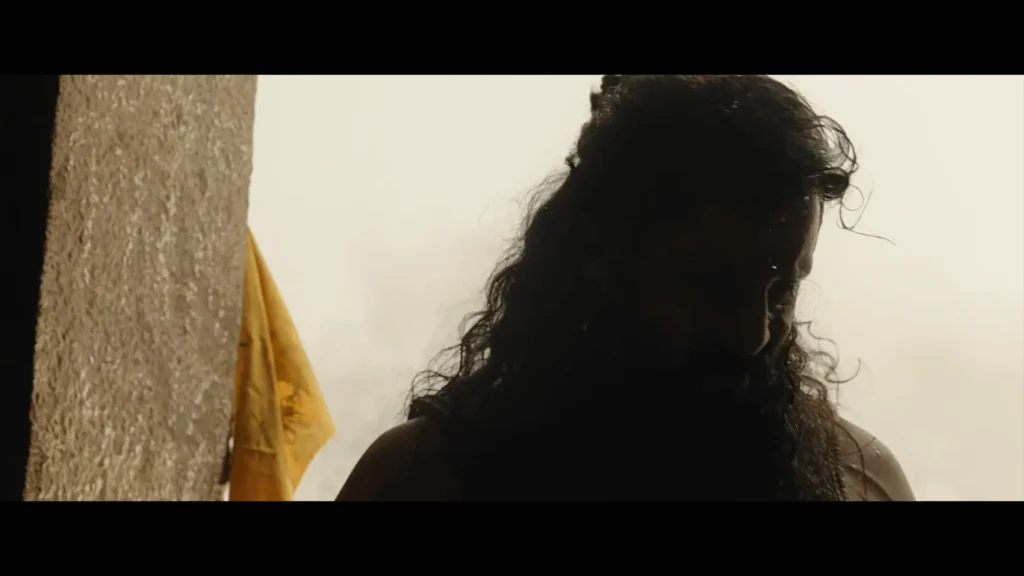
Aditya Karikalan (Chiyaan Vikram), the character, is introduced in an intriguing manner, with his first appearance shrouded in fog. The moment he steps onto the battlefield, the fog clears, revealing a warrior prince carrying a heavy heart.
The misty backdrop is Mani Ratnam’s creative method to hint at Aditya’s obscure past. With this single shot, Maniratnam establishes that he is coming from a shady past, and we are not clear about his past.
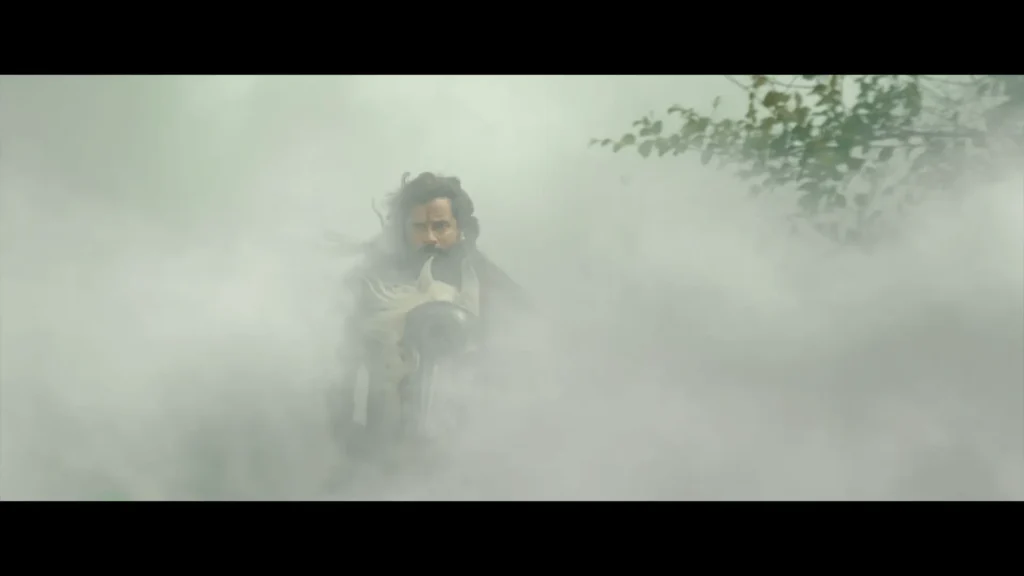
Aditya Karikalan introduction
We are hearing about his past through his conversations with Parthibendran and Kundavai in multiple instances.
As per the historical narratives and the novel, Aditya is stubborn, sticking to his decisions regardless of the circumstances. But no one really knows, who he really was, or what he was going through.
Shadowed Past and Victorious Present
Now, let’s pick another scene. After winning the Nolamba dynasty, Aditya explains his past and agony to Parthibendran. It’s all dark, and Aditya’s face is not clear; we are getting only one half, and if you look at the background, it’s misty again. I believe it’s symbolic of the shady past of Aditya Karikalan.
Aditya- Parthibendran
The deliberate symbolism points towards Aditya’s murky past. When the painful past is shared, and Aditya waves the flag, the frame transitions into sunlight.
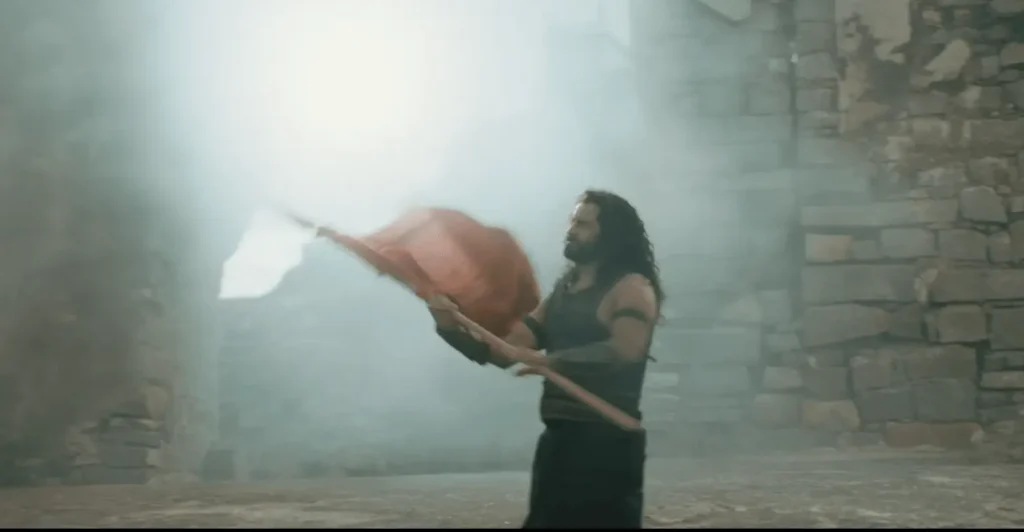
This change implies the flag wave as a metaphorical act to ward off the clouded past. War, Rage, and Victory are his ways to clear off the painful and obscure past around him.
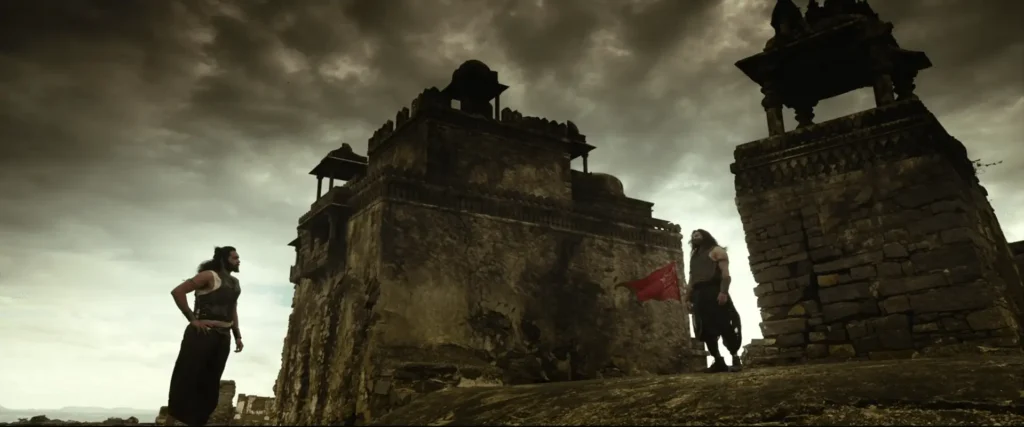
The choice of costumes for Aditya is noteworthy. He is always seen in black and red, contrasting with Arulmozhi, who wears pristine white. This difference in colour choices signifies the differing characters and histories of the two.
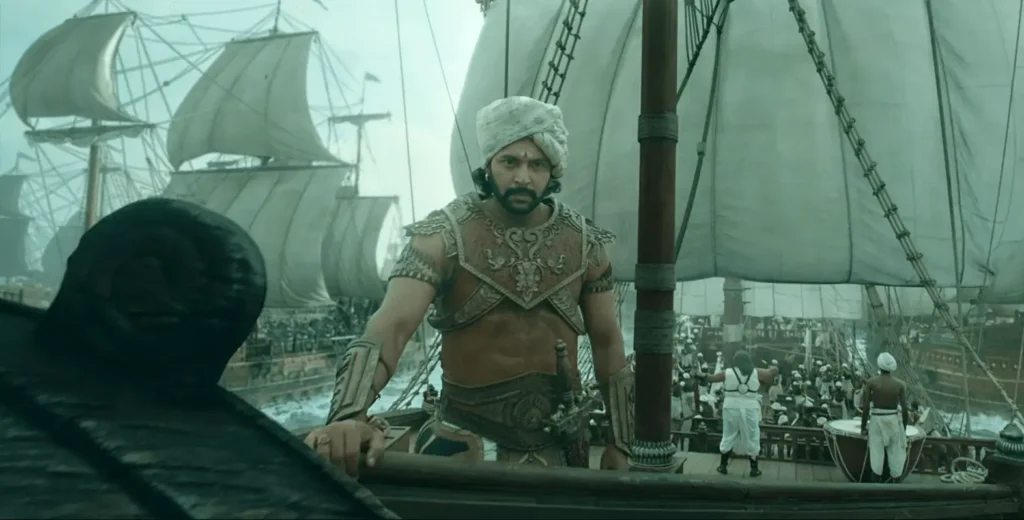
Parallels with Karnan from Mahabharatha
This is actually a wild theory. Thanks to Sandeep (Nanban 🙂 )
Aditya Karikalan’s portrayal has parallels with Karnan from Mahabharatha.
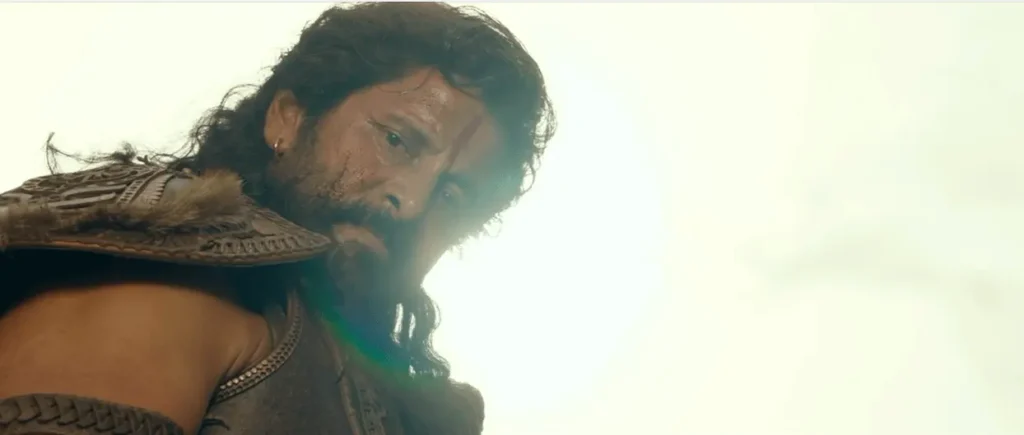
During Aditya’s triumphant moments, a sun glare can be seen in the backdrop. Ravi Varman (the cinematographer) brilliantly incorporated the sun glare as an aura around Aditya. Contrarily, when Aditya is depicted in a state of sadness, the sky appears cloudy, or he is shown in darkness. Even his death happened at night.
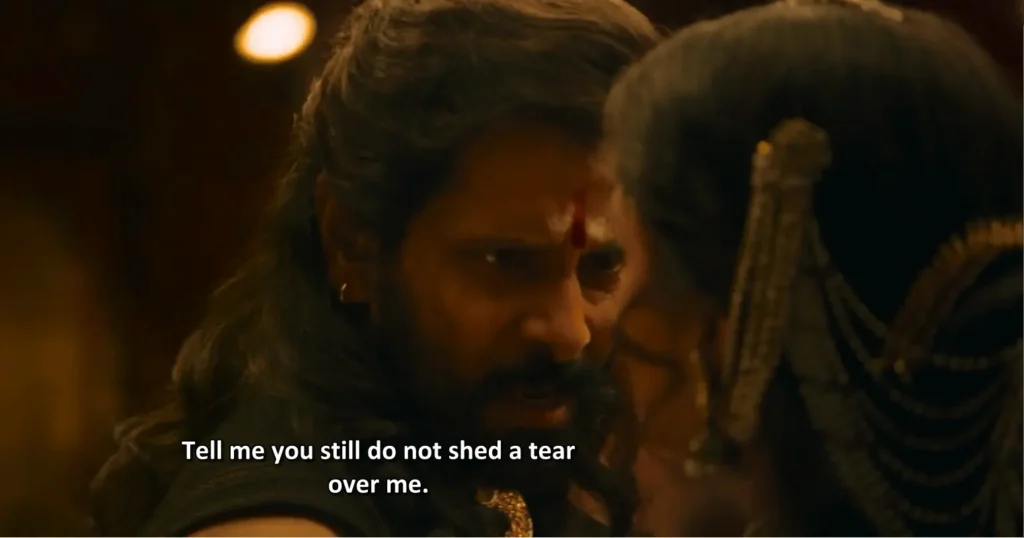
Aditya asks Nandini if it is hard for her to look at him. Then he waves off all the lamps and dies in the darkness.
In the Mahabharata, even Lord Krishna wept at Karna’s death because Karna was kind, loyal, and understood his dharma. However, he was cursed by Bhumi Devi for disrespecting her. It was just his luck or curse spoiled him. He was unlucky as much as Aditya.
Aditya was also cursed. Nandini asked him only one thing, to spare Pandiya’s life, but he ignored her plea. He disrespected her and hurt her. That was the sin he was carrying (metaphorically, Aditya says, “I consumed poison that day”).
A dying Karna asked Krishna to inform his mother Kunti of his death. He could have asked Krishna to give victory to Duryodhana and bring his armies back to life. However, he didn’t. He wanted his mother to proclaim publicly that he was her son and that he was not of low caste. He was looking for acceptance.
Aditya’s last words were a request for Nandhini to tell him that he still lives in her heart. He was looking for acceptance.
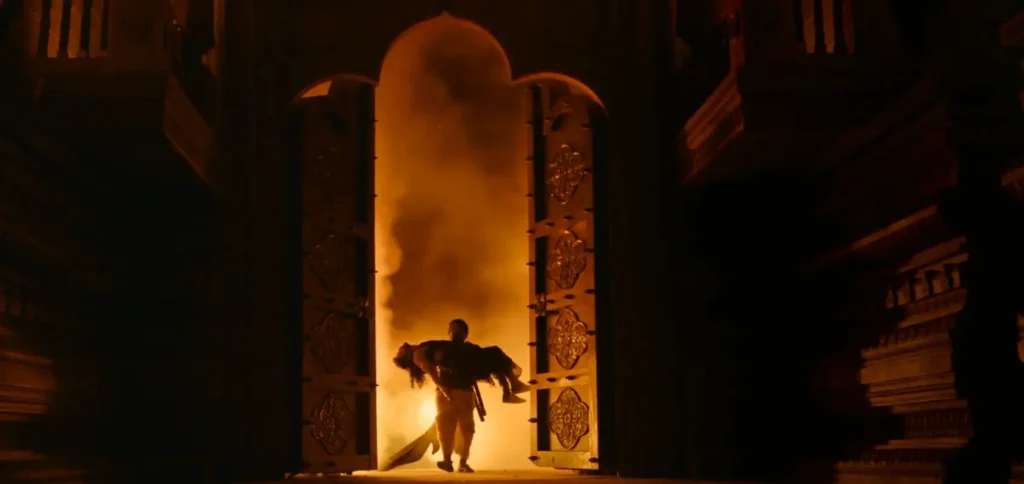
The epic beauty of the scene is the way Vanthiya Thevan carries Aditya’s dead body. The background is filled with smoke, just like when Aditya was first introduced in PS-1. It is a shady mystery, and we could never really understand Aditya, even his death remains a mystery.
The Dance of Victory: Devarattam
Devarattam, a traditional dance form, was performed by kings and warriors to celebrate victory, particularly in the Pandyan and Chola dynasties. During Vanthiyathevan’s visit to Kadambur in the movie, however, the dance depicted appears to align more with “Kecak” than Devarattam.
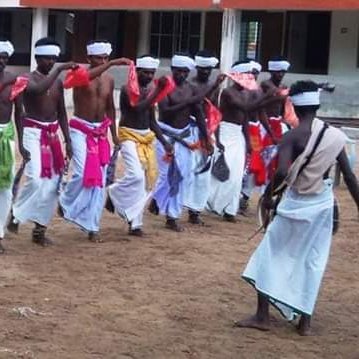
Actual Devarattam, image credits: twitter/@devarattam
Some argue that Devarattam took inspiration from Kecak, but this theory doesn’t holds historical back. The Chola’s naval invasions in Southeast Asia, a possible channel for cultural exchange, started only in 1025, while Aditya Karikala and the Pandyas were active before 1000 CE. Additionally, Southeast Asian rulers like those from Srivijaya, who had close relations with the Pala Empire in Bengal, did not seem to have left any influence on the dance form.
The real Keckak from Bali
The dance is based on the story of the Ramayana and is traditionally performed in temples and villages across Bali (Indonesia).
The Clash of Titans: Kundavai-Nandini Confrontation Scene
The Kundavai-Nandini faceoff scene is one of the most epic scenes in Ponniyin Selvan part -1. The rivalry between two women is on full display in this scene.
But I feel, many might have misread it. Here is my interpretation.
Background: Nandini has deep resentment towards Kundavai, blaming her for all her miseries. Nandini believes that it was Kundavai who got her expelled from the palace and constantly made her feel inferior due to her lineage. In a bid to gain power, Nandini manipulates Periya Pazhuvettayar and considers Madurantakan’s claim to the throne. She keeps Sundara Chola, Kundavai’s father, under house arrest, cutting him off from others for easy manipulation.
Learning about Nandini’s scheme from Vandiyathevan, Kundavai decides to confront her at the Tanjore palace. As the dramatic background music “Saayam Sanchare” (Evening- where Day and Night meets) fills the air, their coded conversation unfolds:
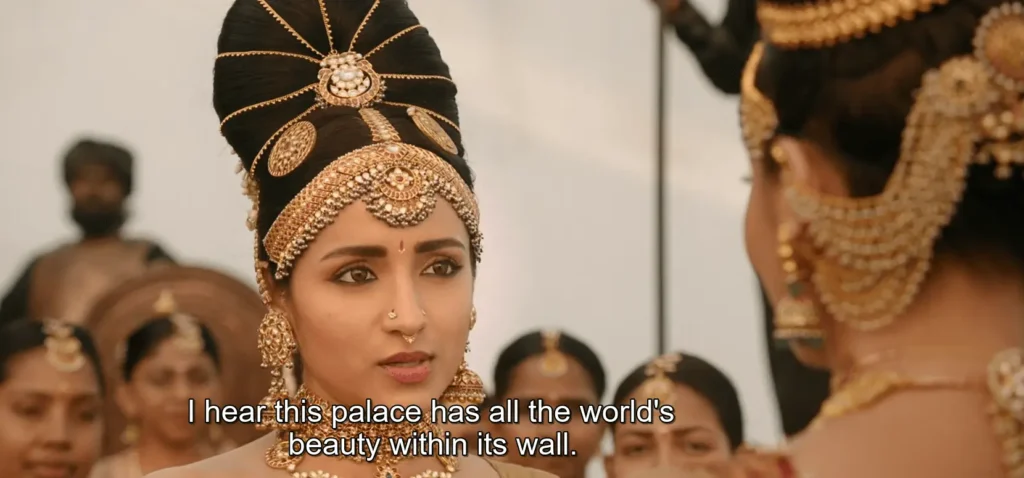
Nandini: “Upon your visit, Tanjore palace itself has become beautiful.”
Kundavai: “But I heard all the beauty in the world has been kept in the Tanjore palace.” (hinting at Nandini’s beauty)
Nandini: “Yes, beauty is held captive here indeed.” (referring to Sundara Chola being under house arrest, Sundara means ‘beautiful’)
Kundavai: “Captive? Does the golden beauty [Sundara Chola] not adorn the throne?“
Nandini: “Yes, it’s gold, old gold.” (referring to the king as old)
Kundavai: “Faded gold is the most precious.”
Nandini: “Even golden shackles are still shackles.” (indicating Sundara Chola is under her control, regardless of his position)
Kundavai: “The key to the shackles are in our hand anyway.” (asserting her ability to free Sundara Chola)
Nandini: “No one can defeat the princess (Kundavai) in an argument.”
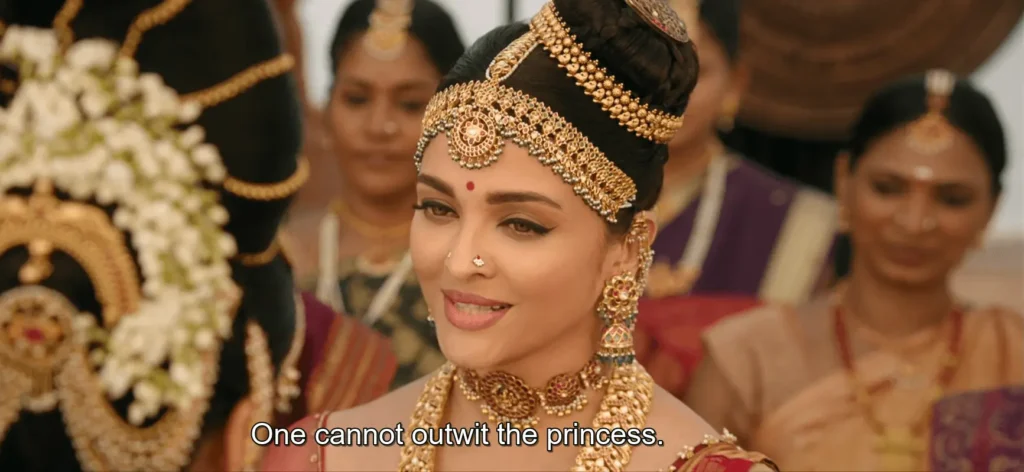
Following this heated exchange, Kundavai smiles as the background score saayam sanchare intensifies. The combined genius of AR Rahman, Ravi Varman, and Mani Ratnam in this scene is simply beyond words.
Kundavi is envious of Nandini’s beauty; Nandini is jealous of Kundavi’s power; and throughout her life, Nandini feels inferior to Kundavi because of the power she holds. You will get all this from this scene, if you read it well.
Nandini: The Ever’green’ Queen
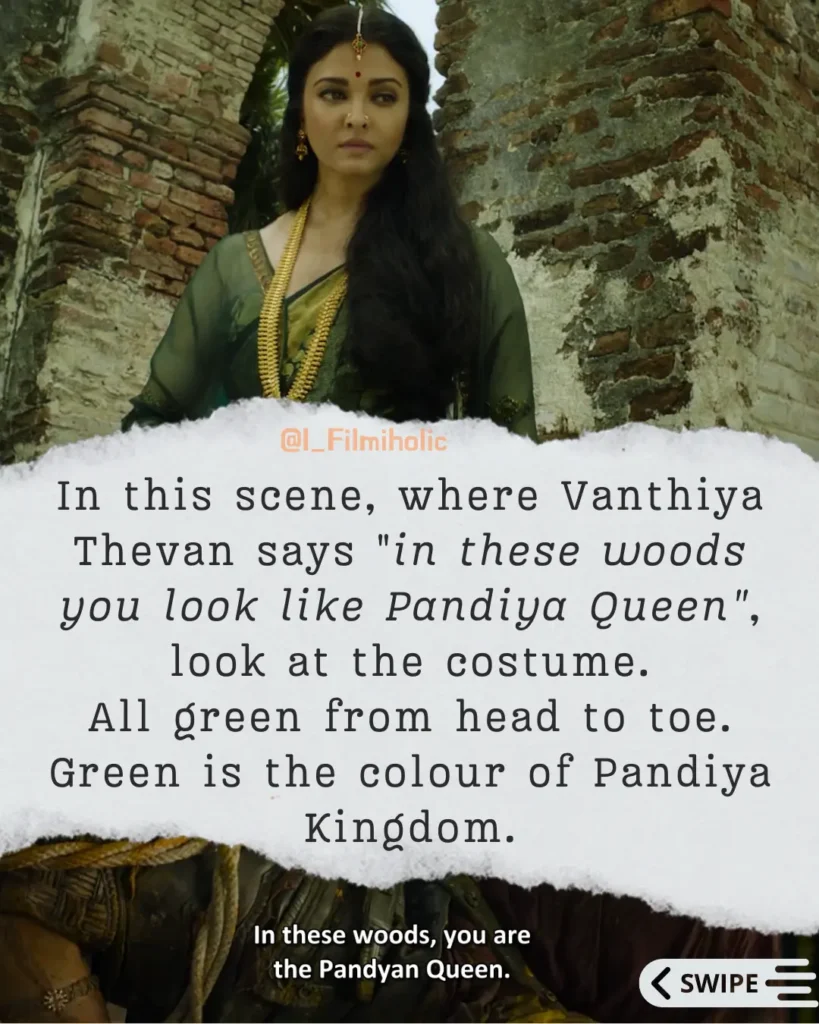
Pandiya’s Fish Eyed(Meenakshi) diety is green. Crafted from a single large emerald stone, the goddess is believed to be Vishnu’s sister, just as Nambi(Jayaram), a vaishnavite, is Nandini’s brother.
Echoes from the Past and Authentic Settings
There’s a scene where Vandhiyathevan ingeniously escapes from the Pazhuvettarayar guards, reminiscent of chase sequences from the movie ‘Thiruda Thiruda’. The elements that Vandhiyathevan disturbs in the crowd — from buttermilk to puffed rice — align perfectly with the setting of 10th century Thanjavur, enhancing the authenticity of the scene.
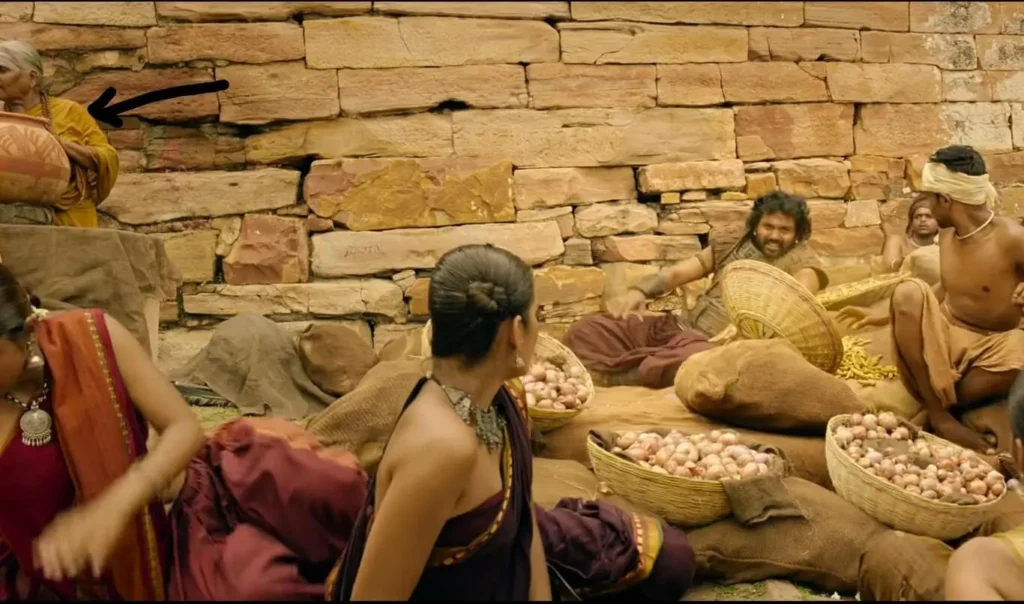
Mani Ratnam also adeptly portrays the flourishing trade relations of the time. The period from 900 to 1300 CE, termed the Early Age of Commerce in Southeast Asian history, saw burgeoning trade ties between China and South India.
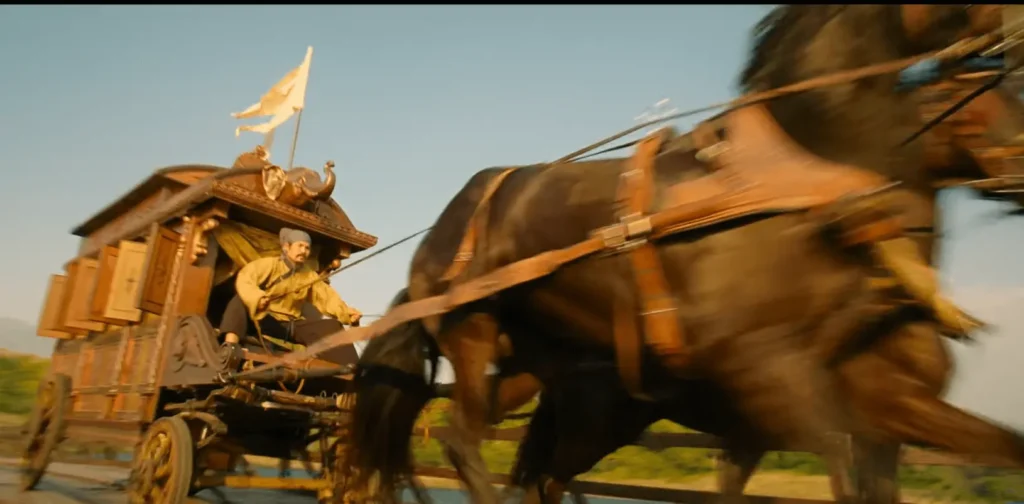
In the film, the charioteer is usually depicted as a Chinese man when the scene is set in Lanka. The character’s inability to understand Tamil allows Arulmozhi to converse freely with his companions without worrying about eavesdropping. This detail cleverly illustrates the language and cultural barriers present in the historical trade relations.
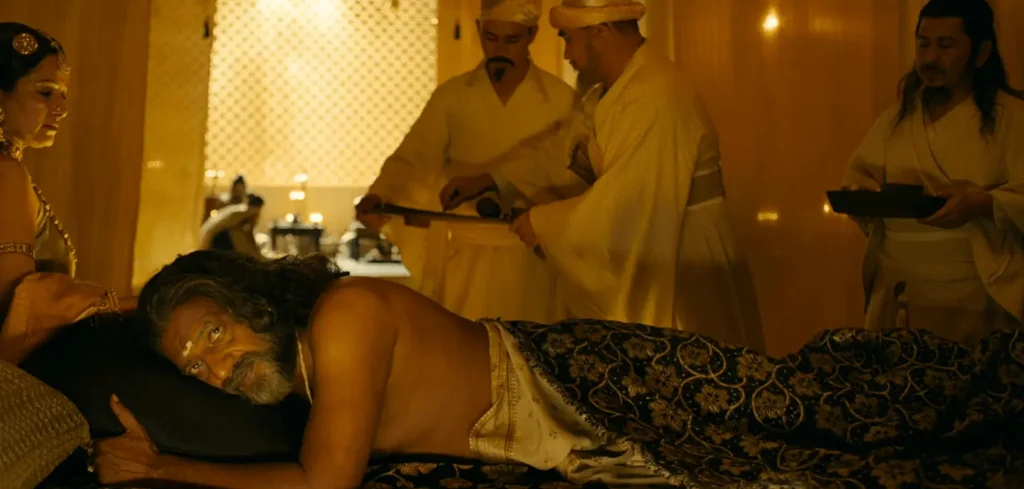
Another historically accurate detail is Sundara Cholan’s acupuncture treatment, highlighting the influence of Chinese medical practices in the region during the time.
One of the most poignant scenes, overlooked by many in the first viewing, happens in Pazhayaarai. As Sendhan Amudhan reaches Trisha to deliver news about Vandhiya Thevan, he nods at Sembiyan Mahadevi, who responds in acknowledgment. This loaded interaction may go unnoticed if you’re unfamiliar with the book.
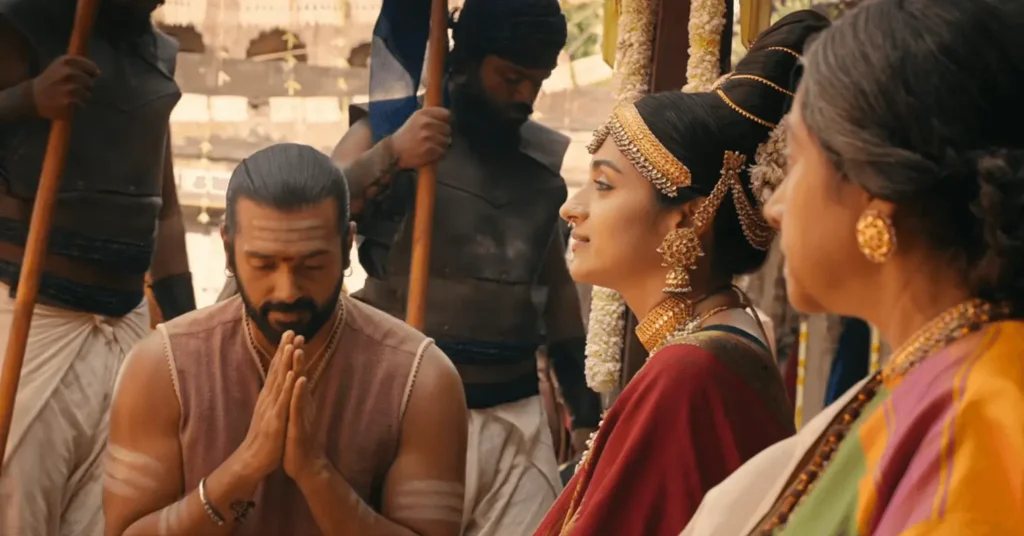
Sendhan Amudhan is actually Sembiyan Mahadevi’s son, while Madhurantakan is the son of Oomai Rani. Will explain in detail soon.
Sembiyan Mahadevi’s Pioneering Influence
What’s striking in the movie is Sembiyan Mahadevi sporting a pottu (bindi). A surprising element, considering the times depicted, this choice moves away from the traditional depiction of widows.
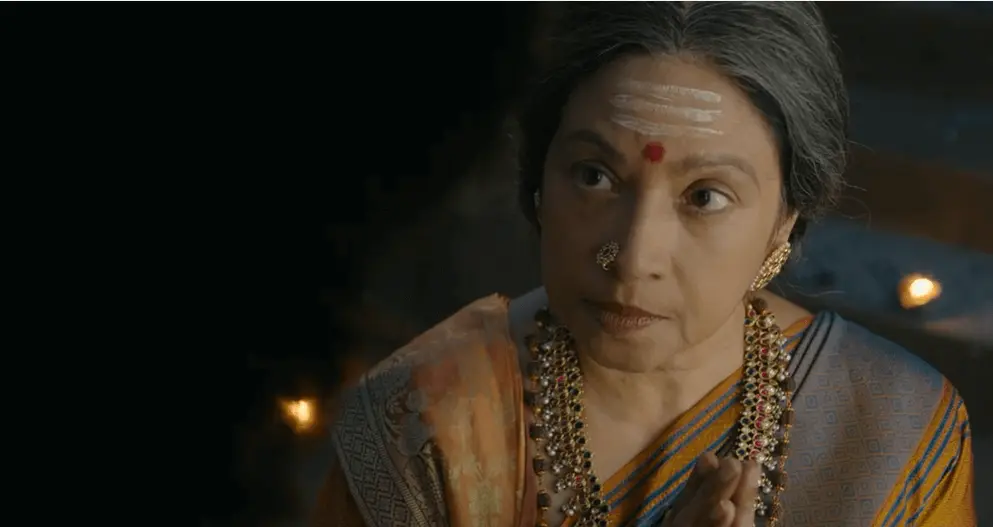
Sembiyan Mahadevi was the queen consort of the Chola Empire from 949 CE – 957 CE, wife of Gandaraditya Chola.
Following Gandaraditya’s death, Sembiyan Mahadevi, rather than committing sati or withdrawing to the Andapuram (the palace’s female quarters), chose a different path. She devoted herself to religious and social activism, becoming not only a revered dowager queen but also the matriarch of the Chola family for the next 50 years.
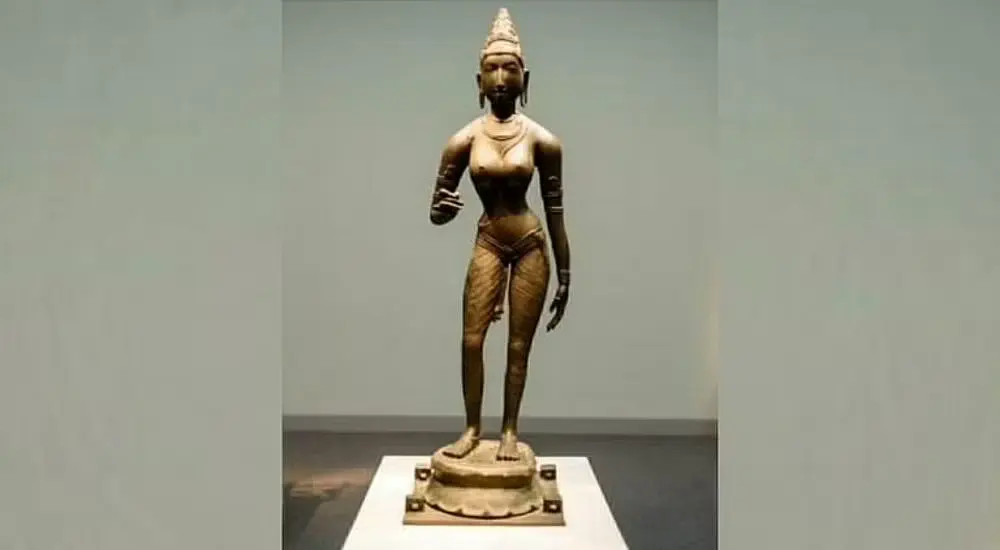
A 1,000-year-old idol of the Queen was traced recently by the TN Idol Wing.
A pioneer in Kalpani (literally ‘stone-work’), Sembiyan Mahadevi initiated projects that transformed ancient brick and mortar temples into enduring granite structures. Her historical foresight led her to order the copying of ancient inscriptions before the reconstruction work. The temples and icons commissioned under her oversight bore a unique mark, and she donated jewels and bronzes to many temples, some built by her and others by her son, Uttama Chola( Madhurantakan).
Symbolism of Victory and Omen: The Red Lion Flag and the Comet
A symbolic scene depicts the triumph of Chola king Arul Mozhi Varman over Mahindan, the Sri Lankan king, as the waves on the coast of Lanka wash ashore the Lankan King’s red lion flag.
A powerful visual metaphor that conveys the complete and utter defeat of the Sri Lankan forces. The foamy waves that touch the Lankan shore symbolize the Chola army’s arrival on Sri Lankan soil, and their presence is a reminder that the Chola Empire is now the dominant power in the region.
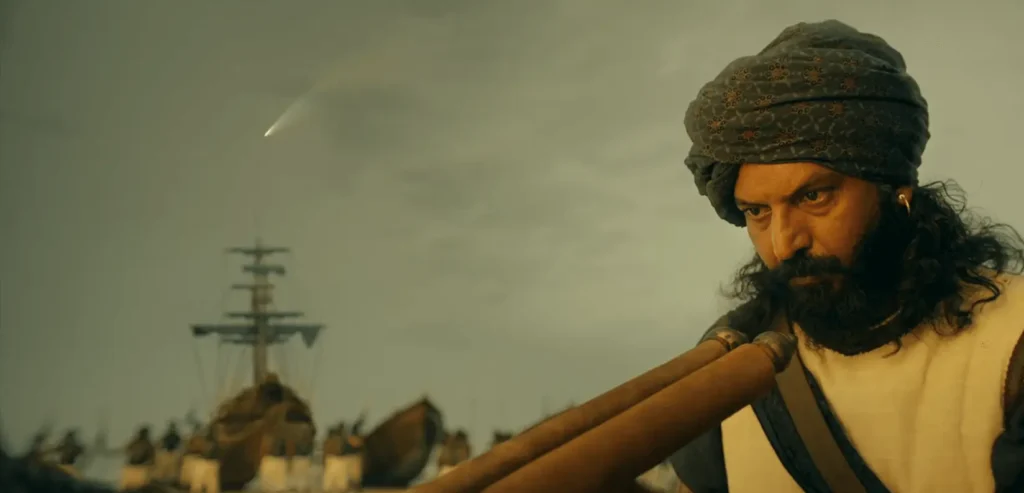
Comet in the background When Nandini order to take captive of Arulmozi
In another instance, the scene where Nandhini and Pazhuvettayir order a convoy to capture Arulmozhi, you can spot a comet in the background. This comet reappears when the Pandiya’s are shown. The comet is a symbol of foreboding, hinting at a threat to the throne or signalling the imminent death of Aditya.
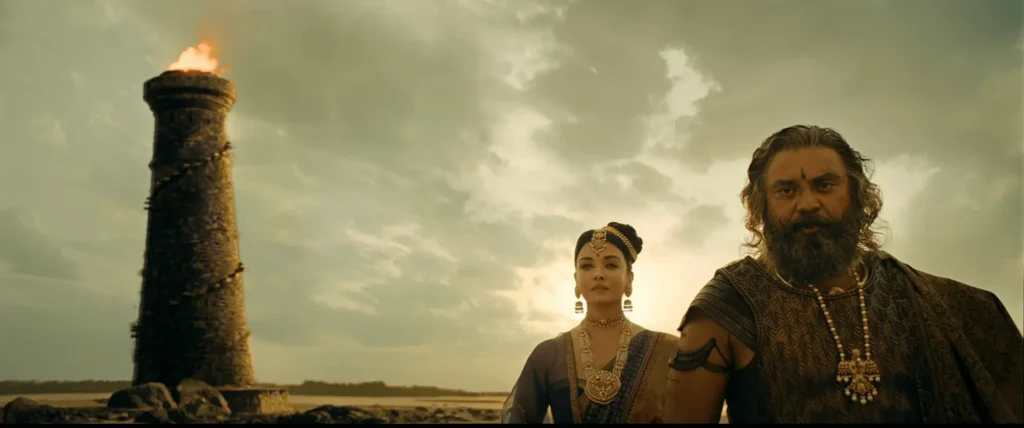
The Comet Scene in Ponniyin Selvan: A Symbol of Impending Doom
Scientifically, the comet seen in Ponniyin Selvan can’t be Halley’s comet as it passed by in 989 CE, by which time Rajaraja had already ascended the throne and Aditya was dead.
Comet in the background while showing Pandiyan Prince
Historically, the appearance of a comet has often been interpreted as a sign of the impending death of a great person, usually a king. Notable examples include the comets associated with the deaths of Julius Caesar and King Harold. In 1910, when Halley’s Comet streaked across the sky, King Edward VII passed away. Around this time, Kalki (1899-1954) would have been around 11 years old and may have heard about the event.
In the context of the movie, the comet symbolizes the impending death of Aditya Karikalan. However, given Sundara Chola’s frail health, everyone interprets the comet as a prediction of his demise.
Sangam Poetry and Cinematic Genius: The Tale of Mandakini in Ponniyin Selvan
The meeting of Mandakini (Uma Rani), and Sundara Chola has a song playing in the background, it’s another example of Mani Ratnam’s brilliance.
It was so painful for me considering Mandakini’s fate. She doesn’t know she has children (will explain more on this soon); she considered Arulmozhi her son (considering it’s from her beloved one), and After years, she meets Sundara Chola again and lays down her life to save his.
Now if you try to understand more about that song, you will realise how painful it is to listen by watching Mandakini’s (Uma Rani’s) death.
This song is ‘Puranaanuru 242,’ one of the 400 songs from the ancient Tamil anthology (Sangam Poetry). AR Rahman adapted this song for the heartbreaking scene of Mandakini’s demise.
The original song was penned by Gudavai Keerathanar (was one of the poets of the Sangam period). Although he belonged to Gudavail, he visited many towns and made many friends. Perunjathan was one such friend from Ollaiyur. He was a chief Satthan (Chieftain) who was famous for his valorous deeds in battlefield.
The poet comes to the town of Ollaiyur and realises that his friend is no more. The whole town is mourning. There he composed this song out of great sadness.
In the poem, the poet questions the jasmine flower, asking why it still blooms after his death in Ollaiyur.
The lyrics go like this: “Young men don’t wear them. Women with bangles don’t pluck them. The whole town is sad because Satthan, the warrior, died. So, Jasmine, who are you blooming for? Why are you still blooming in vain?”
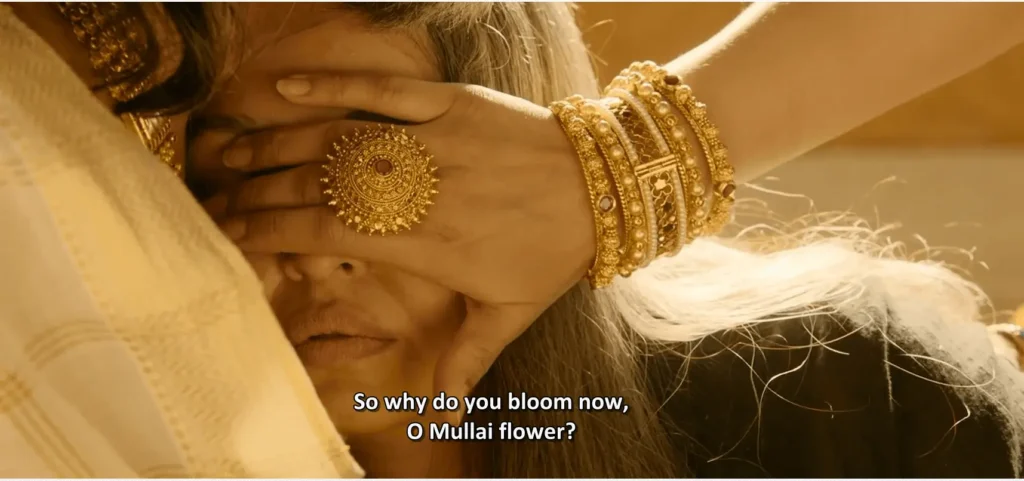
Nothing could better represent the tragic love and death of Mandakini. For what she lived for. It’s a painful question.
Love, Loss, and Forgotten Memories: Nandini’s Birth Secret
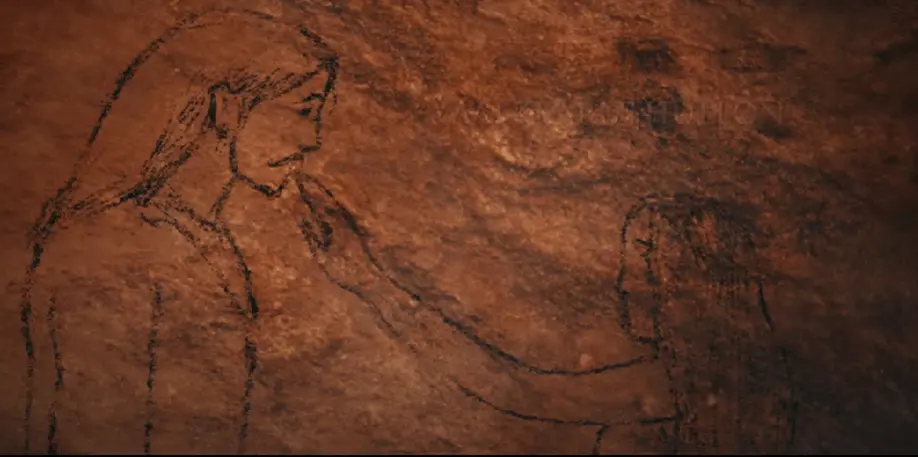
Sundara Chola and Mandakini were in a romantic relationship, but they were forced apart before Sundara Chola’s coronation. Overcome with heartbreak, Mandakini jumped off a lighthouse. However, Anirudha Bramarayan (was a leading minister in the court of the Sundara Chola) rescued her and sent her to Sri Lanka, while telling Sundara Chola that she had died. Meanwhile, Sundara Chola moved on, got married, and had children. His eldest son, Aditya Karikalan, was older than Nandini.
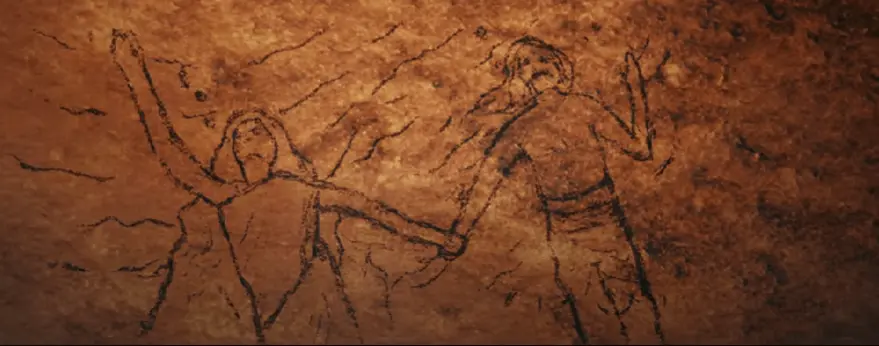
In Sri Lanka, Mandakini and Veera Pandian, both rescued by the boatman(Karuthiramaran) and with Mandakini having lost all her memories, spent a significant amount of time together. She got pregnant and decided to leave Sri Lanka, while Veera Pandian stayed back and lived with the Sri Lankan king.
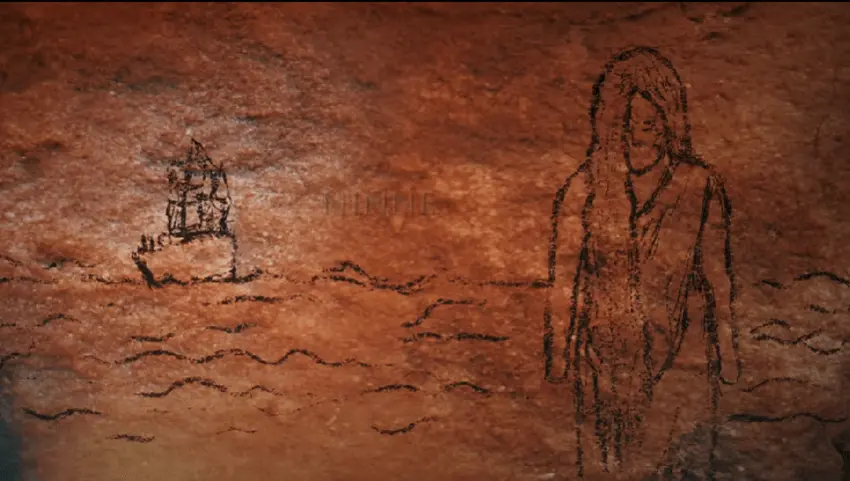
On her return to Tanjore, Mandakini and her mute sister Vani encountered Sembian Mahadevi, who was also pregnant. They started living with her in the palace. Both women gave birth around the same time. Sembian Mahadevi’s son was stillborn, while Mandakini gave birth to twins and left them. Sembian Mahadevi adopted the male twin, Madhurantakan, and handed over the female twin, Nandini, to Azhwarkaddiyan’s (Nambi) parents. Vani was instructed to bury the supposedly dead infant, who, in reality, survived. She took the child, Sendhan Amudhan, and left.
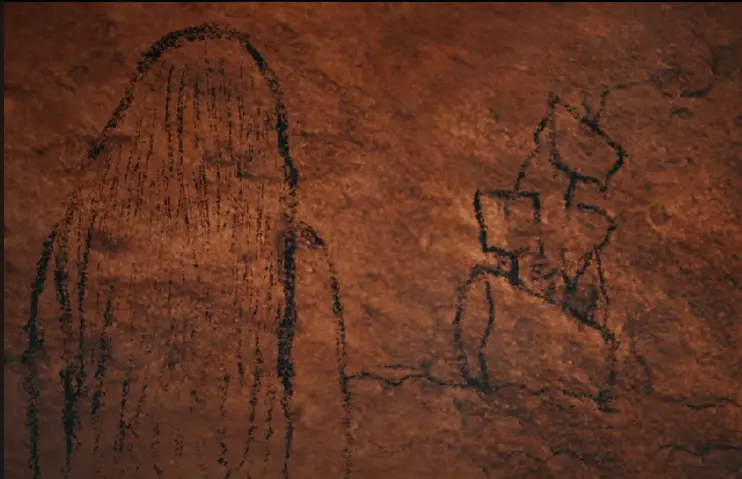
Meanwhile, Veerapandiyan sent Karuthiruman (boatman played by Yog Japee) to relay a message to Mandakini, who was back in Kodi Karai under her father’s care. However, upon arrival, he found that Mandakini had suffered another accident, which had restored her memory.
She could not recognise Karuthiruman, which meant she had no recollection of what had transpired between her fall from the lighthouse and her recent accident.
Was Nandini ever in love with Aditya Karikalan?
Nandini, a creation of Kalki, is one of the most multifaceted characters you will encounter in “Ponniyin Selvan.” She is like a diamond. Not only is she stunningly beautiful, but she’s also incredibly intelligent. Her willpower and ingenuity make her a unique femme fatale in literature.
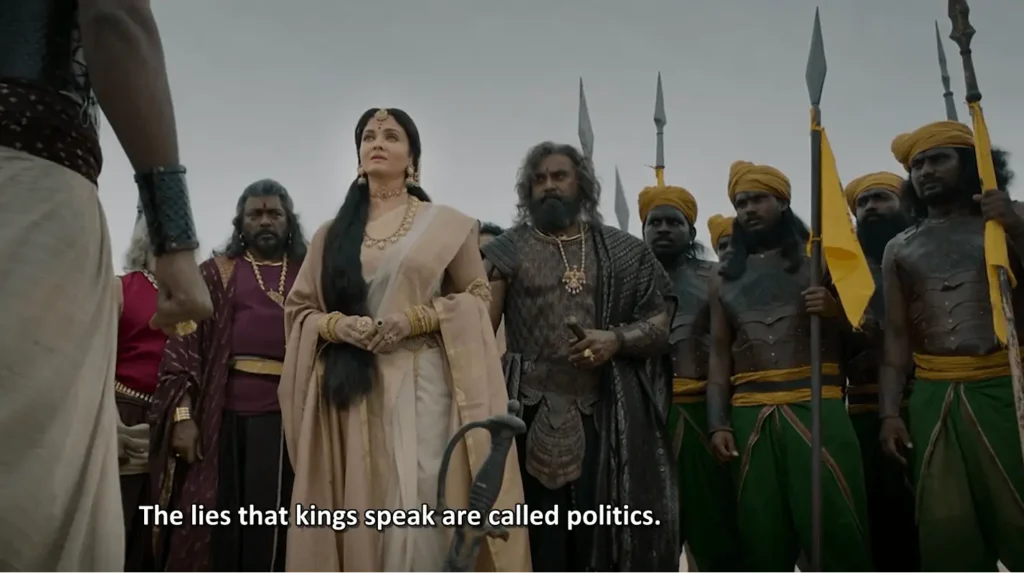
She has been described as treacherous, vicious, venomous, lethal, and dangerous. These aren’t misjudgments, as Nandini is truly the most formidable character in the novel.
Understanding Nandini takes some time because, much like a finely cut diamond, she has numerous aspects to her persona. The novel introduces us to her character well before we meet her. Kandan Maran speaks of Periya Pazhuvetarayar’s marriage to a younger woman, and teases him about his obsession with her. Later, Azhwarkadiyan shares a censored version of her life story, painting her as a sisterly figure and stoking our sympathy for her as a young woman forced to marry an older man.
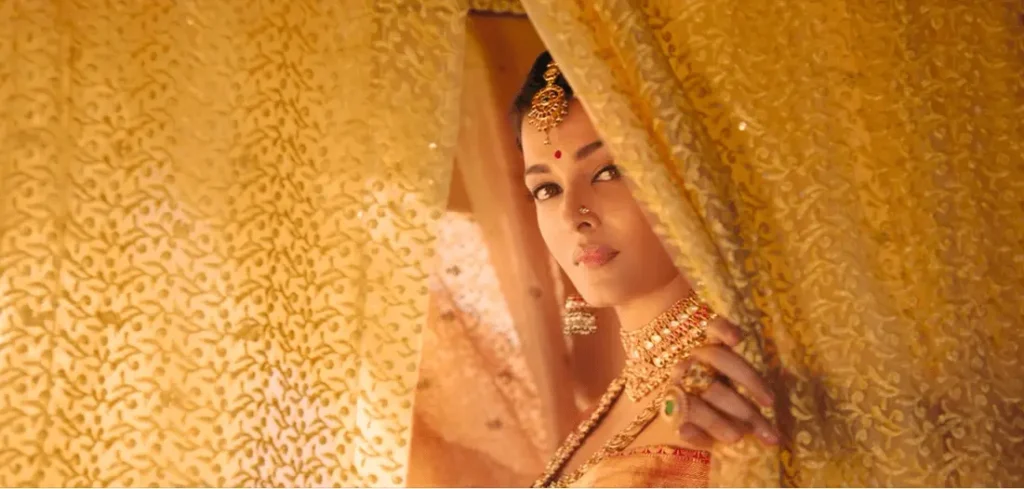
We first meet Nandini through the eyes of Vandiya Devan, entranced by her beauty, as she peeks out from the curtains of a veiled palanquin to investigate the disturbance in her path.
Aditya Karikalan’s frank confession to Parthibendran uncovers more about Nandini’s history. It seems that Nandini mastered her unique brand of seduction with Aditya Karikalan. But was it love, or was it a longing for the power she would gain if she were to marry the Crown Prince? It’s hard to say for sure.
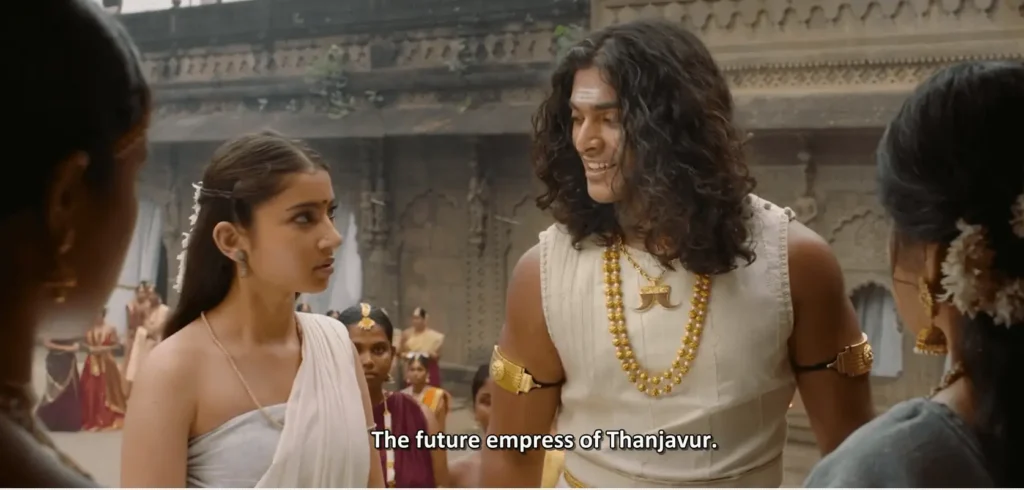
What we do know is that the deep-seated jealousy between Kundavai and Nandini originated from their childhood. Nandini coveted Kundavai’s status and influence as the Princess, while Kundavai envied Nandini’s beauty.
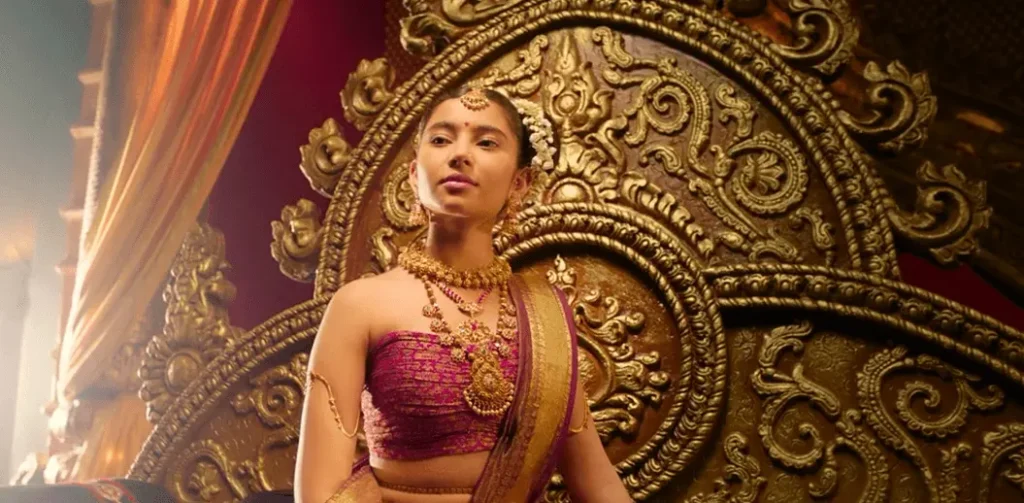
The scene where Nandini imagines her childhood as a queen
Nandini’s obsession with power drove her, I believe, and her confession to Aditya in the end holds some truth, in my opinion
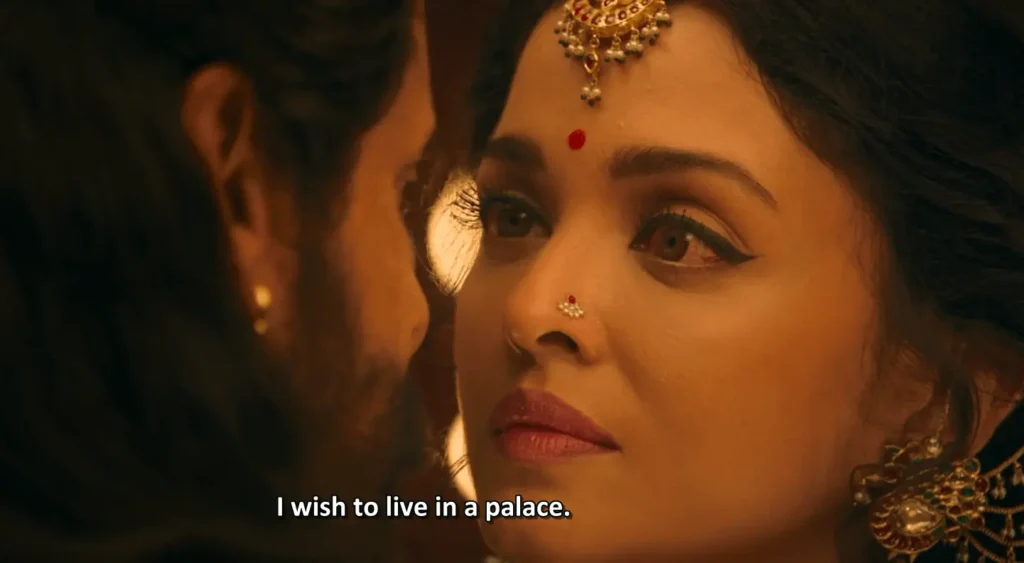
Nandini v/s Kalpana
Do you remember the first movie that Mani Ratnam made with Aishwarya Rai? It’s Iruvar (1997).
In Iruvar, Aishwarya played a character similar to Jayalalitha. There are striking similarities in their ruthlessness.
It’s as if Mani Ratnam saw reflections of Nandini in Jayalalitha and vice versa. Like Nandhini in Jayalalitha or a Jayalalitha in Nandhini. But both are versions of Lady Macbeth considering their character shades.
That can be a reason why he picked Aishwarya for this role.
A scene in “Iruvar” where Kalpana (Aishwarya Rai) sows seeds of doubt in Anandan’s (Mohan Lal) mind is particularly reminiscent of Nandini’s manipulations.
She asked Anandan, “Who is bigger? An actor or a CM? Don’t you to wish to be the CM?“
Anandan thought about her question. He had never considered himself to be a competent to his friend Tamizhselvan. But Kalpana’s words made him wonder if he could be.
Fast forward 25 years, and the same Aishwarya Rai masterfully brings Nandini to life on screen with the same shades of Kalpana. Kalpana’s words were similar to what Nandhini had said to Pazhuvettarayar. Nandhini had charmed the elderly Pazhuvettarayar and planted the seeds of desire in him.
She had told him that Madurantakan should claim the throne, by that the power will always lies in Pazhuvettarayar.
But Nandhini had failed in her attempts unlike Kalpana.
This realisation & the guilt made her commit suicide.
Have you ever wondered how scriptwriters create characters? Do they start from scratch? What lenses do scriptwriters use when they watch movies? Here, we will do a mini-script analysis to understand this better. To do this, we will look at the theme (events), characters, and the plot. I will focus on the characters and events more.
A Scene from Thief (1981)
For the purpose, we are choosing Thief, a 1981 American neo-noir heist action thriller film directed and written by Michael Mann. The film is loosely based on The Home Invaders by Frank Hohimer.
Thief (1981) A Brief Summary
In this 1981 film, Thief, Frank is a jewel thief of unparalleled skill. He manages to keep his past hidden behind the façade of a successful businessman. He has two thriving businesses and a seemingly peaceful life, but is it all as serene as it appears?
A scene from Thief (1981)
Frank thinks he has everything figured out. But there is one thing missing from his life: a family. When he starts dating Jessie, a cashier, the missing piece seems to be falling into place.
But then, everything changes. Frank is double-crossed during one last job, a diamond heist. His fencer, Joe Gags, is brutally killed, and his share of the loot is stolen. He is betrayed by Leo, a mob boss who has been watching his every move.
From a thrilling diamond heist gone wrong, to a dangerous game of cat-and-mouse with vengeance, and an unexpected twist in his personal life, Frank’s world spirals into chaos. His trusted friend is murdered, his family is threatened, and everything he’s worked for is on the brink of ruin.
But Frank is not going down without a fight. A man with nothing to lose is the most dangerous kind. Armed with determination, a burning desire for revenge, and a whole lot of explosives, Frank is ready to burn his past to the ground and settle the score. He’s done playing by the rules. It’s time for the master thief to step out of the shadows.
A Perfect Script & A Well Written Character
Let’s analyse the script and try to understand how the screenwriter Michael Mann might have developed it. What might have been his thought process when he started developing the script about Frank?
Character Sketch
Frank is a complex character. He is a skilled thief with a hardened exterior, but he also has a desire for a simple, “normal” life. This desire for normalcy comes from his need for stability, which is likely a reaction to his tumultuous past and ongoing criminal activities.
A scene from Thief (1981)
He shows signs of trauma and post-traumatic stress disorder (PTSD) due to his past experiences in prison. He is hyper-vigilant, has recurring bouts of anger, and struggles with emotional intimacy. These experiences have also made him resilient and resourceful, but they have also made it difficult for him to trust others and let go of control.
Frank is an introverted individual who has adapted to survive in a world that demands extroversion. He is guarded, self-reliant, and meticulous in his work. He prefers solitude or the company of a select few. This could be a coping mechanism to manage his PTSD symptoms and control his environment.
Throughout the story, Frank goes on a journey of self-discovery and self-reconciliation. He is forced to confront his “shadow” (the hidden, darker aspects of his personality) and integrate it with his “persona” (the mask he presents to the world). This is a key part of his character arc.
Three Acts & Three Psychological Approaches
ACT ONE: Dissonance and Identity Crisis
In the first act, Frank aspires to live a normal life, indicating a clear cognitive dissonance between his personal identity and his occupational identity as a thief. This internal conflict plays a crucial role in driving the narrative and establishing the emotional tension in the film. This dissonance is a key driving force for the narrative and sets up the emotional tension.
Tuesday Weld as Jessie & James Caan as Frank from Thief (1981)
ACT TWO: Confrontation and Growth
In the second act of Thief, Frank’s inner conflict becomes too much to bear. After Leo betrays him, Frank’s dreams of a normal life are shattered. He is forced to face the reality of his criminal lifestyle.
A scene from Thief (1981)
Frank realises that he can’t have both. He can’t be a thief and have a normal life. This realisation is a turning point for Frank. It leads him to change his behaviour and attitude.
This confrontation can be related to thepsychoanalytic concept of ‘insight’. Frank’s confrontation with reality is a powerful moment of self-awareness. It propels him into the third act of the story.
Act Three: Resolution and Reconciliation
In the third act, Frank undergoes a transformation. He wants to escape his criminal past, so he embraces his “shadow” – the part of his personality that he had previously tried to suppress or deny. In Jungian psychology, confronting and accepting one’s shadow is a crucial step in achieving self-integration. Frank’s decision to quit his life of crime marks his journey towards reconciling his conflicting identities.
Frank’s narrative, from conflict through confrontation to resolution, mirrors a psychological journey that many individuals undertake when they confront uncomfortable truths about themselves.
Title Card
In Thief, this journey is not only an exploration of Frank’s character but also a wider commentary on identity, morality, and the potential for personal change.
Why A Must Watch?
Thief is one of the best “One Last Job” or “Double Life Rom-Com” movies I have ever seen. The scriptwriter did an excellent job of developing the characters, and I highly recommend this movie to anyone who loves to write.
“Ninaivo Oru Paravai,” directed by Thiagarajan Kumararaja as part of Amazon’s Modern Love: Chennai, will share a similar aesthetic experience with films like Eternal Sunshine of the Spotless Mind and Wong Kar Wai’s In the Mood for Love.
In these films, characters are often framed by the rectangle of the film frame, as well as by smaller internal shapes. This create a sense of separation and isolation or a sense of mystery and intrigue.
Frames from ‘In The Mood For Love” & “Ninaivo oru Paravai”
As suggested by the title, “Ninaivo Oru Paravai” (Memory is just a bird), memories are ephemeral, free-spirited, and mutable.
I hope you might have seen, 2000’s Memento or if you are a film enthusiast, you might have seen 1975 “The Mirror”.
Just as Nolan manipulates our perception in “Memento,” Kumaraja crafts an immersive experience, challenging the viewer to distinguish the boundary between hallucination, film inside the film, and reality.
Like a complex maze with a thousand doors, each revealing a new riddle, “Ninaivo Oru Paravai” presents an intricate puzzle.
Let’s Open The Door: Ninaivo Oru Paravai Explained
Here is one possible interpretation from my side:
Our main character, K, scripts a story about a couple going through three breakups, one patch-up, and three intimate moments, filled with scenes that connect these elements into a coherent narrative.
Sam, who read K’s script, starts experiencing hallucinations about incidents mentioned in the script after their breakup.
Let’s see what’s in K‘s film.
The story begins with an intimate moment between Hero and Heroine, the only elements of their identity that we know is that hero is an aspiring film maker. The leftover dialogues suggest they’ve chosen to separate, marking their first breakup.
Ninaivo oru Paravai opening scene
What led to this?
They met on a film set in July, when they were both junior actors. They fell in love fast and became intimate.
Notes by K & Messages from Sam’s mobile
Six months later, they made the decision to live together. We see them enjoying their time together.
Six Months reference: Ninaivo Oru Paravai
One rainy night, an astrologer warns them about an upcoming separation.
Jyosya Scene from Ninaivo Oru Paravai
This makes the heroine worry and feel insecure, and she becomes possessive.
Sam’s Possessiveness from Ninaivo Oru Paravai
This might have caused a rift between them.
We then see their second (or maybe first) break-up, which is tougher to bear. After this, the hero leaves the house, and the heroine watches him from the balcony. This time, she moves from right to left on the screen, with an infinity loop in the background.
After this, the hero might have had an accident, causing him to lose his memory.
The hero’s sister asks the heroine to help him recover his memory. He still remembers the heroine’s name. The heroine visits the hero, writes down their beautiful memories, and shares them with him. The hero reads each note, embedding these memories in his mind.
There is a rain scene, it’s a beautiful memory that heroine written in the note for hero.
If you look closely, you will get some hints from those frames.
Sign Board & the notice on the tea-stall which says “2000 Cats are missing in Chennai”
A Hidden Revenge Story
At this point, you might see it as a revenge story, where the heroine tells him to believe everything she says, whether it’s true or false. He lives with the uncertainty of his memories, unsure if they’re lies or the truth. It’s like a Thursdayism philosophy that K used to talk about in the past.
There is no Tatto visible, and it;s part of the script written by K: Ninaivo oru Paravai
I see it as a form of revenge because the heroine was dealing with the same feelings after their break-up. She couldn’t tell what was real and what was an illusion.
Now, she’s passing the same feelings on to the hero, telling him,
“Anything you remember won’t be the truth but a figment of your imagination. I’m the only one who can tell you if it’s real or just your imagination.“
But she promises him that she never cheated and that they’ll never see each other again. She gives him back the script that he wrote.
Wamiqa Gabbi in Ninaivo oru Paravai
As she leaves, she repeats the hero’s words from their first break-up, “Avvulo thaana (That’s it?)” “I guess so.”
You can see this as the third break-up in the script.
A Happy Ending
The heroine then comes home in the rain, with the hero following her. She closes the door on him when he begs for her love.
She asks why she should love him.
He replies that even though he’s lost all his memories, he still remembers her. This shows his love for her.
Sam opens the door, and they get back together. She says they’re going to live happily ever after, just like the characters in the movie.
Climax scene written by K : Ninaivo Oru Paravai
She then comes back in, possibly after making love, closes the door, and the title card “A film by K” appears.
This is K’s film.
Let’s Now Explore, What is Reality?
After her breakup, Sam seeks help from a psychiatrist to cope with her emotional distress, and she starts improving with treatment.
During her visit to the doctor, bird tattoos are visible on her neck (in the present or real). These bird tattoos might serve as symbolic keys, resembling a love bite, possibly representing the painful remnants of love and memory.
This tattoo plays a pivotal role in this film. It helps us distinguish between the real and imaginary worlds (or events from K’s scripts) in the film.
Let’s Pick Some More Hints
On reaching home and starting to clean, the tattoo on Sam’s neck is visible.
When she picks up the ashtray, it reminds her of the couple’s habit of smoking together after making love.
Sam holding Ash Tray: Ninanivo Oru Paravai
While Sam is holding the ash tray, you can see that cactus in the background is dry. But, when she see K’s sister, cactus is green. Sam’s hallucinations are vivid and colourful.
Cactus in the background (One is dry, but the very next moment it’s green)
She begins to hallucinate again. K’s sister’s arrival and the entire hospital sequence seem copied from the script. While Sam converses with K’s sister or during her time at the hospital, her tattoos are not visible.
While searching for toilet paper, we see tablets on the shelf, but she doesn’t use them. Sam starts to hallucinate the entire script (written by K) as her own memories or present experiences.
In the climax, when they meet for the last time at the bar, Sam’s tattoo is initially not visible, which suggests it’s a hallucination influenced by the script.
And this scene is there in the script or K already discussed this with Sam (So first part of the meeting is a hallucination).
From Hallucination to Painful Reality(In the Climax)
But when she says, “We won’t meet again; I came to give you back the script,” her tattoo becomes visible, suggesting that the event actually occurred in their real lives. So, this is her real memory. This might have been there last meet and after this K might have met with an accident.
or else, That painful breakup scene in the script was their last meet and here nobody is there opposite to Sam, and she is hallucinating K is there oposite to her and leaving the script saying “This was one last thing I had kept in your memory”.
To make it more concrete, she is raising glass and leaving the table by keeping 500 rupees( can be going Dutch as well). There are no dialogues from K, once the tattoo appears. It’s a hallucination, she is leaving the script on empty table.
Even those orange lights are some hint, you can see the shades of orange in all her hallucinations.
K is Dead!!
Following that painful break-up, K might have met with an accident and slipped into a coma or might have died. Why?
In the subsequent scene, Sam’s tattoo is visible, and she is walking back home with a clear sky. The doctor calls her and warns her about hallucinations. She mentions a journal written by Sam (which contains what we’ve seen as hallucinations, which she might have written in reality as well).
When Sam mentions meeting K, the doctor reacts with surprise, uttering “K?” in a tone indicating impossibility. Hence, K might be dead or incapable of meeting Sam. The doctor shows shock when Sam mentions rain, suggesting there is actually no rain.
In the next scene, Sam is shown talking to K at their home, and it’s raining. It’s a hallucination.
There’s a dialogue from Sam: “We are going to be like those characters in the movie, we are going to live happily ever after from here.“
However, after this, Sam comes and closes the door. Her tattoos are visible; it’s actually real. She hallucinates that K is with her and sleeping inside. She returns to her loop which ends happily. The door closes. She is going to live like that.
Now doctor (In the film) is the only one who knows K is dead or what happened to him other than Sam. If you look closely, you can see that Doctor and Josya are same.
Doctor Character & Josya Character
Ninaivo Oru Paravai: Ending Explained
I’ve another theory about the break-up scenes in the film.
I think Sam has been through a similar experience before, and the Psychiatrist helped her escape this cycle.
In the first break-up scene, Sam walks from the left to the right of the screen. But in the second break-up, which is more painful, she walks from right to left, with an infinity loop showing in the background.
It’s possible that Sam might have experienced the entire events again and again as hallucinations, undergoing the same series of pain and happiness.
Even the song’s lyrics playing in the background highlight this: “Will time stagnate at anyone’s behest?” and “Fish that swims in the mirage.” (song after their second break-up scene)
Like a pendulum, Sam oscillates from left to right and right to left through her memories (her real memories might be).
After her appointment with the psychiatrist, we observe her returning home and revisiting the pain while gathering objects linked to her memories of K.
A Redemption
And when she picks up the ash tray, she starts hallucinating again. At this point, she is disrupting the cycle, striving to create a happier ending.
Cigarette packet name is Cancer: Ninaivo Oru Paravai
She hallucinates about K’s sister and her meetings with K. She finds a solution, just like in the movie; she hallucinates and reunites with K on that rainy night.
A song plays in the background while she stores the memories (notes) in the jar: “Till the summer skies burst, and rain pours forth, will your eternal suffering persist.”
In that rainy night, she is seeding a happy ending for that eternal suffering.
One Last Theory
Let’s shift our perspective by 180 degrees and consider that the actual director or writer could be Sam, not K.
In real, Sam is the one who wrote the script, drawing from her own memories. She wrote the script and in the end she left is at the bar assuming K is there and it’s his script (Like in her movie script, in the present she is living like the chaarcter in the movie, so she believes, K wrote the script).
The doctor has been working to erase K from her mind. It’s no coincidence that Josya in her script ( who predict the break-up or being a reason for a rift in their relation) and the doctor bear a striking resemblance. There’s even a scene where the doctor discusses Sam’s journal, reinforcing the idea that Sam is the writer.
Notes from Ninaivo Oru Paravai: Analyse the Handwriting
If you observe closely, the notes written by Sam and the notes on the script have the same handwriting. Look at the ‘S’ written on notes and script. But the notes on the toilet paper, which were written by K, are in a different handwriting.The notes written by K on the toilet paper display a distinct handwriting style
Conclusion
This all reminds me of Kim Ki Duk’s movie ‘3 Iron.’ In the end, the hero returns to the heroine’s house and lives there unnoticed by the heroine’s husband. It implies that three people are living in the house, but the husband is unaware. This raises the question: “Is the world we live in reality or a dream?“
3 – Iron Movie climax: Directed by Kim Ki Duk
In a similar situation, K might be living with Sam, but no one else knows. It’s hard to discern the reality.
Thiagaraja Kumaraja made this movie as a distorted jigsaw puzzle, by watching it multiple times, you will be able to fix it in order. But he removed one piece from the jigsaw: “Why They Broke Up?” this is the trigger to ACT 2 of the movie ( or even K’s script).
Maybe there might be more clues to reveal that #WhatHappened moment. Please share as a comment if you find any.