Explore our collection of Telugu movie reviews, featuring detailed critiques and opinions on the latest releases from the experimental world of Telugu cinema. Stay up-to-date with our sharings and recommendations.
Gowtam Tinnanuri’s Kingdom, starring Vijay Deverakonda, Bhagyashri Borse and Satyadev, arrives with the promise of a high-adrenaline action drama wrapped in stylish visuals. But overall, I felt it misses the one thing that holds it all together: emotional impact. Here’s my review of Kingdom (2025). Let’s break it down.
Kingdom 2025 Poster
Plot Summary: A Spy Story Tied to Brotherhood
Soori (Vijay Deverakonda) is a rural police constable from Andhra, who finds himself caught in the middle of a high-stakes spy mission. As the mission unfolds, he learns it connects to his long-lost brother Siva (Satyadev). What starts as a spy mission is later becomes personal. And this brotherly bond — forms the core.
Sounds like it could be intense, right? It should’ve been.
A shot from Kingdom 2025
First Half: Stylish, But Emotionally Hollow
The film opens with a visually striking British-era setup. Within minutes, you know this is going to be a well-shot movie. Cinematographers Jomon T. John and Girish Gangadharan make every frame look polished and premium.
Once the plot gets going—especially in the first hour—the narration starts to feel flat. The issue, I felt, is in how the emotional beats are handled. There are scenes meant to establish Deverakonda’s Soori as a determined character, and later the director introduces his emotional trigger—his pain and desperation to find Siva. But the way it unfolds feels either too predictable or underwhelming. It’s the kind of moment where you go, “Oh… that’s it?”
Take, for instance, the scene where the brothers smuggle gold from the Navy. The setup feels too convenient. You’re left wondering, “Wait, was it really that easy?”Instead of clever plotting or tension, it comes across like the writer just went with the first idea that popped up.
I felt the film missed a major opportunity. If they had brought in a more impactful star or given Satyadev’s character (Siva) a stronger arc—maybe even played it like a subtle Godfather-style rise—the story could’ve had more gravity. It had the core ingredients, but it needed a little more time to simmer.
Even the villain angle, with a gang operating out of Sri Lanka, feels like a recycled subplot from a dozen action films. Some tension is there. But no freshness. You stay watching because the visuals are neat and the actors are giving it their all — but the writing doesn’t support them with the best.
A Scene from Kingdom 2025
Second Half: Better, But Still Familiar
The second half picks up a little, especially once Satyadev’s character gets more screen time. There’s one Gory scene that works better than expected. And the moment Satyadev got elevation in that scene. Pure Goosebumps guaranteed from then on. For a moment, it feels like the film’s about to enter beast mode.
And if you haven’t seen international cult films like City of God (The idea of “escaping the system” but still being trapped by it),Incendies, or Nolan’s Batman series — Kingdom might surprise you more. Some sequences, especially the prison fight and emotional twists, carry strong inspiration. For casual viewers, these moments land hard. For filmiholics, though, they’ll feel familiar — maybe too familiar.
The climax, though, sticks the landing. Neatly designed and emotionally tighter than the rest of the film. You finally feel that rush the genre promised.
Final Thoughts
Kingdom is a massy action flick, but not with the emotional depth or innovative thoughts that the story demands. It’s held together by two strong performances, first-rate visuals, Anirudh music and occasional goosebump moments.
Gowtam Tinnanuri keeps the core story focused, but the emotional payoffs don’t really hit like his previous film Jersey did.
Still, the sincerity shows. There’s no overstuffing; I can see that they trimmed down Bhagyashri’s scenes, love track, etc. Just a stylish attempt at telling a cliched story sprinkled with Myth, Crime & Guilt. You won’t feel bored, I believe.
Kingdom (2025) Review Rating: 3/5 Watch if you enjoy stylish dramas with moments that echo bigger films — even if they don’t go as deep.
After years of delays and a lot of expectations, Hari Hara Veera Mallu, starring Pawan Kalyan, finally hits theatres. Directed by Krish Jagarlamudi (with A. M. Jyothi Krishna completing the later portions), this period action-adventure tries to blend myth, rebellion, and heist — but ends up somewhere in the middle. In short, this is my review for Hari Hara Veera Mallu. No spoiler detailed review ahead.
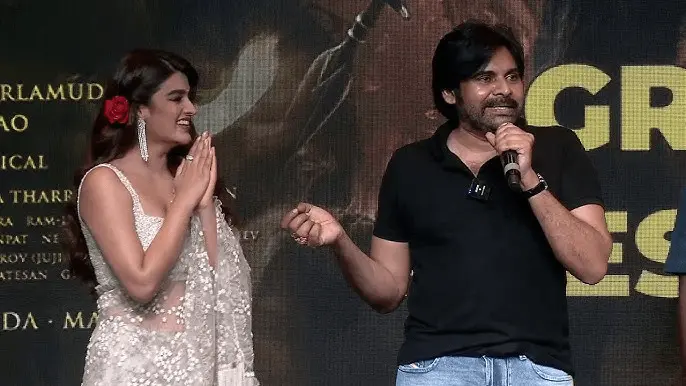
Pawan Kalyan & Nidhi Agerwal during HHVM Promotions
First Half: A Glimpse of Promise
For those searching for a quick Hari Hara Veera Mallu plot summary — the film is about Veera Mallu, a Robin Hood-like figure tasked with stealing the Koh-i-Noor diamond from Mughal emperor Aurangzeb. Sounds exciting, right? And for the first half, it is.
The first half carries the stamp of Krish Jagarlamudi’s storytelling. There’s decent world-building, with grand sets like the Kollur kingdom and Machilipatnam port. The Charminar fight sequence and other action set pieces hold up. MM Keeravani’s background score lifts several scenes, adding emotional weight even when the story itself takes its time to kick in.
Fans around me cheered ( even me 😉 ). There’s some pace, some mass moments and a lot of whistles— it works just enough.
Second Half: Where the Wheels Come Off
This is where the trouble begins — especially for those expecting consistent storytelling or strong visuals.
The VFX issues in Hari Hara Veera Mallu are hard to ignore. From visible green screens (even in hair strands!) to horse chases that look straight out of an old PC game — it’s rough. You can feel the change in direction too. The second half clearly shifts gears under A. M. Jyothi Krishna’s handling, and the patchwork shows.
The film begins to drag. Scenes feel like filler. Important dialogues feel rushed or oddly dubbed. Zero emotional pull. It’s mostly missing the aura of the first half.
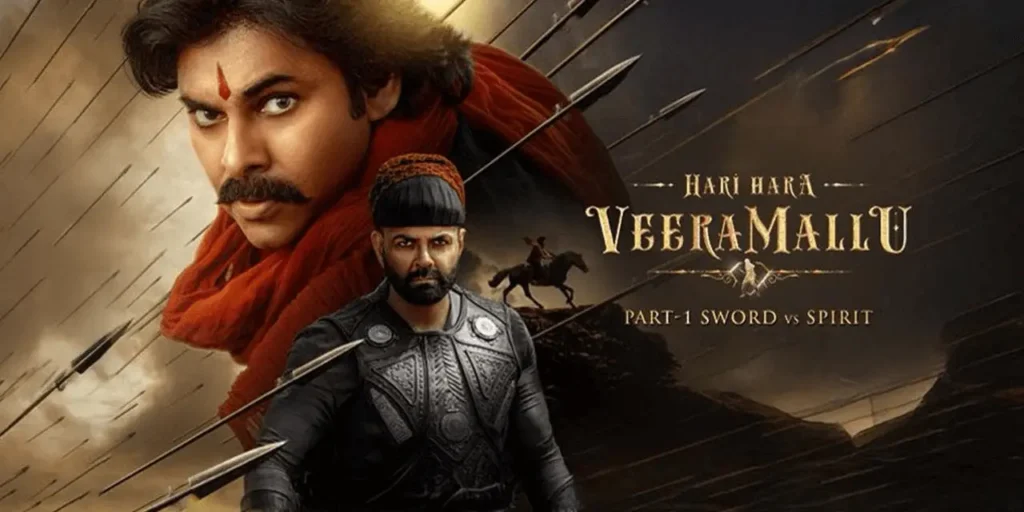
HHVM movie Poster
Characters & TechnicalsReview: HHVM
Pawan Kalyan’s new movie is carried by… well, Pawan Kalyan. His screen presence does a lot of heavy lifting, even when the material is uneven.
Bobby Deol is strong in his limited screen time. But a lot more is saved for Part 2.
Nidhhi Agerwal’s Panchami starts off promising with her adorable screen presence, but fades into the background.
Cinematography by Gnana Sekhar VS and Manoj Paramahamsa adds period texture, especially in the first half. But again, the visual effects drag it down.
MM Keeravani’s score is one of the film’s consistent strengths, especially during action sequences.
Final Thoughts
If you’re a Pawan Kalyan fan, this film has moments. If you’re looking for a tight period action film with emotional depth, this won’t fully satisfy.Despite its strong cast and bold ambition, Hari Hara Veera Mallu ends up as a scattered epic — visually grand in parts, but emotionally underwhelming. And no, it didn’t really need a Part 2 for this pacing.
If I were to define Lucky Baskhar in one word, it would be “cathartic.” Cathartic means nothing but that moment where you say, “My name is Maximus Decimus Meridius…” Lucky Baskhar follows the same path—the story of a middle-class bank employee who can’t even afford three pav bhajis from the streets of Mumbai, who becomes a billionaire in a couple of years. It’s not a one-man-show movie like Sivaji the Bossor Padayappa; rather, the credit must be shared between the team: Venky Atluri, Dulquer Salmaan, Nimish Ravi, and G.V. Prakash.
Title Card: Lucky Baskhar
A High Octane Narrative by Venky Atluri
Honestly speaking, I don’t like preachy movies, so I was a little hesitant about this Venky Atluri venture. I expected it to be a better version of Vijay Devarakonda and Parasuram’s Family Star.
Family Star Trailer
However, Venky surprised me with a well-balanced narrative filled with twists and turns. The thriller shade of the movie overpowered its middle-class hero glorification and preachy dialogues. Even the way he portrays some harsh truths is so classy and straight to the point—for example, dialogues like “I am not bad; I’m rich.”
Venky Atluri introduce his scenes like it’s from a pressure pump, building up tension in the audience and then with a twist, a sudden release—again, repeating this throughout the script until the climax. Normally, this pattern could make you bored, and by the climax, people might not feel the impact since they may start predicting things. But here, Venky shows brilliance in scripting; he covers up Baskhar’s cunningness with family drama and emotions so that the script ensures the audience won’t be skeptical about Baskhar’s actions. When Baskhar says, “It’s just begun,” he really means it. The second half shifts into top gear with family sentiments, thrills, emotions, and suspense.
A Con Thriller for Family Audience
So overall, Venky Atluri’s script is more like a Con thriller, with every other element acting as a cover-up. Another point I like about the script is that money laundering or stock market scams are not that easy to comprehend for a layman unless you are a fan of web series like Scam.
Scam 1992 Trailer
Here, Venky cleverly adds some overlapping shots where supporting characters explain things for you, so Baskhar’s sly moves become comprehensible even for those unfamiliar with the nuances of finance.
Dulquer Salmaan: Heart of the Film
It’s hard to imagine any other actor ( from Tollywood) pulling off this role with the ease Dulquer Salmaan does. His “boy-next-door” charm and physique make him a relatable character. DQ’s biggest plus is his “boy-next-door” look and physique.
Dulquer’s recent characters from TollyWood
His chest or arms aren’t like balloons, and he doesn’t have the headweight of a star. When he is humiliated, crying, we see a helpless middle-class family man, someone we know.
There’s a shot where he cries in the bathroom after almost losing everything—his dignity, his hope, his vehicle—and then switches with a smile. His ability to switch between helplessness and resilience ensures we empathise with his character. Venky’s objective of coating cunningness with innocence and justifying fraudulence with helplessness succeeds due to Dulquer’s screen presence and ease of acting.
Another big plus of Dulquer is he’s a great narrator. The movie progresses with DQ breaking the fourth wall and narrating, which is the icing on the cake.
Nimish Ravi’s Authentic Cinematic World
Cinematographer Nimish Ravi brilliantly captures the essence of 1990s Mumbai. Nowhere does the setting feel artificial, with the grey walls, crowded streets, and vada pav stalls giving an authentic backdrop.
Scene from Lucky Baskhar
In a period drama, the biggest challenge is making the setting believable. Nimish & Art team did a decent job here. It’s 1990s Mumbai, not because of some film posters but because of Nimish Ravi and art director Banglan (the art director of DQ’s Kurup).
G.V. Prakash Kumar’s Score – The Magic Touch
Pick any high or low moment in the film—when Baskhar faces an insult from a moneylender, or when he does a ₹6 million shopping spree and walks in slow motion—GVP makes sure you don’t have time to think about logic; just enjoy the magic on screen with your ears open. :).
GVP’s music keeps viewers entranced, amplifying the emotional highs and lows without letting them pause to question or be a detective to predict what’s next.
A Strong Role for Meenakshi Chaudhary
When it comes to the beautiful Meenakshi Chaudhary, I’m personally so happy to see her in a prominent role rather than roles where she’s just serving coffee to the hero or dancing with some uncles.
Ted talk: Dr Meenakshi Chaudhary
Her character, Sumathi, is strong, independent, and inspiring. It was well-written, and there are many scenes where she scores as an emotional anchor for Baskhar.
A Story That Resonates with the Middle-Class Dreams
Lucky Baskhar touches every middle-class man out there, and Venky successfully sells his dreams to that set audience. Overnight success with minimal consequence and a happy ending—what else does an average viewer want for satisfaction, at least for a day?
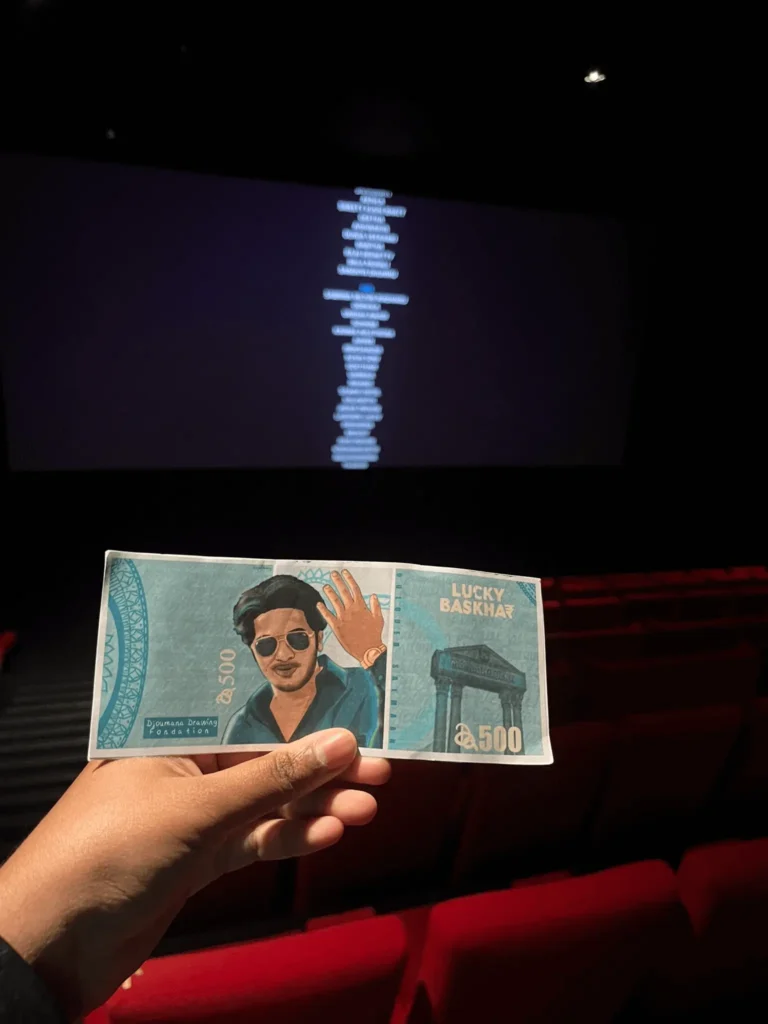
Image credits: @djmn_drawing
I appreciate how Venky shifts the perspective from “Fortune comes with risk” to “Fortune sustains when you know where to stop.”Most fortunes fall when people overestimate luck as skill.
Final Thoughts
In a world where only 2 million Indians (out of 1.428 Billion) belong to the high-income group (according to a 2021 Research report), Lucky Baskhar is bound to be a blockbuster.
It serves as a catharsis for everyone dreaming of overnight fortunes. Considering director Venky Atluri’s previous flicks like Vaathi or Rang De, in my opinion, Lucky Baskhar is the best.
What are the OTT releases, this week? With so many releases across platforms, here are 4-5 picks that I think are worth checking out. Do Patti, Aye Zindagi, Swag, Meiyazhagan and Gaganachari❤️ are my suggestions. Why I pick those; scroll down to read more.
Do Patti: A Thriller That Promises More Than It Delivers
Do Patti is a movie about crime, drama, and emotions. The story is about two twin sisters, Saumya and Shailee (both played by Kriti Sanon). Saumya is kind and gentle, but she is mistreated by her husband, Dhruv (Shaheer Sheikh). Her twin, Shailee, is clever and competitive. She always tries to be better than Saumya and even tries to ruin her sister’s love life.
When Saumya says that Dhruv is trying to harm her, a tough cop named Vidya Jyoti (played by Kajol) steps in to investigate. As the story moves forward, secrets are revealed about the troubled relationships between the sisters and Dhruv, leaving the audience wondering who is telling the truth.
The movie begins with lots of twists and interesting moments, showing the rivalry between the sisters and Saumya’s struggles with her husband. But as the film goes on, the story slows down, and the fight for justice feels too long by the end.
Highlights: Do Patti
❤️ Kriti Sanon delivers an impressive double role, portraying two distinct personalities with depth and flair. ❤️ Kajol shines in moments, playing a no-nonsense cop with hints of vulnerability. ❌ The screenplay falters towards the end, stretching the narrative and losing its earlier momentum, with a lot of scenes having no significance to what the makers actually intend to say. ❌ In my experience, music is the biggest problem here; it lacks impact, especially at some key emotional moments.
Gaganachari: A Sci-Fi Comedy with a Nostalgic Touch
Platform:Amazon Prime Director: Arun Chandu Cast: K.B. Ganesh Kumar, Gokul Suresh, Aju Varghese, Anarkali Marikar
Trailer: Gaganachari
Plot Synopsis: Gaganachari
Gaganachari is a quirky sci-fi film set in a dystopian Kerala of the 2040s. The story follows Victor (K.B. Ganesh Kumar), a former national hero known for hunting aliens, now hiding in a bunker with his eccentric companions, Alan (Gokul Suresh) and Vaibhav (Aju Varghese). Life takes an unexpected turn when an alien named Eliyamma (Anarkali Marikar) arrives at their bunker, forcing them to avoid authorities and stay out of trouble.
The film uses humour and nostalgia to explore life in a post-apocalyptic Kerala, mixing in references to 80s and 90s Malayalam cinema. As Victor participates in a documentary interview, we glimpse the struggles of Kerala’s citizens—where governments monitor people, right-wing activists patrol the streets, and synthetic ‘geef’ replaces beef. Gaganachari cleverly balances light-hearted moments with deeper themes like climate change and authoritarianism.
Highlights: Gaganachari
❤️ K.B. Ganesh Kumar delivers a hilarious performance as Victor, bringing charm and energy to the role. ❤️ Gokul Suresh surprises with excellent comic timing, while Aju Varghese adds to the fun with his witty lines. ❤️ The nostalgic references to Malayalam cinema are a treat for fans, adding a unique flavour to the story. ❌ Some jokes may feel too niche, limiting appeal for those unfamiliar with Malayalam culture. ❌ The plot can feel scattered at times, with moments that slow down the film’s pacing.
Meiyazhagan (Sathyam Sundaram): A Soulful Journey into Emotions
Platform: Netflix Director: C. Prem Kumar Cast: Karthi, Arvind Swamy, Rajkiran, Sri Divya, Devadarshini, Jayaprakash
Trailer: Meiyazhagan
Plot Synopsis: Meiyazhagan
Produced by Jyothika and Suriya under 2D Entertainment, Meiyazhagan follows the emotional journey of Arulmozhi Varman (Arvind Swamy) as he returns to his home town. A one day visit for his cousin’s wedding in 2018 takes an unexpected turn when Arul encounters a distant relative (Karthi) he struggles to recognise. What begins as a reluctant reunion blossoms into an unlikely bond, full of warmth, nostalgia, and a little humour.
While it may not resonate with audiences as deeply as 96, Meiyazhagan stands out as a reflective character study. It brings together two remarkable actors in a film that feels both intimate and grand, making it a must-watch for those seeking a heartfelt cinematic experience.
Why You Should / Should not Try Meiyazhagan (Sathyam Sundaram)
Highlights: ❤️ The chemistry between Arvind Swamy and Karthi shines, giving life to a story about rediscovery and relationships. ❤️ Karthi’s mischievous character and Swamy’s transformation make for heartwarming performances. ❌ At 178 minutes, the film feels a bit stretched, its ending may seem predictable, and it doesn’t hold a universal appeal (as in ’96’) in the second half because of deep Tamil centric narratives.
Hitler: An Old-Style Vigilante Movie That Falls Short
Platform:Amazon Prime Director: Dana SA Cast: Vijay Antony, Gautam Vasudev Menon, Riya Suman, Charanraj, Redin Kingsley
Hitler Trailer
Plot Synopsis: Hitler 2024
Hitler follows Selva (Vijay Antony), who balances a new romance with Sara (Riya Suman) while getting involved in a political crime spree. Meanwhile, Deputy Commissioner Shakthi (Gautam Vasudev Menon) investigates a series of murders linked to a corrupt politician, Rajavelu (Charanraj). As expected in any vigilante script, the story brings together these two seemingly unrelated plots with a predictable twist.
Hitler feels more like a nostalgic nod to vigilante classics of the past than an original action thriller. It borrows heavily from familiar templates, resembling films like Gentleman, which ironically starred Charanraj too. The attempt to add intrigue with misdirections and subplots doesn’t hold, as the narrative struggles to find fresh ground.
Highlights of ‘Hitler 2024’
❤️ Riya Suman’s character is well-integrated into the plot, going beyond a mere love interest. ❌ The plot feels outdated and predictable, offering little excitement. ❌ Vijay Antony’s inconsistent portrayal of Selva fails to create emotional resonance.
SWAG: A Bold Experimental Satire on Gender Dynamics
In Swag, Hasith Goli brings a non-linear narrative that traverses between the 1550s and the present, tackling themes of gender, power, and identity.
Back in 1551, Queen Rukmini Devi (Ritu Varma) ruled a kingdom that followed matriarchal traditions, where baby boys were not allowed to survive. One of her decisions brings a curse on future generations, leading to a treasure hunt in the present.
In today’s world, Bhavabhuti (Sree Vishnu), a clever police officer, tries to claim the family’s treasure but lacks the needed proof of his lineage. He is joined by Singareni, a social media star, and Anubhuti (Ritu Varma again), a civil engineer, as they all compete to inherit the treasure. As the story develops, we uncover family secrets and see how gender roles have shifted over time.
Swag is more than just a satire on the battle of the sexes—it’s an exploration of gender equality, told through quirky characters and complex storylines.
The film’s experimental approach, blending farce with theatre-like absurdity, might not be for everyone, but it ultimately rewards those willing to stay with it.
Why You Should / Should not Try SWAG
❤️ Sree Vishnu’s dynamic portrayal across multiple characters is a major highlight, particularly a surprising role revealed just before intermission.Ritu Varma and Meera Jasmine add emotional weight with their performances. ❤️ This is not a typical Tollywood movie; it’s an outside-the-box thought process and will be a different experience for most film enthusiasts. ❌ The multi-layered narrative can feel confusing, especially with several timelines and characters to track. ❌ The second half has moments that drag, testing viewers’ patience.
Aye Zindagi: A Heartfelt Tale with Missed Opportunities
Based on a true story, Aye Zindagi follows the journey of Vinay Chawla (Satyajeet Dubey), a 26-year-old software engineer battling liver cirrhosis. He travels to Hyderabad for treatment, where he meets Revathi Rajan (Revathy), a grief counsellor whose role is to convince families of brain-dead patients to donate organs. As Vinay confronts his illness, an unexpected bond forms between him and Revathi, touching on themes of hope, second chances, and survivor’s guilt.
Set in a time when liver transplants were rare and organ donation was still gaining traction in India, the film seeks to explore the emotional complexities of illness and loss. However, the narrative falters in delivering the depth the story deserves.
Highlights: Aye Zindgi
❤️ Revathy delivers a moving performance, carrying the emotional weight of the film. ❤️ The themes of hope and renewal are well-intentioned, though not fully realised. ❌ The plot feels disjointed, with several illogical decisions and underdeveloped characters. ❌ Satyajeet Dubey’s performance lacks the emotional impact needed for his role.
In the last season of The Legend of Hanuman, we saw the heroic Hanuman battling Kumbhakaran and Indrajit, saving Rama and Laxman from Patal Lok. This season, Hanuman returns in his Panchmukhi Avatar, taking on five powerful forms representing different Gods and directions. As new challenges arise, Hanuman embarks on a deeper journey of self-discovery, facing trials that test both his strength and wisdom.
What I like most about Trivikram Srinivas is how he connects mythological stories with mass masala movies. He often places his heroes in the roles of Vishnu, Rama, or Krishna, making them feel like incarnations of these divine figures. In Saripodhaa Sanivaaram, Vivek Athreya followed a similar approach.
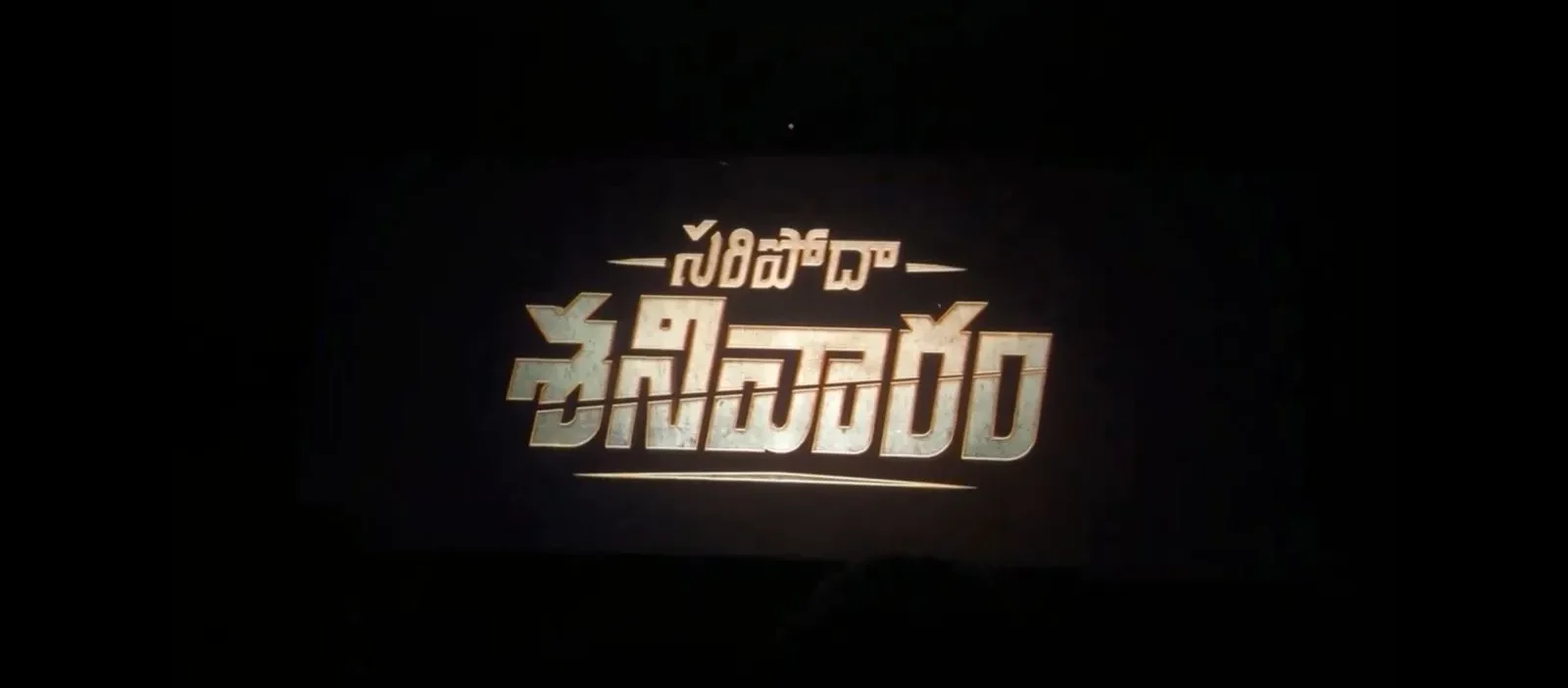
Saripodhaa Sanivaaram Title card
Have you heard the story of Narakasura?
Narakasura was a powerful and evil demon king, the son of Bhudevi (Mother Earth) and Varaha, an avatar of Lord Vishnu. Despite his divine origins, Narakasura was notorious for his wickedness and cruelty. He ruled the kingdom of Pragjyotisha, where he terrorized people and killed many innocents.
His power and arrogance grew so immense that even the heavens were disturbed by his actions.
Finally, Lord Krishna decided to fight Narakasura. However, Narakasura had a boon that only his mother could kill him. Krishna, knowing this, allowed Satyabhama, who was an incarnation of Bhudevi, to take the lead in the battle.
Plot: Saripodhaa Sanivaaram
Saripodhaa Sanivaaram begins with this story, and throughout the movie, Naani keeps referring to it. In a way, S. J. Suriyah represents a modern-day Narakasura, Sokulapalam is a modern-day Pragjyotisha, and Surya and his girlfriend Charulatha can be seen as Krishna and Satyabhama.
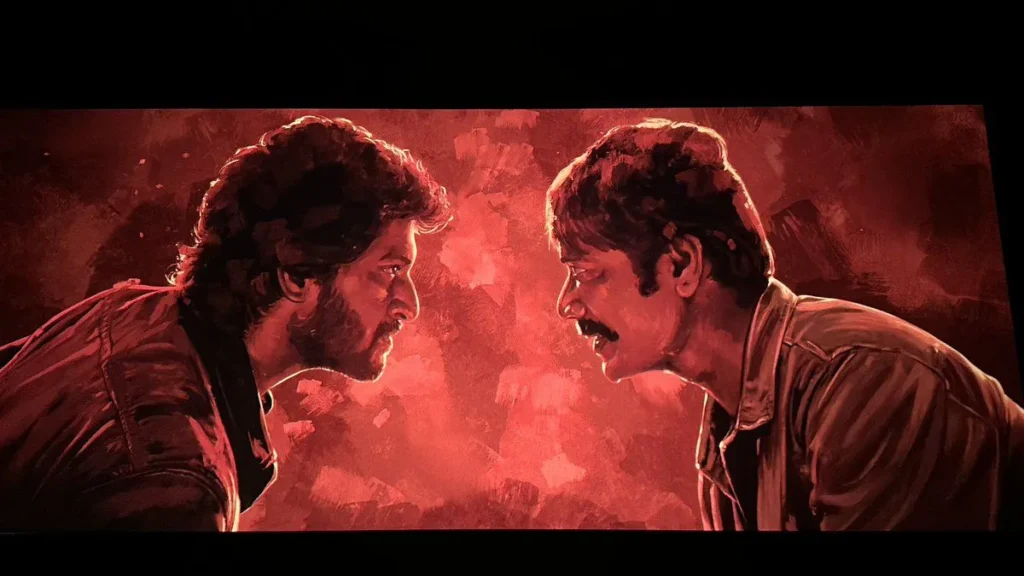
Nani vs S J Suriyah Face Off from Sanivaaram
But there is one difference, Krishna empowers others to take action against injustice but Suriya is different, when he witnesses injustice, he does not let it go.
Why You Should Try This Movie
This movie is packed with all the elements that make for commercial success in Tollywood and Kollywood: mother sentiment, father sentiment, sister sentiment, and a hero saving a community from oppression or vigilantism. A hero introduction setup where he fights against injustice. You’ll experience intense cat-and-mouse games between the villain and the hero.
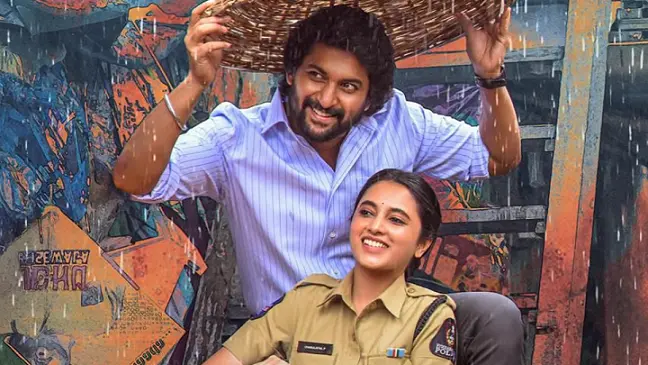
Nani & Priyanka Mohan
But what’s most impressive is that Vivek Athreya proves you don’t need to rely on showing the actress’s navel, a mass item song, or a foreign set song to create a mass action flick. Even though it’s a mass entertainer, Vivek Athreya keeps a minimalist approach, ensuring that you won’t get bored with cliches. In one line, Saripodhaa Sanivaaram is a middle-class Chathrapathi or a Vikramarkudu on a low budget.
A Domino Game and Athreya’s 6 Chapters
I feel like Vivek Athreya, as a writer, took inspiration from films like Tamil Maaveran and various Hollywood movies. He segmented Saripodhaa Sanivaaram into six chapters: the prologue, the turn, the knot, the crossroads, hide and seek, and redemption. It’s almost as if Vivek Athreya is trolling mass-action fans, sarcastically asking us, ee formula Saripodhaa? (Isn’t that enough?).
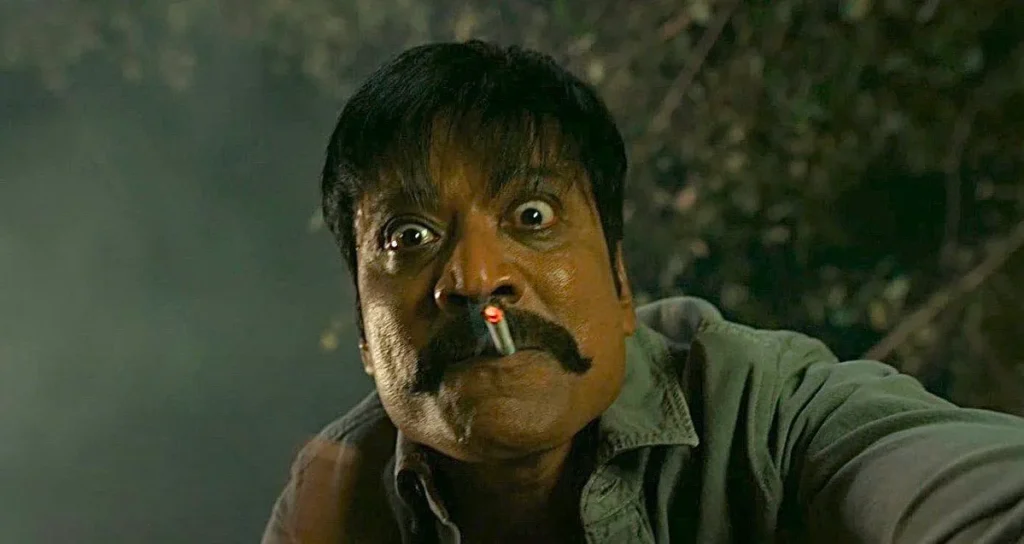
S J Suriyah as C I Daya
He established Suriyah (Nani) with subplots, Charulatha (Priyanka Mohan) with an open-ended past, and Daya (S J Suriyah) laced with dark humour and a dysfunctional family plot, all of which set the stage for a fire show.
The way Vivek wrote the script is like a domino effect—each event triggers the next, and each character drives an event. It’s beautiful to witness the script evolve so rhythmically.
Performances & Cast
When it comes to performances, Abhirami’s portrayal of the mother was deeply touching and reminded me of Simran in Kannathil Muthamittal, especially those moments at the beach, and some elements from Bhanupriya of Chathrapathi.
Sai Kumar, the millennium’s angry young man, plays a father struggling to pacify his angry young son. There wasn’t much for a veteran like Sai Kumar to do, aside from a few bass voice narrations.
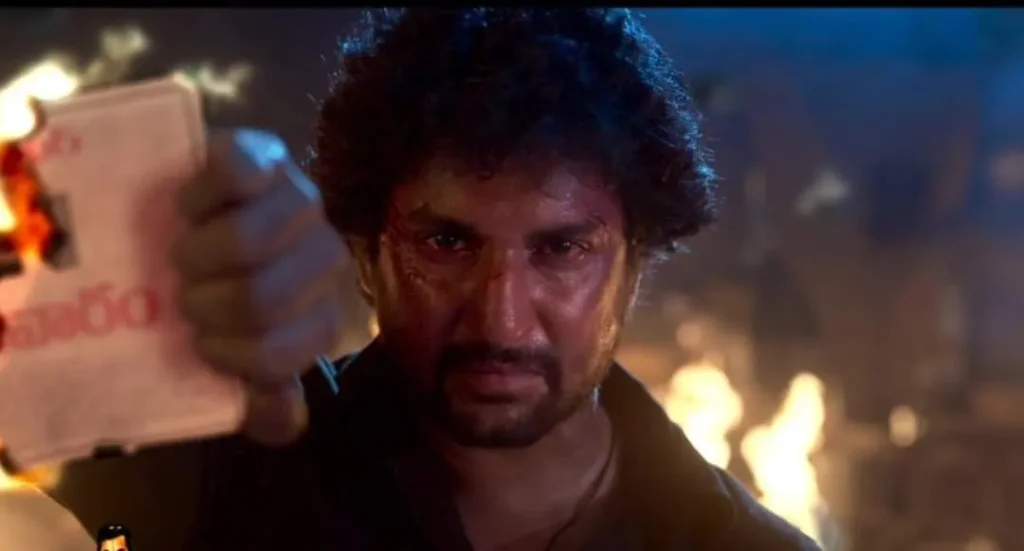
Nani as Suriyah
S. J. Suriyah and Nani played their characters brilliantly, convincingly portraying their utterly chaotic and distressed lives. Both are going through pain triggered by siblings—one suffering because of his brother, the other troubled by his sister.
Murli Sharma and Ajay Ghosh’s characters were icing on the cake with the perfect touch of humour to the film with their mannerisms and timing.
S J SUriyah speech at Saripodhaa Sanivaaram pre-release event
However, Priyanka Mohan’s character didn’t quite convince me. As S. J. Suriyah mentioned during the pre-release event of Saripodhaa Sanivaaram, Priyanka was too cute even as a constable. Her makeup, costume, and body language felt more like a hero’s pillion rider. I wish she had played a more prominent role, similar to what we see in the Narakasura story.
Jakes Bejoy: The Master of Elevation
Last but not least, Jakes Bejoy is the one who ensures you won’t dig too much on logic. Instead, you’re completely sucked into Athreya’s world, where no poor man uses social media or mobile cameras. For every question that pops into your head, Vivek’s writing will push you to another event, and Jakes Bejoy’s BGM will scream loud, and shut your curious mind, keeping you on track.
Saripodhu Ee Sanivaram
Finally, it’s technically a Vivek Athreya vigilante story, but I believe it’s actually a Vivek Athreya revenge story—a revenge against the Telugu audience who made his Ante Sundaraniki a flop. Now, he’s screaming loud to you: Saripodhaa Ee Sanivaram! (Is this Saturday enough??) I believe people are saying a big yes! Ee saari assalu bore kottaledhu.
In one of his interviews, Ravi Teja mentioned that some directors had already approached him for the Raid remake, but he declined since it doesn’t fit within his comfort zone (mass-masala-glamour). However, when Harish Shankar proposedMr.Bachchan, he readily agreed because Harish Shankar’s remakes are different. I completely agree with this, and that’s exactly what I felt when I watched Gaddalakonda Ganesh and Mr. Bachchan. Harish Shankar will go to any extent to entertain with his masala-action dramas.
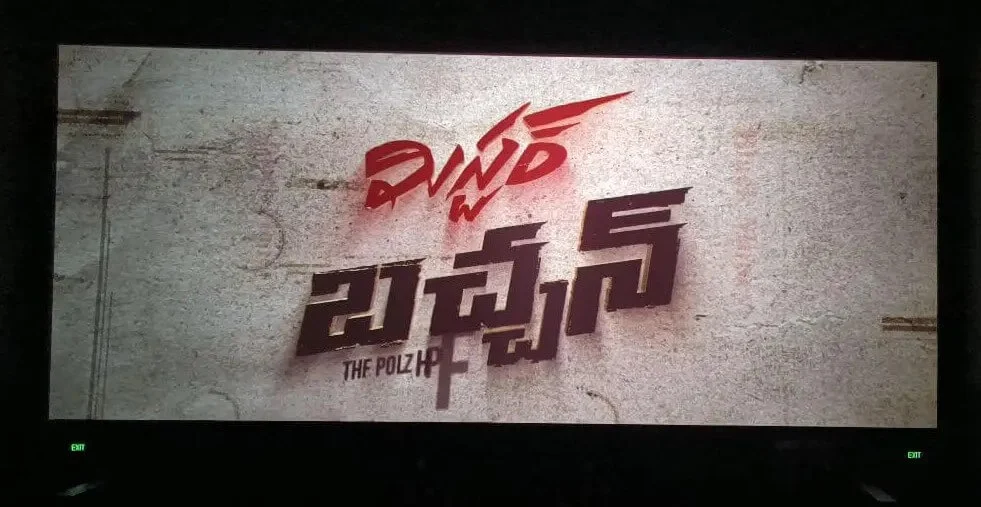
Mr.Bachchan Title Card
The thing with a remake movie is, when you know what’s coming yet still find yourself drawn to the narrative, then it’s a successful remake. And that’s the Harish Shankar formula. Let’s take the example of Dabangg and Pawan Kalyan’s Gabbar Singh. Who would have expected that Antakshari event with rowdies at the police station?
Gabbar Singh Antakshari Scene
The Grandeur Plot
In Mr. Bachchan, Ravi Teja plays a tax official who raids the house of a powerful and wealthy man and gets suspended from the department. The entire first half has him romancing the heroine and enjoying his suspension period. In the second half, his suspension is repealed, and he’s assigned to conduct a raid at another ruthless, powerful man’s home.
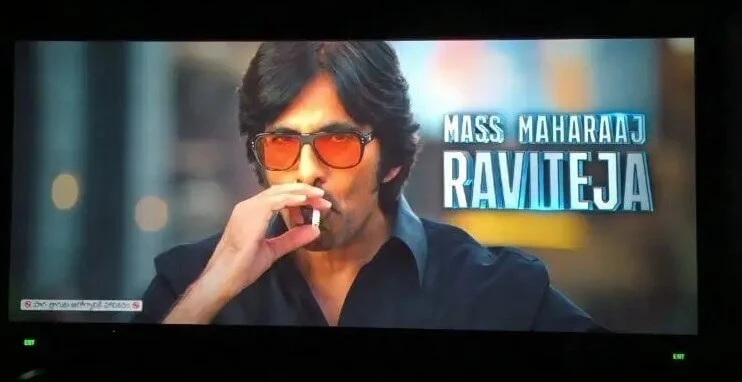
Ravi teja Title Card: Mr. bachchan
Raid (2018) vs. Mr.Bachchan (2024)
In the original movie Raid by Rajkumar Gupta, there’s minimal setup before the raid. We learn that Ajay Devgn has been receiving information from an anonymous source about hidden wealth, and he keeps it all secret, even from his staff, because he (correctly) doesn’t trust them.
Raid Trailer
What I like most about Raid is that it manages to be thrilling without being stressful. But in Mr. Bachchan, everything is grand—4-5 songs, tonnes of junior artists and their melodrama, comedians popping up like those random pineapple pieces in a spicy biryani.
Bhagyashri, Harish Shankar’s Lucky Star
Despite its niggles, clichéd templates, and outdated comedy of nearly two and a half hours, Mr. Bachan might entertain the regular Telugu movie audience, who doesn’t have much in the way of expectations or deep thoughts.
For example, you shouldn’t ask questions like how a 1980s couple from a village dreams up a song in Switzerland, or why the camera angles focus more on the heroine’s curves than her face, or why the ruthless villain and his entire gang are helpless against an average man without even a gun.
It’s a director’s film that draws steamy performances from both Bhagyashri Borse and Ravi Teja, and that’s the biggest highlight of the film. Honestly, it’s more Bhagyashri’s film than Ravi Teja’s.
Ravi Teja – Harish Shankar Mass Elements
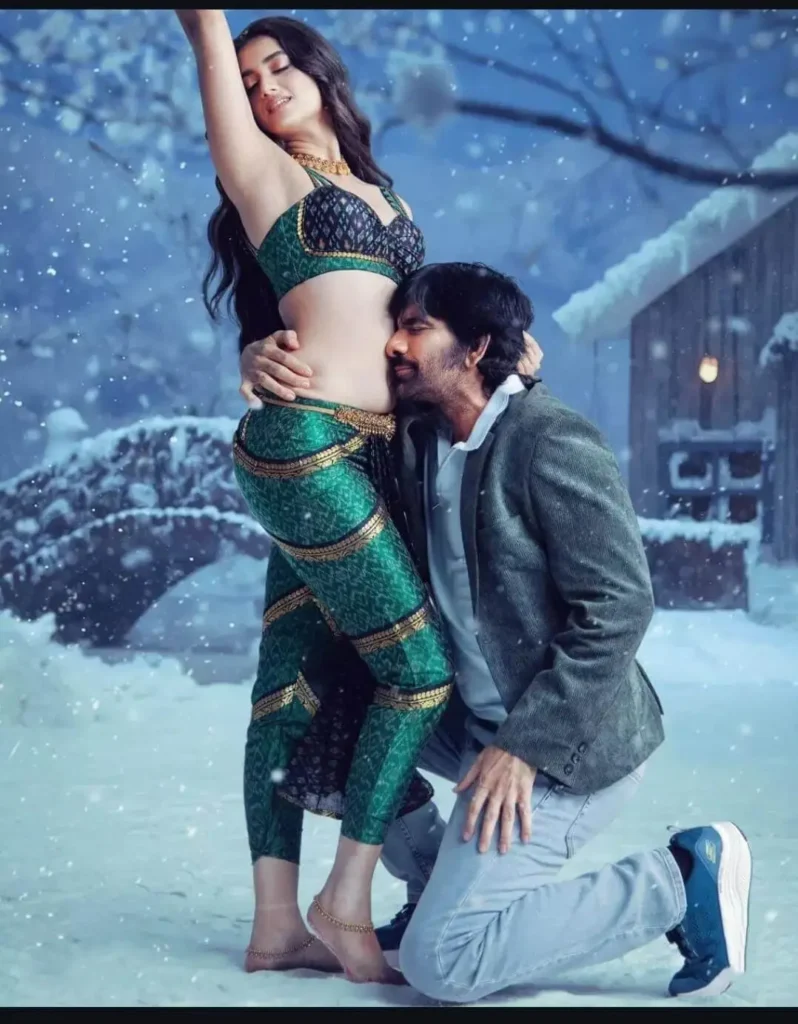
What makes the difference in such an old-type story is the spicy cooking by Harish Shankar. He knows the recipe well. More than Ravi Teja, it’s Bhagyashri Borse who got the whistles. There are certain antics of Ravi Teja—like wrapping his arms around belly curves, clasping fat tissues, cuddling earlobes and neck—which could appear like ‘overacting’ if not handled well by the director. But Harish Shankar managed those areas really well with his camera angles and aesthetic direction skills.
Song Shot from Mr.Bachchan
He used them excellently to bring out hilariously entertaining episodes from the central characters, and even threw in retro Bollywood songs in the first half.
Why you should try Mr.Bachchan
Sathya and his comedy track with Sachin Khedekar
A surprise cameo in the second half
The climax twists and fights
Bhagyashri and her cuteness-overloaded songs
Retro song recording sections—probably the best comedy track of the film
Reference episodes to Amitabh Bachchan movies
The only hope for Ravi Teja, he badly needs a hit, let’s support 🙂
“Mr. Bachan, the only hope”—I believe this title fits Ravi Teja perfectly. After multiple flops, his only hope is in Harish Shankar, and I believe this will end up as an average grosser. One thing is sure: Bhagyashri is going to be the next Sreeleela of Tollywood.
Since its OTT release, the Telugu movie Baby (2023) directed by Sai rajesh Neelam, has been the talk of the town. Viral reels and memes are flooding social media with taglines such as “it’s a message to the new generation” and “it’s the reality of our present generation.” But is this film really a mirror to contemporary relationships, or is it propagating outdated social norms and stereotypes? Let’s try a detailed analysis.
On the surface, Baby (2023) appears to be a love story, but is it really? It seems to perpetuate outdated notions from the 80s and 90s, where a woman’s character is judged based on her attire or lifestyle choices.
Remember how Neelambari was portrayed in the movie Padayappa? Or consider the characters of Vani Vishwanath in Malayalam cinema, and similar examples in the Telugu industry with second heroines in movies.
Just like them, Vaishnavi is subjected to a set of unfair expectations and judgements.
Questionable Messages
One of the alarming messages that Baby seems to deliver is that stalking is acceptable behaviour. Vaishnavi finds herself in a situation where she accidentally kisses Viraj. Though she realises her mistake and apologises, Viraj continues to stalk her, disregarding her repeated refusals.
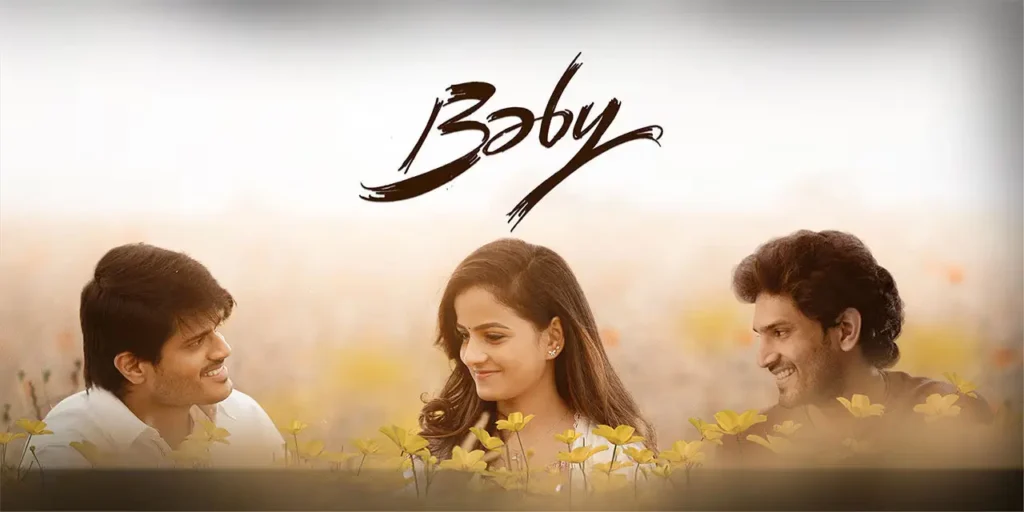
Vaishnavi Chaithanya & Viraj in Baby(2023)
Anand, on the other hand, is portrayed as a possessive lover. While he does make sacrifices for Vaishnavi, such as gifting her a phone, these actions are often more about him than about her. His possessiveness often overshadows other critical aspects of his life, like his relationship with his mother.
Scenes from Baby(2023)
The film appears to be whitewashing the male characters while darkening Vaishnavi’s character to an extreme extent. But why?
The Psychology Behind Audience Reactions
The mass audience seems to empathise more with Viraj and Anand, while vilifying Vaishnavi. This bias might be rooted in traditional gender roles and social norms that unconsciously influence our judgement. Vaishnavi’s character challenges these norms or mindsets that our typical audience has, thereby eliciting a stronger negative reaction from the audience.
The film’s commercial success and viral scenes beg the question: why are people resonating with it? It’s not necessarily because the film portrays reality, but perhaps because it confirms existing biases and beliefs. This is where I believe directors and script writers should be more responsible and try to make some differences instead of following the masses.
The film taps into the general scepticism around modern relationships & choices, packaging it as the real story of this generation, when, in fact, it might be perpetuating harmful stereotypes and norms.
Why Do Mass Audiences Hate Vaishnavi, not Viraj?
In my opinion, Viraj is the real antagonist of the movie, and he is the real villain. Still, people hate Vaishnavi. Why?
Traditional Gender Roles and Expectations
In our culture, traditional gender roles often portray women as the moral compass in romantic relationships. They want every woman to be like Sita, but men can be Krishna or Rama, depending on the hero. If Pawan Kalyan does the same thing in Badri or Jr. NTR does the same thing in Brindavanam, it is considered to be mass or cute. But when Vaishnavi does it in Baby, it is considered to be cheating.
Narrative Focus
The story primarily revolves around Vaishnavi’s choices and their consequences, making her actions the driving force behind the emotional turmoil. This focus naturally makes her more of a target for audience scrutiny compared to Viraj, who appears more as a reaction to her choices than as an instigator. This is where I felt, the script writer could have done a better job instead of spreading more toxicity.
Moral Ambiguity
Viraj isn’t portrayed as a clear-cut villain. He’s attracted to Vaishnavi and pursues her, but it’s Vaishnavi who hides her relationship status, thereby enabling Viraj’s advances. He does make a problematic move by threatening to release their kissing video, but this comes after he feels deceived.
Social Norms and Masculine Privilege
Viraj’s actions may be viewed less critically due to societal norms that often excuse or overlook male indiscretions in romantic pursuits. As I said before, many superstars have already done this multiple times on reel & real, but people are ready to accept it.
Why is Baby a Blockbuster and Going Viral, irrespective of its theme and toxicity?
The Pull of Confirmation Bias
One reason for the film’s massive success could be attributed to confirmation bias, a psychological tendency to seek, interpret, and remember information that confirms our pre-existing beliefs. Baby (2023) seems to validate certain societal norms and judgements, making it appealing to a large audience that finds their beliefs reinforced. This is alarming, even in 2023, the majority believe in it.
Emotional Highs and Lows
From a cinematic standpoint, the film employs effective storytelling techniques that take the audience on an emotional rollercoaster. High arousal emotions, whether positive or negative, are more likely to be shared; this is known as the emotional contagion theory. Scenes that evoke strong emotions—like anger towards Vaishnavi or sympathy for Anand and Viraj—are more likely to go viral.
Scenes from Telugu movie Baby 2023
The Impact of Social Media Algorithms
Let’s not underestimate the power of algorithms in shaping public opinion. Content that triggers strong emotional responses gets shared and commented on more, which gives it higher visibility on social media platforms. This creates a feedback loop in which the more a scene or character is discussed, the more visibility it gains, leading to a self-perpetuating cycle of virality.
The Bystander Effect in Digital Spaces
The ease with which people can share their opinions online paradoxically creates a digital bystander effect. Many might disagree with the portrayals and messages in the film but assume that someone else will voice these concerns.Meanwhile, those who agree with the film’s messages are more likely to share and propagate its content, thus contributing to its blockbuster status.
Baby (2023) is entertaining for youngsters, but it also reinforces harmful stereotypes about women and men. Its popularity shows that filmmakers need to be responsible rather than merely echoing societal biases.
“Custody” is a 90s-set action thriller that weaves unexpected twists, humour, and charm while falling short in delivering a consistently engaging cinematic experience.
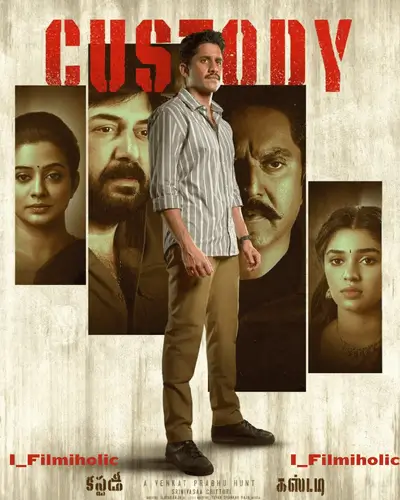
Custody Movie Poster
Plot: A Twisted Tale of Duty and Dilemmas
Our story unfolds in the late 90s, with our hero Shiva (Naga Chaitanya), a morally upright police constable. Chaitanya’s character name might be inspired by Ram Gopal Varma’s Shiva, starring Nagarjuna Akkineni as a young rebel.
His introduction isn’t a typical fight scene, he doesn’t flex muscles but halts a Chief Minister’s ( Priyamani) car to make way for an ambulance.
Next, we’re shown his love life, where he’s planning to elope with his quirky girlfriend, Revathi (Krithi Shetty). The plot thickens when Shiva, in a twist of fate, gets entangled with a dangerous criminal, Raju (Arvind Swami).
Now, Shiva’s mission is to escort Raju to court while dodging the corrupt police officer IG Nataraj (Sharat Kumar) and the entire state police force.
Sounds like quite the thrill ride, doesn’t it? But don’t get too excited; It’s like expecting a giant fireworks show and only getting a sparkler.
End credits from Custody
Custody: A Hunt with Missed Opportunities
Venkat Prabhu always aims to mix comedy and thrills in his films. This is like trying to make a tricky cocktail, where the humour is a refreshing breeze on a hot day. However, in “Custody”, the comedy didn’t hit the mark as expected. Premji seems to have lost the special spark we used to see in other Venkat Prabhu films.
The movie takes some time getting to the main conflict, which can test the patience of the audience. It fumbles when it attempts to explore an emotional backstory, making it feel a tad cliched. The comedy track could also have been sharper, and the action sequences more impactful.
In simple words, it could have been more focussed to the core theme (like Maanadu) and it demands a more brutal editing.
Performances: The Best, The Better, and The Missed Opportunities
In all Venkat Prabhu films, the actors’ performances are the beating heart, and it’s no different in “Custody.” But there is a difference, in Maanadu, you can see a competition between STR & S J Suryah, but here you won’t.
Naga Chaitanya as Shiva wears the role of the morally upright constable. His attempt to portray a character is commendable. While he convincingly plays the underdog, there are moments where we feel a seasoned actor could have added more depth and intensity to the role. It’s not that he doesn’t bring his A-game, but the character of Shiva could have had more facets explored. There are places where the character’s emotional depth doesn’t quite resonate convincingly. Still, it is arguably one of his best performances yet.
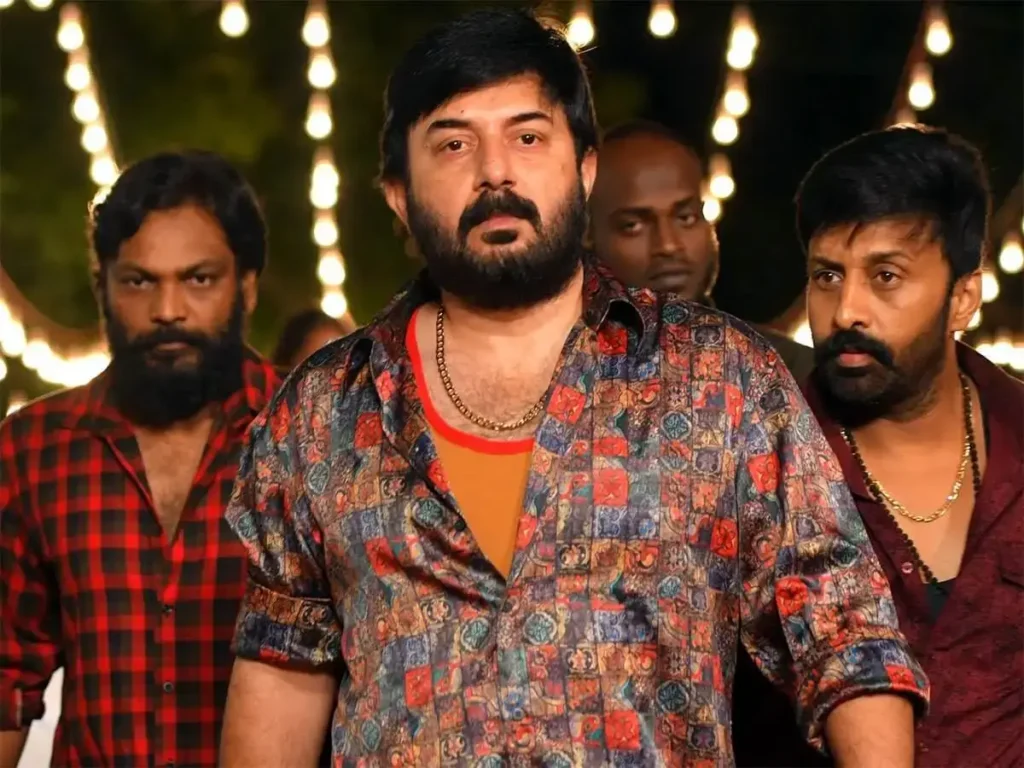
Arvind Samy as Raju from Custody
Arvind Swami as Raju is truly the show-stealer in this film. He beautifully balances the serious nature of his character with unexpected elements of humour. This is where the movie triumphs – in its character portrayals. Aravind Swami’s portrayal of the hardened criminal is not just intense but also delightfully entertaining. He adds a dash of humour even in the most tense moments, which keeps the narrative engaging. His character is a testament to Swami’s versatility as an actor.
Krithi Shetty as Revathy does a good job within the limited scope of her role. Her performance is impressive, and she adds charm to the screen. While her character remains a “nice to have” one in the film to add tension, the screenplay does not offer her much to contribute significantly to the plot. However, she does manage to leave an impact despite being the love interest that does not directly influence the main plotline.
Sharath Kumar as IG Nataraj delivers a strong performance. He embraces the character of the corrupt police officer with ease and manages to exude both menace and class. His screen presence is strong and adds value to the film. But I really wish S J Suryah could have tried the role of I G Natraj.
In addition, the film boasts some starry cameo appearances (I don’t want to spoil the surprise) that are sure to thrill the audience. One such cameo is by Ramki,which, despite being cliched, adds a massy feel to the scene.
Aesthetics and Score: An Ode to the 90s
The technical aspects of the film are appreciable.
Rajeevan, the production designer, and Kathir, the cinematographer, did a great job making it feel like you’ve gone back in time.
Yuvan Shnkar Raja mixed in some of Ilaiyaraaja’s older hits that fit right in and sound even better than the new songs.
Lastly, Venkat Prabhu used some references to take you back to the 90’s . Like, the main guy’s name is ‘Shiva’, as I mentioned before, it’s from a popular 90’s movie. Premji’s sequences with Mani Ratnam’s Mouna Ragam music.
Why Watch ‘Custody’: The Final Verdict
In a nutshell: So, should you watch “Custody”?
It’s an average thriller cop story with an intriguing plot, some thrilling twists, and memorable performances.
It may not be the best movie you’ll watch this weekend, but if you’re a fan of Arvind Swami, or classy villains, or if you’re in the mood for an okayish thriller with some twists and turns or gripping background score, then go for it.
But don’t expect too much, or you might be disappointed. Just sit back, grab your popcorn, and enjoy the Venkat prabhu’s Hunt.
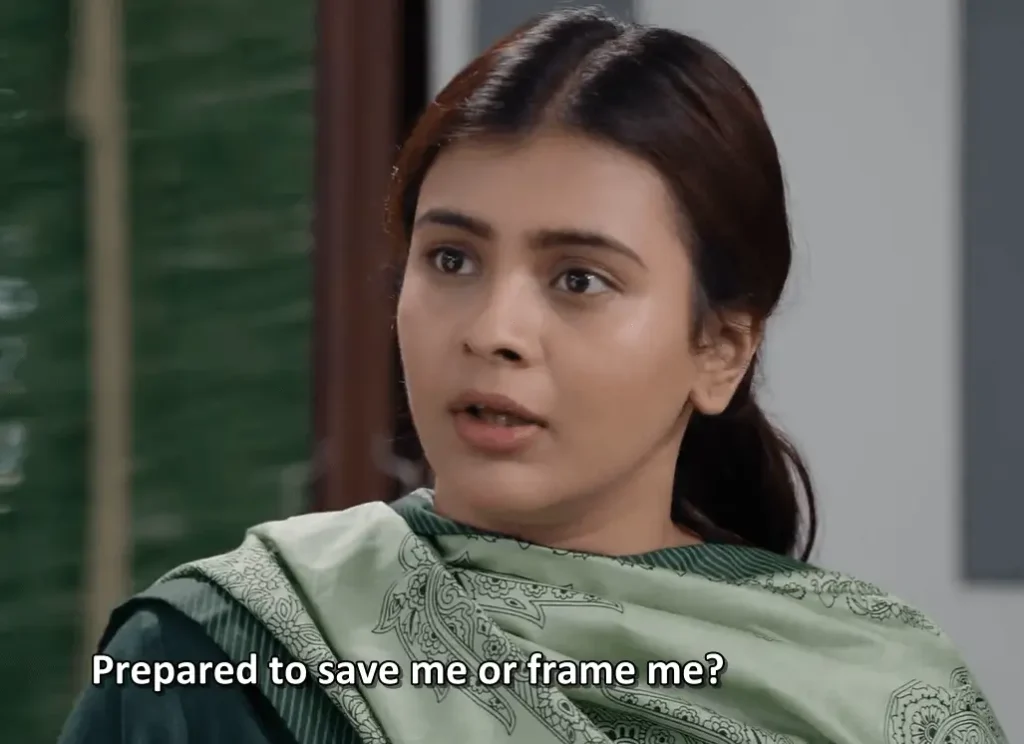
I was searching for a thriller webseries and chose Vyavastha a Zee5 webseries based on its intriguing one-liner:
“On their wedding night, Yamini (Hebah Patel) is arrested for her husband’s murder. Vamsi (Karthik Rathnam), a young lawyer who cares for her, takes her case and tries to save her from Chakraborty (Sampath Raj), a crooked and influential lawyer in the city.”
Sounds interesting, right?
However, although it looks great on paper, the on-screen result is a cliched webseries that follows Vamsi as he tries to prove Yamini’s innocence while battling a corrupt lawyer.
Vyavastha webseries suffers from poor execution and weak scripting, making it worth watching only once if you’re interested in courtroom dramas.
Vyavastha poster
Poor Direction and Below Average Screenplay
Director Anand Ranga establishes a promising premise with a strong foundation for an engaging legal battle. The first episode reminds me of the 2020 Netflix series “Raat Akeli Hei.”
However, from the second episode, I realized that the series is a mediocre attempt with a template screenplay filled with some predictable and insipid events.
A scene from Vyavastha
The intensity and emotional depth are lacking, but to some extend, Karthick Rathnam’s performance helps balance these shortcomings. The subplots and conflicts, which could have enriched the story, are underdeveloped and lose momentum as the series progresses.
Vyavastha starts with a bang, but then it’s just a humming from episode 2 to episode 7, and finally, in episode 8, you can see a rushed conclusion that may also leave you unsatisfied.
I believe that after the first episode, you can directly watch episode 8, and it won’t make much difference even if you skip the episodes in between.
Performances & Technical Aspects
Karthik Rathnam impresses as Vamsi, a lawyer committed to justice, while Sampath Raj’s ruthless and greedy lawyer Chakraborty boasts a strong presence. Hebah Patel provide a decent performance within her characters’ limitations, and it was a surprise to see Kamna Jethmalini after a gap, nothing more to say about her character.
Hebah Patel
Anil Bandari’s cinematography is adequate, but the law firm sequences could have used a more polished presentation. There isn’t much to say about the art department, as it’s even worse. The courtroom setup is unconvincing. Vyavastha is suffocating at multiple places because of thsi poor technical aspects.
Naresh Kumaran’s background score does its job but isn’t exceptional, and it doesn’t leave a lasting impact.
Reasons to Watch Vyavastha webseries:
Engaging premise and intriguing plot (But spoiled from E02-E07))
Strong performances from Karthik Rathnam and Sampath Raj
Some well-written dialogues
Reasons to Skip Vyavastha webseries:
Poor execution and weak screenplay
Underdeveloped subplots and conflicts
Engagement is limited to the first and last episodes.
Despite a solid plot and commendable performances, the series falls short due to poor execution and a weak screenplay.
Introducing Dasara, it’s a Blend of Familiar Elements, that’s my one word for this film.
Srikanth Odela, is the recent pass-out from the school of director Sukumar, after Buchi Bbau. So, there is no wonder why his latest release, Dasara evoking memories of Rangasthalam and Pushpa.
Chitti Babu Rangasthalam, Pushpa, Dharani in Dasara
Rather than delivering a raw revenge thriller, Dasara serves up a concoction of influences from Rangasthalam, KGF, and Kantara, all while incorporating themes such as casteism, friendship, love, heartbreak, politics, alcoholism, misogyny, twists, and even mythology. Despite offering a wide array of elements, the movie fails to deliver anything truly special or unique.
A Rustic Setting with Flawed Character Development
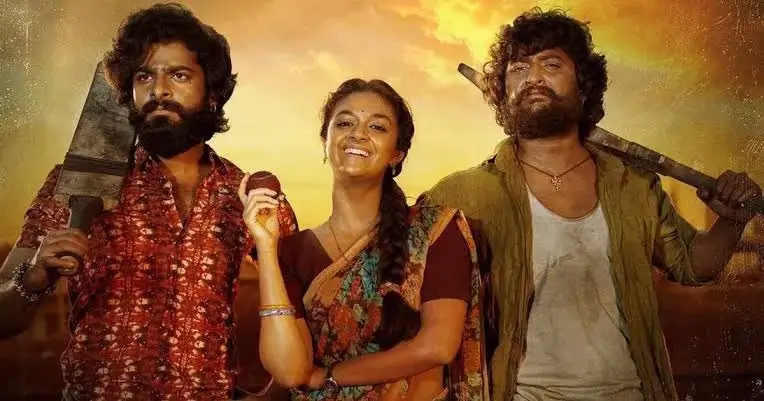
Set in the dusty village of Veerlapalle, where a deeply ingrained caste system prevails, Dasara follows the story of Dharani (Nani) and his friend Suri (Dheekshith Shetty), who both fall in love with the same girl, Vennela (Keerthy Suresh).
Dheekshith Shetty, Keerthi Suresh & Nani
The first half of the movie focuses on the Silk bar, a morning meeting place for the village men. Here, our hero and his friends steal coal from passing goods trains to make ends meet. Sadly, the introduction to this world is somewhat lackluster.
In the second half movie shifts from ‘Silk’ Bar to Vennela, who is the love interest of Dharani and Suri.(No Spoiler)
Nani’s introduction scene with the title card “Natural Star” feels forced and inorganic. The major problem with Dasara is that the character arcs and the events surrounding the central characters are too predictable. For example tehre is a scene in the second half where Shine Tom’s character confronts with Vennela, it ended up so amateurish and lacks conviction because of the poor writings. The director’s attempt to establish numerous elements in a short time frame ultimately dilutes the intensity of the script’s foundation.
Performances: Shine Tom Chacko Shines, Nani doesn’t seem Natural
Shine Tom Chacko’s standout performance comes with ease and a minimalist approach in his devilish moments. Unfortunately, his character lacks opportunities to elevate the film’s experience. Besides Shine Tom, it’s Nani’s one-man show, there are many moments where he excelled at ease, especially emotional moments, but his rugged character shades fails to convince.
The climax brings Kantara to mind, highlighting the absence of a more “ruthless bulky” character. Unfortunately, neither the music nor editing support Nani in creating a “Make-Belive” moment.
Nani as Dharani in Dasara
Keerthy Suresh delivers a decent performance, but her character could have been more fleshed out. I was expecting a Draupadi, but I got a Sita who suffer in between Ram and Raavana. Her Telangana dialect is surprisingly well-executed, though.
Keerthi Suresh as Vennela in Dasara
Music and Pacing: Room for Improvement
Santhosh Narayan’s music offers little that is noteworthy, and the lack of high-octane background music or emotionally stirring tunes is disappointing. Dasara could have been a stronger film if the events and character arcs been better developed. In comparison to Rangasthalam, where Chitti Babu’s character arc slowly evolves and leaves the audience with goosebumps, Dasara’s fast pacing results in a disconnect from the audience’s emotional investment.
Final Thoughts
In conclusion, Dasara’s potential hindered by weak writing and vision. Dasara had the potential to be an industry hit, it falls short due to weak roots in Srikanth Odela’s writing and vision. I hope Nani’s aggressive marketing will reward Dasara with a super-hit tag, but will likely lack a lasting impact.