Master of Realism: Immersing Viewers in Jithin’s Worlds
The world of cinema is often filled with spectacle and extravagance. Yet, Jithin Issac Thomas shines as a filmmaker committed to realism. He crafts narratives with a raw authenticity that sets him apart. His movies break away from common film industry cliches, and instead, paint real-world stories and characters.
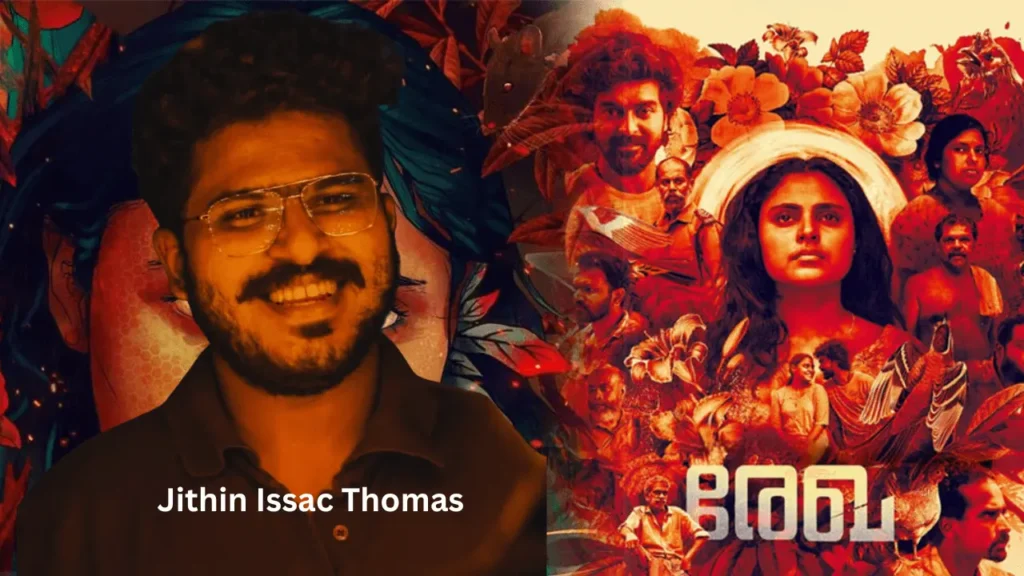
Jithin Issac Thomas & Rekha Movie Poster
Look at his latest film “Rekha,“(Read Rekha review here) a movie set in the small town of Kasaragod. It’s a perfect example of how much he cares about staying true to life. Every little detail in the film, like the way people talk and the unique habits of the characters, shows just how much attention he pays to getting it right. He’s not just focused on making things look real, but also on telling stories that feel genuine.
What’s really special about Jithin Issac’s movies is how he pulls you right into the world he creates. You’re not just a passive viewer when you watch “Rekha.” Instead, you become a part of it all.
You feel like you’re actually walking the lonely streets of Kasaragod, experiencing the village’s simple charm, eavesdropping on friendly conversations, and getting a glimpse into Rekha’s life. It’s an extraordinary cinematic experience that anyone can enjoy, no matter who they are.
Jithin’s films go beyond simple storytelling; they establish a genuine connection of empathy between the viewer and the story. Try watching Rekha or Attention Please.
Jithin Issac Thomas: Breaking Stereotypes and Shaking Up Norms
Jithin Issac Thomas is not afraid to challenge societal norms and break stereotypes through his bold storytelling. His films tackle unconventional subjects and explore themes that many filmmakers shy away from. By doing so, he pushes the boundaries of cinema and opens up discussions on important social issues.
In Rekha, he used a subtle method to do this. But In “Attention Please,” he is louder about this.
Jithin is dissecting the sensitive topic of caste discrimination. The protagonist, Hari, played by Vishnu Govindan, is an aspiring screenwriter who faces ridicule and dismissal due to his caste and complexion. Jithin fearlessly exposes the deep-rooted prejudices that exist in our society, forcing the audience to confront uncomfortable truths.
It’s Jithin Issac Film, Expect Turns!
This commitment to breaking stereotypes extends beyond social themes. Jithin’s films take unexpected turns and subvert conventional storytelling norms. He keeps the audience on their toes, constantly questioning what will happen next.
In “Rekha,” what initially appears to be a simple love story takes a sharp turn towards an intense revenge thriller. This unpredictability challenges the audience’s expectations and leaves them in a state of surprise and contemplation.
In Rekha , he is trying to challenge that “I am Man!!” pride set by the conservative society with “I am a woman” pride.
By breaking stereotypes and shaking up norms, Jithin Issac Thomas encourages viewers to reflect on their own biases and preconceived notions. His films have the power to ignite conversations and spark change in society. They serve as a reminder that cinema has the potential to be a platform for social commentary and introspection.
Jithin Issac films serve as a catalyst for change and inspire audiences to think critically about the world around them.
A Voice for the Voiceless: Speaking Up Through Cinema
Jithin Issac Thomas has carved a niche for himself as a filmmaker who amplifies the voices of the marginalized and overlooked. Through his cinematic endeavors, he serves as a catalyst for change and raises awareness about pressing social issues.
Jithin’s commitment to giving a voice to the voiceless is evident in his films, which tackle a wide range of subjects with sensitivity and empathy.
Addressing Social Injustices
Jithin Issac Thomas’ films don’t just entertain; they speak. They talk about the folks we tend to forget or ignore. It’s like he hands them a microphone and says, “Here, tell your story.”
In his film “Attention Please,” he fearlessly shines a spotlight on caste discrimination. The character of Hari, an aspiring screenwriter from a Dalit background, faces ridicule and discrimination from his flatmates. Jithin’s portrayal of Hari’s struggles not only exposes the deep-rooted prejudices prevalent in society but also challenges the audience to reflect on their own biases.
Attention Please: Trailer
Another film that showcases Jithin’s dedication to addressing social issues is the anthology “Freedom Fight,” in which he directs the segment titled ‘Pra. Thoo. Mu.’
This narrative explores the themes of rebellion and resistance, encouraging viewers to question oppressive systems and stand up for justice.
Jithin’s storytelling compels the audience to confront uncomfortable realities and motivates them to take action against societal inequalities.
Amplifying Women’s Voices
In the film “Rekha,” the titular character takes center stage as a tomboyish woman who confronts an act of injustice and embarks on a path of revenge. Through Rekha’s journey, Jithin challenges gender stereotypes and highlights the strength and resilience of women in the face of adversity.
Through Rekha, Jithin gives a voice to these women. He tells us that ego, revenge, pride, all these are not just a “Man thing”. It’s challenging “I am Man!!” pride with “I am a woman” pride.
Rekha Movie Trailer
In interviews, he emphasizes the need for more representation and equal opportunities for women in the film industry. By shedding light on their stories and perspectives, he aims to create a more inclusive and equitable cinematic landscape.
Jithin doesn’t just make films. He makes statements. And those statements speak for the people who need to be heard.
The Art of Uncomfortable Conversations
In his own words, he creates “not to please or appease an audience, but to make them think, to make them uncomfortable.” This audacious approach sets him apart from many filmmakers of his generation and makes his films unique and thought-provoking.
I believe, Jithin’s ultimate goal as a filmmaker is to inspire social change and create a more inclusive and empathetic society. Through his films, he seeks to spark conversations, challenge societal norms, and encourage viewers to reevaluate their perspectives.
In an industry often driven by commercial considerations, Jithin remains unwavering in his commitment to meaningful storytelling.
I have two ways to deal with it. One is to travel! Just pack your bag and go! Travel alone, experience a different culture or meet new people, and listen to some Rahat Fateh Ali Khan songs while sitting beside the window seat of a train or bus. This way, I keep my brain busy and replace the pain with new memories. It helps me relax.
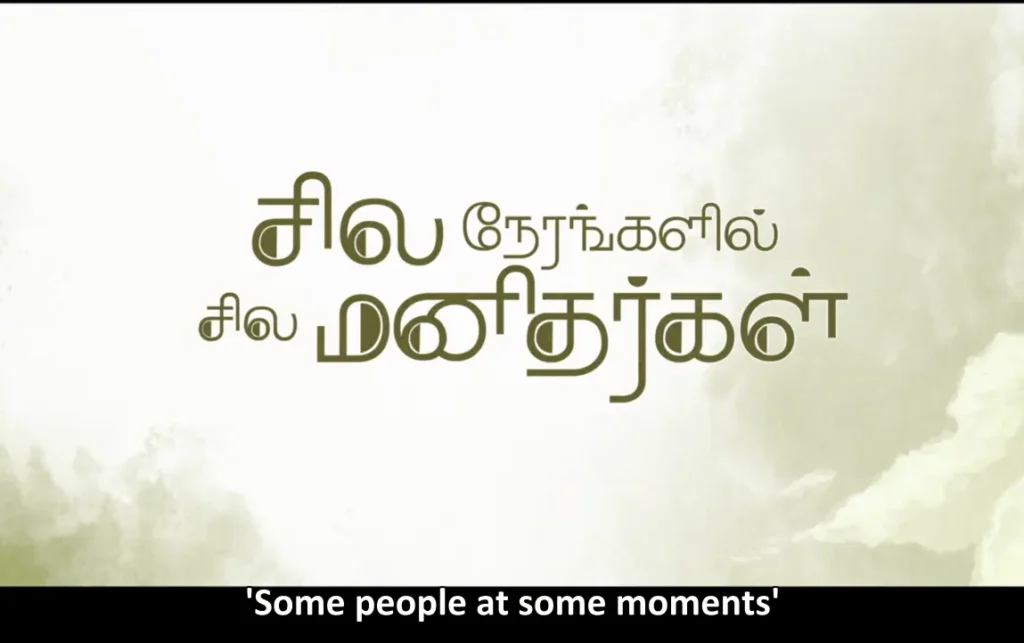
The second option is to watch a movie like “Sila Nerangalil Sila Manidhargal” and cry out loud in the washroom. When I cry, I shed tears and pain, which makes me relax.
Don’t think it’s a tragedy movie—it’s not. I rarely watch tragic movies.
Yeah, I know it’s weird because it’s a thriller, right?
But Bud White (Russel Crowe) & Lynn (Kim Basinger) 🙁
Lynn Bracken: Where did this come from?
Bud White: When I was twelve, my old man went after my mother with a bottle. I got in the way.
Lynn Bracken: So you saved her.
Bud White: Not for long.
Lynn Bracken: Some men get the world. Others get ex-hookers and a trip to Arizona.
Why All This Non-Sense?
I’m saying all this because I don’t want to dissect the movie and write a report. I just want to share the feelings I experienced after watching the movie.
I found “Pachuvum Athbutha Vilakkum” clichéd script, fitting into an overused template frame (or some characters picked from different movies and filled the screen).
“Sila Nerangalil Sila Manidhargal” follows the same template: a few people whose lives become interconnected at a certain point. All of their character arcs reach a low point and then start moving upward, and in the end, everyone is happy. I’m tired of this template, but “Sila Nerangalil Sila Manidhargal” directed by Vishal Venkat made me cry and made a difference.
The story template may be clichéd, but the brilliant casting and heartfelt narration set it apart. Ashok Selvan, Manikandan K, Nassar, K S Ravikumar, Anupama Kumar, Bhanupriya, Rishikanth, Reyya, Riythvika Panneerselvam, Praveen Raja… the list is long. I don’t know the names of the other artists, except for one or two lead characters (I know their names, but I don’t want to mention them).Everyone performed brilliantly, and it felt like I was watching real life unfold.
Why Not Pachuvum Athbutha Vilakkum but Why “Sila Nerangalil Sila Manidhargal”
In “Pachuvum Athbutha Vilakkum,” except for Anjana Jayaprakash and Vineeth, I felt like all the other characters were picked from some other films. Whether it was Mukesh, Shanthi Krishna, or the unknown artists, Fahad Fazil tried the same character aura in “Njan Prakashan” and “Oru Indian Pranayakatha” with similar reactions and body language. That’s where I felt a freshness in “Sila Nerangalil Sila Manidhargal.”
Secondly, the narration in “Pachuvum Athbutha Vilakkum” felt like the director filled the script with aesthetics and overused events: Ahaana, Shruthi, locations, a few dialogues, an obsessed boyfriend, Goan events around villains. Everything felt like sudden pop-ups on the screen that came and went. Some may click, while others may find it annoying. I belong to the latter group.
In “Sila Nerangalil Sila Manidhargal,” don’t expect such pop-up melodrama events (except one around Abi Hassan). It’s a simple story, a simple event that starts in the morning and ends the next day. The brilliant performances from each and everyone I mentioned before are what make it engaging and touching.
Am I saying Sila Nerangalil Sila Manidhargal a Must Watch? No!
Is it predictable? Yes. Is it clichéd? Yes. So why should I watch it? You will witness some brilliant performances that might surprise you. The story is predictable, but the narration will engage you and help you reflect on yourself.
Haven’t you ever had that hard-working colleague who complains about “Promotion” or “Increment”?
Haven’t you ever had that friend who shouts at their parents or doesn’t know how to express love? Or someone who thinks their parents spoiled their life or doesn’t feel proud of them?
Haven’t you ever had that one friend who is so innocent and believes the world is straightforward, everything is black and white?
Haven’t you ever had that annoying uncle who always troubles you with family problems or unwanted tasks?
Have you ever felt the pain of a situation where you are not guilty of a crime, but no one believes you?
If you answered “Yes” to any of these, this movie will help you introspect.
Manikandan in Sila Nerangalil Sila Manidhargal
One last line: Manikandan is the most underrated actor in Kollywood right now.
This is not a review; it’s my personal feeling.
Now, you may not like “Sila Nerangalil Sila Manidhargal” because I’ve set high expectations already. Trust me, it’s an ordinary movie with extraordinary performances, nothing more, nothing less.
Veeran is about a man named Kumaran, played by Hiphop Adhi, who gains superpowers due to a childhood incident. He has the ability to control minds for a short period and can discharge electric arcs. The movie is set in a village where a corporate body, led by a character named Sharath, plans to implement a dangerous project.
Scene from Veeran Movie
Kumaran decides to use his powers to protect his village and its people. He disguises himself as the long-forgotten guardian deity of the village, Veeran. The film’s narrative revolves around Kumaran’s journey in stopping the corporate project and how Sharath (Vinay Rai) plans to remove Veeran from their path.
The movie directed by ARK Saravan, explores themes of Myth, Massy-Superpower and village absurd comedy. Despite being a superhero movie, it tried to keep its touch with reality and village life, and these aspects make it interesting. The humor, action, and music add to the charm of the film.
It’s Not Minnal Murali, It’s a Mix-Bag
Veeran” does share some similarities with other films like Vijay’s Velayudham, Nikhil’s Karthikeya, Ram Kumar’s Mundasupatti, and Basil Joseph’s Minnal Murali. However, in the end it maintains its own identity, thanks to Da Vinci Code (Maybe an inspiration 🙂 ).
Veeran reminds us of “Velayudham” because of the dialogues, costumes, and the climax, where the protagonist assumes a guardian deity’s identity to protect his people.
The character sketch of Veeran bears a resemblance to “Karthikeya”.
The narration around the temple in “Veeran” is quite similar to “Mundasupatti”, and there is even a dialogue referencing it.
Scene from Veeran Movie
Minnal Murali seems to have inspired Veeran in its plot and acts. Even the character of Kaali Venkat in Veeran appears to be similar to Aju Varghese’s role in Minnal Murali. Both characters provide comic relief and being a detective behind the main super-heroes.
The major difference between Veeran and Minnal Murali is in the writing. Minnal Murali has a steady, well-paced character development and transformation into a superhero, whereas Veeran tends to be more sudden in these aspects because of its poor writing.
What Could Have Been Better: Writing
Firstly, the pacing in the first half of the movie could have been better. The story’s development and character introductions felt sudden and could have been more gradual to allow the audience to connect better with the characters and their transformations.
Secondly, the narrative suffers from various logical loopholes. This indicates that the script could have used a little more time and thought. A more tightly woven plot would have significantly enhanced the movie’s overall impact.
Thirdly, the utilization of the superhero aspect of Veeran could have been done more creatively. The film does not fully explore the potential of Adhi’s superpowers, especially in the confrontations.
R BADREE in Veeran
Finally, the villain characters, played by Vinay Rai & R Badree, could have been more compelling. A stronger antagonist would have added more tension to the plot, making the story more engaging for the viewers.That’s what worked best for Minnal Murali.
Why You Should Try Veeran
Unique Setting
Veeran is set in a rural backdrop, offering a fresh and inter
esting take on the usual urban-centric superhero movies. The depiction of village life and its nuances add to the film’s charm.
This week, there are two super-heroes Spiderman and Veeran, I believe children should try this different superhero. Let them get a different perspective.
Superhero Theme
For fans of superhero movies, Veeran presents a novel, desi superhero, which isn’t very common in Indian cinema, especially Tamil cinema. The unique powers of mind control and discharging electric arcs set our hero apart.Thanks to Minnal Murali for this initiative.
Hiphop Adhi as VEERAN
Performance of Hiphop Adhi, R Badree & others.
Hiphop Adhi, as the lead character, delivers a solid performance. His portrayal of the superhero character, with all its complexities, is commendable and a major reason to watch the movie. R Badree nailed his role as a villain.
Good use of Comedy & Myth
The film manages to weave in subtle-humor throughout the plot, making it entertaining. Especially, the situational comedy sequences involving R Badree is a special treat. There is a surprise comedy for you from Munshikanth and Kaali Venkat in the climax.
Kaali Venkat, Munishkanth in Veeran Movie
The way Veeran(Kumaran) uses Myth, is intriguing, it clearily shows how religious systems works, this is where I felt like Veeran is a mediocre Mundassupatti. But still it’s worth considering there are no creepy romantic track.
A scene from Veeran Movie
My Suggestion
Veeran doesn’t quite reach the heights of films like “Minnal Murali”, it still manages to entertain and engage the audience to a certain extent.People were laughing and clapping at theatre, especially children enjoyed the most, I guess.
Remember the first half is slow-paced & poorly written, but in the second half Veeran team did a better job. You may find some thrilling moments.
If you’re a fan of superhero movies and are interested in seeing a different take on the genre, Veeran could be worth a watch. But go in without high expectations, and you might find yourself enjoying the film.
If I were to paint a simple picture of what ‘Zara Hatke Zara Bachke’ is all about, it would be like this: Imagine a slice of life from a middle-class Indian home from Indore, few drama stuffed with humor and woven around the dreams of a young couple. The director, Laxman Utekar, has tried to create a lively canvas where the ordinary becomes extraordinary, much like his previous work, Mimi.
Poster Collage: Zara Hatke Zara Bachke
Story of ‘Zara Hatke Zara Bachke’
Let me introduce you to our main couple, Vicky Kaushal and Sara Ali Khan, who play everyday people just like any other middle-class urban couple. Vicky’s character, Kapil, is a yoga teacher with simple dreams and a clever way of finding shortcuts to solve big problems. On the other hand, Sara Ali Khan portrays Saumya, a spirited chemistry professor with dreams that extend far beyond her home and her lovely georgette sarees.
Their everyday life takes an interesting turn when the pressures of living with their extended family become overwhelming. They yearn for a ‘place’ they can call their ‘own’, a home where they can create their own space and cherish their dreams. And that’s when our story, ‘Zara Hatke Zara Bachke’, begins to unfold.
What follows is a delightful rollercoaster of events, ranging from comical to dramatic, all revolving around this relatable and universal desire for a home.
In a nutshell, ‘Zara Hatke Zara Bachke’ take us to witness the dreams, challenges, and hilarious complications faced by this young Indian couple. Especially, while they navigate through societal expectations, personal ambitions, and the quest for a place to call their own.
Why You Should Give A Try?
Firstly, let’s talk about the performances. Vicky Kaushal, known for his versatile acting skills, brings his A-game to the table as Kapil, the yoga teacher with a penchant for finding clever solutions. His portrayal is relatable and engaging, showcasing his ability to bring charm and authenticity to the character. Sara Ali Khan, on the other hand, captivates with her vibrant presence as Saumya, a chemistry professor who yearns for more from life. Her energy and commitment to the role shine through, adding depth to the narrative.
One of the film’s strengths lies in its ability to tackle real-life issues in a light-hearted manner. The storyline revolves around the dreams and challenges faced by a young middle-class couple, resonating with audiences who have similar aspirations and struggles. Laxman Utekar’s direction, as seen in his previous work like Mimi, ensures that the film strikes a balance between entertainment and thought-provoking storytelling.
Moreover, ‘Zara Hatke Zara Bachke’ offers a glimpse into the world of Indore, a city that adds its own flavor to the narrative. The film beautifully captures the essence of small-town life, providing a unique backdrop for the characters and their journey.
What Could Have Been Better?
In my opinion, one thing that really felt odd to me was that the chemistry between Sara Ali Khan and Vicky Kaushal. It didn’t seem to have much chemistry on-screen.
Even though they are both talented actors with their own strengths, their pairing in the movie didn’t create the desired spark.
Sara Ali Khan
I was expecting a Sara Ali Khan from Atrangi Re, unfortunately, I only got that energy from her, not the natural demeanour. If Sara – Vicky chemistry had been stronger, it would have made Kapil’s & Soumya’s journey more interesting. Here audience may feel some disconnect with the story.
Plot of ‘Zara Hatke Zara Bachke’
Another important point to consider is that the plot of the movie. I felt it was stretched out. The pacing, especially in the second half, was not well done.
If the script had been tighter and repetitive elements had been eliminated, it would have created a more focused and engaging narrative.
Originality & Freshness
The story was highly relatable, but it lacked originality and seemed similar to other films like old Dinesh Vijan films or “Dum Laga Ke Haisha” style. If the filmmakers had strived for a more unique storytelling approach, it would have made the movie stand out from its predecessors.
Chemistry between Vicky Kaushal & Sara Ali Khan
As I said before, Vicky Kaushal’ portrayal of Kapil is excellent, but I felt that Sara Ali Khan’s efforts fell short compared to Vicky. It’s important for Khan to refine her acting approach, finding a balance between being authentic and avoiding being too theatrical.
Laxman Utekar’s approach
From an audience perspective, Laxman Utekar’s approach to ‘Zara Hatke Zara Bachke’ should be criticized for lacking energy and excitement. If he had incorporated more dynamic and innovative storytelling techniques, especially during crucial moments of the film, it would have injected more vitality into the overall viewing experience
Final Verdict
In conclusion, ‘Zara Hatke Zara Bachke’ remains an opportunity to immerse oneself in a light-hearted tale that resonates with the dreams and challenges faced by many. So, if you’re willing to overlook its flaws and embrace its relatable themes, this film has the potential to provide an entertaining and thought-provoking experience.
Bookmyshow offers a Buy one Get one offer for this movie (Only for June 2 Bookings I guess) considering that, it’s worth to give a try.
Asur season 1 presents a fascinating blend of mythological lore and modern-day crime. In this blog post, I will explain the reasons why Asur season 1 stands out, highlight the cast and performances, and provide a recap of the episode-wise plot points.This will serve as a refresher for those who are eagerly anticipating the release of Asur season 2.
Asur Season 1 trailer
The series has made a significant impact on the Indian web series scenario due to its unique concept and storytelling, which blends two very contrasting themes – ancient Indian mythology and modern forensic science – into a compelling narrative that keeps you on the edge of your seat.
What sets Asur apart is its innovative use of mythology in a crime thriller. The show introduces us to a serial killer who commits horrifying murders while drawing inspiration from ancient Hindu mythological texts.
The philosophical underpinnings in each episode, particularly the dichotomy of good and evil, add a deeper layer to the narrative. It’s not just about catching a criminal; it’s about understanding human nature and the inherent capacity for both good and evil within us all.
Asur season 1 Cast: Worth Applauding
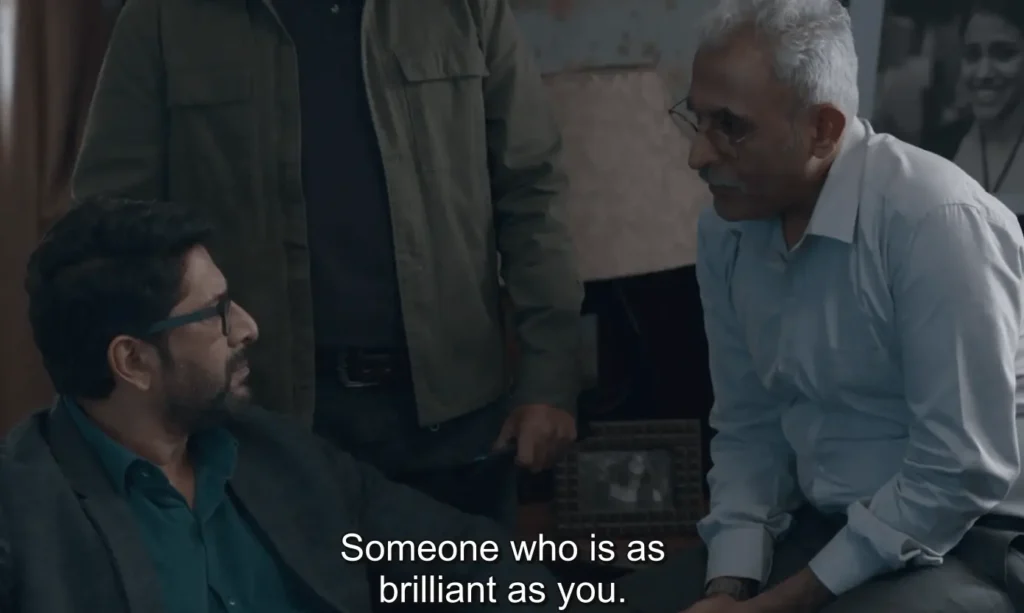
The performances in Asur are top-notch. A notable digital debut is made by Arshad Warsi, known for his comedic roles, as a no-nonsense forensic expert. His portrayal of Dhananjay Rajpoot (DJ), an intense and egoistic senior forensic expert, is refreshing and showcases the versatility of the actor.
Barun Sobti impresses as Nikhil Nair, a forensic expert-turned-teacher, grappling with personal and professional conflicts. His performance successfully conveys the internal struggle and dedication of the character to his craft. The engaging narrative of the series is further elevated by the commendable performances of the ensemble cast, including Ridhi Dogra, Anupriya Goenka, Amey Wagh, and Sharib Hashmi.
Story of Asur Season 1
Asur Episode 1 – The Dead Can Talk
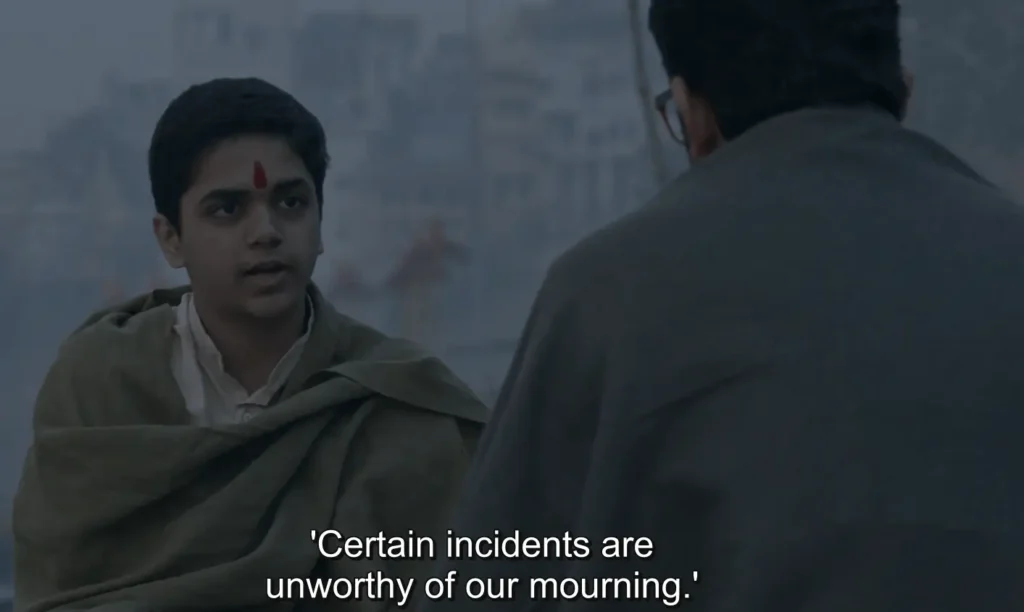
It’s 11 years ago in the holy city of Varanasi. A young boy, son of a priest, is being readied to take on his father’s role. But things take a strange turn. After a ritual by the river, the father asks his son for water. The next thing you know, the father’s lifeless body is sinking into the river. We see the son again, his face smeared with ashes by a group of Aghori saints, and in his hand, he holds a cut finger. Could this be his father’s finger? Did he…kill his father?
Episode 1 from Asur season 1
Now, let’s zoom out of this mystery and travel across continents to the present-day FBI Training Centre in the USA. Here, we meet Nikhil Nair, who left his CBI job to teach forensic science. “The dead can talk,” he tells his students, alluding to how the deceased provide enough evidence to catch their killer. He’s good at his job, his knack for deductions proved when his friend asks his opinion on a murder case. But his past still calls him back to the CBI, particularly through an incessant Shashank Awasthi.
The Horror begins
Meanwhile, a gruesome scene unfolds in Delhi. A woman’s body, assaulted and burnt, is discarded in a jungle, reduced to a gruesome spectacle. This news reaches Nikhil, causing distress at home. His wife, Naina, isn’t happy about him considering going back to CBI, a place he left for their family. This disagreement spirals into a full-blown argument, revealing the cracks in their relationship.
The next morning, a new crime scene is discovered in Delhi, a body left in a terrifying state. Dr. Dhananjay Rajpoot, also known as DJ, arrives at the CBI headquarters in New Delhi. An old photo of him and his wife, Sandhya, hints at some history. A surprising twist comes in the form of a mysterious audio file from the killer, taunting DJ.
Scene from Episode 1 of Asur season 1
As the episode concludes, we see Nikhil taking a painful decision, leaving his family in the USA to return to Delhi. At the same time, a terrifying discovery is made – the woman who was brutally killed was none other than DJ’s wife, Sandhya, a devastating revelation that leaves us gasping for more.
Asur Episode 2 – Rabbit Hole
In the second episode of Asur, we go back 18 years, to the ancient city of Varanasi. We meet Shubh, a curious child who has a unique approach to studying the Gita, leading his stern father to label him as ‘Asur ka avatar’. Shubh’s peculiarity is on full display, especially after a disturbing incident with a puppy.
In today’s time, the CBI team, still reeling from the gruesome murder of Sandhya, who was a renowned painter and DJ’s spouse, takes on the challenging task of uncovering the mystery.
This mystery leads them far away to Nagaland, where another person is found dead in the same creepy way. This is where Nikhil enter the scene.
Scene from Episode 2 of Asur season 1
Enter Nikhil, a seasoned investigator brought in to replace DJ in this complex case. Past friction between Nikhil and DJ add an undercurrent of tension to the proceedings. Nikhil, in collaboration with Nusrat, a forensic expert, starts to put together the chilling puzzle pieces, all seemingly leading back to DJ.
Hidden GPS systems, late-night autopsies, peculiar tattoos, and Sandhya’s secret abortion start to shape a troubling narrative, pointing towards DJ as the orchestrator of the grim deeds. As DJ is led away in cuffs, the audience is left pondering – is he truly guilty, or just a pawn in a more sinister game? The suspense thickens as the real killer watches the spectacle unfold.
Asur Episode 3 – Peek – a – boo
In the third episode of Asur, a flashback reveals Shubh’s childhood intelligence and anger issues.
In the present day, Nikhil receives coordinates and assembles his team to investigate. DJ is imprisoned while the killer strikes in Kolkata, causing a death by poisoning.
The Delhi coordinates lead to a coffin factory, but no suspicious activity is found. Nikhil suspects a buried victim and discovers DJ’s fingerprints on the money from a previous case. George, a shop owner, goes missing, and Nikhil finds him unconscious in a car near a graveyard.
Scene from Episode 3of Asur season 1
DJ warns Nikhil of imminent danger and reveals a personal connection. At the graveyard, the team discovers a coffin rigged with knives and gas, rendering them unconscious. A man in protective gear takes Nikhil to an unknown location, leaving the audience in suspense for the next episode.
Asur Episode 4 – Ashes from the Past
In the fourth episode of Asur, a flashback shows DJ’s presence during a havan(yagnam) ceremony where Shubh’s father is mysteriously poisoned.
Scene from Episode 4 of Asur season 1
In the present day, Nikhil goes missing, and his family arrives in India. Nikhil wakes up in a secluded place and communicates with the kidnapper through a landline phone.
Meanwhile, DJ receives old case files and analyzes them in jail. The kidnapper sends food to Nikhil but demands his cooperation to ensure his family’s safety. Nikhil observes the kidnapper’s characteristics and sees footage of his wife and daughter on television.
The kidnapper assigns Nikhil a task to suggest a method to murder Abhilasha Chandran, a woman involved in brain-mapping experiments. Nikhil proposes a plan involving a dental appointment and an MRI machine.
The kidnapper carries out the murder as instructed. CBI discovers another murder near a lake, prompting DJ to recall the suspicious incident in Varanasi. DJ joins the team at the underwater crime scene and suspects Nikhil’s involvement based on similarities to a past case. The episode leaves viewers questioning how Nikhil will communicate with DJ to escape the kidnapper’s clutches.
Asur Episode 5 – The Devil has a Face
In the sixth episode of Asur, a flashback reveals Shubh’s arrest for his father’s murder, with DJ working on the case.
Scene from Episode 5 of Asur season 1
In the present day, Naina learns about another victim and refuses to believe the theory that Nikhil might be the killer. Nikhil, disturbed by his actions, demands cigarettes from the kidnapper. Lolark seeks permission for DJ to work on the case from jail but is denied by Shashank Awasthi.
Nikhil watches the news about the neuroscientist’s body being found and becomes overwhelmed with guilt. Lolark visits Varanasi to gather information about Shubh and meets an ex-police officer. DJ attends a counseling session in jail led by Kesar Bhardwaj, where they discuss religion and karma. Awasthi finally permits DJ to work on the case, and a new team member, Samarth, joins. Lolark learns about Shubh’s peculiar behavior in jail before his alleged death in a fire.
The CBI team begins their investigation, and DJ realizes that the killer is using Nikhil’s family as leverage. Nikhil attempts to communicate by manipulating the television’s wiring. Samarth suggests studying the victims’ horoscopes, and Nikhil receives his second target, Aditya Jalan. Naina confronts DJ about the officers outside her home, and Lolark discovers Shubh’s records.
The episode ends with DJ recalling his interaction with Shubh during his arrest, hinting at a possible connection between Shubh and the killer.
Asur Episode 6 – The Firewall
Taking a different turn, the sixth episode of Asur begins with a flashback in Kolhapur, where a renowned painter narrates a story to his grandson about the defeat of the Asur Kali. However, the painter is brutally murdered by a masked man who claims to be sending a message to God.
In the present day, Nikhil plans to murder philanthropist Aditya Jalan, but struggles to breach his tight security. DJ contacts a Balinese mask instructor for information but learns that the instructor is blind. Nikhil battles with his past decisions and has an imaginary conversation with DJ for guidance.
Nusrat creates an age-progression photo of Shubh to see his current appearance. Lolark visits Shubh’s grandfather in Varanasi and discovers Shubh’s sketchbook filled with drawings of demons. DJ and Samarth consult a fake priest for horoscope analysis and later seek Kesar’s help. They learn that all the victims were born in the Delphinus constellation.
Another Hint & Hope
DJ realizes that the SIC database holds the required information and asks Rasul to breach its security. In a vision, Nikhil sees a way to murder Aditya using medicine. Rasul eventually hacks the SIC database with Naina’s assistance. Nikhil connects the television to a police walkie-talkie signal and continues studying forensic science books. DJ discusses Shubh’s story and sketchbook with Lolark.
The team suspects Aditya Jalan as the killer’s next target due to his charitable nature. The kidnapper calls DJ, confirming their suspicion and revealing the date of the planned murder. DJ wonders how the kidnapper obtained internal information. DJ and the team prepare for Aditya’s engagement with heightened security, but Aditya dismisses the threat. Rasul and Sajid attend the engagement, and DJ identifies a toy truck as a potential bomb.
The bomb detonates harmlessly in a freezer. However, the lights go out momentarily, and when they come back, Aditya is found dead, poisoned, with the killer’s Balinese mask nearby.
The episode leaves viewers intrigued about the aftermath of this incident.
Asur Episode 7 – Let There be Darkness
Straying from its usual path, the seventh episode of Asur, takes us back 10 years to Varanasi, where Nikhil visits Shubh in jail. Shubh refuses to admit his crime and blames DJ, leaving a cryptic message that they will meet soon.
The CBI struggles to recover from the failure to save Aditya Jalan. During Aditya’s autopsy, DJ and Nusrat discover that Nikhil used Aditya’s ulcer problem to poison him. Two additional non-toxic elements in Aditya’s bloodstream puzzle DJ, as they appear to be a message from Nikhil.
The kidnapper rewards Nikhil with cigarettes and hints at his omnipresence. DJ delves into Hindu mythology and consults Kesar for assistance. The team realizes that the killer targets achievers and believes himself to be the mythological devil Kali.
Nikhil has an imaginary conversation with Nusrat and recalls his past with Naina. DJ faces obstacles in the investigation, including a slow SIC server and the revelation that the podcast voice is not Kesar’s. Dhananjay(DJ) and Naina decipher Nikhil’s message, leading them to suspect Shubh’s involvement and an accomplice.
DJ decodes the meaning of two elements and sends teams to search corresponding coordinates in Delhi. Lolark suspects Kesar and provides DJ with a linguistic report. Naina tracks the killer’s search activity, and DJ requests Naina to add his name to the SIC database as bait.
The episode ends as the killer discovers DJ’s name in the database. The penultimate episode leaves viewers on the edge, anticipating the answers in the final installment.
Asur Episode 8 – End is The Beginning
The final episode of Asur takes us back 10 years to Varanasi, where DJ and Nikhil discuss Shubh’s case. DJ fabricates evidence against Shubh, leading to Nikhil’s resignation from the CBI.
In the present day, the search for Nikhil continues, and DJ anticipates the killer’s arrival at Central Jail to target him. The CBI discovers that Neeraj Jadhav, Radhika Venkatesh, and Umar Sayyed are missing, potentially the next targets. The kidnapper grows impatient, suspecting a trap set by DJ.
DJ becomes suspicious of Kesar and sends a team to his home. The three hostages are trapped in a chamber with limited oxygen, forced to fight for survival. DJ uncovers Kesar’s fake identity and his potential connection to Shubh. Rasul’s behavior raises doubt, especially when he attacks Lolark.
Scene from Episode 8 of Asur season 1
Nikhil escapes his confinement and collects crucial evidence from the kidnapper’s location.
A Big Revelation & A Twist
DJ manages to overpower the kidnapper in his room. However, during Shashank’s interrogation of Kesar, it is revealed that the kidnapper is part of Shubh’s cult.
The live broadcast shows the hostages’ desperate struggle for oxygen. DJ confesses his past fabrication to Shubh and takes pills in exchange for information.
Nikhil, Naina, and the backup team arrive at the chemical factory. Rasul challenges Nikhil to choose between his daughter and the hostages, resulting in a devastating choice. DJ’s condition worsens, and he is rushed to the hospital. Riya, Nikhil’s daughter, is poisoned by a member of the cult.
Lolark is killed by Rasul, and Radhika shoots Umar in a shocking turn of events. Naina and Nikhil find Riya dead, leading to an emotional outburst directed at DJ. Rasul, still hiding his true identity, takes Nikhil away.
Climax scene Asur season 1
The episode concludes with DJ’s suspension and the revelation that Rasul is the real Shubh.
Climax scene Asur season 1
Finally, the camera pans out as Shubh shares a chilling final gaze with DJ, leaving viewers on the edge of their seats and eagerly anticipating the next season.
Asur’s final episode delivers thrilling revelations and sets the stage for a potential second season, leaving viewers eagerly awaiting the future of the Shubh vs DJ and Nikhil conflict.
“Asur 2” is the much-awaited sequel of the critically acclaimed crime thriller series, “Asur.” Back for another intense ride into the murky realms of mythology and murder, the series takes us deeper into the chaotic life of forensic expert-turned-teacher, Nikhil Nair, played by Barun Sobti, and his former mentor Dhananjay Rajpoot, played by Arshad Warsi.
Why Should You Watch “Asur 2”?
If you enjoyed the gripping narrative of the first season of “Asur,” there’s every reason to look forward to its sequel. “Asur 2” promises a similar blend of crime, mythology, and thriller elements that made the first season a hit.
The sequel offers a chance to delve deeper into the complexities of the main characters, particularly Nikhil Nair and Dhananjay Rajpoot. Their quest to apprehend the devious ‘Asur’ promises to keep audiences glued to their screens. (Considering the first 2 episodes.)
Scoop (Netflix)
OTT Platform: Netflix Release Date: June 2, 2023 Directed by: Hansal Mehta Language: Hindi Cast: Deven Bhojani, Tannishtha Chatterjee, Tejasvini Kolhapure, Shikha Talsania, Tanmay Dhanania.
Among the riveting OTT releases this week, ‘Scoop’ stands out as an intense thriller drama series. The series, based on Jigna Vora’s memoir “Behind Bars in Byculla: My Days in Prison,” is set against the backdrop of a media hub and revolves around a crime reporter, Jagruti Pathak. Karishma Tanna plays Jagruti, a journalist whose life spirals out of control when she finds herself accused of the murder of a fellow journalist.
Scoop Trailer
The plot weaves a tale of ambition, power dynamics, and a fight for innocence, portraying the dark nexus between the police, underworld, and media.
Why Should You Watch “Scoop”?
“Scoop” is bound to intrigue you if you have a penchant for thrillers infused with real-world undercurrents. The series draws its premise from real-life events and presents a gripping narrative around the tough life of a journalist, her ambitious pursuits, and the dire consequences she faces.
Karishma Tanna brings the intricate character of Jagruti Pathak, a crime journalist, to life. She finds herself ensnared in a dangerous web of deceit and crime. The compelling trailer assures viewers of a series that delves deep into her struggle to clear her name, offering suspense, drama, and a strong dose of reality.
A Beautiful Life (Netflix)
OTT Platform: Netflix Release Date: June 1, 2023 Directed by: Mehdi Avaz Language: English Cast: Christopher, Inga Ibsdotter Lilleaas, Christine Albeck Borge
Adding to the variety of OTT releases this week, “A Beautiful Life” is an inspiring Danish musical drama movie from Netflix that follows the tale of a talented fisherman-turned-singer, played by singer Christopher.
Beautiful Life Trailer
The movie takes us through his journeyfrom an everyday fisherman to a singing sensation, after being discovered by a renowned music manager. As his life changes dramatically, the movie explores themes like love, passion, struggle, and the courage to chase dreams.
Why should you watch “A Beautiful Life”?
“A Beautiful Life” should be on your watchlist if you appreciate musical dramas that blend love, romance, and the inspiring journey of a character. It tells the story of a humble fisherman with an extraordinary voice, taking you on a captivating journey of transformation.
Additionally, the series skillfully portrays the challenges and obstacles that accompany newfound fame and personal exploration.
School Of Lies (Hotstar)
OTT Platform: Disney Plus Hotstar Release Date: June 2, 2023 Directed by: Avinash Arun Language: Hindi Cast: Nimrat Kaur, Varin Roopani, Divyansh Dwivedi, Aryan Singh Ahlawat, Hemant Kher, Parthiv Shetty, Adrija Sinha, and Aalekh Kapoor.
As you explore the OTT releases this week, don’t miss ‘School of Lies’, this is the one I was waiting for.
School Of Lies Trailer
Why should you watch “School of Lies”?
From the plot, I believe,”School of Lies” is a captivating suspense-drama series that deserves a spot on your watchlist. The series revolves around the mysterious disappearance of a 12-year-old boy named Shakti from his boarding school, uncovering dark secrets about the institution along the way.
What’s the plot of “School of Lies”?
The story is set in the fictional town of Dalton and primarily focuses on RISE, a private boarding school. When Shakti goes missing, Nandita Mehra, the school counselor played by Nimrat Kaur, takes it upon herself to investigate the case. As she digs deeper, she unravels unsettling truths about the school that were previously unknown. If you enjoy mysteries with gradual revelations, this series will undoubtedly captivate your interest.
Is “School of Lies” based on real events?
Yes, the creators of “School of Lies” have drawn inspiration from true events to craft their story. While they haven’t specifically referenced any real-life incidents, they assure viewers that the narrative reflects actual occurrences, adding an extra layer of realism to the suspenseful storyline. If you’re seeking a thrilling drama that draws from real-world events, this series is certainly worth exploring.
Hatyapuri (Zee5)
OTT Platform: Zee5 Release Date: June 2, 2023 Directed by: Sandip Ray Language: Hindi, Bengali Cast: Indraneil Sengupta, Abhijit Guha, Paran Bandyopadhyay, Supriyo Dutta
“Hatyapuri” revives the beloved detective character Feluda from the stories by the legendary Satyajit Ray. Directed by Sandip Ray, the son of Satyajit Ray, this film offers a modern interpretation of the classic detective story, set in contemporary times. The storyline revolves around a stolen ancient manuscript and a mysterious death, essentially presenting a thrilling whodunit narrative.
Hatyapuri Trailer
Why you should watch Hatyapuri
Classic Whodunit: If you enjoy engaging mysteries that keep you guessing until the end, “Hatyapuri” is a must-watch. Unlike some previous Feluda films that leaned more towards thrillers, this film stays true to the essence of a traditional whodunit, keeping the audience in suspense regarding the identity of the villain.
Nostalgia: For fans of Feluda, this film will evoke a sense of nostalgia. It successfully captures the essence of the original series while bringing it into a modern setting.
Strong Cast: Indraneil Sengupta’s portrayal of Feluda has received widespread acclaim. His fluency in Bangla and nuanced performance establish him as a worthy successor to the iconic role. Additionally, supporting performances, particularly from Paran Banerjee and Subhashish Bhattacharya, shine in the film. The impactful soundtrack, composed by Sandip Ray, enhances the emotional resonance of each scene.
Why you might want to skip Hatyapuri
Lack of Modernity: Despite its contemporary backdrop, some viewers may feel that the film’s script doesn’t fully reflect the modern times. While it maintains a period piece sensibility, it may not resonate with those seeking a truly contemporary story.
Less Thrilling: In contrast to some previous Feluda films that offered high levels of action and thrill, “Hatyapuri” relies more on Feluda’s intellect to solve the case. If you prefer action-packed thrillers, this might not be your cup of tea.
Ugram (Prime)
OTT Platform: Amazon Prime Release Date: June 2, 2023 Directed by: Vijay Kanakamedala Language: Telugu Cast: Allari Naresh, Mirnaa Menon
In ‘Ugram’, we meet K. Shivakumar (Allari Naresh), a principled yet aggressive police officer known for his strong stance against corruption and his willingness to resort to custodial torture in his pursuit of justice. However, the narrative takes a twist when Shivakumar’s wife and daughter mysteriously vanish.
The film then unfolds in two distinct halves, with the first focusing on the typical cop drama and the second delving into Shivakumar’s desperate search for his missing family.
Ugram Movie Official Trailer
Why You Should Watch Ugram
Allari Naresh’s Performance: Despite the fragmented narrative, Allari Naresh delivers a dedicated performance as a distressed cop. His physicality and action sequences are impressive, showcasing the passion and intensity of his character.
Action Sequences: Ugram stands out for its well-choreographed and executed action sequences. They are slick, intense, and provide a thrilling visual experience for viewers.
Realistic Cop Drama: If you are a fan of gritty and intense cop dramas with an investigative angle, Ugram offers a familiar yet captivating terrain to explore.
Why You Might Want to Skip Ugram
Ugram might not be a compelling OTT releases this week for you, because of the follwoing reasons.
Disjointed Narrative: The plot tends to lose its way due to the constant shifts between the cop drama and the personal tragedy thriller. This inconsistency makes it challenging to maintain a cohesive narrative flow, thereby diluting the overall intensity of the film.
Stereotypes & Misrepresentation: At times, Ugram resorts to harmful stereotypes, particularly in its portrayal of gender roles and women. These instances may be discouraging for some viewers seeking more progressive storytelling.
Lack of Emotional Depth: While Ugram presents well-executed action sequences, it falls short in terms of emotional depth. The film fails to establish a strong emotional connection with the audience, which could have made the action sequences more resonant and impactful.
Mumbaikar (Jio Cinema)
OTT Platform: Jio Cinema Release Date: June 2, 2023 Directed by: Santosh Sivan Language: Hindi, Tamil Dubbed Cast: Vikrant Massey, Vijay Sethupathi, Ranvir Shorey, Sachin Khedekar, Tanya Maniktala, Sanjay Mishra
https://www.youtube.com/watch?v=6-RpbvyLSDw
Mumbaikar Trailer
Mumbaikar, a remake of Lokesh Kanagaraj’s debut film Maanagaram, brings forth an intriguing narrative. The original film, Maanagaram, revolves around Sri, an engineering graduate from a small town, who unwittingly gets entangled in a complex web of criminal activities in Chennai. This includes the kidnapping of a gangster’s son. The original movie takes audiences on a thrilling journey filled with mistakes, mix-ups, and the harsh realities of urban life.
Though it’s remake of Lokesh Kanagaraj’s debut film, ‘Mumbaikar’ adds to this week’s exciting OTT releases beacuse of the star cast.
Vishwak (Zee5)
OTT Platform: Zee5 Release Date: June 2, 2023 Directed by: Venu Mulkala Language: Telugu & Tamil Cast: Ajay Kathurvar, Dimple K
Lastly, among this week’s OTT releases, we have ‘Vishwak’, a tale of a graduate’s struggle.
Vishwak Trailer
Vishwak, an innovative graduate, as he grapples with decisions regarding his future. Will he chase his entrepreneurial dreams in his hometown or bow down to societal pressure and move abroad?
How South Film Industries are different in their ideologies? Are they Promoting Anti-Hindu elements? Why are Brahmins often targeted in Tamil films? Why is Tamil Movies are anti-Hindu or anti-God 😀 ? Is it a threat for Hinduism?
In recent times, there has been a prevailing notion among certain fanatic cyber warriors that Tamil and Malayalam movies are anti-Hindu, while Telugu movies are considered more pro-Hindu.
However, if you look closer, you will get a different narrative altogether. In this article, we will try to see a different shade of Tamil cinema (Kollywood) and explore how it is different from other industries.
If you don’t have much time, this is a short and sweet answer.
Neo Wave Tamil Cinema: Breaking the Shackles of Casteism & Oppression.
Movie Posters
The Neo Wave Tamil cinema movement, led by directors like Vetri Maaran, Ram, and Mari Selvaraj, directly addresses the issue of casteism. These films aim to break down caste barriers and raise awareness about the oppressive nature of the power.
Dravidian Identity: A Counterbalance to Hindu Nationalism
Tamil cinema has a strong connection with promoting the Dravidian identity. Filmmakers like Karunanidhi and Pa. Ranjith have used their films to support the Dravidian movement, which challenges the dominance of Hindu nationalism promoted by right-wing ideologies. Regional parties in Tamil Nadu actively support and endorse this expression as it is closely tied to their existence.
Now, let’s see other industries, in south, and let’s understand, how they are diversified in their core.
Kannada Cinema: Celebrating Linguistic Pride and Ethnic Minorities
In Kannada cinema, there is a strong emphasis on celebrating the language and Kannadiga pride, especially in popular mainstream films featuring superstars.
Furthermore, the emerging neo-wave Kannada films (Shetty gang) embrace and highlight the cultural heritage of the region, including its ethnic minorities.
These films explore the conservative perspectives from the past, emphasising the significance of preserving one’s roots and heritage.
Malayalam Cinema: A Diversified Motives in Narratives
The Malayalam film industry can be categorized into three distinct genres.
Firstly, there are films that promote communism and align with left-liberal ideologies. These movies often reflect progressive and socially conscious narratives but heavily biased with communism.
Secondly, there are films that explore stories related to the Islamic faith, particularly centered around the Malabar region. These movies shed light on the unique cultural aspects and experiences of the Muslim community.
Lastly, there is a group of creators who address a range of social issues, including casteism, oppression, bureaucratic atrocities, conservative mindsets and body shaming.
They challenge prevailing neo-wave thoughts and contribute to a diverse cinematic landscape in Malayalam. Notable creators in this realm include Jithin Issac Thomas, Krishaand, Ratheesh Balakrishnan Poduval, Don Palathara, Lijo Jose Pellissery, Shyama Prasad and Arun Kumar Aravind.
One distinct feature of Mollywood compared to all other industries is, Mollywood won’t promote linguistic pride, rather it talks against regionalism.
Telugu Cinema: Multiple Shades of Saviours, United by a Common Goal: Profit
Telugu cinema presents a diverse range of narratives and ideologies but with a common root: Conservatism.
Tollywood’s inclination towards conservatism can be attributed to a significant diaspora audience residing abroad. Telugu movies often evoke a sense of nostalgia and cultural pride among this diaspora community, creating a strong connection and a feeling of pride in their heritage.
The Sukumar school of filmmaking strongly promotes native culture and conservative values rooted in the past. In contrast, the Balakrishna and NTR schools perpetuate the aura of royal lineage and uphold brahmanical racial purity.
Another significant aspect of Telugu cinema is its dedication to portraying Hindu mythology and its symbols. Directors like Trivikram, Rajamouli, Koratala Siva, and Boyapati Srinu lead the way in bringing these mythological narratives or symbols to life on the big screen.
Additionally, emerging talents in Telugu cinema are increasingly busy with promoting Telangana dialect and celebrating linguistic pride.
However, it is worth noting that Telugu films often do not explicitly address the social issues mentioned in other industries. Films like Viduthalai, Taramani, Kadaisi Vivasayi may be rare in the Telugu film industry.
Why Tollywood Is Not Getting A Renaissance
The Telugu film industry is largely governed by a few influential figures, and all of them belong to any of the 2-3 castes, either Kamma (NTR Family, ANR Family, Nani & Mahesh Babu) or Kapu (Mega Family) or Kshatriyas (Prabhas, Ravi Teja & Sunil).
Even the writers or lyricists belong to the same group, be it great lyricists or writers, like Aathreya, Aarudra, Sri Sri, Veturi, Sirivennela, Ramajogayya Sastry, Jonnavithula, Tanikella Bharani, Avasarala Srinivas, K Viswanath, or Trivikram (all are Brahmins, if I am not wrong, but that’s not the point; the point is representation and diversities of identities)…
Secondly, neo-producers often characterized as oligarchs, whose primary focus is on business profitability. Consequently, aspects beyond commercial considerations are often given secondary importance.
It is crucial to understand that Tamil cinema, alongside other regional film industries, is not anti-Hindu. On the contrary, it actively promotes social equality, addresses casteism, and incorporates Hindu philosophy in its unique way.
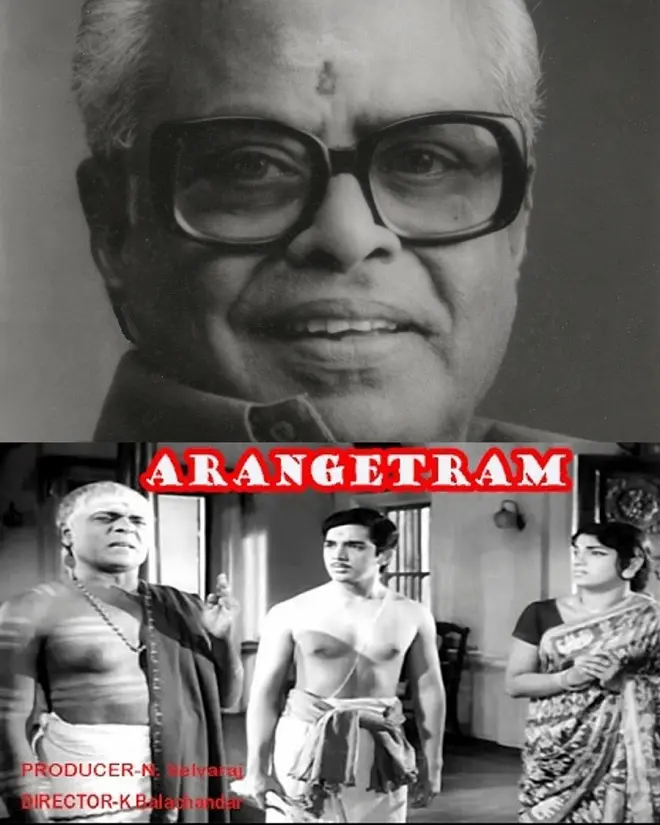
Do you remember the film “Arangetram” where a purohit’s daughter turns to prostitution to uplift her family’s fortunes?
K Balachander, Kamal Hassan in Arangetram
It’s been exactly fifty years since its release in 1973, directed by K. Balachander, a Tamil Iyer filmmaker often seen with holy ash on his forehead.
Being pro-Hindu or pro-any religion goes beyond blindly following orders or ideologies. It also entails the ability to criticize and refine, which is what makes Hinduism a liberal religion.
From Shankaracharya to K. Balachander, they all engaged in critiquing and fixing the system instead of blindly adhering to ancient manuscripts and commandments.
“Anti-Hindu” is a lens, if one holds extremely pro – Hindutva views, you will find any critic as a threat.
Now let me tell you a secret, that rarely people understands: It’s not only Telugu Films, Tamil Films are also great at promoting Hinduism. But both are not same.
How does Tamil cinema incorporate and promote Hindu philosophy?
For those interested in delving deeper, it’s worth noting that Tamil cinema is actually at the forefront of promoting Hinduism.
The term “anti-Hindu” is an ambiguous word, leaving us wondering what truly constitutes a film as anti-Hindu. Does it require explicit portrayal of Hinduism or Hindutva or its symbols to be considered pro-Hindu?
And who has the authority to determine these categorizations?
Before answering these questions and understanding the anti-Hindu or pro-Hindu elements in the Tamil film industry, let’s talk about Hinduism and its nuances.
Exploring the Nuances
Through conversations with a diverse range of individuals, including liberals and ultra right-wing fanatics, I’ve discovered that the true depth and adaptability of Hinduism often go unnoticed.
When compared to Abrahamic religions, Hinduism stands out with its tolerance and flexibility, offering a unique perspective. Hindusim doesn’t believe in Supremacy of one god and it help the followers to be tolerant to other religions & beliefs.
Now, let us see the essence of Hindusim, through the lens of a liberalist.
Hinduism: Beyond Religion
Hinduism transcends conventional religious boundaries and encompasses a way of life and a rich cultural framework. It move into profound existential questions, explores the purpose of life, and intricately examines the relationship between humanity and the divine.
At its core, Hinduism is way of life (just like Democracy), shaping a holistic worldview (Loka samstha sukhino bhavanathu).
Fundamental Philosphies
To understand how South movies, especially Tamil films, promote Hinduism, it is essential to explore some of the unique philosophies within the religion.
These philosophies form the very foundation of many Tamil films, resonating with audiences and communicating profound messages.
The Cycle of Rebirth
Reincarnation, a central belief in Hinduism, explores the concept of the soul’s successive rebirth in new bodies after death.This aligns with the idea of a cyclic theory of time, where the divine takes multiple incarnations to restore cosmic harmony.
Translation: “Whenever there is a decline in righteousness and an increase in unrighteousness, O Arjuna, I manifest Myself on earth.”
Awe, Nenjam Marapathilley, Maanadu, 24 Movie posters
From 1963 film “Nenjam Marappathillai” to Films like “Maanaadu,” or the bilingual film “Awe” directed by Prashanth Varma, or Suriya’s “24,” and Vishnu Vishal’s “Indru Netru Naalai” beautifully showcase this philosophy of reincarnation or cyclic theory of time.
Atman and Brahman
Hinduism introduces the concept of Atman, which refers to the individual self or soul. Hinduism believes that Atman is eternal and intricately connected to the god or divine power known as Brahman. Unlike the Abrahamic religions that view the soul as a distinct, separate entity created by God, Hinduism emphasizes the inseparability of the individual self (soul) from the divine.
“The self is never born nor does it ever die; nor having come to be will it ever cease to be. The self is unborn, eternal, ever-existing, undying, and primeval.” (Chapter 2, Verse 20)
This fundamental philosphy is different from the idea of resurrection.
While Abrahamic religions such as Christianity, Islam, and Judaism believe in the resurrection of the physical body in a transformed state, Hinduism presents a different perspective.
Tamil Films Promoting this Core Philosophies are many. Let’s explore a few remarkable examples:
Image credits: Amazon prime
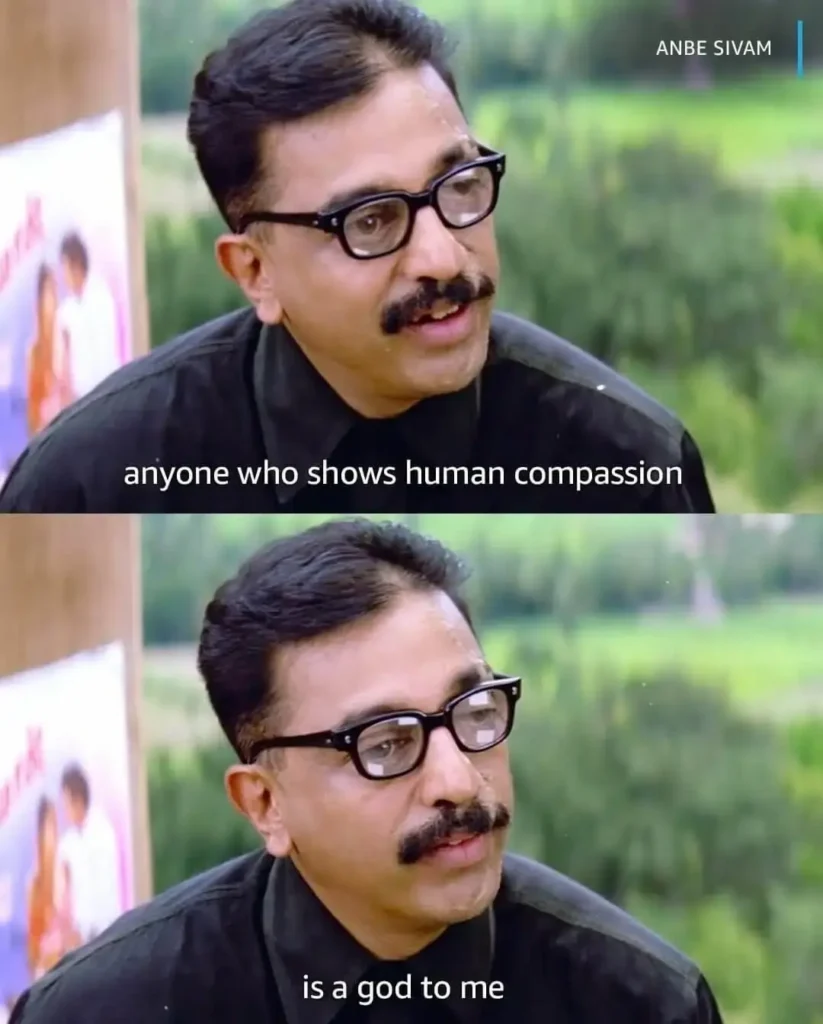
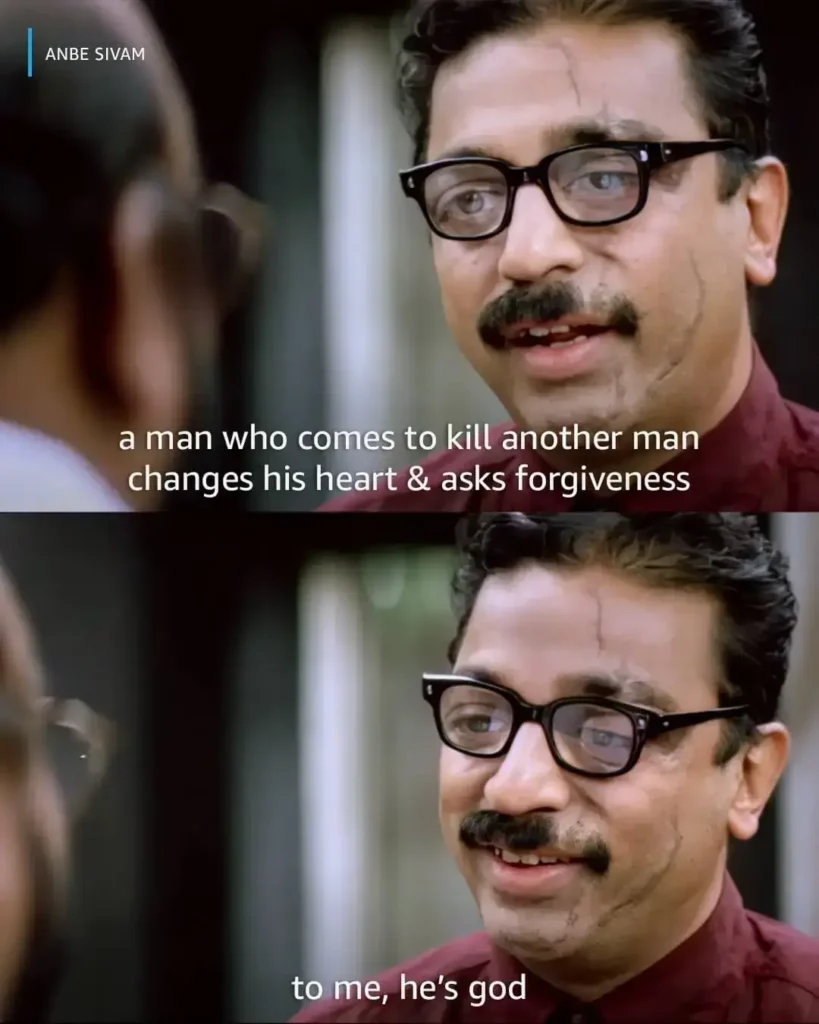
Kamal Hassan’s “Anbe Sivam” (2003)
This thought-provoking film revolves around the concept of “Ayam Atma Brahma,” highlighting the belief that the divine essence resides within each of us. It celebrates the profound connection between individuals and the divine, fostering empathy, compassion, and spiritual growth.
Image credits: Amazon prime
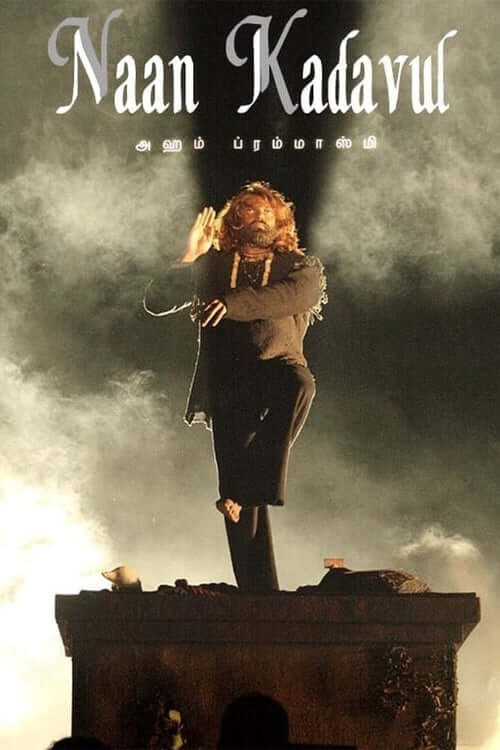
Bala’s “Naan Kadavul” (2009)
Directed by Bala, “Naan Kadavul” embodies the essence of Hindu philosophies with its exploration of divine intervention, the paths of karma, and the transformative power of devotion. It delves into the complexities of human existence, while emphasizing the cosmic interconnectedness between mortals and the divine.
Naan Kadavul Poster with “Aham Brahmasmi” tagline.
“Karnan” by Mari Selvaraj
“Karnan” weaves a powerful narrative rooted in social justice and equality, drawing inspiration from ancient Hindu epics. It highlights the struggles of the marginalized and champions the notion of dharma (righteousness) against oppression, the hero is supported by the soul of his sister.
This list won’t ends here, it’s long.
Diverse Paths to Salvation
In Hinduism, individuals have the freedom to choose from multiple paths to attain spiritual liberation.This is in contrast to Abrahamic religions, which often advocate a more singular path to salvation
Karma Yoga
Karma Yoga advocates selfless service as a means to spiritual growth. It emphasizes performing actions with a sense of duty, without seeking personal gain. Tamil heroes often deliver dialogues that reflect this philosophy, inspiring audiences with the importance of altruistic heroism.
“Karmanye vadhikaraste Ma Phaleshu Kadachana, Ma Karma Phala Hetur Bhurmatey Sangostva Akarmani.” (Chapter 2, Verse 47)
Krishna advises Arjuna to focus on his duty without being attached to the outcomes or being driven by personal desires. He emphasizes the importance of selfless action.
Bhakti Yoga
Bhakti Yoga focuses on devotion and love for the divine. It involves cultivating a deep and personal relationship with a chosen deity or form of the divine. While this philosophy was more prominent in the 80s and 90s, its representation has become relatively rare in contemporary Tamil cinema.
Jnana Yoga
Jnana Yoga centers around knowledge and wisdom. It emphasizes the pursuit of self-realization and understanding the true nature of oneself and the universe. Modern Tamil heroes and heroines often embody this philosophy, celebrating personal freedom and intellectual introspections.
Tamil Films Showcasing Diverse Paths & Moksha
Films like “Oh My Kadavule” (2020), Thiagaraja Kumaraja’s “Super Deluxe,” Vikram’s “Anniyan,” Manikandan’s “Kadaisi Vivasayi” and Suriya’s “7 am Arivu” serve as noteworthy examples that showcase the philosophy of diverse paths to salvation and talks about Moksha. These films explore different aspects of the paths to liberation, offering audiences thought-provoking narratives that inspire introspection and self-discovery.
Hinduism introduces the profound concept of Karma, where the consequences of one’s actions and intentions shape their future experiences and circumstances. Even God can’t escape Karma.
In contrast, Abrahamic religions emphasize the concept of divine judgment, where individuals are held accountable for their actions and face rewards or punishments in an afterlife.
In simpler terms, irrespective of prayers, good deeds, or repentance, Karma remains as a nasty b**ch which follows individuals throughout their lives. Tamil cinema frequently explores these themes, offering thought-provoking narratives that showcase this nasty face of Karma.
Prominent Examples which explore Karma in Tamil Cinema
Tamil films have explored the depths of Karma, presenting captivating stories that reflect the consequences of one’s actions.
Let’s explore some noteworthy examples:
Nalan Kumarasamy’s “Andavan Kattalai” examines the struggles of two individuals as they face the repercussions of their choices, illustrating the complex workings of Karma.
Kamal Hassan’s iconic film “Nayagan” portrays the journey of a gangster grappling with the Karmic consequences of his actions, ultimately seeking redemption.
Manikandan’s “Kutrame Thandanai” delves into the life of a man caught in a web of events driven by Karma, highlighting the impact of past actions on the present.
Two scenes from Thiagaraja Kumaraja’s Super Deluxe
Films like “Dashavatharam,” “Super Deluxe,” and “Katradhu Tamizh” also explore the themes of Karma, inviting audiences to contemplate the interconnectedness of actions and their consequences.
Dharma: Morality and Ethical Duties
Hinduism embraces the concept of Dharma, encompassing moral and ethical duties. It recognizes that moral standards can vary based on circumstances, life stages, and social roles.
Abrahamic religions often adhere to a divine commandments and sins, where moral standards are considered fixed and rooted in the commands of God. In Hinduism it’s not black and white, rather it’s grey.
The conversation between Arjuna and Krishna during at Kuruskhetra is the proof for this.
“Better is one’s own dharma, though imperfectly performed, than the dharma of another well-performed. Better is death in one’s own dharma; the dharma of another is fraught with fear.” (Chapter 3, Verse 35)
Filmmaker Thiagaraja Kumaraja aptly captures this philosophy in his own words, “Yethu Thevaio Athu Dharamam” (What we need is Dharma).
Films like “Aaranya Kaandam” and “Super Deluxe” illustrate this philosophy, where the concepts of right and wrong become blurred. These works challenge viewers to navigate through the shades of gray, exploring the complexities of morality and the multifaceted nature of human actions.
A Scene from Super Deluxe
There is nothing absolute right or wrong; it’s all depending upon the lenses and the needs. Essentially, It’s about you and your survival.
Maya: The Illusion of the Material World:
Hinduism introduces the concept of Maya, acknowledging that the phenomenal world is an illusion, and true reality lies beyond the perceptions of the senses.
In contrast, Abrahamic religions generally consider the physical world as real, created by god and not inherently illusory.
“The wise mourn neither for the living nor for the dead.” (Chapter 2, Verse 11)
Once again, director Thiagaraja Kumaraja delves into the concept of maya in his recent film “Ninaivo Oru Paravai,” questioning the boundaries between reality and imagination.
Even Thiagaraja Kumaraja’s “Super Deluxe” talks about the same in the end with the characters alien and Gajji.
Vijay Sethupathi’s disappearing scene from Kadaisi Vivasayi
Films like “Bogan” by Lakshman, “Awe” by Prashanth Verma, “Kadaisi Vivasayi” (Vijay Sethupathi track) by Manikandan, “Diary” by Arulnithi, “Eeram” by Arivazhagan, “Karnan” by Mari Selvaraj, and “Deja Vu” by Arvind Srinivasan also touch upon the theme of Maya. One personal favorite is Nalan Kumarasami’s “Soodhu Kavvum.“
These films challenge our perception of reality, inviting us to contemplate the illusory nature of the material world and the deeper truths that lie beyond.
Panentheism: Divine Presence in Nature
One striking aspect of Hinduism is its belief in panentheism, acknowledging the divine presence within all aspects of the natural world.
This one is my personal favourite philosophy considering Hinduism as a way of life. All the ancient civilisations followed this.
This sets it apart from the monotheistic beliefs of Abrahamic religions, which emphasize the existence of a singular God or Supreme God.
Hinduism perceives the divine as immanent within nature and all living beings.
I remember when I was a child, I was scared of a centipede and tried to kill it. Then my grandma shouted at me, “Lakshmi Devi” will curse me if I kill a centipede. Because the centipede is Lakshmi Devi’s chariot. This might sound ridiculous, but there is a strong impact on nature. After that incident I never intentionally hurt any animals or reptiles, be they a snake, a spider, a lizard, or a dog. It’s a fear, for a good cause.
Everything in nature is related to God. From Ganges, Himalayas, Rats, Snakes to even Ashes.
This pantheistic approach fosters a deep sense of interconnectedness, reverence, and responsibility towards the nature..
Environmental Conservation and Sustainability
Hinduism’s panentheistic perspective aligns harmoniously with efforts towards environmental conservation and sustainability. By recognizing the divinity in nature, Hinduism instills a profound respect for and protection of the environment. It promotes the idea that humans have a sacred duty (dharma) to preserve and care for the natural world, perceiving it as an integral part of their spiritual journey.
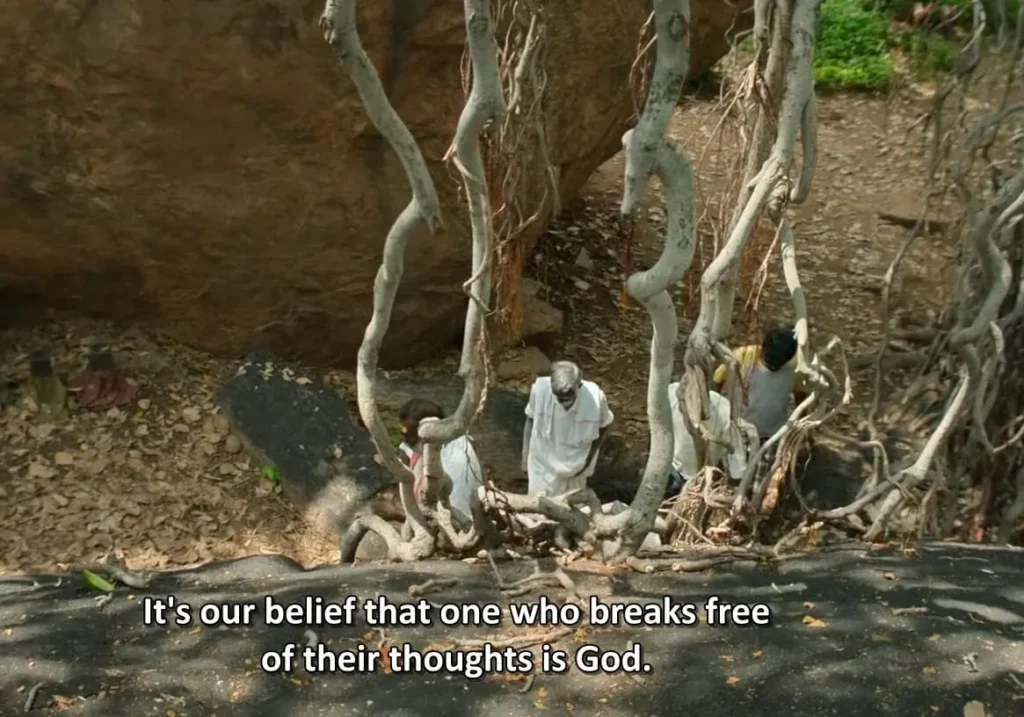
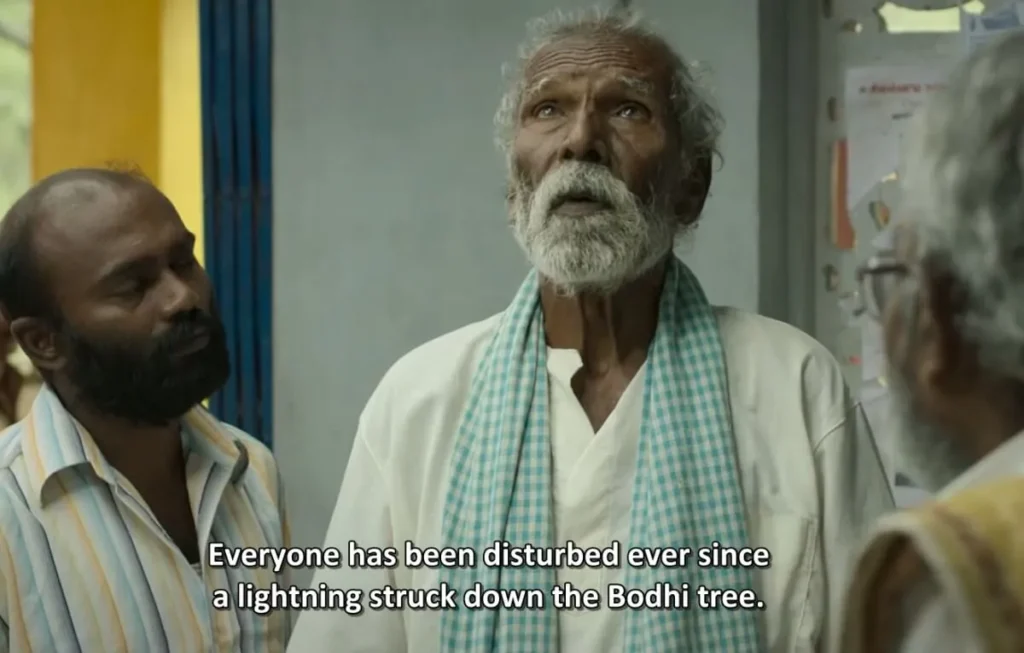
The film “Kadaisi Vivasayi” directed by Manikandan, serves as a remarkable example that exemplifies these themes.
Hinduism’s panentheistic perspective
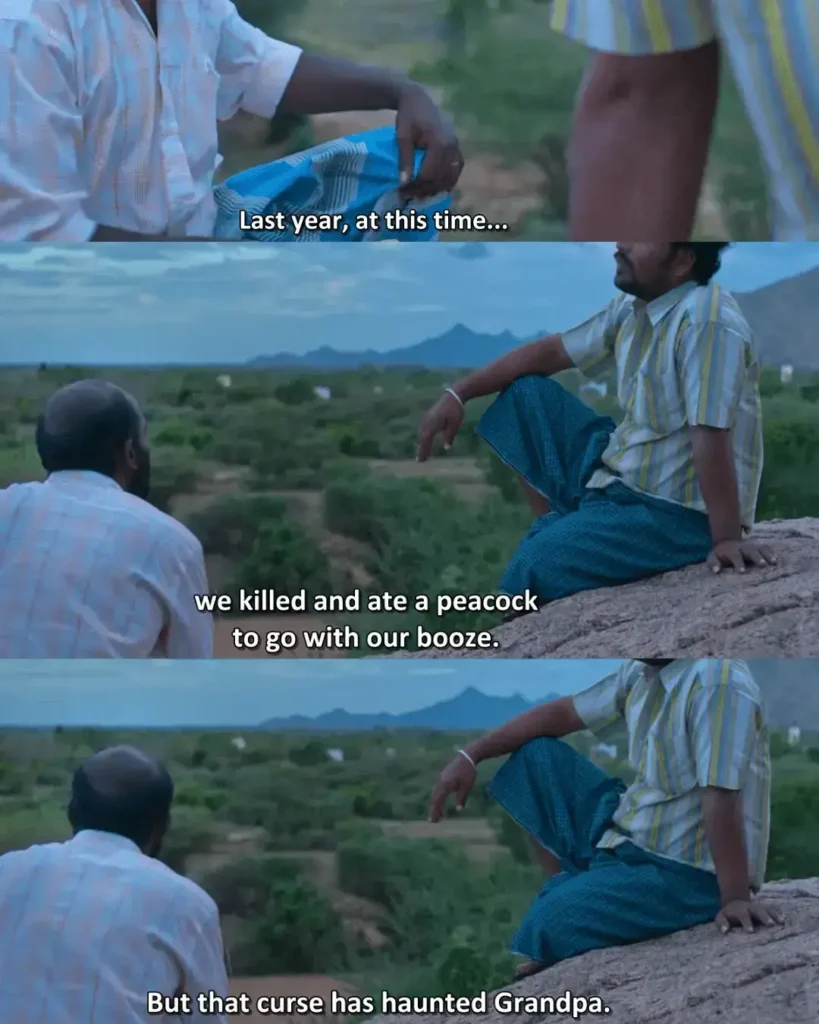
Kadaisi Vivasayi’s title card is shown with a shot of a peakcock on the rock and a song in the background, which translates to “Whether you are a figment of imaginations or an idol made by humans, Muruga, you have a boundless devotion.”
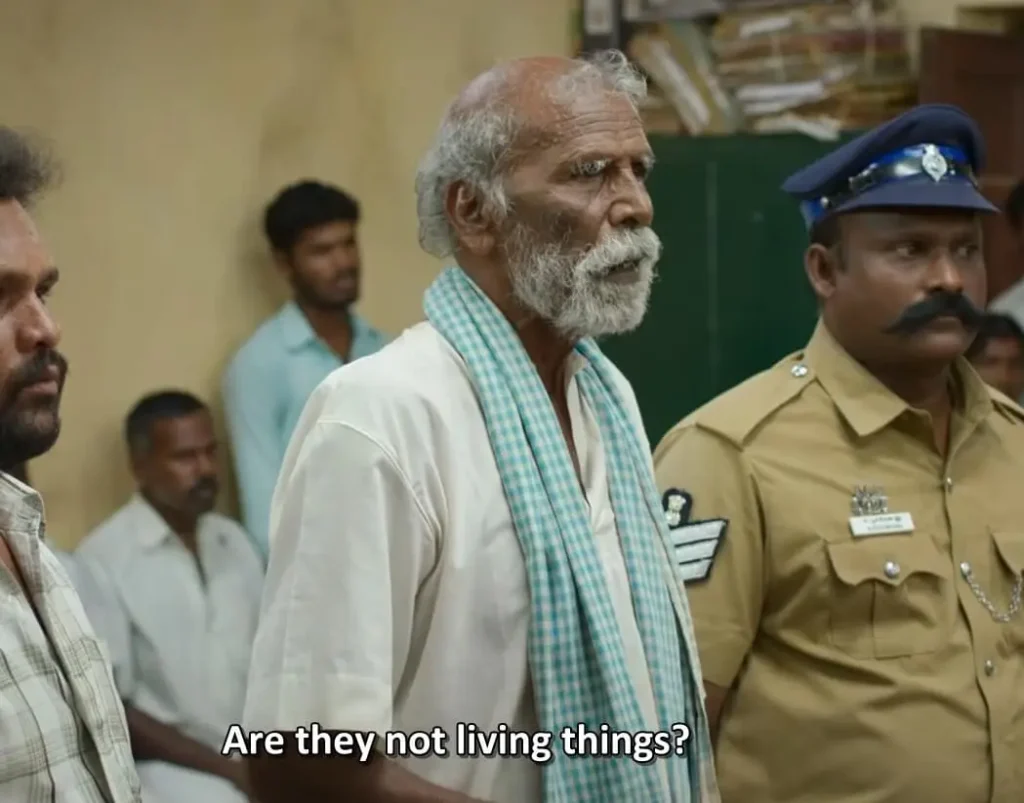
In the movie, later, the farmer asks the court, “How can I kill Murugan’s peacocks?” Will write another post on this soon.
Through the portrayal of peacocks, paddy fields, trees, and stones as divine entities, the movie beautifully captures the interconnectedness between humans and the natural world.
Farmer talking about his paddy fields
It emphasizes the significance of living in harmony with nature, showcasing the traditional practices of elderly farmers who deeply respect and protect the environment.
Personal Freedom and Fanaticism
It is essential to note that the philosophies discussed here aim to empower individuals rather than impose religious dogmas or the authority of a godman.
That is why I said, Hinduism is a way of life.
Unfortunately, some fanatics distort these philosophies in the name of culture and heritage, thereby disrupting the true essence of this “way of life” nature of Hinduism.
I have heard stories from my friends about the challenges they face when it comes to inter-religious marriages. They often share the consequences they encounter from church communities and religious dogmas.
In many cases, if they marry someone from another religion, the expectation is that the non-islamic partner must convert, or else the community may resort to ostracizing the family.
It’s disheartening to witness the impact of such rigid beliefs on personal choices and the potential for social exclusion.
Thankfully, as a Hindu, I have the freedom to marry a girl from any community without interference from temples or pandits. However, I am concerned that these fanatics may soon infringe upon this freedom of choice in the name of religion and culture.
In my opinion, those who attempt to confine this vast philosophy within rigid structures and commandments are the ones who are anti-Hindu.
On the other hand, those who promote the philosophy and question or criticise the evils in beliefs can be considered pro-Hindu.
Sirf Ek Bandaa Kaafi Hai Review: This is a powerful courtroom drama that tells the extraordinary story of an ordinary lawyer, P.C. Solanki, played by the talented Manoj Bajpayee.
Bandaa Title card
Plot: Sirf Ek Bandaa Kaafi Ha
The story unfolds in the heart of Delhi, where a brave young girl (Adrija Sinha) steps forward to accuse a highly influential godman, referred to as ‘Baba’, of sexual abuse.
P.C. Solanki, despite being a small-time lawyer, accepts the daunting task of representing the girl in court, fully aware of the serious dangers and challenges he will face. The girl’s parents hire him after their previous lawyer is exposed trying to take a bribe from Baba’s allies. Solanki faces bribery, witness intimidation, and even murder. But he never gives up. He fights for the girl and eventually wins her case.
How he wins the case against the odds, is what makes it interesting.
Outside the courtroom, Solanki, a devout Shiva worshipper, provides emotional and moral support to the victim, reinforcing her faith in justice. His firm belief in righteousness and his dedication to his profession helps him combat the threats that come his way.
P.C Solanki is a well-written character, you will understand that from the beginning itself.
The film “Sirf Ek Bandaa Kaafi Hai” showcases the tenacity of the common man and salutes the resilience of survivors of sexual abuse.
“Sirf Ek Bandaa Kaafi Hai” is inspired by the infamous 2013 case involving Asaram Bapu, a self-proclaimed godman in India. Asaram Bapu was convicted and sentenced to life imprisonment for sexually abusing a minor girl studying in one of his educational institutions. The character P.C. Solanki, played by Manoj Bajpayee in the film, is based on the real-life lawyer who took on the formidable task of legally challenging the influential godman.
Indeed, a significant and tragic element of the real-life case that parallels the movie is the intimidation and violence faced by witnesses, including multiple murder attempts and successful assassinations.
The Asaram Bapu case saw key witnesses facing extreme threats and violence for their willingness to testify against the godman. At least three key witnesses met their untimely death, with others surviving attacks or receiving death threats. These incidents appeared as clear attempts to intimidate other potential witnesses and obstruct the course of justice.
Similarly, in “Sirf Ek Bandaa Kaafi Hai,” there are scenes showing the escalating violence against those associated with the case, including attacks on the lawyer P.C. Solanki, played by Manoj Bajpayee.
While the movie does not explicitly name Asaram, the narrative follows a similar trajectory, building towards a climactic courtroom judgement.
Cast & Performances
“Sirf Ek Bandaa Kaafi Hai” showcases truly extraordinary performances, with standout acts by Manoj Bajpayee and Adrija Sinha significantly enhancing the film’s impact.
Manoj Bajpayee, playing the role of P.C. Solanki, personifies the heart and soul of the film. He is well-known for his intense roles, but in this film, he steps up his performance even more. His depiction of a small-town lawyer who dares to challenge the powerful godman is an eye-pleasing performance.
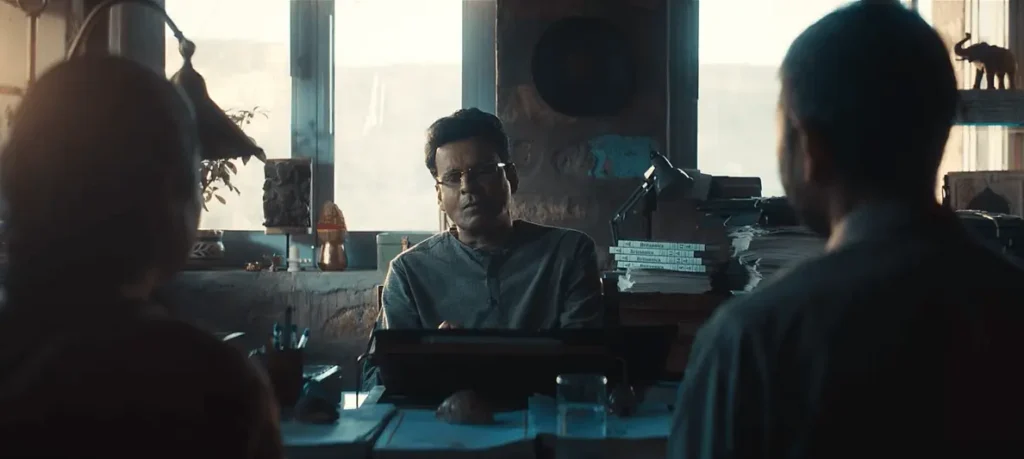
Manoj Bajpayee as P C Solanki
Manoj Bajpayee infuses authenticity and a quiet dignity into P.C. Solanki’s character, anchoring the film with his nuanced and heartfelt act. His exceptional talent illuminates every scene, further strengthening his status as one of India’s finest actors.
Adrija Sinha as Nu (Sirf Ek Bandaa Kaafi Hai)
Playing the role of the young victim, Nu, Adrija Sinha delivers a potent performance. Even as a newcomer in the industry, Adrija Sinha’s portrayal of Nu is touching and invites empathy. She convincingly depicts the character’s initial vulnerability and her subsequent evolution as she courageously confronts her trauma. Adrija Sinha’s sensitive performance leaves a deep impression on viewers and earmarks her as a promising talent for the future.
Furthermore, the entire cast of “Sirf Ek Bandaa Kaafi Hai” excel in their roles, enriching the film with depth and complexity. Each character comes to life through dedicated portrayal, creating a believable world where the story unravels.
Writer Deepak Kingrani & Director Apoorv Singh Karki
Deepak Kingrani’s writing in “Sirf Ek Bandaa Kaafi Hai” combines simplicity with depth and substance. He brilliantly exposes the complexities of a legal battle and the mental fortitude required for a victim to withstand such a dreadful experience.
His characters, from the firm lawyer, P.C. Solanki, to the brave young victim, exhibit a balance between strength and vulnerability.
These characters appear as highly respected legal minds in the film, their expertise and the respect they command depicted with striking authenticity.
Apoorv Singh Karki’s direction matches Kingrani’s writing perfectly. Karki treats the subject with great care, guaranteeing the film’s respectfulness and authenticity.
He doesn’t sensationalize the courtroom scenes; he paints them as crucial and intense, yet avoids excessive drama. Karki subtly enhances the atmosphere of danger and fear surrounding the main character. The scene where two men on a motorcycle follow P.C. Solanki illustrates this – it creates suspense and fear without relying on over-the-top action or dialogue.
Is It Worth Watching?
Powerful Performances from our very own Family Man & Adrija Sinha
Intriguing Storyline: How a common man ace against the odds, How a 16 year old set the mindset for fighting against the evil minds in the society, how a lawyer setting victim’s mindset.
Adrija Sinha as Nu
Trust me, it’s worth watching this.
Social Relevance: The film tackles important social issues, focusing on the real struggles faced by victims of sexual assault, their fight for justice, and societal prejudices.
Especially, there is a conversation between Manoj Bajpayee & Victim’s father during their first meeting at his office. It’s an eye-opening narration for every parent.
Some small disappointments are: Though the storytelling is quite compelling, the film could benefit from more dynamic cinematography.
Using more varied camera angles and innovative lighting techniques could add visual layers to the narrative, making certain scenes more impactful.
Similalrly, more investment in the set design and understanding the nuances of court proceedings could have helped build a stronger environment.
The title of the movie Kathal (2023), which translates to ‘Jackfruit’ in English, is a curious choice.
It is this curiosity which makes me give a try for this comedy-thriller from Netflix this week. Maybe, we can consider it as an answer to Amazon Prime’s Dahaad, which released last week, considering the core plot.
Yashowardhan Mishra’s direction takes us through an eventful narrative, highlighting the socio-political dynamics, caste prejudices, and gender biases in an Indian semi-urban setting.
Kathal Movie, Image credits: Netflix
Plot of Kathal (2023)
The plot revolves around a bizarre case of missing jackfruits that propels the story into unexpected territory.
The jackfruits aren’t your regular type; they’re a rare breed from Malaysia, owned by a local MLA (Vijay Raaz) who values them highly, not for their taste, but for their role in his political ambitions.
These jackfruits, when pickled, are his secret recipe to win over political allies. One day, the jackfruits mysteriously vanish from his garden, throwing the town into a frenzy.
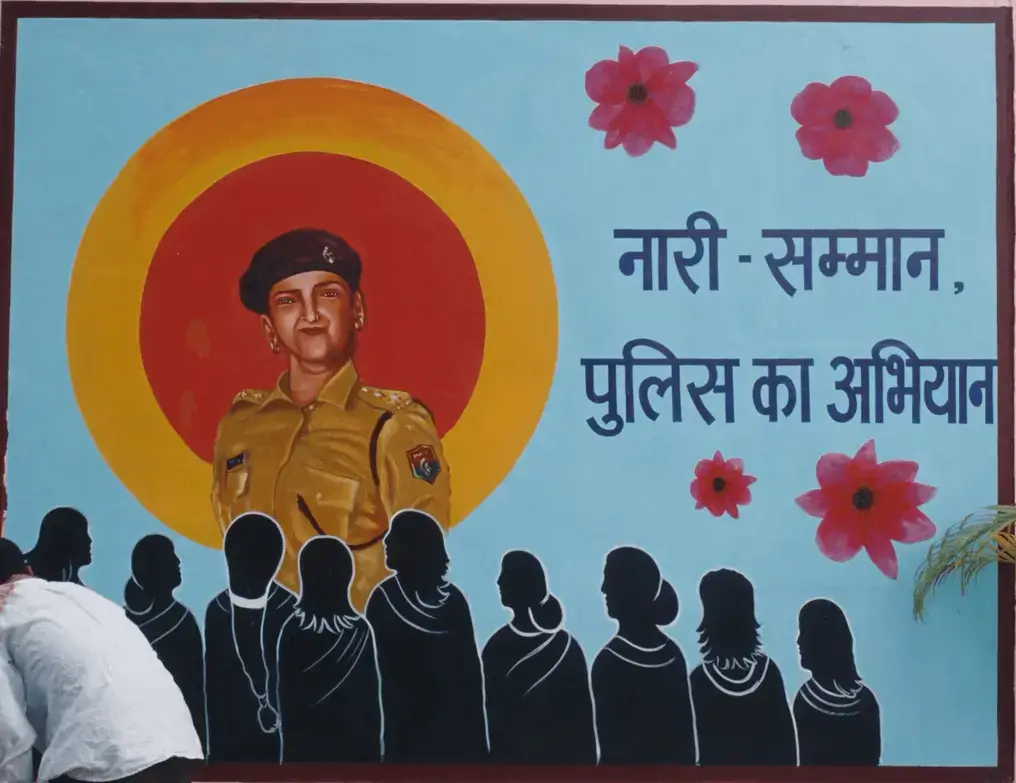
Here comes our heroine, Inspector Mahima Basor(Sanya Malhotra). She’s a dedicated and diligent police officer, driven by her commitment to solve crimes and bring justice.
When this peculiar case of the missing jackfruits falls into her lap, she doesn’t shy away. Instead, she dives right into the heart of the mystery, unafraid of the oddities and absurdities it brings.
But just as she begins to unravel the enigma of the missing jackfruits, she stumbles upon an even darker secret lurking beneath the town’s surface.
This unexpected twist takes her on a path that is far removed from her initial assignment.
Find The Answers by Watching Kathal(2023)
So, what does Inspector Mahima find?
What does the missing jackfruit case have to do with the darker mystery she uncovers?
And can she manage to solve these intertwined cases while dealing with the complexities of her personal life and the societal biases of her small town?
Well, to get these answers, you’ll have to dive into the vibrant world of “Kathal”
Trust me, it’s a ride filled with comedy, intrigue, and a dose of social satire you wouldn’t want to miss!
Perfect Casting With Poor Costumes
The performance of the “Kathal” cast is truly one of the highlights of the movie, bringing depth and authenticity to the storyline.
The lead role of Inspector Mahima Basor is played by the versatile Sanya Malhotra, who has already proven her acting prowess in several previous roles. I believe she is the new Radhika Apte of Netflix.
In “Kathal,” she continues to impress, beautifully balancing her character’s charm and firmness. She delivers a performance that’s both compelling and endearing, offering a fresh portrayal of a diligent police officer.
Sanya Malhotra & AnanatVijay in Kathal
Supporting Sanya is the talented Anantvijay Joshi. His portrayal of a junior police officer brings a dynamic element to the film, contributing to its overall charm and depth.
Neha Saraf, known for her excellent comic timing, also joins the “Kathal” cast, portraying the challenges of a professional woman balancing work and domestic duties. Her performance adds another layer of relatability to the story.
Veteran actors Vijay Raaz and Rajpal Yadav bring their trademark humor and style to their roles as a manipulative MLA and an enthusiastic local journalist, respectively. Despite the peculiar choice of wigs for their characters, they manage to deliver performances that are both enjoyable and memorable.
Rajpal Yadav and Vijay Raaz in Kathal
Why Should You Watch Kathal Movie ?
The “Kathal” movie is a perfect blend of social commentary, humor, and excellent performances.
A shot from Kathal Movie, Image credits: Netflix
It sets itself apart by using a unique storyline – the mysterious disappearance of two prized jackfruits – to highlight deeper issues prevalent in society.
One of the key reasons to watch the “Kathal” movie is its successful portrayal of the socio-political landscape of small-town in North India.
It doesn’t resort to preaching or making lofty statements. Instead, it nudges viewers gently towards acknowledging and understanding the biases and loopholes in our society.
The nuanced performances of the “Kathal” cast further enrich the film. Sanya Malhotra’s character, Inspector Mahima, is particularly noteworthy. She is not just a police officer on a mission, but a woman striving for respect and equality in a male-dominated world.
The movie also benefits from its balance of serious themes with light-hearted moments. The injection of humor keeps the tone enjoyable, ensuring that the audience stays engaged while absorbing the film’s key messages.
In conclusion, if you appreciate cinema that makes you laugh while also making you think, the “Kathal” movie is a must-watch.